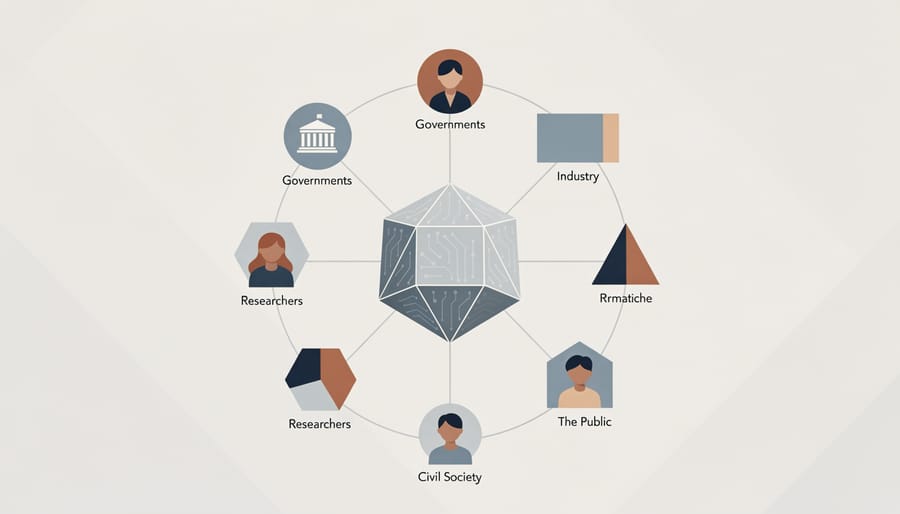

Recognize that artificial intelligence isn’t inherently good or bad—its impact depends entirely on how we design, deploy, and govern it. When AI systems can cause harm through biased hiring algorithms, discriminatory lending practices, or privacy violations, the consequences affect real people in real ways. Responsible AI frameworks exist to prevent these harms before they happen, providing structured approaches that guide organizations in creating technology that serves humanity rather than undermining it.
Understand that these frameworks are essentially rulebooks combined with practical checklists, helping teams answer critical questions at every stage of AI development: Is our training data representative? Could this algorithm disadvantage certain groups? How will we handle mistakes? Who’s accountable when things go wrong? Major technology companies like Microsoft, Google, and IBM have published their own frameworks, while governments and international organizations are establishing regulatory standards that will soon become mandatory rather than optional.
Examine how responsible AI principles translate into concrete actions. Fairness means actively testing algorithms for bias across different demographic groups. Transparency requires explaining AI decisions in language humans can understand. Privacy demands protecting personal information through techniques like data minimization. Accountability establishes clear ownership when AI systems malfunction. Safety ensures rigorous testing before deployment, especially in high-stakes domains like healthcare or criminal justice.
Consider that learning about responsible AI frameworks now positions you ahead of the curve as these practices become industry standards. Whether you’re a student planning your career, a professional expanding your skillset, or simply someone concerned about technology’s societal impact, understanding these frameworks helps you participate meaningfully in shaping AI’s future rather than passively experiencing its consequences.
What Is a Responsible AI Framework?
Think of responsible AI frameworks as building codes for artificial intelligence. Just as construction projects follow strict guidelines to ensure buildings are safe, accessible, and won’t collapse, responsible AI frameworks provide structured rules and principles that guide how we create and use AI systems.
At their core, these frameworks are organized systems of guidelines, best practices, and evaluation methods designed to keep AI development on the right track. They ensure that as we build increasingly powerful AI tools, we’re creating technology that serves people fairly, operates safely, and remains accountable for its decisions.
Here’s why this matters: AI systems are making decisions that affect real lives every day. They’re screening job applications, approving loans, diagnosing medical conditions, and even influencing what content we see online. Without proper guardrails, these systems can perpetuate biases, make harmful mistakes, or operate in ways we don’t understand.
A responsible AI framework addresses these concerns through four fundamental pillars. First, it promotes fairness by ensuring AI systems treat all people equitably, regardless of race, gender, age, or other characteristics. Second, it emphasizes safety, requiring rigorous testing to prevent AI from causing harm. Third, it demands transparency, making sure we can understand how AI reaches its conclusions rather than treating it as a mysterious black box. Finally, it establishes accountability, clearly defining who’s responsible when things go wrong.
The analogy to building codes is particularly fitting because, like construction standards that evolved after structural failures, many responsible AI principles emerged from real-world problems. Companies and researchers witnessed AI systems making biased hiring decisions or misidentifying people, prompting the development of comprehensive frameworks to prevent such issues. These frameworks transform abstract ethical concerns into concrete, actionable steps that developers, businesses, and organizations can follow throughout the AI lifecycle.

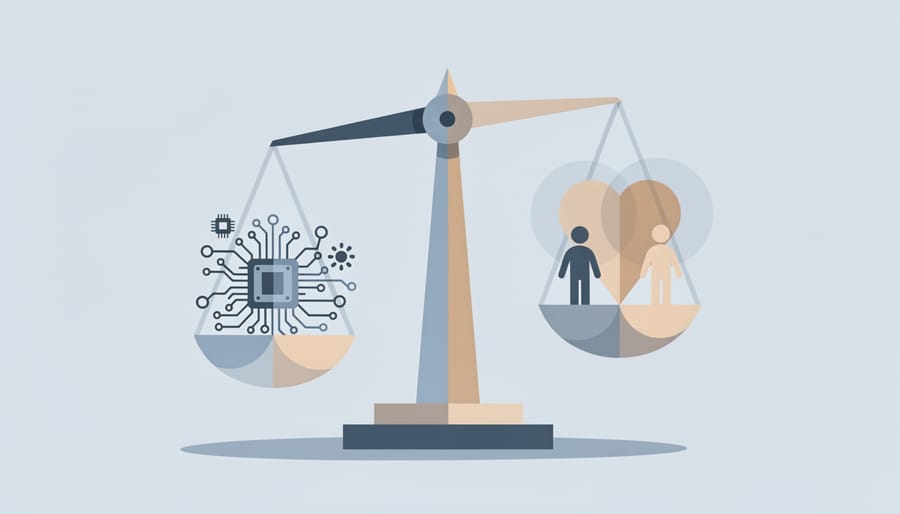
The Five Pillars Every Framework Addresses
Fairness and Bias Prevention
Algorithmic bias occurs when AI systems produce unfair outcomes that systematically favor or disadvantage certain groups of people. Think of it like a pair of tinted glasses that makes an AI see the world in a skewed way, often reflecting historical prejudices present in its training data. Responsible AI frameworks provide structured approaches to catch and correct these biases before they cause real harm.
Consider hiring algorithms that screen job applications. In 2018, a major tech company discovered their recruitment AI was penalizing resumes containing the word “women’s,” such as “women’s chess club captain.” The system had learned from historical hiring data that predominantly featured male candidates, teaching it to prefer male applicants. A robust fairness framework would have flagged this bias during testing phases through techniques like analyzing how different demographic groups fare in the system’s decisions.
Healthcare diagnostics present another critical example. An AI system used to predict which patients needed extra medical care was found to assign lower risk scores to Black patients compared to equally sick white patients. The algorithm used healthcare costs as a proxy for health needs, but because Black patients historically had less access to care and therefore lower costs, the system incorrectly concluded they were healthier. Frameworks help developers identify such proxy discrimination by requiring teams to test systems across different demographic groups and examine whether the data truly represents what they’re trying to measure.
These frameworks typically include bias audits, diverse testing datasets, and continuous monitoring to ensure AI systems treat everyone fairly throughout their lifecycle.
Transparency and Explainability
Imagine being denied a loan without knowing why, or receiving a medical diagnosis from an AI system that can’t explain its reasoning. This is why transparency and explainability are fundamental pillars of responsible AI frameworks.
Transparency means being open about how an AI system works—what data it uses, how it was trained, and what its limitations are. It’s like showing the recipe and ingredients list. Explainability, on the other hand, goes deeper by helping humans understand why an AI made a specific decision in a particular case. Think of it as explaining why substituting one ingredient changed the entire dish.
In loan applications, explainable AI can show applicants exactly which factors influenced their approval or denial—perhaps their debt-to-income ratio or credit history—rather than simply delivering a yes or no. This allows people to understand the decision and potentially take corrective action.
Similarly, in medical diagnoses, when an AI flags a potential tumor in an X-ray, explainability tools can highlight the specific areas and patterns that led to this conclusion. Doctors can then verify the AI’s reasoning, combining machine intelligence with human expertise to make better patient care decisions.
Without these elements, AI systems become black boxes that erode trust and make it impossible to identify when errors or biases occur.
Safety and Robustness
A reliable AI system must perform consistently, even when facing scenarios it wasn’t explicitly trained for. Responsible AI frameworks build in multiple layers of protection to ensure systems fail safely rather than catastrophically.
Consider autonomous vehicles: they must handle everything from sudden pedestrian movements to unexpected road conditions. Frameworks require extensive testing in simulated environments, establishing clear boundaries for when the system should request human intervention. This means programming vehicles to slow down or stop when encountering situations beyond their confidence threshold, rather than making risky guesses.
Content moderation systems demonstrate another critical application. When AI flags potentially harmful content, frameworks ensure human reviewers examine edge cases before final decisions are made. This hybrid approach prevents both over-censorship and dangerous oversights.
Modern AI safety initiatives emphasize stress testing—deliberately challenging systems with unusual inputs to identify weaknesses. Think of it like a fire drill for AI: you practice emergency scenarios before real ones occur.
These frameworks also mandate monitoring systems that track AI performance over time, alerting teams when accuracy drops or unexpected patterns emerge. This ongoing vigilance ensures AI systems remain trustworthy as they encounter evolving real-world conditions.
Privacy and Data Protection
Privacy and data protection form the backbone of any responsible AI framework, ensuring that personal information remains secure and respected throughout the AI lifecycle. Think of it like a digital lock-and-key system: frameworks establish clear rules about what data can be collected, how it’s used, and who has access to it.
At the heart of privacy-focused AI lies the principle of data minimization—collecting only what’s absolutely necessary. For example, if an AI chatbot helps you book appointments, it shouldn’t need access to your entire browsing history. Responsible frameworks enforce this “less is more” approach, reducing both privacy risks and potential misuse.
User consent is equally vital. Before training AI models on personal data, frameworks require transparent communication about what information is being collected and why. Imagine signing up for a fitness app—you should know exactly how your health data will be used and have the power to say no.
These frameworks also emphasize data anonymization techniques, stripping away identifying details so insights can be gathered without compromising individual privacy. Leading organizations implement encryption, access controls, and regular audits to maintain these protections, creating AI systems that users can trust with their personal information.
Accountability and Governance
Effective responsible AI frameworks establish clear lines of accountability by designating specific roles and responsibilities throughout the AI lifecycle. Think of it like a restaurant kitchen—everyone from the head chef to the line cooks knows exactly what they’re responsible for, ensuring food safety and quality.
Most frameworks create governance structures with three key layers. First, an AI ethics board or committee sets policies and reviews high-risk applications. For example, Google’s Advanced Technology External Advisory Council evaluates emerging AI challenges. Second, product teams assign data scientists, engineers, and managers specific accountability for model development and monitoring. Third, independent auditors conduct regular reviews to catch issues early.
Microsoft’s approach illustrates this well: they established an Office of Responsible AI with dedicated teams focused on governance, along with clear escalation paths when ethical concerns arise. Similarly, many organizations now require impact assessments before deploying AI systems, documenting who approved each decision.
These structures ensure that when something goes wrong—like a biased hiring algorithm—there’s no finger-pointing. Instead, there’s a clear chain of responsibility and documented processes for correction, helping organizations maintain trust while innovating responsibly.
Real-World Frameworks You’ll Encounter
Microsoft’s Responsible AI Standard
Microsoft has emerged as a leader in responsible AI by creating practical tools that organizations can actually use. Their Responsible AI Standard, launched in 2022, goes beyond abstract principles to provide concrete implementation steps that teams can follow from day one.
What makes Microsoft’s approach stand out is its focus on human-AI interaction guidelines. These rules ensure that AI systems clearly identify themselves as non-human, explain their capabilities and limitations upfront, and give users meaningful control over automated decisions. Think of it like having guardrails on a bridge—they’re designed to keep everyone safe while still allowing progress forward.
The company has developed specific impact assessment tools that help developers identify potential risks before deployment. These assessments work like a safety checklist pilots use before takeoff, examining everything from data quality to potential biases. Microsoft also provides accountability frameworks that assign clear ownership for AI system outcomes, ensuring someone is always responsible when things don’t go as planned.
For organizations just starting their responsible AI journey, Microsoft offers HAX Toolkit (Human-AI Experience), which provides design patterns and templates. This practical resource transforms abstract concepts into actionable steps, making responsible AI accessible to teams without specialized ethics training.
Google’s AI Principles
Google has established seven AI principles that guide how the tech giant develops and deploys artificial intelligence across its products. These commitments focus on being socially beneficial, avoiding unfair bias, being built and tested for safety, being accountable to people, incorporating privacy design principles, upholding high standards of scientific excellence, and being made available for uses that align with these principles.
What makes Google’s approach noteworthy is how transparently they apply these principles to real products. For example, Google Photos uses fairness testing to ensure its image recognition doesn’t perpetuate harmful stereotypes when labeling people. Gmail’s Smart Compose feature underwent extensive bias testing to avoid suggesting gendered pronouns inappropriately in auto-complete suggestions.
Google also publicly states what they won’t build, including technologies that cause overall harm, weapons, surveillance tools that violate international norms, or technologies that violate human rights. When their AI Ethics Board faced controversy in 2019, they dissolved it and refocused on internal review processes, demonstrating their willingness to adapt.
Their approach shows that responsible AI isn’t just about having principles on paper but actively implementing them through product development, testing, and being willing to say no to certain applications.
IBM’s AI Ethics Framework
IBM has emerged as a leader in responsible AI by prioritizing trust and transparency at every stage of development. Their approach centers on a simple but powerful question: How can users trust an AI system if they don’t understand how it works?
To address this, IBM created AI FactSheets, a documentation method inspired by nutrition labels on food products. Just as you can check a cereal box to see its ingredients and nutritional value, AI FactSheets provide clear information about an AI system’s capabilities, limitations, and potential biases. These documents detail what data trained the model, how accurate it is in different scenarios, and what safeguards exist to prevent misuse.
Think of it like a car’s owner manual—it tells you what the vehicle can do, its safety features, and its limitations. IBM’s FactSheets serve the same purpose for AI systems, making complex technology understandable for everyone from executives to end users.
This documentation approach also includes details about testing results, fairness metrics, and intended use cases. By being upfront about where an AI system might struggle or produce unexpected results, IBM helps organizations make informed decisions about deployment. This level of transparency builds confidence and ensures that AI systems are used responsibly in real-world applications.
How These Frameworks Work in Practice

The Development Lifecycle Approach
Building a responsible AI system isn’t a one-time checkbox exercise. Instead, it’s woven into every stage of development, much like quality control in manufacturing. Let’s walk through how this works in practice.
During the design phase, teams ask critical questions: Who will use this system? Could it disadvantage certain groups? What data do we actually need? For example, when designing a job recruitment tool, developers must consider whether their approach might perpetuate historical hiring biases before writing a single line of code.
The development stage is where responsible practices become tangible. Engineers select diverse, representative datasets and implement fairness constraints directly into algorithms. Think of it as adding guardrails while building a bridge, not afterward.
Testing goes beyond checking if the AI works. Teams conduct bias audits, simulate edge cases, and involve diverse testers who might experience the system differently. A voice recognition system, for instance, should be tested across various accents and speaking styles.
At deployment, transparency takes center stage. Users should understand they’re interacting with AI and know how to provide feedback or appeal decisions. Clear documentation and user guides make systems accountable.
Finally, monitoring ensures ongoing responsibility. Real-world performance often differs from lab conditions, so teams track metrics like fairness and accuracy continuously. If a content recommendation system starts showing concerning patterns, the monitoring phase catches it early, allowing teams to intervene and adjust before problems escalate.
This lifecycle approach transforms responsible AI from abstract principles into concrete, actionable practices at every step.
Tools and Techniques Teams Actually Use
Building responsible AI isn’t just about good intentions—teams need concrete tools to put principles into practice. Think of these as a responsible AI toolkit that helps catch problems before they reach users.
Fairness metrics are mathematical measurements that help teams spot bias in their AI systems. For example, if a hiring algorithm rejects qualified candidates from certain demographics at higher rates, fairness metrics will flag this disparity. These tools don’t make decisions for you, but they shine a light on where your AI might be treating different groups unfairly.
Model cards work like nutrition labels for AI systems. Created by researchers at Google, these one-page documents explain how a model was built, what data it used, its limitations, and how it performs across different groups. When a new team member joins or when you’re deciding whether to use an existing model, the model card provides essential context at a glance.
Impact assessments ask teams to pause and consider consequences before deployment. Similar to environmental impact studies, these evaluations force thoughtful questions: Who might this affect? What could go wrong? Are we ready to handle edge cases? This proactive approach prevents many problems that reactive fixes can’t solve.
Red-teaming involves deliberately trying to break your AI system or make it behave badly. By hiring people to find vulnerabilities—whether bias, security flaws, or unexpected failures—you discover weaknesses in a controlled setting rather than learning about them from frustrated users or news headlines.
Why This Matters for You
Whether you realize it or not, you’re already living in a world shaped by artificial intelligence. Your smartphone’s photo organization, the recommendations on your streaming service, and even the autocomplete in your email—these all rely on AI systems making decisions about your digital life. As AI becomes more deeply woven into everything from healthcare diagnostics to job application screening, the frameworks governing these systems directly impact you.
If you’re just starting your journey in understanding AI fundamentals, learning about responsible AI frameworks gives you a critical lens for evaluating the technology you encounter daily. You’ll start noticing when algorithms might be making unfair assumptions or when companies are transparent about their AI practices. This awareness transforms you from a passive user into an informed participant in our AI-driven world.
For students and professionals considering careers in technology, responsible AI knowledge isn’t optional anymore—it’s essential. Companies across industries are actively seeking people who can build AI systems that are not just powerful, but trustworthy. Understanding these frameworks positions you at the intersection of technical innovation and ethical leadership, a combination that’s increasingly valuable in the job market.
Even if you never write a single line of code, these frameworks matter because they represent society’s attempt to ensure AI serves humanity’s best interests. By learning about them now, you’re preparing to ask better questions, make informed choices about the AI tools you use, and perhaps even contribute to shaping how these technologies evolve. The decisions being made today about responsible AI will define the digital landscape for decades to come—and you have a stake in those decisions.
Getting Started with Responsible AI Learning
Ready to dive into the world of responsible AI? The good news is that you don’t need an advanced degree or years of experience to get started. Numerous free and accessible resources can help you build a solid foundation in ethical AI principles.
Begin with structured learning through interactive AI courses designed specifically for beginners. Platforms like Coursera, edX, and Google’s AI Education offer free courses on AI ethics and responsible development. Google’s “Responsible AI Practices” course provides practical guidance, while MIT’s “Ethics of AI” explores philosophical and societal implications. These courses typically require just a few hours per week and include real-world case studies.
For those who prefer self-paced learning, explore recommended AI books that break down complex concepts into digestible chapters. Look for titles focusing on AI ethics, fairness, and accountability that include practical examples from everyday technology.
Hands-on practice reinforces theoretical knowledge. Experiment with open-source AI fairness toolkits like IBM’s AI Fairness 360 or Google’s What-If Tool. These platforms let you test algorithms for bias and understand how different parameters affect outcomes. You don’t need coding expertise to start exploring their interactive demos.
Join communities focused on responsible AI development. LinkedIn groups, Reddit forums like r/MachineLearning, and specialized Discord servers connect you with practitioners discussing real challenges and solutions. Following thought leaders in AI ethics on social media also keeps you updated on emerging trends and debates.
Consider attending virtual workshops and webinars hosted by organizations like Partnership on AI or the AI Ethics Lab. These events often feature industry experts sharing practical insights and answering questions in real-time.
Start small by applying responsible AI principles to everyday decisions about technology use. Critically evaluate the AI tools you encounter, asking questions about data sources, potential biases, and accountability measures. This practical mindfulness builds the critical thinking skills essential for responsible AI development.
As we’ve explored throughout this guide, responsible AI frameworks aren’t static rulebooks gathering dust on a shelf. They’re living, breathing tools that evolve alongside the technology they govern. Think of them as your compass in the rapidly changing landscape of artificial intelligence—helping developers, organizations, and society navigate toward ethical and trustworthy AI systems.
The beauty of these frameworks lies in their practicality. Whether you’re a student just beginning to explore machine learning, a professional transitioning into AI development, or simply someone curious about how technology shapes our world, understanding responsible AI principles empowers you to be part of the solution. Every algorithm trained with fairness in mind, every privacy protection implemented, and every transparency measure adopted brings us closer to AI that serves humanity’s best interests.
But here’s the thing: responsible AI isn’t achieved in isolation. It requires all of us—developers, policymakers, users, and advocates—to stay curious, ask tough questions, and hold technology accountable. As AI systems become more integrated into healthcare, education, employment, and countless other aspects of daily life, our collective vigilance matters more than ever.
The journey toward responsible AI is ongoing, and the frameworks we use today will undoubtedly transform tomorrow. Stay engaged with emerging trends, continue learning, and remember that every voice contributes to shaping how AI develops. The future of artificial intelligence isn’t just about technological advancement; it’s about ensuring that progress benefits everyone, fairly and transparently. That responsibility belongs to all of us.