
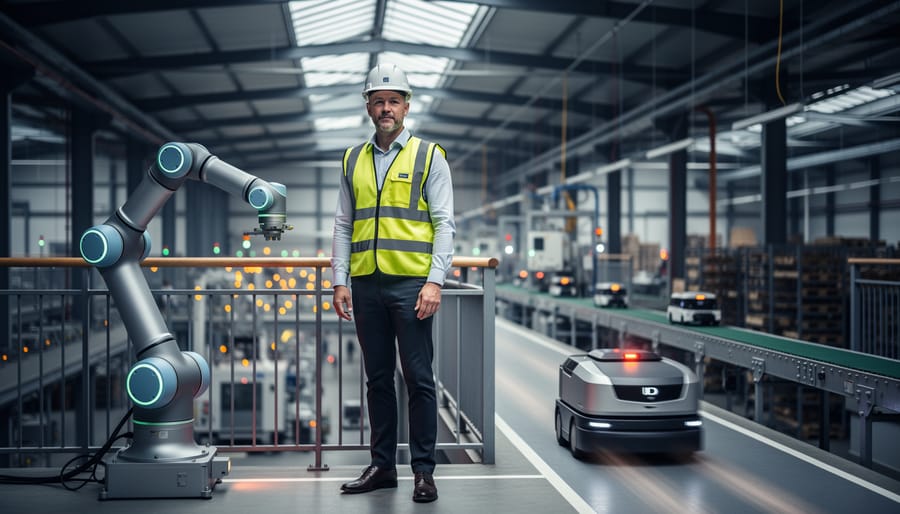
The factory floor of 2025 looks nothing like the assembly lines your parents knew. Smart sensors communicate with AI systems, robots collaborate with human workers, and entire production chains optimize themselves in real-time. This is Industry 4.0, and it’s reshaping every career path in manufacturing, logistics, healthcare, and beyond.
Industry 4.0 refers to the fourth industrial revolution, where digital technologies like artificial intelligence, Internet of Things, cloud computing, and automation converge to create intelligent, interconnected systems. Unlike previous industrial shifts that primarily affected factory workers, this transformation touches every role from entry-level technicians to C-suite executives.
For your career, understanding Industry 4.0 adoption isn’t optional anymore. Companies investing in these technologies need professionals who can bridge the gap between traditional operations and digital innovation. Whether you’re a supply chain analyst learning to interpret AI-driven forecasts, a maintenance technician working with predictive analytics, or a manager overseeing automated workflows, your ability to navigate this technological landscape directly impacts your marketability and earning potential.
The skills gap is real and growing. Organizations worldwide report struggling to find talent that understands both industry-specific processes and emerging technologies. This creates an unprecedented window of opportunity for professionals willing to upskill strategically. The question isn’t whether Industry 4.0 will affect your career, but whether you’ll position yourself as someone leading the change or scrambling to catch up.
What Industry 4.0 Really Means (Beyond the Buzzwords)
If you’ve heard the term “Industry 4.0” tossed around in meetings or seen it in job descriptions, you’re not alone in wondering what it actually means. Strip away the buzzwords, and Industry 4.0 is simply the fourth major shift in how we make and deliver products—one driven by smart, connected technologies.
Think of it this way: Industry 1.0 brought us steam-powered machines. Industry 2.0 introduced assembly lines and electricity. Industry 3.0 gave us computers and basic automation. Now, Industry 4.0 connects all these systems together so they can communicate, learn, and make decisions with minimal human intervention.
At its heart, Industry 4.0 relies on four key technologies working in harmony. First, there’s the Internet of Things (IoT)—imagine sensors on factory equipment constantly sending data about temperature, vibration, or production speed. These sensors are like having thousands of attentive employees monitoring every detail, 24/7.
Next comes artificial intelligence and machine learning, which analyze all that sensor data to spot patterns humans might miss. If a machine typically vibrates at a certain frequency before breaking down, AI learns to predict failures before they happen—like a weather forecast, but for equipment.
Cloud computing acts as the central nervous system, storing massive amounts of data and making it accessible from anywhere. Instead of information trapped in isolated computers, everyone from engineers to executives can access real-time insights on their devices.
Finally, advanced automation and robotics execute the physical work, but they’re far smarter than their predecessors. These systems can adapt to changes, collaborate safely with human workers, and even handle customized products without extensive reprogramming.
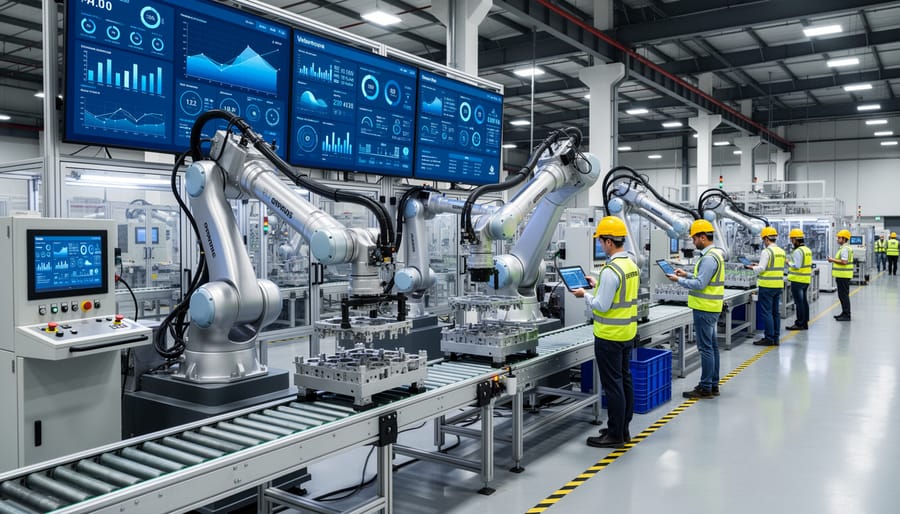
The magic happens when these technologies combine. A smart factory might detect a quality issue through sensors, use AI to diagnose the cause, automatically adjust machine settings via the cloud, and notify relevant team members—all within seconds. That’s Industry 4.0 in action: intelligent, interconnected systems that make operations more efficient, flexible, and responsive to customer needs.
Why Companies Are Racing to Adopt Industry 4.0
The Skills Gap That’s Creating Job Opportunities
Here’s where the opportunity gets exciting: there’s a massive gap between what companies need and who’s available to fill those roles. According to recent industry reports, 75% of manufacturers struggle to find qualified candidates who understand both digital technologies and manufacturing operations. This isn’t about lacking programmers or factory workers—it’s about finding people who speak both languages.
Think of it like needing a translator who’s fluent in two very different worlds. Companies are desperately seeking professionals who can bridge the gap between traditional operations and emerging technologies like artificial intelligence, robotics, and data analytics. The World Economic Forum estimates that this skills shortage will create 97 million new roles globally by 2025, with Industry 4.0 positions commanding salary premiums of 20-30% above traditional roles.
What makes this particularly promising for career seekers is that you don’t need to be an expert in everything. Understanding how AI applications work in real-world industrial settings, or how to interpret data from smart sensors, already puts you ahead of most candidates. The demand is so high that companies are increasingly willing to train the right people who demonstrate curiosity and foundational knowledge in these converging fields.
Industries Where AI Integration Is Happening Right Now
Industry 4.0 isn’t just a futuristic concept—it’s already reshaping how multiple sectors operate today. Understanding where this transformation is most active can help you identify career opportunities and skill gaps worth addressing.
Manufacturing leads the charge, with automotive giants like BMW and Siemens using smart sensors and predictive maintenance systems to reduce downtime by up to 50%. These factories now rely on digital twins—virtual replicas of physical systems—to test changes before implementing them on production lines.
In chemical processing, companies like BASF employ AI-powered quality control systems that monitor reactions in real-time, catching issues milliseconds before they become costly problems. This shift means technicians now work alongside intelligent systems rather than replacing them entirely.
Logistics has been revolutionized through automated warehouses and route optimization algorithms. Amazon’s fulfillment centers use thousands of robots working in harmony with human workers, while DHL employs predictive analytics to anticipate shipping delays before they occur.
Healthcare facilities are adopting smart monitoring systems that track patient vitals continuously, alerting staff to subtle changes that might indicate complications. Hospitals like Mayo Clinic integrate IoT devices with electronic health records for more coordinated care.
The finance sector uses machine learning for fraud detection and risk assessment, processing millions of transactions instantly to identify suspicious patterns.
This widespread AI integration transforming careers means professionals across these industries need to develop digital literacy alongside their domain expertise to remain competitive and valuable in evolving workplaces.
How Cross-Industry AI Knowledge Becomes Your Career Superpower

Real Stories: Professionals Who Made the Leap
Meet Sarah Chen, a quality control manager at a traditional automotive parts manufacturer who saw her company struggling to compete. Rather than waiting for change, Sarah enrolled in online courses covering IoT sensors and data analytics. Within six months, she proposed implementing smart sensors on the production line to detect defects in real-time. Her initiative reduced waste by 30% and earned her a promotion to Director of Digital Operations. Today, she leads her company’s entire Industry 4.0 transformation, bridging her deep manufacturing knowledge with new digital skills.
Then there’s Marcus Williams, a mechanical engineer who felt his career plateauing after a decade in the field. He noticed growing demand for professionals who understood both physical systems and digital technologies. Marcus dedicated evenings to learning about digital twins—virtual replicas of physical assets that use real-time data for monitoring and optimization. He started small, creating a digital twin prototype for equipment maintenance at his plant. The project caught executive attention when it predicted equipment failures three days in advance, preventing costly downtime. Marcus now works as an Industry 4.0 consultant, helping manufacturers implement predictive maintenance systems across multiple facilities.
Finally, consider Priya Patel, a logistics coordinator who transformed her supply chain experience into a career in smart manufacturing. She recognized that her understanding of inventory management could be amplified through Industry 4.0 technologies. After learning about AI-driven supply chain optimization, Priya developed a proposal showing how automated inventory tracking could save her company millions. She now manages an integrated supply chain system where robots, sensors, and AI work together, proving that domain expertise combined with Industry 4.0 knowledge creates powerful career opportunities.
The Essential Skills You Need to Bridge Industries

Technical Foundations That Transfer Everywhere
Regardless of which industry you’re eyeing, certain technical foundations create a solid launchpad for your Industry 4.0 journey. Think of these as your universal toolkit that translates seamlessly whether you’re working in manufacturing, healthcare, or retail.
Start with core AI and machine learning concepts. You don’t need to become a data scientist overnight, but understanding how machines learn from patterns, what supervised versus unsupervised learning means, and how algorithms make predictions will help you speak the language of Industry 4.0 confidently.
Data analysis skills form your second pillar. This means getting comfortable with how data is collected, cleaned, and interpreted to drive decisions. Familiarity with basic statistical concepts and visualization tools helps you understand the stories data tells about production efficiency, customer behavior, or equipment performance.
Programming basics round out your foundation. Python has emerged as the go-to language because of its readability and vast library ecosystem for AI applications. Even knowing enough to read and modify simple scripts opens doors to automation projects and collaborative work with technical teams.
Here’s a practical learning pathway: Begin with free online courses covering AI fundamentals and basic Python programming. Platforms like Coursera, edX, and DataCamp offer beginner-friendly options. Next, practice with real datasets through guided projects. Finally, apply what you’ve learned to a challenge in your current role, even something small like automating a repetitive task or analyzing performance metrics differently.
The beauty of these foundational skills is their portability. Master them once, and you’ll carry valuable currency into any Industry 4.0 environment.
Industry-Specific Knowledge vs. Universal Principles
When stepping into Industry 4.0 roles, you’ll face an important question: should you focus on becoming an industry expert or developing broad technical skills? The answer is both, but strategically balanced.
Think of it like learning to cook. You need fundamental techniques that work across cuisines (universal principles), but also need to understand specific ingredients and cultural contexts (industry knowledge) to create authentic dishes. Similarly, understanding how machine learning algorithms work is universal, but knowing how they apply to predictive maintenance in manufacturing versus fraud detection in banking requires industry-specific context.
Start with universal principles. Grasp foundational concepts like data analytics, IoT systems, cloud computing, and automation frameworks. These transfer across industries and give you the vocabulary to communicate with specialists anywhere. Once you understand that predictive analytics uses historical data to forecast outcomes, you can apply this concept whether you’re optimizing supply chains or personalizing customer experiences.
Then layer on industry knowledge efficiently. Rather than spending years in one sector, use these accelerated learning strategies:
Shadow professionals in your target industry through informational interviews or job shadowing programs. Ask about their daily pain points and how technology currently helps or hinders their work.
Study industry case studies that showcase successful Industry 4.0 implementations. Publications like industry trade journals often detail real transformation projects with specific challenges and solutions.
Join industry-specific online communities and forums where practitioners discuss practical applications. These conversations reveal unwritten rules and common obstacles that textbooks miss.
Attend webinars and conferences focused on digital transformation within specific sectors. You’ll absorb terminology, regulations, and priorities unique to that field.
The sweet spot is developing enough industry literacy to identify problems and opportunities, while maintaining strong technical fundamentals that let you implement solutions across contexts.
Your Practical Roadmap to Industry 4.0 Career Advancement
Phase 1: Building Your AI Foundation
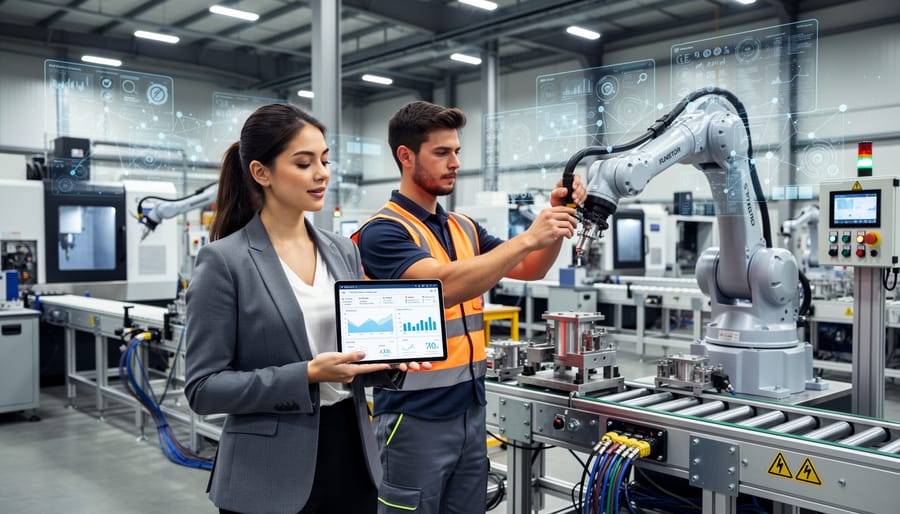
Starting your Industry 4.0 journey doesn’t require an engineering degree. Begin with foundational AI literacy through accessible resources that build your understanding progressively.
Ask Alice recommends starting with introductory courses on platforms like Coursera or edX that cover AI basics, machine learning fundamentals, and data analytics. Look for programs offering certificates in digital transformation or Industry 4.0 technologies. These typically take 4-8 weeks and provide practical context for how AI applies to manufacturing, supply chains, and business operations.
Complement formal learning with hands-on projects. Try analyzing simple datasets using free tools like Google Sheets or Tableau Public. Experiment with no-code AI platforms that let you build basic models without programming knowledge. These practical exercises bridge theory and application.
For those serious about building an AI career, Ask Alice’s curated reading list includes beginner-friendly books explaining machine learning concepts through real-world examples rather than complex mathematics.
Join online communities where learners share projects and ask questions. This peer support accelerates learning and keeps you motivated. Remember, everyone starts somewhere, and Industry 4.0 skills develop through consistent practice rather than overnight mastery.
Phase 2: Connecting AI to Real Industry Problems
Understanding how Industry 4.0 technologies solve real business challenges is essential for building career-relevant expertise. Start by studying industry case studies from leading companies like Siemens, General Electric, or smaller manufacturers that document their digital transformation journeys. These stories reveal the specific problems organizations face, from reducing equipment downtime through predictive maintenance to optimizing supply chains with IoT sensors.
Industry reports from sources like McKinsey, Deloitte, and the World Economic Forum provide data-driven insights into adoption trends and challenges across sectors. These reports often highlight skill gaps and emerging roles, giving you a roadmap for career positioning.
Participate in webinars and virtual conferences hosted by industry associations and technology providers. These sessions typically feature practitioners discussing real implementations, complete with lessons learned and results achieved. The Q&A portions offer valuable opportunities to understand nuanced challenges.
Build your professional network by joining Industry 4.0 focused LinkedIn groups and attending local manufacturing or technology meetups. Connect with operations managers, engineers, and digital transformation consultants who can share firsthand experiences. Consider reaching out for informational interviews to learn about specific pain points their organizations face. This practical exposure transforms theoretical knowledge into applicable expertise that employers value.
Phase 3: Demonstrating Cross-Industry Value
Once you’ve built foundational skills, it’s time to showcase your value to potential employers or clients. Think of yourself as a translator between cutting-edge technology and traditional business operations—this unique positioning makes you highly marketable.
Start by creating a portfolio that demonstrates practical application rather than just theoretical knowledge. Document a small project where you’ve applied Industry 4.0 concepts, even if it’s a simulated scenario. For example, design a predictive maintenance system for manufacturing equipment or map out an IoT sensor network for inventory tracking. These tangible examples speak louder than certifications alone.
Contributing to open-source projects or participating in industry hackathons provides real-world experience while expanding your professional network. Many companies host innovation challenges specifically around smart manufacturing or supply chain optimization—perfect opportunities to apply your skills.
Pursue relevant certifications from recognized organizations like Coursera, edX, or industry-specific bodies. Certifications in areas like IoT fundamentals, data analytics, or specific platforms such as Siemens MindSphere or GE Predix add credibility to your profile.
Most importantly, learn to communicate how Industry 4.0 solutions solve actual business problems. Can you explain how predictive analytics reduces downtime? Can you quantify efficiency gains from automation? This business-focused perspective, combined with technical knowledge, positions you as an invaluable bridge between innovation and implementation—exactly what organizations undergoing digital transformation need most.
Where the Opportunities Are (And How to Find Them)
The good news? Industry 4.0 is creating jobs faster than many companies can fill them. The challenge is knowing where to look and how to position yourself as the perfect candidate.
Let’s start with the roles themselves. Data analysts and IoT specialists are in hot demand as factories install smart sensors and need people to interpret the flood of information. Digital twin engineers create virtual replicas of physical systems, while automation specialists design and maintain robotic systems. Cybersecurity professionals protect connected manufacturing environments, and supply chain analysts optimize logistics using AI-powered tools. These positions exist across manufacturing, logistics, healthcare, energy, and agriculture, not just in traditional tech companies.
Finding these opportunities requires a multi-pronged approach. LinkedIn remains the powerhouse for Industry 4.0 roles. Search for terms like “IoT engineer,” “industrial data scientist,” or “smart manufacturing specialist.” Follow companies actively digitizing their operations, like Siemens, GE Digital, and Rockwell Automation. Indeed and Glassdoor also feature these positions, but niche platforms like Dice and AngelList often list opportunities at smaller tech firms building Industry 4.0 solutions.
Networking opens doors that job boards can’t. Join LinkedIn groups focused on smart manufacturing and industrial IoT. Attend virtual conferences like the Industrial IoT World Congress or local Industry 4.0 meetups. These connections often lead to opportunities before they’re publicly posted. Don’t overlook professional associations like the Society of Manufacturing Engineers or MESA International.
Here’s where many candidates stumble: the interview. When discussing cross-industry skills, translate your experience into Industry 4.0 language. Did you analyze customer behavior data in retail? That’s pattern recognition applicable to predictive maintenance. Managed project timelines? That’s relevant to coordinating digital transformation initiatives. Always connect your past work to tangible business outcomes, like efficiency gains or cost savings.
For those exploring broader AI career opportunities, remember that Industry 4.0 represents the practical application of these technologies in physical industries. Your ability to bridge digital skills with real-world manufacturing challenges makes you invaluable.
Finally, consider contract and consulting roles. Many companies test Industry 4.0 initiatives with temporary specialists before committing to full-time hires. These positions provide experience and often convert to permanent roles.
The journey into Industry 4.0 doesn’t require you to become an overnight expert in robotics or artificial intelligence. What matters most is taking that crucial first step toward understanding how these technologies are reshaping workplaces and creating new career pathways. Whether you’re a recent graduate mapping out your professional future or an experienced professional looking to stay relevant, embracing Industry 4.0 knowledge opens doors you might not have imagined existed.
Think of this transformation as an opportunity rather than a threat. Companies across every sector are actively seeking people who can bridge the gap between traditional operations and smart technologies. Your willingness to learn about data analytics, automation, or IoT systems sets you apart in a competitive job market. The beauty of this technological revolution is that it values curiosity and adaptability as much as technical expertise.
Start small. Pick one area that genuinely interests you, whether it’s understanding how machine learning improves manufacturing efficiency or exploring how cloud computing enables remote collaboration. Each concept you grasp builds your confidence and expands your professional toolkit. Remember, every expert in Industry 4.0 was once a beginner asking the same questions you are now.
Your career advancement doesn’t happen by waiting for the perfect moment. It happens when you commit to continuous learning and practical application. Explore the wealth of resources available on Ask Alice to deepen your understanding, discover real-world applications, and connect with a community of learners just like you. The future belongs to those who prepare for it today.