

Every time you check your bank balance, swipe your credit card, or apply for a loan, artificial intelligence is working behind the scenes to protect your money and make split-second decisions about your financial life. AI in finance refers to computer systems that can learn from patterns, make predictions, and automate decisions that traditionally required human expertise—all at speeds and scales impossible for people alone.
Think of AI as a tireless financial guardian that never sleeps. While you’re having breakfast, machine learning algorithms are scanning millions of transactions across the globe, identifying suspicious patterns that might indicate fraud. When you apply for a mortgage, AI systems evaluate your creditworthiness by analyzing thousands of data points in seconds. As markets open and close around the world, artificial intelligence powers trading systems that execute billions of dollars in transactions based on complex pattern recognition.
The technology has evolved from simple automated rules to sophisticated neural networks that genuinely learn and adapt. Modern AI systems can detect fraud attempts you’d never notice yourself, predicting criminal behavior by recognizing subtle anomalies in transaction patterns, timing, and amounts. They can assess financial risk more accurately than traditional methods, provide personalized investment advice, and even predict market movements by processing news, social media, and economic data simultaneously.
For the average person, this means faster loan approvals, better fraud protection, lower fees through automation, and more accessible financial services. Banks and fintech companies have deployed AI to serve billions of customers with unprecedented efficiency and security. Understanding how AI works in finance isn’t just academic curiosity anymore—it’s essential knowledge for anyone who wants to navigate the modern financial landscape confidently and protect their financial future effectively.
What AI in Finance Actually Means
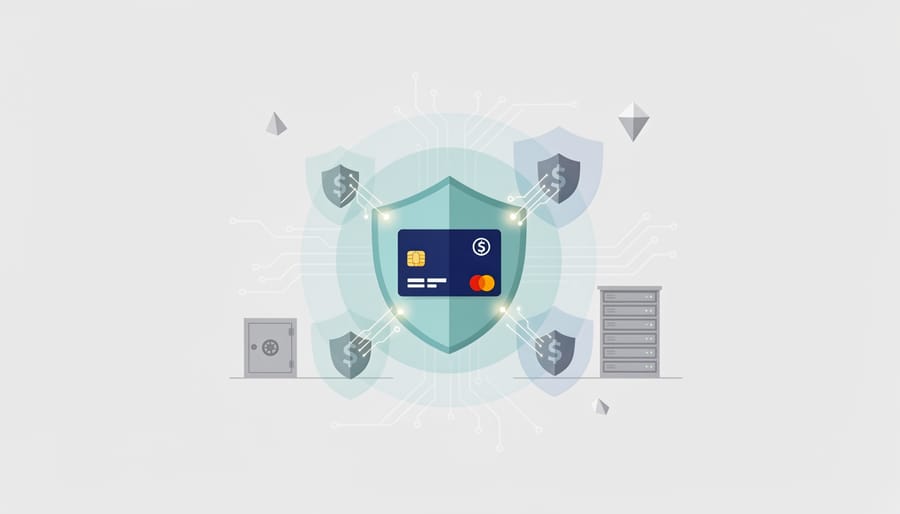
The Difference Between Traditional Security and AI-Powered Protection
Think of traditional security systems as security guards following a strict checklist. They know exactly what suspicious behavior looks like because someone programmed specific rules: “If a credit card is used in two countries within an hour, flag it.” These rule-based systems work well for known threats, but they’re rigid. A fraudster who stays just under the spending limit or waits 61 minutes between transactions can slip right through.
AI-powered protection, by contrast, learns and adapts like a detective who gets smarter with every case. Instead of following fixed rules, AI systems analyze millions of transactions to identify patterns humans might never notice. For example, they might detect that you always buy coffee at 8 AM on weekdays, grocery shop on Saturdays, and never purchase electronics at 3 AM. When a transaction breaks this invisible pattern, even if it doesn’t trigger any traditional rules, the AI flags it for review.
Here’s where it gets interesting: AI catches what traditional systems miss. Imagine a fraudster makes small, seemingly innocent purchases over several weeks to avoid detection. Traditional systems see nothing wrong because no single rule is broken. But AI notices the subtle shift in your spending personality and raises an alert.
The real power lies in AI’s ability to improve continuously. Every confirmed fraud case teaches the system something new, making it better at protecting everyone. Traditional systems, meanwhile, remain frozen until a human manually updates their rules.
How AI Detects Financial Fraud in Real Time
Behavioral Pattern Analysis
Imagine your credit card suddenly showing a purchase for expensive electronics in another country while you’re sleeping peacefully at home. Here’s where AI becomes your financial guardian, working tirelessly in the background to protect you.
AI systems in finance function like detectives who intimately know your habits. They learn your typical spending patterns—where you shop, how much you usually spend, what time of day you make purchases, and even which devices you use. Over weeks and months, the system builds a detailed profile of your “normal” behavior.
Let’s say you regularly spend between $50-$150 at grocery stores near your home on weekend mornings. The AI recognizes this pattern. But when a transaction for $2,500 appears at an online electronics store at 3 AM—something you’ve never done before—the system immediately notices the anomaly.
This is behavioral pattern analysis in action. The AI compares every new transaction against your established baseline. Multiple unusual factors trigger higher alert levels: wrong location, unusual amount, strange timing, unfamiliar merchant type. When enough red flags appear simultaneously, the system can automatically decline the transaction or freeze your account temporarily while sending you an instant notification.
The beauty of this approach is its adaptability. As your spending habits evolve—perhaps you start a new hobby or move to a different neighborhood—the AI continuously updates its understanding of what’s “normal” for you. It’s personalized protection that grows smarter over time, distinguishing between genuine fraud and simply a change in your lifestyle.
Anomaly Detection in Action
Imagine a financial system processing five million credit card transactions every hour. Hidden within this massive flow might be a fraudster testing stolen card numbers with small purchases, or a compromised account suddenly buying gift cards across different countries. AI excels at finding these needles in the haystack by learning what normal looks like, then flagging anything that deviates from expected patterns.
Here’s how it works in practice. When you swipe your card at a coffee shop near your home on a Tuesday morning, AI systems instantly compare this transaction against your personal spending patterns, your location history, the merchant’s reputation, and millions of similar transactions from other customers. The purchase fits your profile perfectly, so it clears in seconds.
But suppose someone tries using your card details to buy electronics in another country minutes later. The AI immediately spots multiple anomalies: unusual geographic location, different product category, higher purchase amount, and impossible travel time between transactions. The system flags this as suspicious and may block the transaction before any money leaves your account.
Major banks report that these AI systems can identify suspicious patterns across billions of data points simultaneously, catching fraud schemes that would take human analysts weeks to notice. For example, AI might detect a merchant whose transaction patterns suddenly shift, suggesting a compromised payment terminal, or recognize coordinated activity across seemingly unrelated accounts that indicates an organized fraud ring.
The Types of Financial Fraud AI Can Prevent

Credit Card Fraud and Identity Theft
Every time you swipe your card or tap to pay, AI systems are working behind the scenes like digital detectives, analyzing your transaction in milliseconds. These systems learn your unique spending patterns—where you shop, how much you typically spend, and even what time of day you make purchases.
When something looks off, AI springs into action. Imagine you usually buy coffee in Seattle every morning, then suddenly there’s a $2,000 electronics purchase in Miami an hour later. AI recognizes this impossibility and can instantly freeze the transaction or trigger a verification text to your phone.
The technology monitors dozens of factors simultaneously: transaction location, purchase amount, merchant type, time patterns, and device information. It’s particularly effective at catching sophisticated threats like debit card scams and account takeovers where criminals try to mimic legitimate behavior.
What makes AI especially powerful is its ability to detect subtle anomalies humans might miss. It can spot when a card number is being tested with small purchases before a big fraudulent transaction, or when login attempts show unusual patterns suggesting someone’s trying to break into your account. This constant vigilance helps protect your money 24/7, often stopping fraud before you even notice something’s wrong.
Money Laundering Detection
Money laundering involves disguising illegally obtained funds by moving them through complex transaction networks—often spanning multiple accounts, countries, and institutions. Traditional detection methods struggle to keep pace with these sophisticated schemes, but AI excels at uncovering hidden patterns within massive transaction datasets.
Machine learning algorithms analyze millions of transactions simultaneously, identifying suspicious activity that would take human investigators months to trace. For instance, AI can detect when small amounts of money repeatedly move between seemingly unrelated accounts in different jurisdictions—a common laundering technique called “smurfing.” The system might notice that these accounts share unusual characteristics: similar login times, linked IP addresses, or coordinated withdrawal patterns.
One real-world example involves a European bank that implemented AI-powered monitoring and discovered a network of shell companies funneling funds across fourteen countries. The AI identified subtle connections between hundreds of transactions occurring over eighteen months—relationships invisible to traditional rule-based systems.
These algorithms continuously learn from new laundering tactics, adapting their detection capabilities as criminals evolve their methods. By analyzing transaction timing, amounts, locations, and participant relationships, AI creates comprehensive maps of money flows that reveal sophisticated laundering operations hiding in plain sight within legitimate banking activity.
Insurance and Loan Fraud
Insurance and loan fraud costs the financial industry billions annually, but AI is changing the game by catching schemes that once slipped through the cracks. When someone submits a claim or loan application, AI systems instantly cross-reference their information against massive databases, searching for inconsistencies that human reviewers might miss.
Think of it like a detective with perfect memory. If someone claims a brand-new laptop was stolen but their credit card history shows no such purchase, AI flags it immediately. The system analyzes patterns across thousands of data points—purchase histories, medical records, employment verification, property records, and even social media activity—to build a complete picture.
For loan applications, AI examines income statements, employment history, and credit reports simultaneously. It can detect when applicants inflate their income, misrepresent employment status, or use synthetic identities created by combining real and fake information. One major insurance company reduced fraudulent claims by 30% after implementing AI cross-referencing tools.
The beauty of this approach is speed and scale. What once required days of manual investigation now happens in seconds, allowing legitimate claims to process faster while fraudulent ones get caught before any money changes hands. This protects both financial institutions and honest customers who ultimately pay for fraud through higher premiums and interest rates.
Real-World Success Stories
Major financial institutions worldwide are already reaping impressive results from AI-powered fraud detection systems. JPMorgan Chase, one of the world’s largest banks, deployed machine learning algorithms that reduced false declines by 50% while simultaneously catching more fraudulent transactions. For customers, this meant fewer embarrassing moments of having legitimate purchases declined during shopping trips or travel.
Mastercard’s Decision Intelligence system demonstrates the speed advantage of AI. The platform analyzes transactions in just milliseconds, evaluating over 300 different factors including purchase location, merchant type, and historical spending patterns. Since implementation, Mastercard has seen fraud detection accuracy improve by 30%, protecting millions of cardholders from unauthorized charges before they even notice suspicious activity.
PayPal processes billions of transactions annually, making fraud prevention a massive challenge. Their AI systems now detect and prevent approximately $40 billion in fraudulent transactions each year. The technology examines user behavior patterns, device fingerprints, and transaction characteristics to identify suspicious activity. What makes this particularly impressive is that PayPal maintains a false positive rate below 1%, meaning genuine customers rarely experience unnecessary transaction blocks.
European banking giant HSBC implemented AI solutions that cut investigation time for suspicious transactions from hours to mere minutes. Their fraud analysts can now review ten times more cases than before, with the AI system flagging high-risk transactions and providing supporting evidence for human review. This hybrid approach, combining machine intelligence with human expertise, has proven especially effective for complex fraud schemes.
The evolution of generative AI in fraud detection represents the next frontier, enabling systems to predict entirely new fraud patterns before they become widespread. These real-world implementations prove that AI doesn’t just save banks money—it directly protects everyday consumers from financial harm while making legitimate banking smoother and more convenient.

The Technology Behind the Scenes
Machine Learning Models That Learn from Fraud
Machine learning models detect fraud through two main approaches: supervised and unsupervised learning. Think of supervised learning like training a new bank employee with flashcards. You show them hundreds of transactions labeled “legitimate” or “fraudulent,” and they learn to spot the patterns. The system studies known fraud cases, noting details like unusual purchase locations, transaction amounts that don’t match spending habits, or multiple card attempts in quick succession. Over time, it builds a mental model of what fraud looks like.
For example, if your credit card is suddenly used to buy electronics in three different countries within an hour, supervised learning models flag this because they’ve seen similar patterns in past fraud cases.
Unsupervised learning works differently—imagine a detective who notices something suspicious without having seen that exact crime before. These models analyze millions of transactions looking for anomalies and unusual clusters of activity. They don’t need labeled examples; instead, they identify behaviors that deviate from normal patterns.
Picture this: most people don’t buy luxury handbags at 3 AM from overseas websites. An unsupervised model might flag this as unusual, even if it’s never seen this specific fraud pattern before.
Financial institutions typically combine both approaches. Supervised learning catches known fraud types quickly, while unsupervised learning discovers new, evolving schemes that fraudsters constantly develop. Together, they create a dynamic defense system that adapts to emerging threats while maintaining vigilance against familiar attacks.
Neural Networks and Deep Learning
While traditional AI systems follow predefined rules, neural networks take a more sophisticated approach by mimicking how the human brain processes information. Think of them as layered learning systems where each layer identifies increasingly complex patterns in financial data.
In fraud detection, these networks excel at spotting subtle anomalies that rule-based systems might miss. For example, a neural network can analyze thousands of transaction characteristics simultaneously—from purchase amounts and locations to timing patterns and device information—learning what legitimate behavior looks like for each individual customer.
Deep learning, a more advanced form of neural networks with multiple processing layers, has dramatically improved detection accuracy. Major banks using these systems report catching up to 70% more fraudulent transactions while reducing false alarms that frustrate customers. When your credit card company correctly blocks a suspicious overseas transaction while approving your legitimate vacation spending, that’s deep learning in action.
However, these powerful systems face one significant challenge: they often function as “black boxes,” making decisions without clear explanations. This has sparked growing interest in explainable AI, which aims to make these complex systems more transparent and trustworthy for both financial institutions and their customers.
The Challenges AI Faces in Fighting Fraud
While AI has revolutionized fraud detection in finance, it’s not a perfect solution. Understanding these limitations helps us appreciate both the technology’s potential and the ongoing challenges financial institutions face.
One of the most frustrating issues is false positives. Imagine your credit card getting declined while you’re traveling abroad, or your legitimate online purchase being flagged as suspicious. This happens because AI systems, in their effort to catch fraud, sometimes mistake unusual but genuine behavior for criminal activity. A study by Javelin Strategy & Research found that false declines cost merchants billions annually and create poor customer experiences. Banks must constantly fine-tune their systems to balance security with convenience.
The battle between AI and fraudsters resembles a high-stakes chess match. As AI systems become smarter, criminals adapt their tactics. Fraudsters now use their own AI tools to study detection patterns and find workarounds. They’ll test small transactions to probe for weaknesses, gradually escalating their schemes once they understand how to evade detection. This cat-and-mouse game means financial institutions can never become complacent with their existing AI models.
Data privacy presents another significant hurdle. AI systems need vast amounts of personal financial data to function effectively, but this raises important questions about user privacy and consent. How much of your financial behavior should banks monitor? Where do we draw the line between security and surveillance? Different countries have varying regulations, making it complex for global financial institutions to deploy AI solutions uniformly.
Additionally, AI models require constant updating and retraining. Yesterday’s fraud patterns won’t predict tomorrow’s schemes. Financial institutions must invest heavily in maintaining their AI systems, hiring skilled data scientists, and staying current with emerging threats. For smaller banks and credit unions, these resource requirements can be prohibitive, potentially creating a security gap in the financial ecosystem.
What This Means for You as a Consumer
Whether you realize it or not, AI fraud detection is already working behind the scenes every time you swipe your card or log into your banking app. Here’s what this means for your everyday financial life.
When you make an unusual purchase—say, booking a last-minute flight or shopping in a different city—AI systems instantly analyze that transaction against your typical spending patterns. In most cases, legitimate purchases go through seamlessly. However, if the system flags something suspicious, you might receive a text message or app notification asking you to verify the transaction. This is AI fraud detection in action, protecting your money in real-time.
The good news? These systems are getting smarter and less intrusive. Modern AI can distinguish between genuine changes in your behavior and actual fraud with impressive accuracy. That international purchase you made at 2 AM might have triggered alerts years ago, but today’s systems understand context better—they know if you recently searched for travel destinations or if your phone’s location data supports the transaction.
Here’s how you can work alongside these AI systems to maximize your protection. First, respond promptly to verification requests from your bank. These aren’t spam—they’re your financial institution double-checking potential fraud. Second, review your transaction history regularly through your banking app. AI learns from your feedback when you mark transactions as legitimate or fraudulent. Third, set up transaction alerts for purchases above certain amounts, giving you an extra layer of awareness.
Keep your contact information updated with your bank so verification alerts reach you immediately. The faster you and the AI system work together, the better protected your finances remain. Think of AI fraud detection as a vigilant partner that never sleeps, constantly watching for threats while learning to understand you better over time.

AI’s role in financial security represents far more than a technological upgrade—it’s a fundamental shift in how we protect our money and personal information. From detecting fraudulent transactions in milliseconds to identifying suspicious patterns invisible to human analysts, artificial intelligence has become the vigilant guardian of our financial ecosystem. Just as AI across industries continues to reshape how we work and live, its impact on finance touches everyone who uses a credit card, mobile banking app, or online payment system.
Looking ahead, emerging technologies promise even stronger protection. Explainable AI will help us understand why certain transactions get flagged, building trust through transparency. Meanwhile, blockchain integration could create tamper-proof audit trails that make fraud even harder to commit. Quantum computing may eventually crack today’s encryption, but AI will evolve alongside it, developing new defensive strategies.
Your role in this AI-powered future is straightforward: stay informed about your financial institution’s security features, enable available protections like transaction alerts and two-factor authentication, and regularly review your account activity. Understanding how AI shields your finances empowers you to make smarter decisions and spot potential issues early. As these technologies continue advancing, the partnership between human awareness and artificial intelligence will create the most robust defense against financial fraud—keeping your hard-earned money where it belongs.