

Treat AI deployment security as a multi-layered defense system, not an afterthought. Begin by implementing access controls at every stage of your machine learning pipeline, restricting who can modify training data, adjust model parameters, or access prediction outputs. A compromised dataset or model can cascade into widespread failures, from biased hiring algorithms to manipulated fraud detection systems.
Encrypt your data both in transit and at rest, using industry-standard protocols like TLS 1.3 for communication and AES-256 for storage. This protects sensitive training information and proprietary model architectures from interception. Deploy models within isolated containers or virtual environments that limit their access to broader network resources, preventing lateral movement if an attacker gains entry through a vulnerable endpoint.
Implement continuous monitoring for anomalous behavior patterns that signal potential attacks. Watch for unusual prediction requests, unexpected model performance degradation, or attempts to extract training data through carefully crafted queries. These model extraction and data poisoning attacks have become increasingly sophisticated, targeting everything from healthcare diagnostic tools to autonomous vehicle systems.
Establish a versioning system for your models and training datasets, creating audit trails that track every change. This enables rapid rollback if you discover compromised components and helps identify the source of security breaches. Regular security audits should examine not just your code, but also dependencies, third-party libraries, and the infrastructure hosting your AI systems.
The stakes are tangible: deployed AI systems handle medical diagnoses, financial transactions, and personal data for millions of users daily. Securing them demands the same rigor as protecting traditional software systems, with additional considerations for the unique vulnerabilities machine learning introduces.

Why AI Systems Are Security Nightmares Waiting to Happen
The Hidden Risks in Your ML Pipeline
Your machine learning pipeline has more entry points for attackers than you might realize. Let’s walk through each stage and see where things can go wrong.
During data collection, imagine you’re building a spam filter that learns from user reports. An attacker could deliberately report legitimate emails as spam, slowly teaching your model to block important messages. These data poisoning attacks work because they’re subtle, injecting bad examples that contaminate your training dataset over time.
The model training phase brings its own challenges. Consider a healthcare AI trained on patient data. If someone gains access to your training environment, they could steal sensitive medical information or insert backdoors that make the model misdiagnose specific conditions. Think of it like planting a bug in a building during construction – it’s much harder to detect than breaking in later.
When you deploy your model, new risks emerge. A recommendation system at an e-commerce site might face adversarial attacks where competitors manipulate inputs to trigger incorrect suggestions, damaging user trust and sales.
Finally, during inference, attackers might probe your model with carefully crafted queries to extract training data or reverse-engineer proprietary algorithms. It’s like someone asking your system very specific questions to figure out exactly how it thinks. Each pipeline stage needs its own security strategy to keep your AI system safe.
Real-World Examples That Should Worry You
In 2023, a major healthcare AI platform discovered that attackers had poisoned their training data, causing their diagnostic model to misclassify certain conditions. The breach went undetected for months, affecting thousands of patient recommendations before security teams caught the manipulation. The incident cost the company over $40 million in remediation and legal settlements.
A popular chatbot service learned this lesson the hard way when users exploited prompt injection vulnerabilities to extract sensitive training data, including personal information from other conversations. Within hours, screenshots circulated online, devastating user trust and triggering regulatory investigations across multiple countries.
More recently, an e-commerce platform fell victim to adversarial attacks that manipulated their pricing recommendation engine. Attackers crafted specific inputs that caused the AI to suggest drastically reduced prices, resulting in significant financial losses before the company shut down the system.
These aren’t hypothetical scenarios. They represent the new reality of AI deployment. Each case shares a common thread: organizations rushed to deploy powerful AI systems without implementing fundamental security measures, assuming traditional cybersecurity would suffice. It doesn’t.
What Secure MLOps Actually Means (In Plain English)
The Three Pillars of Secure AI Deployment
When you deploy an AI system into the real world, you’re essentially opening three critical doors that need strong locks. Think of secure AI deployment as a three-legged stool—remove any leg, and the entire structure collapses. These three pillars work together to create a comprehensive security framework.
The first pillar is data protection. Imagine your training data as a recipe for your grandmother’s secret sauce. If someone gets hold of it, they could reverse-engineer your entire system, discover sensitive information about your customers, or even poison future batches by contaminating your data sources. Data protection means encrypting information both when it’s stored and when it travels between systems, controlling who can access what data, and ensuring that sensitive details like personal information are properly anonymized or removed.
The second pillar focuses on model integrity. Your AI model is like a highly trained guide dog—it only works safely if its training remains intact. Attackers might try to trick your model with carefully crafted inputs, steal the model itself to create knockoffs, or subtly alter its behavior. Model integrity involves protecting the model files themselves, monitoring for unusual prediction patterns that might indicate tampering, and implementing safeguards against adversarial attacks that try to fool your system.
The third pillar is infrastructure hardening. Think of this as fortifying the building where your AI lives. Even with perfect data and models, weak infrastructure is like leaving your front door wide open. This means securing the servers running your AI, managing who has access to deployment systems, keeping all software updated with security patches, and monitoring network traffic for suspicious activity.
Together, these three pillars create a robust defense strategy that protects your AI system from multiple angles.

Locking Down Your Data: The Foundation of AI Security
Encryption That Actually Works for AI Workloads
Think of encryption as a protective shield for your AI system’s sensitive information. When you’re deploying AI models, you’re handling valuable data and proprietary algorithms that need protection in two key scenarios.
Encryption at rest protects data stored on your servers or cloud storage. This means your training datasets, model weights, and configuration files are scrambled into unreadable formats when sitting idle. If someone gains unauthorized access to your storage, they’ll find gibberish instead of usable information. Most cloud providers like AWS, Google Cloud, and Azure offer automatic encryption at rest, which you can enable with a simple checkbox during setup.
Encryption in transit safeguards data moving between systems. When your application sends user inputs to your AI model or receives predictions back, that information travels across networks. Without encryption, it’s like sending postcards anyone can read. Using HTTPS protocols and TLS certificates creates a secure tunnel for this communication.
Here’s a practical starting point: enable your cloud provider’s built-in encryption features first. They’re designed to work seamlessly without requiring cryptography expertise. For API communications, always use HTTPS endpoints rather than HTTP. These foundational steps cover most security needs without adding complexity to your deployment workflow. Remember, encryption that’s too complicated often gets misconfigured or skipped entirely, so start simple and expand as your security requirements grow.
Who Gets to Touch Your Data (And Why It Matters)
Imagine leaving your house keys under the doormat with a note listing what’s inside. That’s essentially what happens when AI systems lack proper access controls. Your data pipeline processes sensitive information constantly, and deciding who can touch it isn’t just bureaucracy—it’s your first line of defense.
Role-based access control (RBAC) works like a hotel key card system. A data scientist might need read access to training datasets, while a DevOps engineer requires deployment permissions but shouldn’t access raw customer data. Instead of giving everyone master keys, you assign permissions based on actual job requirements. This principle of least privilege means people only access what they truly need.
Audit logging acts as your security camera, recording every interaction with your data. When something goes wrong—a data breach or accidental deletion—these logs become your investigation starting point, showing who accessed what and when.
Here’s your practical access control checklist:
• Implement RBAC for all data pipelines and model repositories
• Enable multi-factor authentication for system access
• Set up comprehensive audit logging with automated alerts
• Review and revoke unnecessary permissions quarterly
• Document who has access to what and why
• Use temporary credentials that expire automatically
• Monitor unusual access patterns in real-time
Think of access control as installing good locks on valuable doors—simple, essential, and surprisingly overlooked.
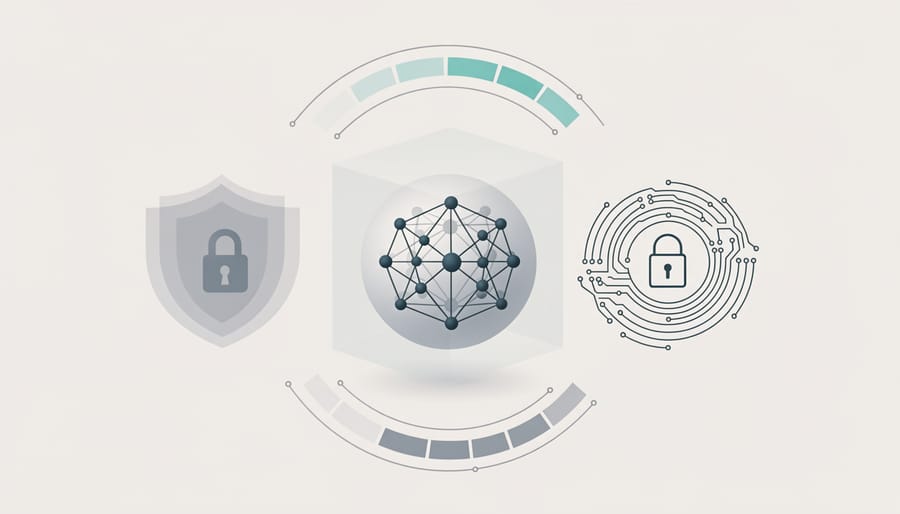
Protecting Your Models From Theft and Tampering
Model Signing and Verification Made Simple
Think of model signing like sealing a letter with wax—it proves the model came from you and hasn’t been tampered with. When you deploy an AI model, anyone could potentially swap it with a malicious version. Model signing solves this problem using digital signatures.
Here’s how it works: Before deployment, you create a unique cryptographic signature for your model file. This signature acts like a fingerprint that’s mathematically tied to your model’s exact contents. When the model is loaded for use, the system verifies this signature matches. If even a single byte has changed, the verification fails, and the system refuses to use the compromised model.
In practice, tools like Sigstore make this process straightforward. You sign your model file with a private key (kept secret), and your deployment system uses a public key (shared openly) to verify authenticity. Popular ML platforms like TensorFlow and PyTorch support model signing through their serialization formats.
For example, a healthcare startup deploying a diagnostic model could sign it before sending to hospitals. Each hospital’s system automatically verifies the signature, ensuring they’re using the genuine, FDA-cleared model—not a modified version that could produce incorrect diagnoses. This simple step protects both the provider and end users.
Stopping Model Extraction Attacks Before They Start
Model extraction attacks occur when adversaries repeatedly query your AI system to reverse-engineer its behavior and create their own copycat model. Think of it like someone photographing every page of a valuable cookbook to recreate it at home. These attacks not only threaten your intellectual property but can also expose sensitive training data patterns.
The most effective defense is implementing query rate limiting. Set reasonable thresholds for how many requests a single user or IP address can make within a timeframe. For example, if your image classification API typically serves 100 requests per user daily, flag accounts exceeding 500 queries as suspicious.
Adding response uncertainty helps too. Instead of always returning the model’s raw confidence scores, consider rounding predictions or adding slight noise to outputs. This makes it harder for attackers to precisely replicate your model’s decision boundaries while maintaining accuracy for legitimate users.
Monitor for unusual query patterns as well. Attackers often submit carefully crafted inputs designed to probe model boundaries. Implement logging systems that detect systematic exploration attempts, like sequential variations of the same input or queries covering edge cases exhaustively. When suspicious activity appears, temporarily restrict access and require additional authentication before restoring full service.
Hardening Your AI Infrastructure: Building Fortress Walls
Container Security for AI Workloads
Containers have become the backbone of modern AI deployments, packaging your models and dependencies into portable units. But this convenience comes with security responsibilities that shouldn’t be overlooked.
Think of Docker containers as apartments in a building. Without proper security, a breach in one container could affect others sharing the same infrastructure. Start by using official base images from trusted registries and regularly scan them for vulnerabilities using tools like Trivy or Aqua Security. Never run containers as root users, and always implement resource limits to prevent a single container from monopolizing system resources during inference spikes.
For Kubernetes clusters orchestrating your AI workloads, implement role-based access control (RBAC) to ensure team members only access what they need. Enable pod security policies that restrict privileged containers and enforce network policies to control traffic between pods. This is particularly crucial when different model versions run simultaneously.
Consider using secrets management solutions like HashiCorp Vault rather than hardcoding API keys or database credentials in container images. Apply the principle of least privilege everywhere: your inference service doesn’t need write access to training data storage.
Regular security audits of your container configurations and automated vulnerability scanning should become part of your deployment pipeline, not an afterthought. This proactive approach helps catch issues before they reach production.
API Security: Your AI’s Front Door Needs a Better Lock
Your AI model’s API is like the front door to your house—if it’s not properly secured, anyone can walk in and cause trouble. When you deploy an AI system, the API becomes the primary way users and applications interact with your model, making it a critical security checkpoint.
Start with strong authentication mechanisms. Think of this as requiring both a key and a security code to enter. Implement API keys for basic access, but consider OAuth 2.0 or JWT tokens for production systems handling sensitive data. Each user or application should have unique credentials that you can track and revoke if needed.
Rate limiting acts as your bouncer, preventing abuse before it overwhelms your system. Set reasonable request limits per user or IP address to stop both accidental overload and deliberate attacks. For instance, limiting a user to 100 requests per minute protects your infrastructure while still serving legitimate users.
Input validation is your security scanner at the entrance. Never trust user inputs blindly. Validate data types, check for unexpected formats, and sanitize inputs before they reach your model. This protects against injection attacks and malformed data that could crash your system.
Finally, defend against adversarial inputs—specially crafted requests designed to manipulate your AI’s behavior. Monitor for unusual patterns, implement content filters, and consider adding detection layers that flag suspicious requests for human review.
Monitoring and Detection: Catching Problems Early
Once your AI system is live, think of monitoring as your security guard that never sleeps. Continuous monitoring helps you catch problems before they snowball into major incidents.
Start with logging and tracking three critical areas. First, monitor model behavior for unexpected changes. If your fraud detection model suddenly flags 50% more transactions as suspicious, something’s wrong. This drift might indicate data poisoning or model manipulation. Second, watch for unusual access patterns. Multiple failed authentication attempts or data requests from unfamiliar locations deserve immediate attention. Third, track system performance metrics like response times and error rates, as sudden changes often signal security issues.
Popular monitoring tools make this easier. Platforms like Prometheus and Grafana help visualize system health in real-time. Cloud providers offer built-in services like AWS CloudWatch or Azure Monitor that can alert you instantly when anomalies occur. For model-specific monitoring, consider specialized tools like Evidently AI or Fiddler that track prediction quality and data drift.
Set up automated alerts for suspicious activity, but balance sensitivity to avoid alert fatigue. Create a response playbook so your team knows exactly what to do when alarms sound. Regular security audits, ideally monthly, help catch vulnerabilities that automated systems might miss.

Your Secure AI Deployment Checklist
Ready to put everything into action? This practical checklist will guide you through securing your AI deployment from start to finish. Think of it as your security roadmap, organized by the key stages of getting your system up and running.
Pre-Deployment Stage
Before launching anything, start with a thorough security assessment. Document what data your AI system will access, where it’s stored, and who has permission to view it. Create an inventory of all third-party libraries and frameworks you’re using—vulnerabilities often hide in dependencies we forget about.
Next, establish your security baseline. Review relevant AI security standards for your industry and determine which apply to your project. Set up version control for both your code and your models, ensuring you can track every change made during development.
During Deployment
When you’re ready to deploy, encrypt everything in transit and at rest. This includes your training data, model files, and API communications. Configure your infrastructure with the principle of least privilege—each component should only access what it absolutely needs to function.
Implement robust authentication and authorization controls. Use API keys, tokens, or certificates for system-to-system communication, and require multi-factor authentication for human users. Set up monitoring and logging from day one so you can detect unusual activity immediately.
Post-Deployment Maintenance
Security doesn’t end at launch. Schedule regular security audits at least quarterly, reviewing access logs and testing your incident response procedures. Keep all dependencies updated and scan for known vulnerabilities weekly.
Create a feedback loop where your security team regularly reviews model performance and behavior. Unexpected prediction patterns might signal data poisoning or adversarial attacks. Document every security incident, no matter how minor—these reports become invaluable learning opportunities.
Finally, maintain clear documentation of your entire security setup. When team members change or you scale your system, this documentation ensures security measures don’t accidentally get overlooked. Remember, securing AI systems is an ongoing commitment, not a one-time task.
Securing your AI systems might seem overwhelming at first, but remember that every significant improvement starts with a single step. You don’t need to implement every security measure overnight. Instead, focus on building a solid foundation by addressing the most critical vulnerabilities in your current deployment. Start by reviewing your data handling practices, ensuring your models have basic access controls, and documenting your security decisions. These small actions compound over time, creating increasingly robust protection for your AI systems.
The landscape of AI security continues to evolve alongside emerging technologies and threat vectors. What works today may need adjustment tomorrow, making continuous learning essential for anyone deploying AI systems. Stay curious about new security frameworks, participate in community discussions, and regularly audit your implementations against current best practices.
The most important decision you can make right now is to begin. Whether you’re a student experimenting with your first machine learning project or a professional managing enterprise deployments, taking that first step toward secure AI deployment sets you on a path toward building trustworthy, resilient systems. Review the checklist we’ve provided, identify one area where you can make an immediate improvement, and take action today. Your future self and your users will thank you for prioritizing security from the start.