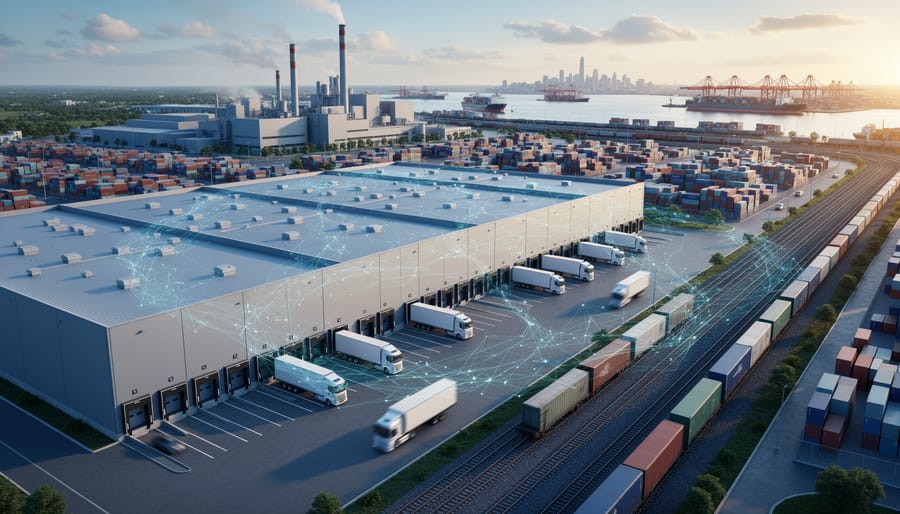
Supply chain and logistics aren’t the same thing, though many people use these terms interchangeably. Understanding the difference becomes crucial when you’re implementing AI solutions, as each domain requires distinct approaches and technologies.
Logistics is the tactical component that focuses on moving and storing goods efficiently. It handles transportation, warehousing, inventory management, and order fulfillment. Think of it as the execution layer—getting products from point A to point B at the right time and cost.
Supply chain is the strategic umbrella that encompasses logistics plus everything else: sourcing raw materials, manufacturing, demand forecasting, supplier relationships, and customer delivery. It’s the entire network of activities that transforms raw materials into finished products in customers’ hands.
Here’s why this distinction matters for AI applications: logistics AI tools typically optimize routes, predict delivery times, and automate warehouse operations. Supply chain AI, however, tackles broader challenges like demand forecasting across multiple markets, supplier risk assessment, and end-to-end visibility across complex networks.
When you’re evaluating AI solutions, knowing whether you need logistics optimization or supply chain intelligence determines which machine learning models you’ll deploy. A routing algorithm for last-mile delivery serves a completely different purpose than a predictive model that forecasts supply disruptions six months ahead.
This article breaks down these differences with practical examples, showing you exactly which AI technologies apply to each domain and how to choose the right tools for your specific business challenges.
The Simple Answer: What Makes Them Different
Supply Chain Management: The Big Picture
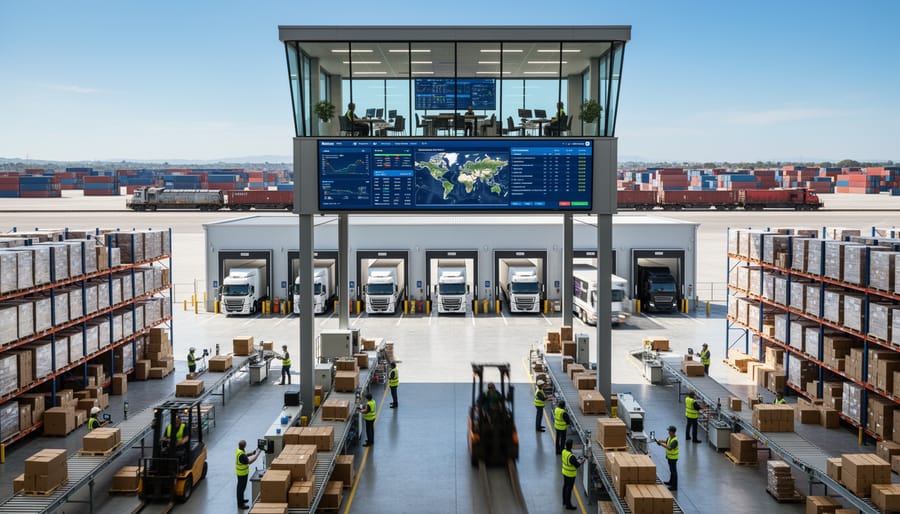
Supply Chain Management is the big-picture strategist that orchestrates every step of getting products from raw materials to happy customers. Think of it as the master conductor of an orchestra, coordinating multiple instruments to create harmony.
At its core, SCM encompasses strategic planning across several interconnected areas. It starts with sourcing decisions—choosing the right suppliers and negotiating contracts. Then it moves through manufacturing processes, where products come to life. Next comes inventory management, balancing the delicate act of having enough stock without tying up too much capital. Finally, it extends to customer relationships, ensuring satisfaction and gathering feedback for continuous improvement.
What makes SCM truly distinctive is its end-to-end perspective. Rather than focusing on individual tasks, it views the entire journey as one connected system. For example, a smartphone manufacturer practicing effective SCM doesn’t just think about shipping phones. They consider how component suppliers in different countries affect production timelines, how warehouse locations impact delivery speed, and how customer demand patterns should influence manufacturing schedules.
This holistic approach means SCM professionals make strategic decisions about partnerships, technology investments, and process improvements that ripple through the entire operation. It’s about creating competitive advantages through better coordination, visibility, and responsiveness across all touchpoints.
Logistics: The Movement Specialist
Think of logistics as the hands-on executor in your supply chain – the specialist that physically moves things from point A to point B. While supply chain management orchestrates the entire symphony, logistics focuses specifically on the tactical operations: transportation, warehousing, inventory management, and final delivery.
Here’s a practical example: Imagine you order a laptop online. Logistics handles the tangible tasks – picking your laptop from the warehouse shelf, packing it securely, loading it onto a delivery truck, tracking its journey, and ensuring it arrives at your doorstep intact and on time. It’s all about the physical flow of goods.
This is why logistics is technically a subset of supply chain management. It’s one critical component within the larger ecosystem, but it doesn’t encompass strategic decisions like supplier selection, demand forecasting, or relationship management with partners.
For anyone exploring AI applications in this space, understanding this distinction matters. AI tools designed for logistics optimization focus on route planning, warehouse robotics, and last-mile delivery efficiency. These are different from broader supply chain AI solutions that might predict market demand or optimize supplier networks. Knowing where logistics ends and broader supply chain management begins helps you identify the right technology solutions for specific operational challenges.
Where They Overlap (And Where They Don’t)
Think of supply chain management and logistics as two overlapping circles in a Venn diagram. In the middle, where they intersect, you’ll find shared responsibilities like inventory management, warehousing, and order fulfillment. Both teams care deeply about these areas because they directly impact customer satisfaction and operational costs.
In the overlapping zone, consider a company managing its warehouse operations. Both supply chain managers and logistics coordinators need visibility into stock levels, storage optimization, and picking efficiency. They collaborate to ensure products move smoothly from storage to shipping docks.
However, each discipline has its distinct territory. Supply chain management extends far beyond the overlap, encompassing strategic elements like supplier relationships, contract negotiations, risk assessment, and long-term planning. A supply chain manager might spend months developing relationships with alternative suppliers in different countries to mitigate geopolitical risks or negotiating better payment terms to improve cash flow.
Meanwhile, logistics operates in its own specialized space, focusing on the tactical execution of moving goods. This includes route optimization, carrier selection, freight cost management, and last-mile delivery coordination. A logistics professional might use real-time traffic data to reroute shipments or negotiate rates with multiple carriers to find the most cost-effective shipping solution for next-day delivery.
Here’s a practical example: When launching a new product, the supply chain team determines which suppliers to source materials from and establishes quality standards. Once materials arrive, logistics takes over, managing transportation schedules, coordinating warehouse receipt, and eventually planning delivery routes to distribution centers. Both teams need synchronized information, but their decision-making focuses on fundamentally different aspects of getting products to customers.
How AI Treats Supply Chain and Logistics Differently
AI for Supply Chain Management: Strategic Intelligence
Artificial intelligence is revolutionizing how companies manage their entire supply chain, bringing strategic intelligence to every decision point. While logistics AI focuses on moving goods efficiently, supply chain management AI takes a broader view, orchestrating everything from raw material sourcing to final delivery.
One of the most powerful applications is demand forecasting. Machine learning algorithms analyze historical sales data, seasonal patterns, weather forecasts, social media trends, and even economic indicators to predict what customers will want weeks or months in advance. For example, Walmart uses ML models that process data from millions of transactions daily, helping them stock the right products at the right time. This approach has reduced their inventory costs while improving product availability, a balancing act that was nearly impossible with traditional methods.
Supplier risk assessment represents another game-changing application. AI systems continuously monitor suppliers for potential disruptions by analyzing news feeds, financial reports, geopolitical events, and even social media sentiment. When a supplier faces potential issues, whether from natural disasters, political instability, or financial troubles, the system alerts procurement teams before problems cascade through the supply chain. Companies like Unilever employ these systems to manage thousands of suppliers across dozens of countries, maintaining resilience in increasingly volatile global markets.
Production planning has become remarkably sophisticated through AI integration. AI transforms supply chain planning by optimizing manufacturing schedules based on demand forecasts, equipment availability, labor resources, and material supplies. These systems can automatically adjust production runs when unexpected changes occur, minimizing waste and maximizing efficiency.
Procurement optimization uses AI to determine optimal order quantities, timing, and supplier selection. Similar to how AI revolutionizing financial analysis helps companies make smarter financial decisions, procurement AI evaluates pricing trends, supplier performance metrics, and contract terms to recommend the best purchasing strategies.
Consider Procter & Gamble, which implemented ML algorithms across their supply chain operations. Their system analyzes over 100 variables to forecast demand for products in different markets, resulting in a 20% improvement in forecast accuracy and significant cost savings. This kind of strategic intelligence enables companies to move from reactive problem-solving to proactive planning, fundamentally transforming how modern supply chains operate.
AI for Logistics: Operational Efficiency
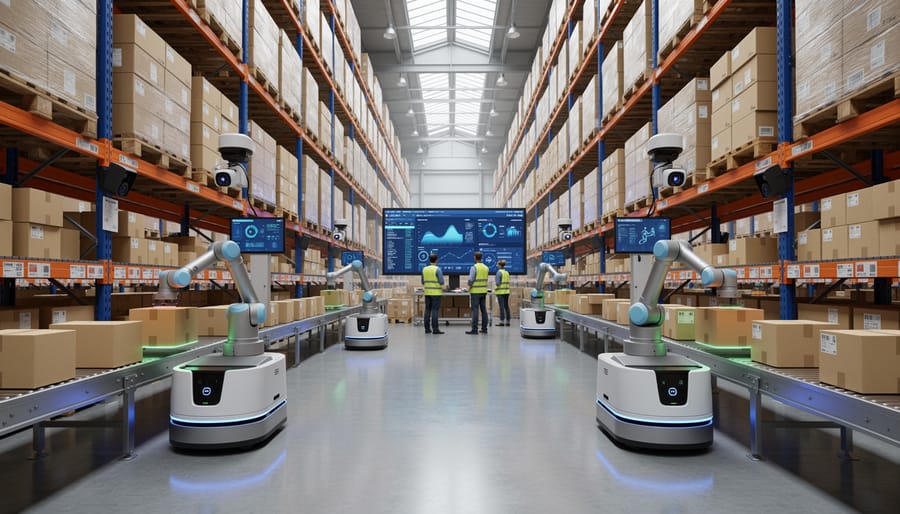
Artificial intelligence is revolutionizing logistics operations by tackling real-world challenges that have plagued the industry for decades. From optimizing delivery routes to managing entire fleets, AI is making logistics faster, cheaper, and more reliable.
Route optimization represents one of AI’s most impressive achievements in logistics. Traditional route planning relied on static maps and basic algorithms, but modern AI systems analyze real-time traffic data, weather conditions, road closures, and delivery time windows simultaneously. Companies like UPS save millions of gallons of fuel annually by using AI to calculate the most efficient routes, reducing both costs and environmental impact. These systems learn from historical data, becoming smarter with each delivery cycle.
Warehouse automation showcases AI’s ability to transform physical operations. Imagine a warehouse where robots work alongside humans, using computer vision to identify products, predict optimal storage locations, and even pack boxes. Amazon’s fulfillment centers employ thousands of AI-powered robots that can navigate warehouses autonomously, retrieve items, and bring them to human workers for final processing. The result? Orders processed in minutes instead of hours.
Last-mile delivery, the final step from distribution center to customer doorstep, has become a testing ground for cutting-edge AI applications. Delivery drones are no longer science fiction. Companies like Wing and Zipline use AI-powered drones to deliver packages in under 30 minutes, navigating complex airspace and identifying safe landing zones automatically. Similarly, autonomous delivery vehicles from companies like Nuro are already operating in select cities, using AI to navigate streets, avoid obstacles, and complete deliveries without human drivers.
Fleet management has evolved dramatically through AI integration. Modern systems monitor vehicle health, predict maintenance needs before breakdowns occur, and optimize fuel consumption. They track driver behavior, provide real-time coaching, and can even reroute vehicles instantly when problems arise. These capabilities mirror other urban AI applications transforming city infrastructure.
The practical impact is measurable: companies implementing AI-driven logistics solutions report 15-30% cost reductions, 20-40% faster delivery times, and significantly improved customer satisfaction. As these technologies mature, they’re becoming accessible to businesses of all sizes, not just industry giants.
Real-World Impact: Why the Distinction Matters for AI Implementation
Understanding the difference between supply chain and logistics isn’t just academic—it directly impacts how effectively companies implement AI solutions. When organizations blur these lines, the results can be costly.
Consider the case of a major retail distributor that invested heavily in what they called an “AI supply chain solution.” The problem? They actually implemented a logistics-focused route optimization system. While their delivery trucks became more efficient, the AI couldn’t address their real pain point: predicting demand fluctuations and coordinating with suppliers. Six months and millions of dollars later, they still struggled with inventory shortages because they’d solved the wrong problem with the wrong technology.
The opposite mistake happened at a manufacturing company that deployed demand forecasting AI designed for end-to-end supply chain management. They expected it to also optimize their warehouse operations and shipping schedules. When their loading dock efficiency didn’t improve, they blamed the AI system—when actually, they needed separate logistics-specific tools for those operational tasks.
Success stories emerge when companies understand the distinction. A pharmaceutical distributor correctly identified their challenge as both supply chain and logistics problems requiring different AI approaches. They implemented predictive analytics for supply chain visibility across their supplier network, then added separate machine learning algorithms for warehouse robotics and route optimization. The result? A 30% reduction in stockouts and 25% faster deliveries.
AI-powered healthcare supply chains demonstrate this principle beautifully—hospitals use strategic AI for procurement and supplier management while deploying different systems for tracking medical equipment movement within facilities.
The lesson is clear: before implementing AI, ask whether you’re solving a strategic supply chain challenge or an operational logistics problem. This clarity ensures you select the right tools, set appropriate expectations, and measure success against relevant metrics. Getting this wrong doesn’t just waste money—it can erode trust in AI initiatives across your entire organization.
What This Means for You
Understanding the difference between supply chain and logistics isn’t just academic—it directly impacts how you approach AI implementation and career development in these fields.
For businesses implementing AI solutions, recognizing this distinction helps you allocate resources effectively. If you’re struggling with warehouse efficiency, you need logistics-focused AI tools like automated sorting systems or route optimization software. But if you’re facing broader challenges like supplier reliability or demand forecasting, you’ll benefit more from supply chain AI platforms that analyze data across your entire network. Start small by identifying your most pressing bottleneck, then choose AI tools designed specifically for that domain. Remember that while AI can dramatically improve efficiency, it also comes with considerations around AI’s environmental impact that should factor into your decision-making.
Students and career changers should recognize that these fields offer different entry points. Logistics roles often require hands-on operational knowledge and familiarity with transportation management systems, while supply chain positions demand strategic thinking and data analysis skills. If you’re drawn to AI applications, focus on learning machine learning basics, then specialize in either logistics optimization algorithms or broader supply chain analytics platforms.
For professionals already in these fields, the AI revolution means continuous learning is essential. Take online courses in data science fundamentals, experiment with AI-powered tools your company already uses, and network with others combining traditional expertise with new technology. The most valuable professionals will be those who understand both the operational realities and the AI capabilities that can transform them.
The key takeaway: Know which problem you’re solving before choosing your AI solution, and understand that expertise in one area doesn’t automatically transfer to the other.
Understanding the difference between supply chain and logistics isn’t just semantics—it’s fundamental to deploying AI solutions effectively. Think of it this way: logistics AI helps you deliver packages faster today, while supply chain AI helps you predict what products you’ll need six months from now. Choosing the wrong AI tools for the wrong problems can mean wasted resources and missed opportunities.
The exciting news? Both fields are experiencing unprecedented transformation through artificial intelligence. We’re seeing autonomous vehicles revolutionizing last-mile delivery, predictive algorithms preventing supply disruptions before they happen, and machine learning models optimizing inventory in ways humans never could. As these technologies mature, the distinction between supply chain and logistics will become even more pronounced, with specialized AI solutions emerging for each domain.
Whether you’re a student exploring career options, a professional considering AI implementation, or simply curious about how technology shapes our world, this is an incredible time to engage with these fields. The companies that understand these differences—and leverage AI accordingly—will be the ones leading tomorrow’s commerce revolution. The opportunity to learn, innovate, and contribute has never been greater.