
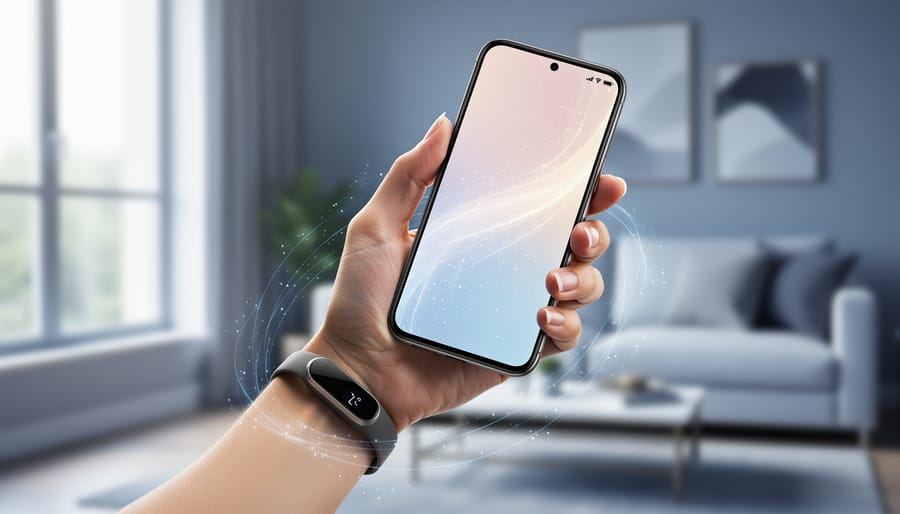
Every time you tilt your smartphone to switch from portrait to landscape mode, tap your fitness tracker to check your steps, or let your car’s safety system detect a collision, you’re experiencing g-sensor technology in action. A g-sensor, short for gravity sensor or accelerometer, measures acceleration forces acting on a device—whether from movement, tilt, or vibration. These tiny components have become the invisible workhorces powering everything from your phone’s screen rotation to advanced artificial intelligence systems that interpret human motion and environmental changes.
Understanding g-sensors matters now more than ever because AI technologies increasingly depend on the real-time motion data these sensors provide. Modern machine learning algorithms analyze g-sensor inputs to enable gesture recognition, predictive maintenance in industrial equipment, fall detection for elderly care, and autonomous vehicle navigation. The sensor converts physical movement into electrical signals, measuring force in units called “g-force,” where 1g equals Earth’s gravitational pull. This data becomes the foundation for AI models that learn patterns, predict behaviors, and make split-second decisions across countless applications that shape our daily lives.
What Is a G-Sensor? Breaking Down the Basics
The Science Behind G-Sensors (Without the Jargon)
At their core, g-sensors rely on something called MEMS technology—micro-electromechanical systems. Don’t let the fancy name intimidate you. Think of MEMS as incredibly tiny machines, so small they’re measured in micrometers (that’s millionths of a meter).
Here’s a simple way to picture how a g-sensor works: Imagine a tiny ball suspended inside a miniature box. When you tilt the box or move it suddenly, the ball shifts position. Now, shrink that entire setup down to microscopic size and replace the ball with a minuscule mass attached to springs.
When your device accelerates—whether you’re picking up your phone, driving around a corner, or dropping your fitness tracker—that microscopic mass moves in response to the force. As it shifts, it changes the distance between itself and fixed electrodes nearby. This movement alters the electrical capacitance (essentially, the ability to store electrical charge) between these components.
The sensor detects these capacitance changes and converts them into electrical signals. These signals tell your device exactly how much force is being applied and in which direction. The whole process happens instantaneously, thousands of times per second, giving your devices real-time awareness of their movement and orientation.
What makes this technology remarkable is its size and efficiency. An entire g-sensor can fit on a chip smaller than a grain of rice, consuming minimal power while constantly monitoring motion—which is why your smartphone battery doesn’t drain from the accelerometer alone.
Where You’ll Find G-Sensors Working Every Day
In Your Pocket: Smartphones and Wearables
Your smartphone or smartwatch wouldn’t know which way is up without its built-in g-sensor. These tiny accelerometers have become essential to our daily digital experience, working quietly in the background to make our devices smarter and more intuitive.
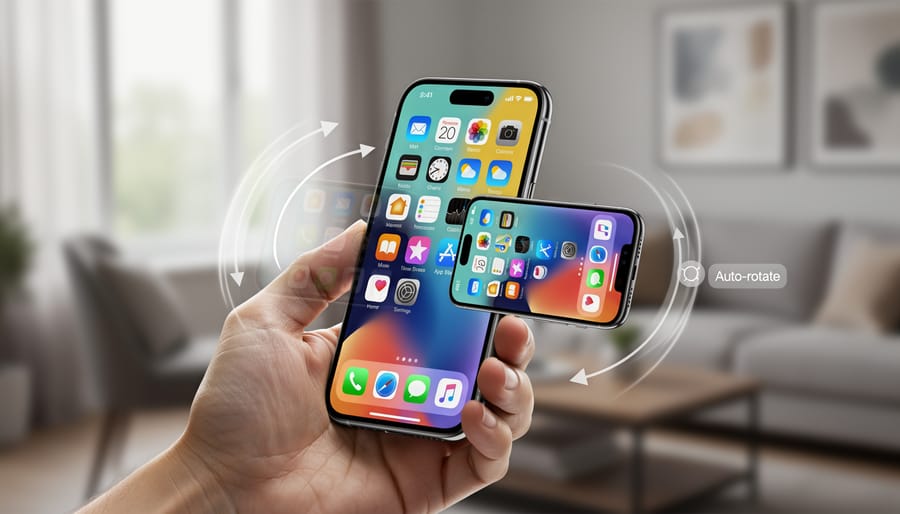
The most obvious example is screen rotation. When you turn your phone from portrait to landscape, the g-sensor detects this change in orientation and automatically adjusts your display. It’s such a seamless experience that we rarely think about the technology making it happen.
For fitness enthusiasts, g-sensors are the backbone of activity tracking. Your smartwatch counts your steps by detecting the repetitive acceleration patterns of walking or running. More advanced algorithms can even distinguish between different activities—whether you’re cycling, swimming, or climbing stairs—based on the unique movement signatures each creates.
Gaming has also been transformed by g-sensors. Racing games respond when you tilt your phone to steer, while augmented reality apps use accelerometer data to understand how you’re moving your device through space.
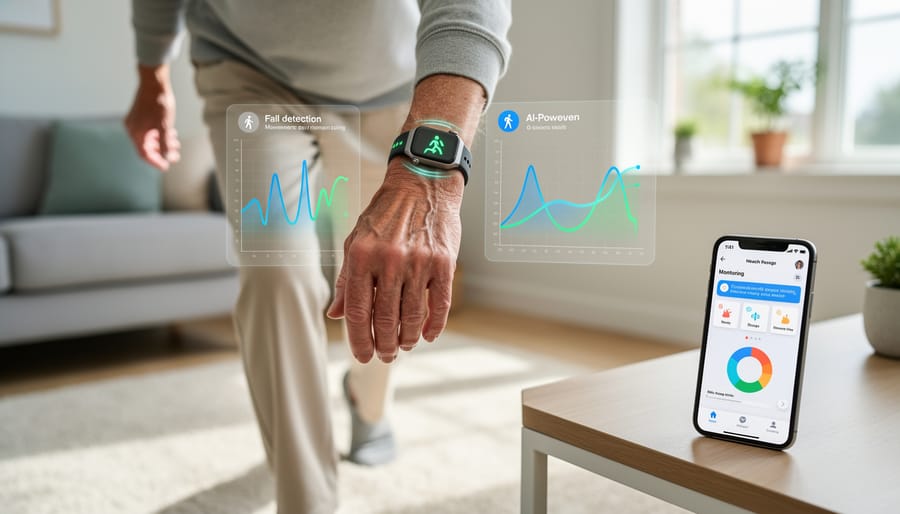
Perhaps most importantly for wearable safety, modern smartwatches use g-sensors for fall detection. When the sensor registers a sudden, sharp deceleration consistent with a fall, the device can automatically alert emergency contacts—a potentially life-saving feature for elderly users or those with medical conditions.
Beyond Phones: Vehicles, Drones, and Industrial Equipment
G-sensors have become indispensable safety guardians and performance optimizers far beyond our smartphones. In modern vehicles, these sensors serve as critical components in airbag deployment systems. When a collision occurs, the g-sensor detects sudden deceleration within milliseconds, triggering airbags to inflate before passengers make contact with hard surfaces. This split-second response has saved countless lives since the technology’s widespread adoption.
Vehicle stability control systems also rely heavily on g-sensors to keep cars safe on the road. These sensors constantly monitor lateral and longitudinal forces, detecting when a vehicle begins to skid or roll. The moment dangerous movement is detected, the system automatically applies brakes to individual wheels or adjusts engine power to help the driver maintain control. This technology has become so effective that it’s now mandatory in many countries.
Drones represent another fascinating application of g-sensor technology. These flying devices use multiple sensors working in concert to maintain stable flight, compensate for wind gusts, and execute smooth maneuvers. Without g-sensors providing constant feedback about orientation and acceleration, your drone would tumble from the sky within seconds of takeoff.
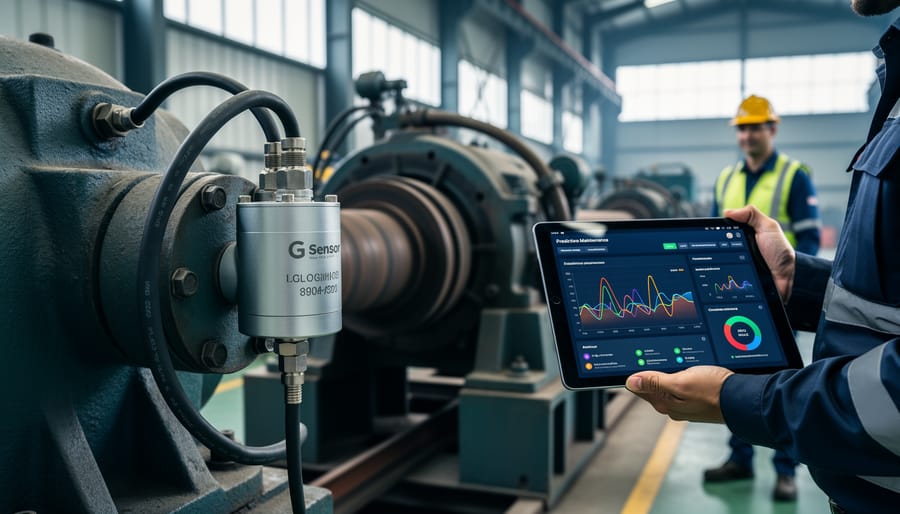
Industrial machinery monitoring has also been transformed by g-sensor integration. Factories now embed these sensors in heavy equipment to detect unusual vibrations that might indicate worn bearings, misalignment, or impending mechanical failure. By catching problems early through vibration analysis, companies prevent costly breakdowns and dangerous workplace accidents while optimizing maintenance schedules.
How AI Transforms G-Sensor Technology
The fusion of traditional g-sensors with artificial intelligence represents a significant leap forward in motion detection technology. While conventional g-sensors excel at measuring acceleration and orientation, they essentially act as data collectors—recording movement without truly understanding it. This is where AI changes everything.
When you combine g-sensors with AI algorithms, something remarkable happens. These AI sensors don’t just detect motion; they learn from it. Machine learning models can analyze patterns in acceleration data to recognize specific activities, predict user behavior, and even detect anomalies that might indicate problems.
Consider your smartphone’s ability to automatically switch between portrait and landscape modes smoothly, or how fitness trackers can distinguish between walking, running, and cycling. These capabilities stem from AI processing g-sensor data in real-time, making intelligent decisions based on learned patterns rather than simple threshold triggers.
The predictive power is particularly transformative. In automotive safety systems, AI-enhanced g-sensors can anticipate potential collisions by analyzing acceleration patterns, triggering preventive measures milliseconds faster than traditional systems. In healthcare, they can detect irregular movement patterns that might signal health issues before they become serious.
This intelligent layer also improves efficiency. AI algorithms can filter out irrelevant motion data, reducing false alarms and battery consumption while focusing computational resources on meaningful events. The result is smarter devices that respond more accurately to your needs while consuming less power.
AI-Powered G-Sensors in Action: Real Applications That Matter
Smarter Health Monitoring
G-sensors are becoming invaluable tools in healthcare, where artificial intelligence transforms simple motion data into life-saving insights. Consider elderly care facilities, where falls represent a serious risk. AI-powered systems continuously analyze g-sensor readings from wearable devices, learning to distinguish between normal sitting movements and the characteristic acceleration patterns of a fall. When detected, these systems can instantly alert caregivers, potentially reducing response times from hours to seconds.
The technology extends beyond fall detection. Researchers are training AI models to recognize seizure patterns by analyzing subtle changes in body movement captured by g-sensors. The algorithms learn to identify the distinct motion signatures that precede or accompany different types of seizures, enabling earlier intervention and better treatment planning.
Perhaps most fascinating is gait analysis for early disease detection. AI examines walking patterns through g-sensor data, identifying irregularities invisible to the human eye. Slight changes in stride length, walking speed, or balance might indicate emerging conditions like Parkinson’s disease or cognitive decline. By catching these signs early, healthcare providers can begin treatment when it’s most effective. This proactive approach transforms g-sensors from simple motion detectors into sophisticated health monitoring systems that work silently in the background, watching over our wellbeing.
Predictive Maintenance for Machinery
Imagine a factory where machines could tell you they’re about to break down weeks before it happens. This isn’t science fiction—it’s happening right now thanks to AI-powered sensors analyzing vibration data from g-sensors.
G-sensors attached to industrial equipment constantly monitor vibration patterns during normal operation. When a bearing starts wearing out or a motor begins to misalign, these changes create subtle shifts in vibration that humans might miss. However, artificial intelligence excels at detecting these tiny anomalies. Machine learning algorithms trained on thousands of hours of operational data learn to recognize the unique vibration signatures that precede specific failures.
For example, an AI system monitoring a wind turbine might detect irregular vibrations indicating bearing degradation. It alerts maintenance teams to replace the bearing during scheduled downtime rather than waiting for a catastrophic failure that could damage the entire turbine and halt power generation for weeks.
This predictive approach saves industries millions in repair costs and prevents dangerous accidents. Manufacturing plants use these systems to maintain production schedules, while airlines rely on them to ensure passenger safety by catching engine problems before takeoff.
Enhanced User Experience in Gaming and AR
Modern gaming and augmented reality have been transformed by AI’s ability to interpret g-sensor data in real-time. When you tilt your smartphone to steer a racing game or rotate your device to explore a virtual environment, AI algorithms are working behind the scenes to translate those physical movements into smooth, responsive digital actions.
Think of traditional gaming controls as a simple on-off switch, while AI-enhanced g-sensor processing acts more like a skilled interpreter. Machine learning models analyze acceleration patterns from the g-sensor to predict your intended movements, reducing lag and creating more natural interactions. In racing games, for example, AI can distinguish between a deliberate sharp turn and an accidental hand shake, filtering out unwanted inputs while amplifying meaningful gestures.
For augmented reality applications, AI processes g-sensor data alongside gyroscope and camera inputs to maintain stable virtual object placement in your physical space. When you walk around a virtual character displayed on your screen, the AI ensures it remains anchored to the real world, even as you move quickly or change viewing angles.
Gesture recognition has also improved dramatically. AI learns your personal movement patterns over time, adapting to how you naturally hold and move your device, making controls feel increasingly intuitive and personalized.
The Technical Edge: What Makes AI-Enhanced G-Sensors Different
Artificial intelligence is transforming traditional g-sensors from simple motion detectors into intelligent decision-makers. But what exactly gives AI-enhanced g-sensors their edge? Let’s break down the key technical improvements that make these sensors smarter without diving too deep into complex engineering.
Pattern recognition stands out as the most significant advancement. While conventional g-sensors simply report raw acceleration data, AI-powered versions learn to identify specific movement patterns. Think of it like the difference between hearing sounds and understanding language. A traditional sensor detects that your phone moved, but an AI-enhanced version recognizes whether you’re walking, running, or cycling based on the unique vibration signatures of each activity.
Noise filtering represents another crucial improvement. Standard g-sensors often struggle with false readings caused by vibrations, temperature changes, or electrical interference. AI algorithms act like intelligent filters, distinguishing between meaningful motion and environmental noise. This means fewer false alarms in security systems and more accurate fitness tracking.
Context awareness takes sensor intelligence even further. Modern AI-enhanced g-sensors don’t just respond to individual movements—they understand situations. For example, a smartphone can differentiate between an accidental drop and intentional shaking because the AI considers the sequence and intensity of movements together.
Energy efficiency has also improved dramatically thanks to edge AI processors. Rather than constantly streaming data to the cloud for analysis, these sensors process information locally, waking up the main processor only when necessary. This smart power management extends battery life significantly, allowing fitness trackers and IoT devices to run weeks longer between charges while providing more sophisticated monitoring capabilities.
What’s Coming Next: The Future of AI-Powered Motion Sensing
The convergence of g-sensors and artificial intelligence is just beginning to unlock possibilities that seemed like science fiction a few years ago. As we look toward the horizon, several transformative applications are taking shape.
Autonomous vehicles represent perhaps the most ambitious frontier. Future self-driving cars will combine g-sensor data with AI to make split-second decisions about passenger safety, detecting everything from sudden braking patterns to potential rollovers before they happen. These systems will learn from millions of motion data points to predict and prevent accidents with unprecedented accuracy.
In healthcare, the next generation of diagnostic tools will use g-sensor arrays paired with tiny AI chips to monitor patient movement with medical precision. Imagine wearable devices that detect the earliest signs of Parkinson’s disease through subtle gait changes, or smart beds in hospitals that automatically alert nurses when patients at risk of falling attempt to stand.
Smart cities are also on the cusp of a motion-sensing revolution. Infrastructure equipped with AI-powered g-sensors will optimize traffic flow by learning from real-time vehicle movement patterns, predict maintenance needs in bridges by detecting structural vibrations, and even improve emergency response by analyzing crowd dynamics during evacuations.
Perhaps most intriguing are personalized AI assistants that truly understand your physical context. These systems will recognize when you’re exercising versus commuting, adjust your smart home accordingly, and provide contextually appropriate notifications based on your actual activity rather than simple assumptions.
G-sensors have come a long way from their origins as simple motion detectors. What started as basic accelerometers measuring physical movement have transformed into sophisticated, AI-powered systems that learn, predict, and adapt to our behaviors. Today’s g-sensors don’t just detect when you rotate your phone—they analyze your gestures, recognize patterns in your activities, and even predict potential falls in elderly care devices. This evolution mirrors the broader journey of technology itself: from reactive tools to intelligent assistants.
As you go about your day, take a moment to notice how many times g-sensors are working silently in the background. When your fitness tracker counts your steps, when your car deploys airbags at precisely the right moment, or when your smartphone adjusts its screen orientation—you’re experiencing this remarkable technology. The integration of artificial intelligence has only accelerated innovation in this space, opening doors to applications we’re just beginning to explore. Stay curious about these developments, because g-sensors represent a perfect example of how fundamental technology, when combined with AI, can reshape our everyday experiences in meaningful ways.