
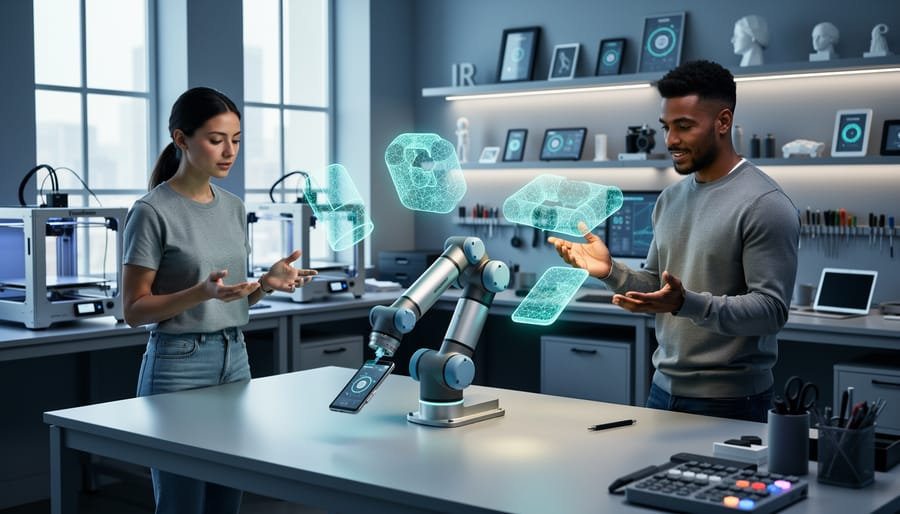
The traditional product development cycle—taking 18-24 months from concept to launch—is collapsing. AI now compresses this timeline by up to 60%, transforming how companies identify market gaps, prototype solutions, and iterate based on user feedback. This isn’t about replacing human creativity; it’s about amplifying it with tools that process millions of data points in seconds, predict customer preferences before surveys are sent, and generate dozens of design variations while your team sleeps.
Consider how Netflix uses machine learning algorithms to test thousands of thumbnail variations, or how pharmaceutical companies employ AI to simulate drug interactions that once required years of laboratory testing. These aren’t futuristic concepts—they’re current practices reshaping competitive advantage across industries.
The shift matters because consumer expectations have evolved. Today’s customers expect personalized experiences, rapid innovation cycles, and products that anticipate their needs. Manual development processes simply can’t keep pace. AI bridges this gap by automating repetitive tasks, uncovering hidden patterns in customer behavior, and enabling rapid experimentation at scale.
Whether you’re launching a startup, leading product strategy at an established company, or simply curious about how technology is reshaping innovation, understanding AI’s role in product development has become essential. The question isn’t whether to integrate these tools, but how quickly you can adopt them before competitors do. This guide breaks down exactly how AI transforms each stage of product creation and provides practical steps for implementation.
Why Traditional Product Development Is Getting a Major Upgrade
The Old Way: Time-Consuming and Expensive
Traditional product development has long been a slow, resource-intensive process that puts significant strain on businesses. Consider the automotive industry, where designing a new vehicle model typically takes three to five years from initial concept to market launch. Companies invest millions in physical prototypes, testing facilities, and lengthy consumer research cycles before a single unit reaches a showroom.
The consumer electronics sector faces similar challenges. When developing a new smartphone, manufacturers might create dozens of physical prototypes, each costing thousands of dollars, just to test different design variations. Market research alone can consume months and substantial budgets, often involving focus groups, surveys, and analysis that still leave companies uncertain about consumer preferences.
In the pharmaceutical industry, the situation is even more dramatic. Bringing a new drug to market averages ten years and costs approximately $2.6 billion, with much of that time spent on trials that could have been better informed by predictive data.
These traditional approaches share common pain points: extended timelines that miss market opportunities, high costs that limit innovation to well-funded companies, and risk of investing heavily in products that ultimately fail to resonate with customers. Small businesses and startups often find themselves unable to compete, lacking the resources for extensive development cycles.

What AI Brings to the Table
Artificial intelligence brings three game-changing capabilities to product development that are reshaping how companies innovate. First, AI excels at pattern recognition, analyzing massive datasets to uncover customer preferences and market trends that humans might miss. Imagine sifting through millions of customer reviews in minutes rather than months—that’s the power of AI-driven analysis.
Second, AI accelerates experimentation through rapid prototyping and testing. Machine learning models can simulate thousands of product variations, predicting which designs will resonate with users before a single physical prototype is built. This means fewer costly mistakes and faster time-to-market.
Third, AI enables personalization at scale. Instead of creating one-size-fits-all products, companies can now tailor features, recommendations, and experiences to individual user needs. Think of how streaming services suggest content you’ll love or how smart home devices learn your preferences over time.
These capabilities work together to create a development process that’s faster, smarter, and more responsive to real customer needs. The result? Products that don’t just meet market demands—they anticipate them.
How AI Accelerates Every Stage of Product Development
Idea Generation and Market Research
The product development process has traditionally relied on gut instinct and limited market research, but AI is changing the game by turning vast amounts of data into actionable insights. Today’s AI-powered analytics tools can sift through millions of customer reviews, social media conversations, and market trends to identify gaps in the market and emerging consumer needs that humans might miss.
Take consumer electronics as an example. Companies like Samsung and Apple use AI to analyze customer feedback across forums, app stores, and support tickets to understand what features users want most. When analyzing smartphone reviews, AI might detect recurring complaints about battery life during video streaming, prompting engineers to prioritize power optimization in the next generation.
In the software world, platforms like Spotify and Netflix employ AI to track user behavior patterns and identify opportunities for new features. Spotify’s Discover Weekly playlist emerged from AI analysis showing that users spent significant time manually searching for similar artists, revealing an unmet need for automated music discovery.
AI also monitors competitor activities and industry trends in real-time, alerting product teams to shifting market dynamics. By processing patent filings, product launches, and pricing changes across the industry, these systems help companies stay ahead of the curve and identify whitespace opportunities where competition is minimal but demand is growing.
Design and Prototyping
Once design concepts are established, AI accelerates the prototyping phase in remarkable ways. Instead of creating one prototype at a time, generative design algorithms can produce hundreds or even thousands of design variations in hours, each optimized for specific parameters like weight, strength, or cost.
In materials science, this capability has become transformative. Researchers at MIT used AI models to predict the properties of potential battery materials, screening over 100 million candidates in mere weeks—a task that would have taken human scientists decades. The AI identified promising lithium-ion alternatives that could make batteries safer and more efficient, fast-tracking compounds that might have been overlooked using traditional methods.
Similarly, chemical engineers now employ AI to simulate how new compounds will behave under different conditions. These virtual experiments help predict everything from melting points to reaction rates without running expensive lab tests. One pharmaceutical company used AI simulation to reduce the time needed to identify viable drug formulations from months to just days.
The real advantage lies in AI’s ability to consider multiple variables simultaneously. While a human team might optimize a prototype for strength, AI can optimize for strength, weight, manufacturing cost, and environmental impact all at once. This multidimensional optimization means prototypes often emerge more refined than those created through traditional iteration, requiring fewer physical versions before reaching a market-ready design.
Testing and Quality Assurance
AI is revolutionizing how developers catch bugs and ensure product quality before launch. Traditional testing methods often miss edge cases or require extensive manual effort, but AI-powered tools now predict where defects are likely to occur by analyzing code patterns and historical data.
Take GitHub Copilot and similar AI assistants that now include testing capabilities. These tools analyze your codebase to automatically generate test cases, identifying scenarios developers might overlook. They examine previous bug reports to predict which code changes carry the highest risk of introducing new issues.
Companies like Google use machine learning models to prioritize which tests to run first, dramatically reducing testing time while catching more defects. Their AI systems learned from millions of test runs to identify which code changes typically cause failures, allowing teams to focus their quality assurance efforts where they matter most.
Tools like DeepCode and Snyk employ AI to scan code repositories in real-time, flagging potential security vulnerabilities and quality issues as developers write code. This immediate feedback loop means problems get fixed early when they’re cheapest to address, rather than during expensive late-stage testing or after release. The result is more reliable products reaching users faster, with development teams spending less time firefighting and more time innovating.
Launch and Iteration
Launching a product is just the beginning of its journey. This is where AI truly shines as a continuous improvement partner. Once your product reaches customers, AI systems start collecting and analyzing performance data in real-time, tracking everything from user engagement patterns to feature adoption rates and customer feedback sentiment.
Think of AI as your product’s personal health monitor. Machine learning algorithms can spot trends that humans might miss, like noticing that users abandon a feature at a specific step or discovering unexpected ways customers are using your product. For example, streaming services use AI to track viewing patterns and subsequently adjust their recommendation algorithms and content investments based on what actually resonates with audiences.
The beauty of AI-powered iteration lies in its speed and precision. Rather than waiting months for quarterly reviews, AI can flag issues within days and suggest specific improvements. It might recommend interface adjustments, identify bugs affecting certain user groups, or highlight features that deserve more prominence. Some companies even use AI to run automated A/B tests, continuously experimenting with variations to optimize the user experience. This creates a feedback loop where your product evolves based on actual user behavior rather than assumptions, ensuring it stays relevant and competitive in fast-moving markets.
Real Companies Using AI to Build Better Products Faster
From Concept to Market in Half the Time
When TechFlow, a mid-sized software company, decided to build a new project management platform, they faced a familiar challenge: their traditional 18-month development cycle would put them far behind competitors. Instead of following the conventional path, they integrated AI tools throughout their process.
The company started by using AI-powered market analysis tools that processed thousands of customer reviews and support tickets in days rather than months. This revealed specific pain points their competitors were missing. Next, their design team employed AI prototyping software that generated multiple interface variations based on user behavior data, cutting design iterations from weeks to days.
During development, AI code assistants helped developers write and debug faster, while automated testing tools caught bugs in real-time. The most dramatic impact came from AI-driven user testing, which simulated thousands of user interactions to identify usability issues before launch.
The result? TechFlow launched their platform in just nine months with fewer post-launch issues than previous products. Their CEO noted that AI didn’t replace their team’s creativity and expertise but rather eliminated repetitive tasks, allowing developers and designers to focus on innovation. The compressed timeline meant they captured market share while competitors were still in development, demonstrating how AI can transform theoretical speed advantages into real competitive wins.
Predicting Product Success Before Launch
Before Pepsi launched a new energy drink variant in 2022, they turned to AI-powered market analysis tools to assess potential success. The system analyzed millions of social media conversations, competitor performance data, and consumer sentiment patterns across different demographics. The AI predicted the product would underperform in its original formulation but identified specific flavor profiles and packaging designs that would resonate with target customers.
By acting on these insights, Pepsi reformulated the product and adjusted their marketing approach before manufacturing began. The result? A successful launch that exceeded initial sales projections by 27% and avoided an estimated $15 million in potential losses from a failed product.
This example illustrates how AI transforms the traditional “launch and learn” approach into “predict and perfect.” Rather than relying solely on focus groups and historical gut feelings, companies now use machine learning algorithms to process vast amounts of market data, identifying patterns humans might miss. These systems analyze everything from pricing sensitivity to seasonal trends, helping businesses make data-backed decisions about which products to develop, how to position them, and when to release them into the market.
Personalizing Products at Scale
Gone are the days when one-size-fits-all was the only economically viable option for products. AI has revolutionized how companies deliver personalized experiences to millions of customers simultaneously, something that would have been impossible just a decade ago.
Think about how streaming services like Netflix curate unique homepages for each subscriber, or how smartphone interfaces adapt to individual usage patterns. AI analyzes user behavior, preferences, and interactions to create tailored product experiences at massive scale. In software development, AI-powered recommendation engines don’t just suggest products—they dynamically adjust entire user interfaces based on how you interact with the application.
Electronics manufacturers are taking this further by using AI to customize device settings before they even reach consumers. Smart home devices learn your routines and preferences, adjusting lighting, temperature, and security settings automatically. Companies like Nike have introduced platforms where AI helps design custom shoes based on your activity data and style preferences.
This mass customization wasn’t economically feasible before AI because it required too many human hours. Now, machine learning algorithms process millions of data points instantly, creating personalized product configurations, interfaces, and recommendations that feel individually crafted while serving global audiences efficiently.
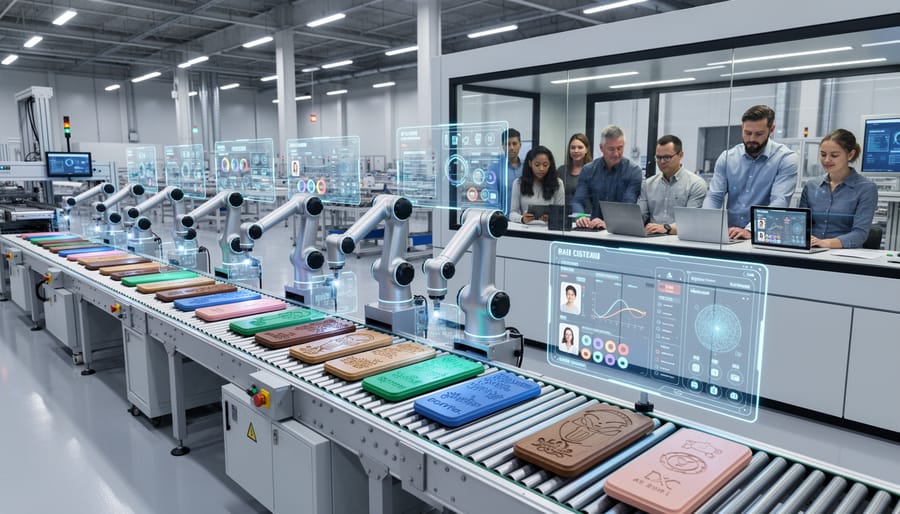
Key AI Tools and Technologies You Should Know About
Generative Design Tools
Generative design tools use AI to explore thousands of design possibilities in minutes, something that would take human designers weeks or months. Think of it as having a tireless creative partner that generates options based on your requirements. For example, Autodesk’s generative design software helped Airbus create an aircraft partition that was 45% lighter than the original while maintaining strength requirements. You input constraints like materials, manufacturing methods, weight limits, and budget, then the AI produces multiple viable designs ranked by performance. General Motors used this approach to consolidate eight separate components into a single part, reducing weight by 40% and saving significant manufacturing costs. These tools don’t replace human designers but amplify their capabilities, handling the computational heavy lifting while designers focus on selecting and refining the best solutions for real-world applications.
Predictive Analytics Platforms
Predictive analytics platforms function like crystal balls for product development, but they rely on data rather than magic. These tools analyze historical sales data, customer behavior patterns, social media trends, and market indicators to forecast how products might perform before launch. Think of Netflix predicting which shows you’ll love based on your viewing history, but applied to product decisions.
These platforms use machine learning algorithms to spot patterns humans might miss. For example, a beverage company might discover that certain flavor combinations trend in summer months among specific demographics. The system processes millions of data points, from weather patterns to social media sentiment, creating probability models that estimate market reception.
The real power lies in reducing costly mistakes. Instead of investing millions in a product that might flop, companies can test concepts virtually, adjust features based on predictions, and launch with greater confidence. Modern platforms present findings through intuitive dashboards with visual charts, making complex predictions accessible to teams without data science backgrounds.
Natural Language Processing for Customer Insights
Modern AI systems can process thousands of customer reviews, social media comments, and support tickets in minutes, extracting valuable patterns that would take human teams weeks to identify. Through customer feedback analysis, companies gain direct insights into what features customers love, what frustrates them, and what they wish existed. For example, when customers repeatedly mention that a mobile app is “confusing to navigate,” AI flags this sentiment and its frequency, prompting product teams to prioritize user interface improvements. This technology goes beyond simple keyword counting by understanding context and emotion. It distinguishes between “I love this feature” and “I would love this feature if it worked better,” enabling teams to make data-driven decisions that truly reflect customer needs rather than relying on assumptions or limited survey responses.
Machine Learning for Testing and Optimization
Product testing traditionally required extensive manual evaluation and user feedback cycles. Today, machine learning algorithms transform this process by continuously analyzing how users interact with products in real-time. These systems learn from every click, scroll, and interaction to identify patterns that humans might miss.
Consider how streaming platforms optimize their interfaces. ML models test multiple versions of features simultaneously, measuring which layouts keep users engaged longer or which recommendation placements drive more content discovery. The algorithms adapt automatically based on performance data, eliminating guesswork.
In e-commerce, ML testing goes beyond simple A/B comparisons. These systems dynamically adjust product page layouts, search result rankings, and checkout flows for individual user segments. They identify friction points causing cart abandonment and test solutions at scale, learning from millions of interactions to refine the experience continuously. This automated optimization cycle means products improve faster than ever before.

Getting Started: Practical Steps for Your First AI-Enhanced Project
Identify Your Biggest Product Development Bottleneck
Before diving into AI solutions, take a step back and honestly assess your current product development process. Where do things consistently slow down? Perhaps your team spends weeks analyzing customer feedback manually, or maybe design iterations take forever because prototyping is resource-intensive.
Start by mapping your development timeline from concept to launch. Identify the stages where projects typically stall or require the most human hours. Common bottlenecks include market research, data analysis, quality testing, and iterative design refinements.
Talk to your team members across departments. Developers might highlight code testing delays, while designers could point to the time spent creating multiple mockups. Customer service teams often have valuable insights about recurring product issues that slip through testing.
Once you’ve pinpointed your primary bottleneck, ask yourself: Is this task repetitive? Does it involve processing large amounts of data? Is it slowing down other critical activities? If you answered yes to these questions, you’ve likely found where AI can deliver the most immediate value to your product development process.
Start with Low-Hanging Fruit
When beginning your AI journey in product development, start with applications that demonstrate immediate value without requiring extensive technical expertise or infrastructure investment. Chatbot integration for customer feedback collection represents an ideal entry point—platforms like Intercom or Drift offer pre-built solutions that can gather user insights during product testing phases. Similarly, sentiment analysis tools can quickly process customer reviews and social media mentions to identify pain points and feature requests, delivering actionable intelligence within days rather than months.
Another accessible starting point involves using AI-powered analytics dashboards that visualize user behavior patterns. Tools like Mixpanel or Amplitude incorporate machine learning to automatically surface trends you might otherwise miss in raw data. These quick wins build organizational confidence and demonstrate tangible ROI, making it easier to secure support for more ambitious projects. By proving value early, you create momentum for comprehensive AI adoption strategies across your entire development pipeline.
Build Your AI Literacy (Without Getting a PhD)
You don’t need an advanced degree to understand AI’s role in product innovation. Start your journey by exploring free online courses from platforms like Coursera’s AI for Everyone or Google’s Machine Learning Crash Course, which break down complex concepts into digestible lessons. Building AI literacy becomes more engaging when you join communities like the AI Product Managers LinkedIn group or Reddit’s r/MachineLearning, where practitioners share real-world experiences and solutions.
For hands-on learning, experiment with no-code AI tools like Teachable Machine or RunwayML to understand how AI models work without writing complex code. Follow newsletters like The Batch by Andrew Ng or Import AI for weekly updates on practical applications and emerging trends. Consider attending local AI meetups or virtual conferences where product teams discuss their innovation journeys. The key is consistent, curiosity-driven learning rather than attempting to master everything at once.
The path to AI-enhanced product development is more accessible than you might think. You don’t need a computer science degree or a massive budget to start exploring how artificial intelligence can transform your innovation process. Whether you’re analyzing customer feedback with sentiment analysis tools, using generative AI to brainstorm concepts, or testing prototypes with predictive analytics, the barriers to entry have never been lower.
This is an evolving field, which means it’s also an exciting time to dive in. The tools and platforms available today are becoming increasingly user-friendly, with many offering free tiers or trial periods perfect for experimentation. Start small: pick one aspect of your product development cycle that could benefit from automation or enhanced insights. Maybe it’s market research, concept generation, or quality testing. Run a pilot project, learn from the results, and build from there.
Remember, the companies revolutionizing their industries with AI didn’t transform overnight. They started with curiosity, took incremental steps, and learned as they went. Your first AI implementation might be imperfect, and that’s completely normal. What matters is taking that initial step and staying engaged with how the technology evolves.
Looking ahead, we’re moving toward a future where AI won’t just assist product development but will enable entirely new categories of products we haven’t imagined yet. The innovators who start experimenting today will be the ones shaping tomorrow’s breakthrough products. The question isn’t whether to explore AI-enhanced development, but rather: what will you create with it?