
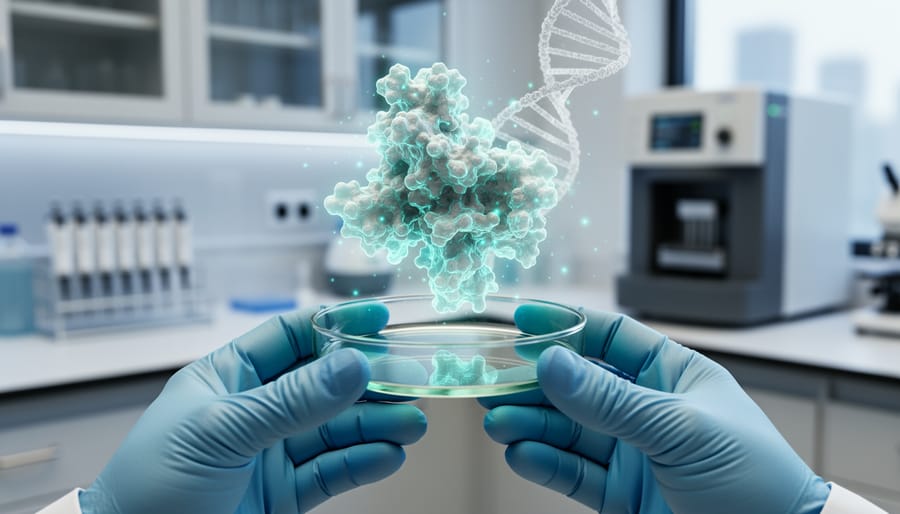
Imagine a world where scientists design life-saving drugs in hours instead of years, where personalized cancer treatments are crafted specifically for your DNA, and where we can predict and prevent diseases before symptoms even appear. This isn’t science fiction. The AI and biology convergence is making these breakthroughs reality right now, transforming how we understand life itself and develop solutions to humanity’s most pressing health challenges.
Artificial intelligence and biotechnology represent two of the most transformative forces of our time. Separately, each field has revolutionized industries and saved countless lives. Together, they’re creating possibilities that seemed unimaginable just a decade ago. AI’s ability to process vast amounts of data and identify patterns invisible to the human eye is unlocking secrets hidden within our genes, accelerating drug discovery, and enabling precision medicine tailored to individual patients.
This convergence matters because traditional biotechnology research is slow, expensive, and often relies on trial and error. A single drug can take 10-15 years and billions of dollars to develop, with no guarantee of success. AI changes this equation dramatically by analyzing millions of molecular combinations in minutes, predicting how diseases will progress, and identifying treatment approaches with unprecedented accuracy. Whether you’re a student exploring career options, a professional considering how these technologies impact your industry, or simply curious about the future of healthcare, understanding this intersection will help you grasp where innovation is heading next.
What AI and Biotechnology Convergence Actually Means
The Natural Partnership Between Data and Biology
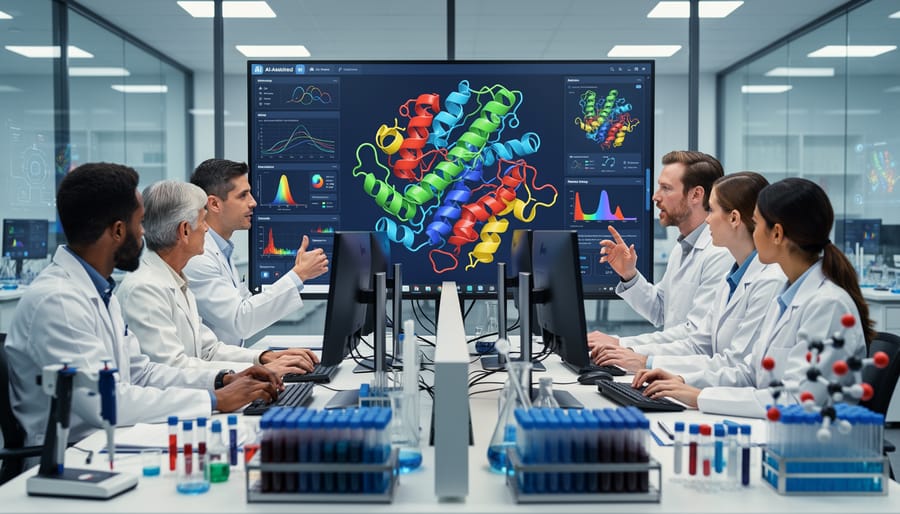
Imagine trying to understand a library with billions of books, where each page represents a different piece of biological information. This is essentially what scientists face when studying living organisms. Every cell in your body contains roughly 3 billion base pairs of DNA, and tracking how genes express themselves, proteins interact, and cells respond to treatments creates an almost incomprehensible flood of information.
This is where artificial intelligence becomes biology’s perfect partner. While traditional analysis methods would take researchers years to process even a fraction of this data, AI algorithms can identify patterns, correlations, and anomalies at lightning speed. Think of it like having a brilliant assistant who never gets tired and can simultaneously compare millions of data points that would overwhelm any human team.
The partnership works because biological systems are essentially information processors themselves. DNA is nature’s code, proteins are molecular machines following specific instructions, and diseases often emerge from errors in these biological programs. AI excels at understanding code and detecting patterns, making it naturally suited to decode biology’s complexity.
For example, when researchers sequence a patient’s genome, they generate terabytes of raw data. AI can quickly scan this information to identify genetic mutations linked to diseases, predict how someone might respond to medications, or even spot early warning signs of conditions before symptoms appear. What once required months of painstaking manual analysis now happens in hours, transforming our ability to understand and treat diseases at their most fundamental level.
Key Technologies Driving the Convergence
The marriage of AI and biotechnology is powered by three core technologies that are revolutionizing how scientists understand and manipulate living systems.
Machine learning forms the foundation of this convergence. Think of it as teaching computers to recognize patterns in biological data, much like how you learned to distinguish between different types of plants. Instead of explicit programming, machine learning algorithms examine vast datasets of DNA sequences, protein structures, or patient records and identify meaningful patterns that would take human researchers years to uncover. For example, these systems can predict which drug candidates might successfully treat a disease by analyzing thousands of previous experiments.
Deep learning takes this concept several steps further. It’s a more sophisticated form of machine learning that processes information through multiple layers, similar to how your brain processes information from simple features to complex understanding. In biotechnology labs, deep learning algorithms can analyze medical images to detect cancerous cells with remarkable accuracy, sometimes surpassing human experts.
At the heart of these technologies are neural networks, computational systems inspired by the human brain’s interconnected neurons. These networks consist of artificial neurons organized in layers that process and transform information. When applied to biotechnology, neural networks can predict how proteins will fold into three-dimensional shapes, a breakthrough that recently helped scientists understand diseases better and design new medications faster than ever before.
Together, these technologies enable researchers to process biological complexity at unprecedented speeds and scales.
Real-World Applications Changing Medicine and Healthcare
Drug Discovery at Lightning Speed
Traditional drug development has been a marathon, often taking over a decade and costing billions of dollars to bring a single medication to market. AI is transforming this landscape dramatically, compressing timelines that once stretched across years into mere months.
The COVID-19 pandemic showcased this revolutionary potential. When the world needed vaccines urgently, AI systems analyzed millions of protein structures and predicted how potential vaccines would interact with the virus. What typically takes years of laboratory trial-and-error was accomplished in weeks. Moderna’s vaccine, for instance, benefited from AI-powered platforms that helped design the optimal molecular structure. The company moved from sequencing the virus to starting human trials in just 63 days, an unprecedented achievement.
Beyond speed, AI delivers substantial cost savings. The average drug development process costs approximately 2.6 billion dollars, with a staggering 90% failure rate in clinical trials. AI addresses this by predicting which drug candidates are most likely to succeed before expensive human trials begin. Companies like Insilico Medicine have demonstrated this approach by using AI to identify a potential treatment for fibrosis in under 18 months, at a fraction of traditional costs.
AI algorithms can also predict drug side effects by analyzing how molecules interact with various biological pathways, catching potential problems early. This predictive capability means researchers can focus resources on the most promising candidates, avoiding costly dead ends. The result is not just faster drug discovery, but smarter, more efficient development that could make treatments more accessible and affordable for patients worldwide.
Personalized Medicine Becomes Reality
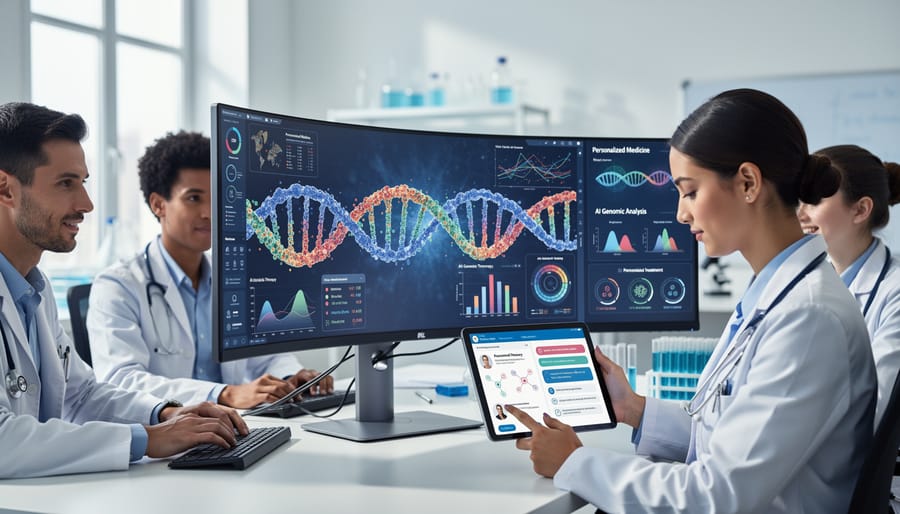
Imagine visiting your doctor and instead of receiving the same treatment as millions of others, you get a therapy designed specifically for your genetic makeup. This isn’t science fiction anymore. AI is making personalized medicine a reality by analyzing vast amounts of individual genetic data to predict how your body will respond to specific treatments.
Consider cancer treatment as an example. Traditional chemotherapy often follows a one-size-fits-all approach, but AI systems can now examine a patient’s tumor genetics alongside thousands of similar cases to identify which drug combinations will work best for that specific person. This means fewer trial-and-error attempts and potentially better outcomes with fewer side effects.
The process works like having a highly skilled detective examine your genetic blueprint. AI algorithms scan through millions of genetic variations, comparing your DNA to extensive databases of treatment outcomes. They identify patterns that human doctors might miss, such as specific gene mutations that make certain medications more or less effective for you.
For everyday patients, this translates into practical benefits. Someone with chronic conditions like diabetes might receive medication dosages tailored to their metabolism, reducing the risk of complications. A person facing heart disease could get a prevention plan based on their genetic predisposition rather than general statistics.
The beauty of this approach lies in its growing accessibility. As AI technology becomes more sophisticated and affordable, what once required weeks of analysis by specialized labs can now happen in days, bringing truly individualized healthcare within reach for more people.
Early Disease Detection That Saves Lives
When Sarah Mitchell discovered a small lump during a routine mammogram, traditional imaging suggested it was benign. However, an AI system analyzing her scans detected subtle pattern anomalies that human eyes missed. A biopsy confirmed early-stage breast cancer, giving Sarah a 98% survival rate compared to the 27% she would have faced if detected just two years later. This is the life-saving power of AI analyzing biological data.
AI systems now identify diseases months or even years before symptoms appear. Google’s DeepMind detected over 50 eye diseases from retinal scans with 94% accuracy, matching or surpassing expert ophthalmologists. In genetic testing, AI algorithms scan entire genomes in hours rather than weeks, flagging rare mutations that cause conditions like cystic fibrosis and sickle cell disease in newborns.
The impact extends beyond cancer and genetic disorders. Stanford researchers developed an AI that predicts heart attacks up to five years in advance by analyzing cardiac imaging. Another system detects early signs of Alzheimer’s disease through speech pattern changes, enabling intervention before significant cognitive decline occurs.
These breakthroughs share a common advantage: AI processes vast datasets far beyond human capacity, recognizing microscopic patterns that signal disease onset. Earlier detection means earlier treatment, dramatically improving patient outcomes and reducing healthcare costs while giving families precious additional time together.
Beyond Healthcare: AI-Biotech in Agriculture and Environment
Engineering Crops for a Changing Climate
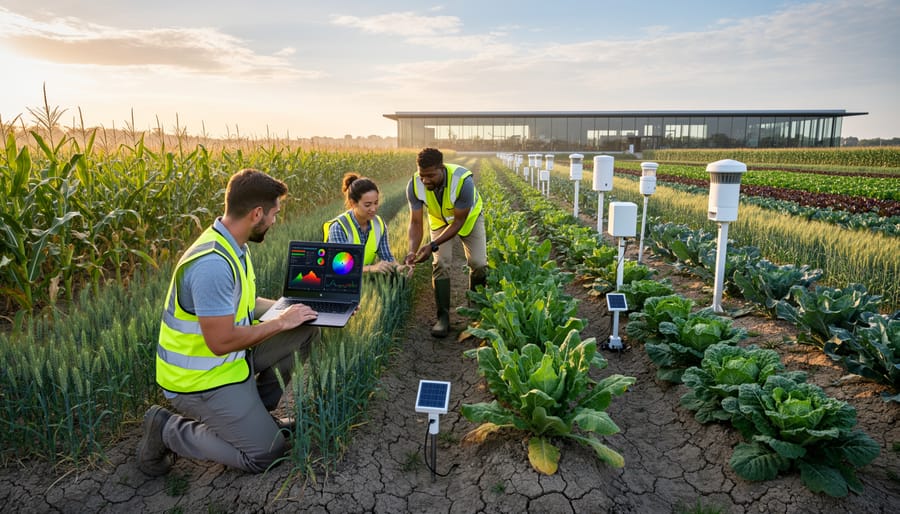
Climate change poses one of the greatest threats to global food security, but AI-powered biotechnology is helping scientists develop crops that can withstand these new challenges. By analyzing massive datasets of plant genomes, weather patterns, and soil conditions, AI systems can identify genetic traits that make crops more resilient to drought, extreme temperatures, and diseases.
Consider how this works in practice. Researchers at agricultural biotech companies use machine learning algorithms to scan through thousands of plant varieties, identifying specific genes associated with drought tolerance. Instead of spending years on trial-and-error breeding, AI can predict which genetic combinations will produce the most resilient crops in just months. For example, scientists have developed AI models that analyze how plants respond to water stress at the molecular level, then recommend targeted genetic modifications to improve their survival rates.
Disease resistance is another critical area where AI makes a difference. Traditional crop breeding to combat plant diseases could take a decade or more. Now, AI systems can predict which gene sequences will help plants defend against specific pathogens by studying patterns in plant immune responses. This technology has already helped create wheat varieties resistant to rust diseases that devastate harvests across Africa and Asia.
The practical impact is significant. AI-assisted crops can maintain yields even during droughts, require fewer pesticides, and adapt to changing growing seasons. As our climate continues to shift, these innovations become essential tools for feeding a growing global population while using resources more efficiently.
Cleaning Up Our Planet with Biological Solutions
Our planet faces mounting environmental challenges, from plastic pollution choking our oceans to carbon emissions warming our atmosphere. But here’s where biotechnology and AI join forces to offer genuine hope: scientists are now designing microorganisms that can tackle these problems in ways we never thought possible.
Think of it as giving nature a helpful upgrade. Researchers use AI algorithms to analyze thousands of enzyme structures and predict which modifications could enable bacteria to efficiently break down plastics. In 2022, scientists successfully engineered bacteria that can digest PET plastic (the material in water bottles) in just days rather than centuries. AI accelerated this discovery by rapidly testing millions of molecular combinations virtually before moving to lab experiments.
Oil spills represent another area where these AI-driven environmental solutions shine. Machine learning models help identify and enhance naturally occurring oil-eating bacteria, making them more effective at cleaning contaminated waters and soil. The AI analyzes which genetic tweaks will help these microbes thrive in harsh, polluted environments while consuming petroleum products faster.
Perhaps most exciting is carbon capture biotechnology. AI is helping design algae and bacteria that absorb atmospheric carbon dioxide more efficiently than their natural counterparts. These engineered organisms could potentially be deployed at scale, turning a greenhouse gas problem into a biological solution.
The beauty of this approach? Once developed, these microorganisms can self-replicate and work continuously, offering sustainable, cost-effective environmental remediation that scales naturally.
The Technology Behind the Magic
How AI Learns from Biological Data
Think of teaching AI to understand biological data like teaching a child to recognize animals. Just as a child learns to identify dogs by seeing thousands of dog pictures, AI models learn patterns by processing vast amounts of biological information.
When working with genomic sequences, AI systems analyze DNA like reading a massive instruction manual written in a four-letter alphabet: A, T, G, and C. Scientists feed the AI millions of these sequences, and it learns to spot patterns—identifying which genetic combinations might lead to certain diseases or traits. It’s similar to recognizing that certain word combinations in a book tend to appear together, except these patterns hold the secrets to life itself.
For protein structures, imagine teaching AI to predict how a crumpled piece of paper will fold. Proteins are long chains of amino acids that fold into complex 3D shapes, and their shape determines their function. AI models study thousands of known protein structures, learning the rules that govern how these molecular chains twist and fold. This is like showing someone countless origami patterns until they can predict the final shape just by looking at the folding instructions.
With medical images, AI training resembles teaching radiologists their craft. The system examines thousands of X-rays, CT scans, and MRIs labeled by doctors, gradually learning to distinguish healthy tissue from tumors or other abnormalities. Through repetition and correction, the AI develops an “eye” for spotting what human experts would notice.
The Tools Scientists Are Using Today
Behind the AI revolution in biotechnology are powerful yet increasingly accessible tools that scientists worldwide now rely on. Think of these platforms as sophisticated toolboxes that handle the computational heavy lifting, allowing researchers to focus on biological discoveries rather than programming complexities.
TensorFlow, developed by Google, has become a cornerstone in biotech labs. This open-source framework excels at pattern recognition, making it invaluable for analyzing genetic sequences and predicting protein structures. Researchers use it to train models that can spot disease markers in medical images or identify promising drug candidates from millions of molecular combinations. What makes TensorFlow particularly appealing is its flexibility – whether analyzing DNA sequences or processing microscopy images, it adapts to different biological data types.
PyTorch, Facebook’s contribution to the field, has gained devoted followers for its intuitive approach. Scientists appreciate how it allows them to build and modify AI models more naturally, almost like sketching ideas on paper. This platform has powered breakthroughs in understanding how proteins fold and interact, problems that stumped researchers for decades.
These frameworks don’t require users to be programming experts. Many come with pre-built models specifically designed for biological applications, similar to using recipe templates rather than creating dishes from scratch. Cloud-based versions have democratized access further, enabling smaller research teams and startups to harness AI capabilities that once required substantial computing infrastructure. The result is a biotech landscape where computational power meets biological insight, accelerating discoveries from lab bench to patient bedside.
Challenges and Ethical Considerations We Can’t Ignore
Who Controls Your Genetic Data?
When AI systems analyze your DNA, who actually owns that information? This is perhaps one of the most pressing questions emerging at the intersection of artificial intelligence and biotechnology. Your genetic code is uniquely yours, containing everything from your ancestry to potential health risks, yet once uploaded to an AI-powered platform, it enters murky legal territory.
Before sharing genetic data with any service, ask yourself these critical questions: Can the company sell your anonymized genetic information to pharmaceutical companies or researchers? If their AI discovers something significant about your health predisposition, who gets notified first? What happens if the company experiences a data breach? Unlike a stolen password, you cannot change your DNA.
Consider also the implications for your family members, who share portions of your genetic makeup. When you upload your data, you are indirectly exposing their genetic information too. Additionally, insurance companies and employers increasingly seek genetic insights, raising concerns about discrimination based on AI-predicted health outcomes.
The ethical considerations in AI become even more complex when dealing with irreplaceable biological data. Understanding data usage policies, encryption methods, and your rights to data deletion are essential steps before entrusting your genetic blueprint to any AI system.
Making Sure Everyone Benefits
As AI-driven biotechnology advances rapidly, there’s a growing concern that breakthrough treatments and diagnostics might remain out of reach for developing nations and low-income communities. Consider gene therapies that can cure previously untreatable diseases—if these cost hundreds of thousands of dollars, they’ll only serve the wealthy few.
Several initiatives are working to bridge this gap. Organizations like the Drugs for Neglected Diseases initiative use AI to develop affordable treatments specifically for conditions affecting poorer populations. Open-source AI platforms allow researchers worldwide to access drug discovery tools without expensive licensing fees. Some biotech companies are adopting tiered pricing models, charging wealthier nations more to subsidize access in lower-income countries.
International partnerships matter too. The World Health Organization is developing frameworks to ensure equitable distribution of AI-enhanced diagnostic tools, particularly for infectious diseases prevalent in resource-limited settings. Meanwhile, cloud-based AI services are democratizing access to computational power that was once available only to well-funded laboratories.
The challenge remains significant, but these efforts represent crucial steps toward ensuring that AI-biotech innovations benefit humanity broadly rather than deepening existing healthcare inequalities.
What’s Coming Next in AI-Biotech Convergence
The next few years promise remarkable advances as AI and biotechnology continue their rapid convergence. Here’s what we can realistically expect to see emerging from laboratories and making their way into real-world applications.
Personalized medicine is moving beyond concept into practice. Within the next 2-3 years, we’ll likely see AI systems that analyze your genetic profile, lifestyle data, and environmental factors to predict disease risks with unprecedented accuracy. Imagine visiting your doctor and receiving treatment protocols specifically designed for your unique biology, not just the average patient. Several pharmaceutical companies are already piloting these approaches for cancer treatment and rare genetic disorders.
The speed of drug discovery will continue accelerating dramatically. What once took a decade might soon happen in months. AI models are getting better at predicting which drug compounds will work, reducing the expensive trial-and-error phase. We’re already seeing this with antibiotics targeting drug-resistant bacteria, where AI has identified promising candidates that human researchers might have overlooked.
Synthetic biology will become more accessible and precise. Think of it as programming living cells the way we program computers. AI tools are making it easier to design custom proteins and engineer microorganisms for specific purposes, from producing sustainable materials to cleaning up environmental pollutants. Small biotechnology startups, not just major corporations, will be able to tackle ambitious projects.
We’ll also witness more AI-designed vaccines and therapies reaching clinical trials. The success of rapidly developed COVID-19 vaccines demonstrated what’s possible when computational power meets biological innovation. This approach will extend to other infectious diseases and potentially even conditions like Alzheimer’s and diabetes.
Perhaps most excitingly, these technologies will become more democratized. Cloud-based AI platforms are making powerful computational biology tools available to researchers worldwide, accelerating innovation beyond traditional research hubs and into unexpected places.
The convergence of AI and biotechnology isn’t just another technological trend—it’s a fundamental shift in how we approach some of humanity’s greatest challenges. From accelerating drug discovery that once took decades to personalizing medical treatments based on individual genetic profiles, this partnership is already reshaping healthcare, agriculture, and environmental conservation in tangible ways.
As we’ve explored throughout this article, AI’s ability to process vast amounts of biological data, recognize patterns invisible to human researchers, and predict outcomes with increasing accuracy is unlocking possibilities that seemed like science fiction just years ago. Whether it’s designing new proteins, diagnosing diseases earlier, or developing crops that can withstand climate change, these technologies are moving from laboratory experiments to real-world solutions.
However, this transformation comes with responsibilities. The ethical considerations around data privacy, algorithmic bias, and equitable access to these innovations demand our continued attention and thoughtful discussion. Staying informed about these developments helps us participate meaningfully in shaping how these technologies benefit society.
The journey of AI and biotechnology convergence is just beginning, and the pace of innovation continues to accelerate. If you’re eager to deepen your understanding of these transformative technologies, explore the wealth of resources available on Ask Alice. From beginner-friendly guides on machine learning fundamentals to deep dives into specific applications, there’s always more to discover. The future is being written now—and understanding these technologies helps you be part of that story.