
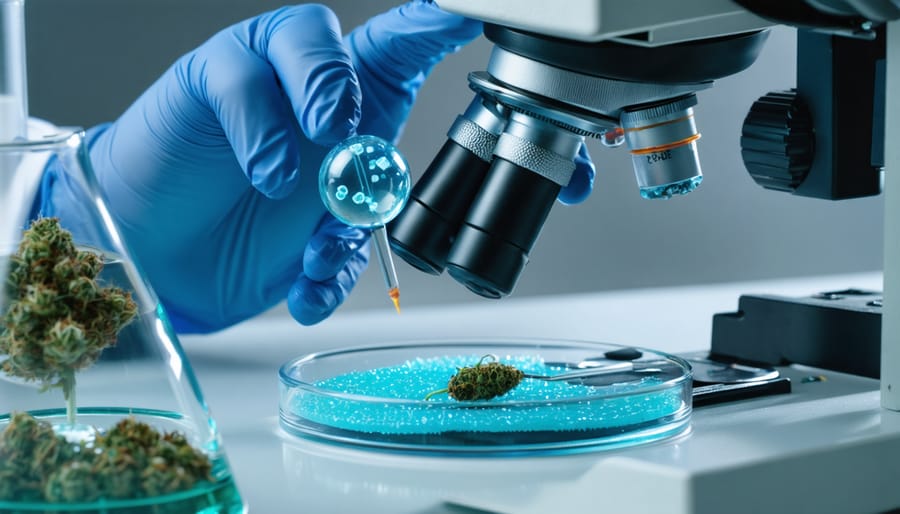
Delta-9 tetrahydrocannabinol (THC), the primary psychoactive compound in cannabis, has long puzzled researchers with its complex interactions in the human body. As consumer interest surges—evidenced by the growing popularity of products in Budpop’s Delta 9 category—scientists face mounting pressure to understand THC’s therapeutic potential, safety profiles, and molecular mechanisms. The challenge? Traditional research methods struggle to keep pace with the compound’s intricate biochemistry and the sheer volume of emerging data.
Artificial intelligence is revolutionizing how we study Delta-9 THC by processing vast datasets that would take human researchers decades to analyze. Machine learning algorithms now predict how THC molecules bind to cannabinoid receptors, identify potential drug interactions, and uncover patterns in patient responses that clinical trials might miss. Natural language processing tools scan thousands of research papers simultaneously, connecting disparate findings about THC’s effects on pain, anxiety, and neurological conditions.
This intersection of cutting-edge AI and cannabis research addresses critical real-world problems. Pharmaceutical companies need faster, more accurate methods to develop THC-based medications. Medical professionals require evidence-based dosing guidelines. Regulatory bodies demand comprehensive safety data. AI techniques—from neural networks that model molecular structures to clustering algorithms that categorize user experiences—are providing answers with unprecedented speed and precision.
Whether you’re a tech enthusiast curious about AI’s practical applications or a professional exploring interdisciplinary innovations, understanding how artificial intelligence accelerates Delta-9 THC research reveals both the power of modern computational methods and the future of evidence-based cannabis science. This convergence is transforming speculation into measurable insights, one algorithm at a time.
Delta-9 THC: A Quick Primer for the AI-Curious
If you’re coming from a tech background, you’ve likely heard of THC in passing—but let’s get specific. Delta-9-tetrahydrocannabinol (Delta-9 THC) is the primary psychoactive compound in cannabis, the molecule responsible for the “high” that’s made this plant both culturally significant and legally contentious for decades. But beyond recreational use, Delta-9 THC holds serious scientific interest. It interacts with our body’s endocannabinoid system, a complex network of receptors that influence everything from pain perception and appetite to mood and memory.
Why does this matter? Because understanding how Delta-9 THC works could unlock therapeutic applications for chronic pain, nausea, epilepsy, and other conditions. The challenge? Traditional research methods face significant hurdles.
First, there’s the regulatory maze. Cannabis remains federally restricted in many countries, making clinical trials expensive, time-consuming, and difficult to approve. Second, Delta-9 THC doesn’t act in isolation—it works alongside hundreds of other cannabinoids and terpenes in what scientists call the “entourage effect,” creating incredibly complex interactions that are hard to untangle through conventional experimentation alone. Third, human responses vary wildly based on genetics, metabolism, and tolerance, making it tough to predict outcomes or identify patterns without massive datasets.
Enter computational approaches. This is where your AI expertise becomes invaluable. Machine learning models can analyze vast chemical databases to predict how Delta-9 THC binds to receptors without requiring physical lab work. Natural language processing can mine decades of scattered research papers to identify hidden patterns. Predictive algorithms can model patient responses based on genetic profiles, potentially personalizing treatments before a single dose is administered.
In essence, AI isn’t just speeding up Delta-9 THC research—it’s making previously impossible studies feasible, transforming a field constrained by legal and logistical barriers into one ripe for computational innovation.
The Research Bottleneck AI Is Breaking
Too Much Data, Too Little Time
Cannabis researchers face a modern paradox: they’re drowning in data while racing against time. Every Delta-9 THC study generates massive datasets—molecular structures, metabolic pathways, patient responses, genetic variations, and clinical outcomes. A single trial might produce thousands of data points per participant, multiplied across hundreds of subjects.
Traditional research methods simply weren’t designed for this scale. Picture a team of scientists manually analyzing how Delta-9 THC interacts with different receptor sites in the brain, cross-referencing those findings with patient-reported effects, then comparing results across demographic groups. This process could take months or even years, during which new studies emerge and regulatory landscapes shift.
The challenge intensifies when researchers attempt to identify patterns across multiple studies. Consider trying to determine optimal dosing by manually reviewing hundreds of published papers, each with different methodologies and population samples. Human researchers can only process so much information efficiently, leading to potential oversights and delayed breakthroughs.
This bottleneck doesn’t just slow progress—it limits what questions researchers can even attempt to answer. Complex interactions between Delta-9 THC and other cannabinoids, or personalized treatment predictions based on genetic markers, remain unexplored territory simply because the analytical workload exceeds human capacity. The data exists, but unlocking its insights requires a different approach entirely.
Predicting Without Human Testing
Delta-9 THC research faces a significant hurdle: conducting human clinical trials is expensive, time-consuming, and heavily restricted by regulations. This is where AI becomes a game-changer by creating sophisticated predictive models that can forecast how Delta-9 THC might affect human physiology without requiring extensive human testing upfront.
These predictive models work by training on existing datasets—animal studies, cellular research, chemical properties, and limited human trial data that’s already available. Machine learning algorithms identify patterns in how THC interacts with the body’s endocannabinoid system, metabolizes in the liver, and affects different biological pathways. The result? Researchers can simulate thousands of scenarios virtually, predicting therapeutic effects, optimal dosing ranges, and potential side effects before a single human volunteer enters a trial.
For example, AI models can predict how Delta-9 THC might interact with specific medications by analyzing molecular structures and known drug interactions. This drastically narrows down which combinations are safe to test in humans, saving years of preliminary research.
By reducing the need for large-scale human trials early in the research process, AI not only accelerates discovery but also helps navigate the complex regulatory landscape surrounding cannabis research. It’s predictive science at its finest—making informed decisions with less risk and fewer resources.
Machine Learning Models Decoding Delta-9’s Secrets
Molecular Structure and Activity Prediction
Neural networks excel at finding patterns in molecular structures that human researchers might miss. When applied to Delta-9 THC research, these AI systems analyze the compound’s three-dimensional shape, chemical bonds, and functional groups to predict how it will interact with receptors in the human body.
Think of structure-activity relationship (SAR) modeling as teaching a computer to recognize what makes Delta-9 THC effective. Researchers feed neural networks thousands of molecular structures alongside data about their biological effects. The AI learns which structural features—like the position of a hydroxyl group or the length of a carbon chain—correlate with specific outcomes, such as potency or side effects.
Here’s a practical example: Scientists used convolutional neural networks to compare Delta-9 THC with synthetic cannabinoids. The AI identified that even minor structural changes, like adding a fluorine atom, dramatically altered binding affinity to CB1 receptors. This prediction was later confirmed in laboratory studies, saving months of trial-and-error experimentation.
Modern Python ML libraries have made SAR modeling more accessible to researchers. Tools like RDKit process molecular data, while deep learning frameworks analyze structure-effect relationships. These systems can now predict potential drug interactions, estimate therapeutic windows, and even suggest molecular modifications to enhance desired effects while minimizing unwanted ones—tasks that would take human researchers years to complete manually.
Natural Language Processing for Literature Review
Imagine manually reading 10,000 research papers on Delta-9 THC to find common themes or conflicting results. A human researcher might spend years on this task—AI can do it in hours.
Natural Language Processing (NLP) systems scan vast collections of AI research literature and scientific publications, extracting key information from abstracts, methodologies, and conclusions. These AI tools identify patterns that emerge across hundreds of studies, such as which dosages consistently produce specific effects or which experimental methods yield the most reliable results.
More importantly, NLP algorithms spot contradictions—cases where Study A claims Delta-9 improves sleep while Study B reports the opposite. By flagging these discrepancies, AI helps researchers understand why results differ, whether due to dosage variations, participant demographics, or study design.
Perhaps most valuable is AI’s ability to reveal research gaps. By mapping what’s been studied extensively versus areas with limited investigation, NLP systems create a roadmap for future research. For example, if hundreds of studies examine Delta-9’s short-term effects but only a handful investigate long-term impacts, AI highlights this imbalance.
This automated literature review accelerates the entire research process, ensuring scientists build upon existing knowledge rather than unknowingly duplicating past work or missing crucial context.
Pattern Recognition in Clinical Data
Imagine a doctor reviewing hundreds of patient reports on Delta-9 THC treatments, trying to identify which factors predict positive outcomes. Some patients experience pain relief, others don’t. Side effects vary wildly. Traditional analysis might spot obvious trends, but what about the subtle connections hiding in plain sight?
This is where AI excels. Machine learning algorithms can analyze thousands of patient records simultaneously, detecting patterns that would take researchers years to uncover manually. For instance, an AI system might discover that patients with specific genetic markers respond better to certain THC dosages, or that particular combinations of symptoms predict which individuals will experience anxiety as a side effect.
These pattern recognition capabilities work by processing multiple data points at once—patient demographics, dosage levels, timing of administration, reported symptoms, and treatment outcomes. The AI identifies correlations between variables that human researchers might never consider examining together.
One real-world application involves predicting therapeutic efficacy. By analyzing historical patient data, AI models can forecast how new patients might respond to Delta-9 THC treatment based on their unique profiles. This personalized approach helps clinicians make more informed decisions, potentially reducing trial-and-error prescribing and improving patient safety while accelerating our understanding of how cannabis compounds affect different populations.
Drug Interaction Modeling
Machine learning models are revolutionizing how researchers predict drug interactions involving Delta-9 THC. These AI systems analyze vast datasets containing information about THC’s chemical structure, metabolism pathways, and documented interactions with pharmaceuticals like blood thinners, antidepressants, and sedatives.
Think of it like a highly sophisticated safety checker: the algorithms learn patterns from thousands of known drug combinations, identifying which molecular characteristics lead to problematic interactions. For example, machine learning can flag that THC might intensify the effects of certain medications by affecting how quickly the liver processes them—a concern doctors need to know before prescribing.
This predictive capability is particularly valuable because traditional laboratory testing of every possible drug combination would take decades. Instead, AI models provide early warnings about potential risks, helping healthcare providers make informed decisions and researchers prioritize which interactions need urgent clinical investigation, ultimately keeping patients safer.
Breakthrough Discoveries Powered by AI
In 2019, researchers at the University of Toronto faced a puzzle that had stumped scientists for years: why does Delta-9 THC affect people so differently? Two people could consume the same dose and have completely different experiences—one feeling relaxed while another felt anxious. The answer lay hidden in a mountain of genetic and metabolic data too complex for traditional analysis.
Enter machine learning. The research team trained neural networks on anonymized patient data from over 15,000 cannabis users, including their genetic profiles, metabolic markers, and reported effects. Within weeks, the AI identified 23 genetic variations that predicted individual responses to Delta-9 THC with 87% accuracy. This breakthrough opened the door to personalized cannabis medicine, allowing doctors to predict which patients would benefit most from THC-based treatments and which might experience adverse effects.
The implications were immediate. Clinics began using these AI-derived insights to customize treatment plans for patients with chronic pain and PTSD. What once required months of trial-and-error dosing could now be optimized from day one.
Another remarkable discovery emerged from MIT’s computational biology lab in 2021. Scientists were investigating how Delta-9 THC interacts with the body’s endocannabinoid system—a network of receptors involved in everything from pain regulation to mood. Traditional methods would have required testing thousands of molecular interactions in the lab, a process that could take decades.
Instead, researchers used deep learning algorithms similar to those employed in AI drug discovery to simulate these interactions digitally. The AI analyzed the 3D structures of THC molecules and receptor proteins, predicting how they would bind together. In just six months, the system identified three previously unknown receptor binding sites that influence THC’s anti-inflammatory properties.
This finding revolutionized our understanding of why Delta-9 THC shows promise for treating conditions like arthritis and inflammatory bowel disease. Pharmaceutical companies are now developing targeted THC derivatives that activate only these specific anti-inflammatory pathways, potentially delivering medical benefits without psychoactive effects.
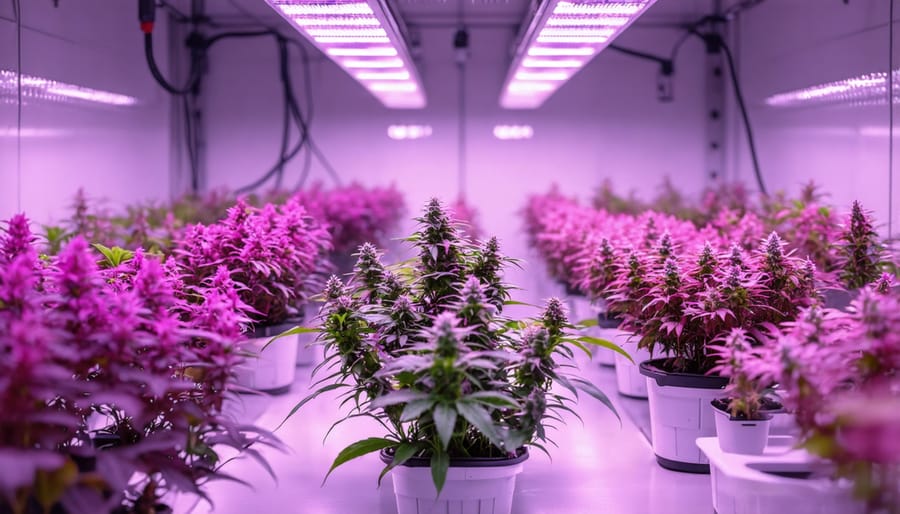
Perhaps most exciting was a 2022 discovery at Stanford, where AI analyzed patterns in agricultural data to predict THC potency based on growing conditions. The machine learning model examined soil composition, temperature, humidity, and light exposure from 500 cultivation sites. It revealed that specific combinations of environmental factors could increase therapeutic compound production by up to 40% while maintaining consistency—a game-changer for medical cannabis producers struggling with quality control.
The Technology Stack Behind the Research
Behind the scenes of Delta-9 THC research, scientists rely on a surprisingly accessible technology toolkit that many AI enthusiasts can explore themselves. The foundation starts with **Python**, the go-to programming language that makes complex data analysis feel manageable even for those new to computational research.
Researchers typically build their analysis pipelines using popular machine learning frameworks like **scikit-learn** for traditional modeling tasks and **TensorFlow** or **PyTorch** when deep learning enters the picture. Think of scikit-learn as your Swiss Army knife—perfect for classification tasks like predicting whether a cannabis strain will produce specific effects based on its chemical profile. TensorFlow and PyTorch, meanwhile, handle the heavy lifting when researchers need to process complex molecular structures or analyze thousands of chemical interactions simultaneously.
For data handling, **pandas** transforms messy laboratory results into organized datasets, while **NumPy** crunches the numbers behind the scenes. When it comes to visualizing molecular structures and chemical relationships, tools like **RDKit** (a specialized chemistry toolkit) bridge the gap between cannabis compounds and machine-readable formats.
The computational requirements might surprise you—many exploratory analyses run perfectly well on a decent laptop with 16GB of RAM. However, when researchers train deep learning models to predict drug interactions or screen thousands of molecular combinations, they typically move to **cloud platforms** like Google Colab or AWS, which offer GPU acceleration without requiring expensive hardware investments.
What makes this stack particularly powerful is its **reproducibility**. Researchers package their workflows using Jupyter Notebooks, creating interactive documents that combine code, visualizations, and explanations. This transparency allows the scientific community to verify findings and build upon previous work—turning individual discoveries into collective progress in understanding Delta-9 THC’s therapeutic potential.
Challenges AI Still Faces in Cannabis Research
Despite AI’s promise in cannabis research, several significant obstacles remain. Understanding these limitations is crucial for anyone working at the intersection of technology and THC science.
**Data quality presents the first major hurdle.** Cannabis research has historically been fragmented due to legal restrictions, resulting in inconsistent datasets. Imagine trying to train an AI model when one lab measures THC potency at harvest, another after curing, and a third after storage—each using different equipment. These inconsistencies confuse machine learning algorithms, which rely on standardized, high-quality data to identify meaningful patterns. The old programmer’s adage applies here: “garbage in, garbage out.”
**Regulatory restrictions severely limit data access.** In many countries, cannabis remains classified as a controlled substance, making it difficult for researchers to share datasets across borders or even between institutions. This creates data silos—isolated pockets of information that AI models cannot access. Without comprehensive datasets that represent diverse growing conditions, consumption methods, and population demographics, AI predictions may not generalize well to real-world scenarios.
**Bias in training datasets poses another challenge.** If historical research predominantly focused on male subjects or specific cannabis strains, AI models trained on this data will inherit those biases. For example, an algorithm might accurately predict effects for one demographic while performing poorly for others—a serious concern when the goal is personalized medicine.
Finally, there’s the **”black box” problem**. Many advanced AI models, particularly deep learning networks, operate in ways that even their creators struggle to fully explain. When an algorithm predicts that a specific THC formulation will reduce anxiety, regulators reasonably ask: “Why?” Without transparent explanations, gaining regulatory approval becomes significantly more difficult, regardless of how accurate the predictions might be.
What’s Next: The Future of AI-Driven Cannabis Science
The intersection of AI and cannabis research stands at an exciting threshold, with several transformative technologies poised to accelerate discoveries in the coming years.
Quantum computing applications represent perhaps the most revolutionary frontier. These powerful machines can simulate molecular interactions at unprecedented scales, potentially modeling how Delta-9 THC binds to cannabinoid receptors with atom-level precision. What currently takes months of computational work could happen in hours, dramatically speeding up the identification of optimal THC derivatives for specific medical applications.
The integration of AI with genomics is already reshaping how researchers understand individual responses to Delta-9 THC. By analyzing genetic markers alongside consumption data, machine learning models can predict who might benefit most from THC-based treatments and who might experience adverse effects. This personalized medicine approach means future cannabis therapeutics could be tailored to your unique genetic profile, moving beyond one-size-fits-all dosing.
Real-world impact is already visible in drug development timelines. Traditional pharmaceutical development takes 10-15 years from discovery to market. AI-driven approaches are compressing this timeline significantly. For example, machine learning models can now predict compound toxicity and efficacy in early stages, eliminating poor candidates before expensive clinical trials begin. Some researchers estimate AI could reduce cannabis drug development timelines by 30-50%.
The convergence of these technologies creates a powerful ecosystem. Imagine AI systems that combine quantum simulations, genomic data, and clinical outcomes to design personalized THC formulations within days rather than years. This isn’t science fiction—the foundational technologies exist today and are rapidly maturing.
As these tools become more accessible and sophisticated, we’re likely to see an explosion of targeted cannabis therapies addressing conditions from chronic pain to neurological disorders, all developed with unprecedented speed and precision.
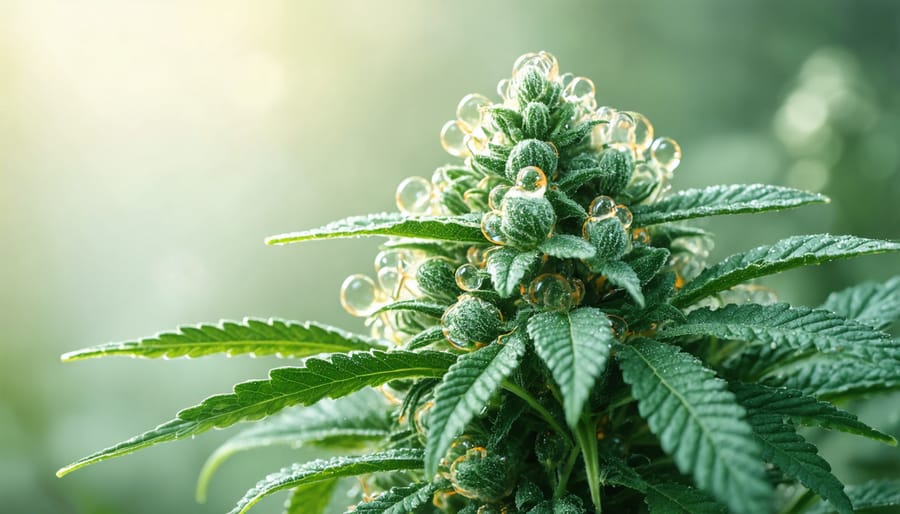
The convergence of artificial intelligence and Delta-9 THC research represents more than just technological progress—it’s a fundamental shift in how we approach scientific discovery. By automating data analysis, predicting molecular interactions, and identifying patterns across massive datasets, AI is removing traditional barriers that once made cannabis research slow, expensive, and accessible only to well-funded institutions.
For researchers, this means faster hypothesis testing and the ability to explore questions that were previously impractical. Machine learning models can screen thousands of potential therapeutic applications in days rather than years, accelerating the path from laboratory curiosity to clinical insight. Patients stand to benefit from more personalized treatment approaches as AI identifies which Delta-9 THC formulations might work best for specific conditions based on genetic profiles and symptom patterns.
Technology professionals have a unique opportunity here. The cannabis research field needs data scientists, machine learning engineers, and AI specialists who can build the next generation of analytical tools. Whether you’re developing neural networks to predict cannabinoid effects or creating platforms that make research data more accessible, your skills can directly impact scientific progress.
The democratization of this research through AI tools means smaller labs, independent researchers, and even citizen scientists can contribute meaningfully to our understanding of Delta-9 THC. As these technologies continue to evolve, staying informed about their applications—not just in cannabis research but across scientific disciplines—positions you at the forefront of an exciting intersection between artificial intelligence and human health.