

Adaptive practice testing analytics platforms typically cost between $15 and $150 per user per month, with most professional solutions clustering around $40 to $80 monthly depending on question bank size, analytics depth, and administrative features. Enterprise packages serving entire training programs or educational institutions often negotiate annual contracts in the $5,000 to $50,000 range based on seat count and customization needs.
Three factors drive the biggest price swings: the sophistication of the adaptive algorithm (basic difficulty adjustment versus true item response theory models), the breadth of performance analytics (simple pass/fail tracking versus granular skill mapping), and whether the platform includes pre-built content or requires you to supply your own questions. Subscription models dominate the market because they bundle software updates and expanding question libraries, but one-time purchase options still exist for organizations wanting perpetual licenses without ongoing fees.
The pricing conversation matters because buyers face a dual burden of proof. Budget holders want to know if these tools justify their cost, while learners and instructors need evidence that adaptive testing actually improves outcomes beyond traditional study methods. AI in education promises personalized learning at scale, but adaptive practice testing represents one of the clearest return-on-investment stories in educational technology.
Research consistently shows that adaptive practice testing raises first-attempt pass rates by 12 to 28 percentage points compared to static study materials. The mechanism works through precision targeting: algorithms identify knowledge gaps in real time and serve questions at the optimal difficulty level to reinforce weak areas without wasting time on mastered content. For high-stakes professional certifications like the 5th class power engineer sample test this efficiency translates to fewer retake fees, shorter prep cycles, and higher confidence on exam day.
Pricing by Platform Type
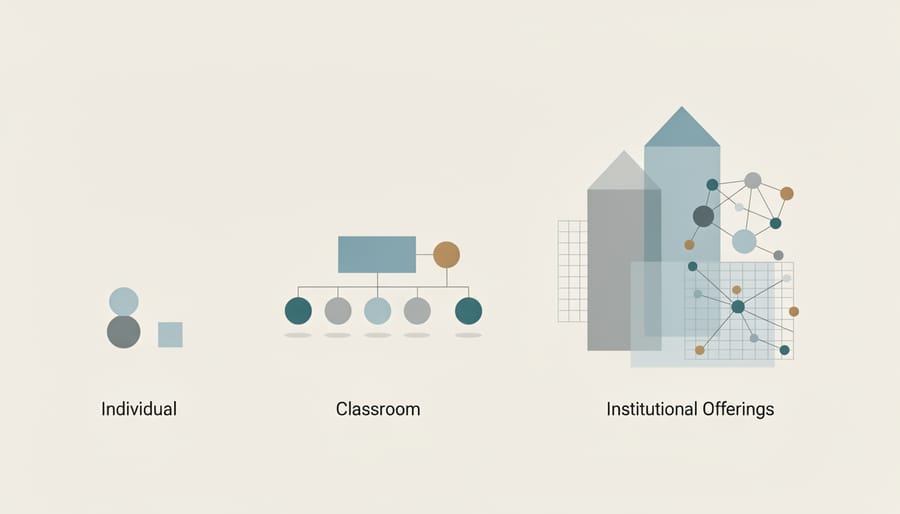
Adaptive practice testing platforms segment their pricing primarily by the size and type of buyer, with substantial differences between individual users and large institutions. Understanding these tiers helps you identify the most cost-effective option for your specific needs.
| Platform Type | Typical Pricing Range | Best For | Common Features |
|---|---|---|---|
| Individual Student | $15-$150/month | Self-directed learners, single exam prep | Basic adaptive questions, progress tracking, mobile access |
| Classroom/Small Group | $300-$2,000/year | Tutoring centers, small training programs (5-50 users) | Multi-user dashboard, basic analytics, shared question banks |
| Institutional Enterprise | $5,000-$50,000+/year | Universities, large certification bodies, corporate training | Advanced analytics, custom content, API integration, dedicated support |
| Professional Certification Prep | $200-$600 per exam | Medical boards, CPA, bar exam candidates | High-quality questions, detailed explanations, performance benchmarking |
Individual student subscriptions represent the entry point for most users. Monthly plans for general exam prep typically start around $15-$30, while specialized professional exam platforms charge $50-$150 monthly. Many providers offer discounts for longer commitments, with annual subscriptions often cutting the effective monthly rate by 20-40%. At this level, you get access to adaptive question banks, basic performance tracking, and mobile apps, but analytics remain surface-level.
Classroom and small group licenses serve tutoring centers, test prep companies, and academic departments. These packages usually accommodate 5-50 users and cost $300-$2,000 annually depending on subject matter and the number of seats. The pricing model shifts from per-person to bulk licensing, making the per-user cost drop significantly. Instructors gain access to group performance dashboards and can assign specific practice sets, though the analytics still focus on aggregate trends rather than granular individual insights.
Institutional enterprise solutions cater to universities, professional training organizations, and large employers running certification programs. Pricing jumps to $5,000-$50,000+ annually because these implementations include custom content development, integration with existing learning management systems, advanced predictive analytics, and dedicated technical support. The per-user cost becomes negligible at scale, a university paying $20,000 for 2,000 students spends just $10 per student annually, but the upfront commitment requires budget approval and multi-year planning.
Professional certification prep platforms occupy a specialized niche between individual and institutional pricing. Candidates preparing for high-stakes exams like the USMLE, CPA, or bar exam pay $200-$600 for comprehensive packages tied to a single exam attempt. These platforms justify premium pricing through rigorously vetted question quality, detailed performance analytics comparing you to other test-takers, and higher historical pass rate correlations.
What’s Included: Cost Breakdown and Feature Tiers
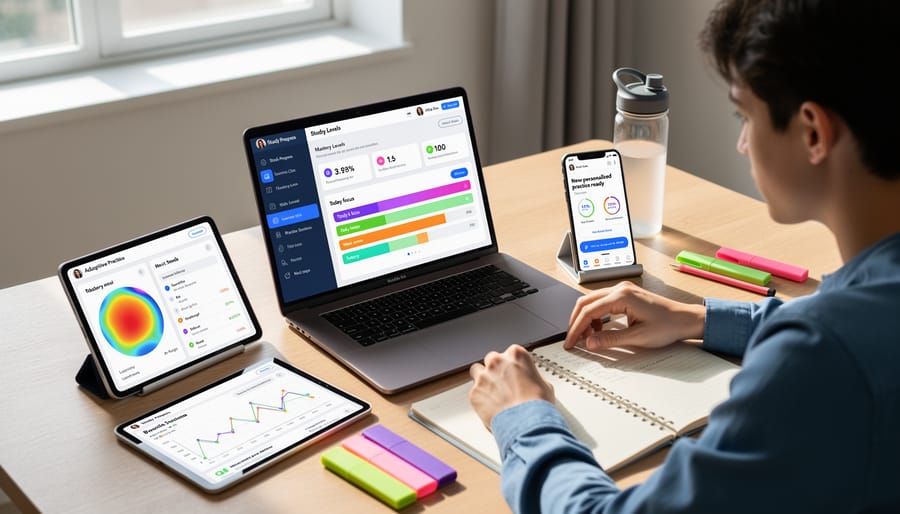
Understanding what you get at each price point helps you avoid paying for features you won’t use, or worse, settling for a platform that can’t deliver the analytics you need to move the needle on pass rates.
Most platforms tier their offerings around three levels: basic adaptive question banks, intermediate analytics suites, and enterprise-grade solutions with custom integrations. The differences aren’t arbitrary, they reflect how much data you can access and what you can actually do with it.
Basic Tier: Adaptive Questions Without Deep Insights
Entry-level subscriptions, typically $15-40 per month for individual learners, give you access to adaptive question banks that adjust difficulty based on your answers. You see immediate feedback on whether you got something right or wrong, and the system tracks which topics you struggle with. That’s where it stops. No predictive analytics, no performance dashboards comparing you to other test-takers, no recommendations for what to study next beyond “you missed questions about Topic X.” These plans work for self-directed learners who just need practice questions and can figure out their own study priorities.
Mid-Tier: Analytics That Show You Why You’re Struggling
Move up to $50-120 per month for individuals or $500-1,500 annually for classroom licenses, and you unlock the analytical layer that actually changes outcomes. These packages include performance dashboards showing your knowledge trajectory over time, not just a snapshot. You get diagnostic reports identifying specific subtopics within broader subjects where you’re weak, for example, not just “you need work on cardiovascular pharmacology” but “you consistently miss questions about beta-blocker mechanism of action versus side effects.” The adaptive algorithm becomes more sophisticated, incorporating spaced repetition timing and confidence-based scoring, where you indicate how sure you are of each answer.
Key features that separate mid-tier from basic plans:
- Time-spent analytics showing which question types slow you down, indicating conceptual gaps versus simple recall issues
- Predictive readiness scores estimating your current probability of passing based on historical data from thousands of test-takers
- AI-generated study recommendations prioritizing high-impact topics where improvement will most boost your overall score
- Mobile app access with offline question banks for studying without connectivity
- Progress comparison against anonymized peer groups preparing for the same exam
For instructors managing groups, mid-tier plans add class-level dashboards showing at-a-glance which students are on track and which need intervention, plus the ability to assign specific practice modules.
Premium Tier: Custom Content and Institutional Integration
Enterprise solutions starting around $5,000 annually for small institutions scale up to $50,000-plus for medical schools or large professional training programs. What justifies the jump? Custom content creation, platforms will build question banks specifically for your curriculum or certification program, not just off-the-shelf material. You get single sign-on integration with your existing learning management system, automated data exports to your student information system, and white-labeling so the platform carries your institution’s branding. Advanced admin controls let you set mastery thresholds, create custom learning pathways, and generate compliance reports.
The analytics depth increases too. Premium tiers provide item-level psychometric analysis showing which questions effectively discriminate between prepared and underprepared learners, longitudinal cohort tracking across multiple exam cycles, and API access for researchers studying learning patterns. Dedicated account managers help you interpret the data and adjust your program based on what the analytics reveal.
What Drives the Price: Key Cost Factors
Subject complexity plays the largest role in determining platform costs. Medical licensing exams like USMLE or NCLEX demand extensive, rigorously-vetted question banks with detailed explanations written by subject matter experts, often driving prices 3-5x higher than platforms for basic IT certifications or standardized tests. Each medical question requires clinical accuracy, evidence-based rationales, and regular updates to reflect current practice guidelines, costs that basic certification prep simply doesn’t incur.
The size and quality of the question bank directly correlate with price. A platform offering 500 generic practice questions costs far less than one providing 10,000+ items across multiple difficulty levels, each tagged with learning objectives and psychometrically validated. Premium platforms invest in item analysis, removing poorly-performing questions and continuously refining their banks based on thousands of user responses. This ongoing quality control requires statisticians, content experts, and sophisticated tracking systems that budget platforms skip entirely.
Algorithm sophistication separates basic adaptive testing from truly intelligent systems. Entry-level platforms might simply adjust difficulty after right or wrong answers, while advanced systems use item response theory, Bayesian knowledge tracing, and machine learning models that predict optimal question sequencing for each learner. The computational infrastructure, data science talent, and years of algorithm refinement behind these premium systems justify significantly higher costs, you’re paying for the AI that actually personalizes the experience rather than just randomizing question order.
Analytics depth and reporting capabilities create substantial price tiers. Basic platforms show you a percentage score and maybe weak topic areas. Premium systems provide granular competency mapping, time-on-task analysis, confidence ratings, predicted pass probability, comparison to peer cohorts, and longitudinal progress tracking across weeks or months. These dashboards require real-time data processing, visualization tools, and backend infrastructure that budget platforms simply don’t build. Institutions paying for group licenses especially value instructor dashboards that identify struggling students early, a feature that demands additional development and server capacity.
Mobile app quality matters more than most buyers realize initially. Native iOS and Android apps with offline question access, push notifications for study reminders, and seamless sync across devices require separate development teams and ongoing maintenance. Platforms charging premium prices typically offer polished mobile experiences, while cheaper alternatives often rely on clunky responsive websites that frustrate users and reduce engagement.
Live support and customer success resources separate professional-grade platforms from self-service options. When you’re preparing for a high-stakes exam, access to technical support, study coaches, or implementation specialists justifies higher monthly fees. Enterprise contracts often include dedicated account managers and training sessions, services that budget platforms can’t afford to staff.
Finally, data security and compliance requirements significantly impact costs for institutional buyers. Platforms handling student records must comply with FERPA, while healthcare training systems need HIPAA-compliant infrastructure. Robust AI data privacy protections, regular security audits, encrypted data storage, and clear retention policies require legal review, specialized hosting, and ongoing monitoring that increase operational expenses passed along in subscription pricing.
Free and Open-Source Alternatives vs. Premium Platforms
The gap between free adaptive testing tools and premium platforms is substantial, but not everyone needs enterprise-grade analytics to see results. Your choice depends on three factors: technical capacity, time availability, and the stakes of the exam you’re preparing for.
Free and open-source options like Moodle with adaptive quiz plugins or H5P interactive content can deliver basic question sequencing based on performance. You’ll need someone comfortable with PHP, database management, and learning management system architecture to set these up properly, expect 20-40 hours of initial configuration plus ongoing maintenance. The adaptive logic is rudimentary compared to commercial platforms: questions get harder or easier based on correct answers, but there’s no sophisticated item response theory modeling or predictive analytics forecasting readiness.
Pros
- Zero licensing costs make these accessible for individual students or small study groups with tight budgets.
- Complete control over question content, difficulty calibration, and data privacy without vendor lock-in.
- Open-source communities provide plugins and documentation, though you’ll need technical skills to implement them.
Cons
- Setup requires significant technical expertise in web hosting, database configuration, and LMS administration.
- Basic adaptive algorithms lack the machine learning sophistication that identifies nuanced knowledge gaps.
- No dedicated support team, meaning troubleshooting falls entirely on your technical staff or volunteers.
- Question bank quality depends entirely on your own content creation, with no vetted, psychometrically validated items included.
The data quality difference matters more than most realize. Premium platforms invest heavily in item analysis, tracking which questions reliably discriminate between prepared and unprepared test-takers, identifying confusing distractors, and retiring ineffective items. A free question bank you’ve built yourself lacks this validation unless you have hundreds of users providing performance data over time. For high-stakes exams like medical licensing or bar certification, that difference translates directly to pass rate impact.
Commercial platforms justify their cost through speed and proven algorithms. You’re operational within an hour instead of weeks, the adaptive engine has been refined across thousands of users, and the analytics dashboard shows exactly which content areas need more work. The education trade-offs come down to whether your time and the exam’s importance warrant the investment, a $200 platform subscription makes sense for a $50,000 salary increase, less so for a hobbyist certification.
For institutions, the calculation shifts toward premium platforms once you’re serving more than 50 students. The staff hours saved on technical maintenance, combined with the demonstrated 8-15 percentage point pass rate improvements from sophisticated adaptive testing, typically recover the platform cost within one exam cycle.
How Adaptive Analytics Actually Improve Pass Rates

Adaptive practice testing analytics improve pass rates through a closed feedback loop that continuously refines what each student sees based on their actual performance. When you first log in, the platform administers a diagnostic assessment, not to grade you, but to map your current knowledge. It identifies which topics you’ve mastered and which ones trip you up, then builds a personalized learning path that concentrates effort where it matters most.
The real power emerges in real-time difficulty adjustment. If you answer three consecutive questions correctly on contract law, the algorithm increases complexity, testing edge cases and nuanced scenarios. Miss two questions on torts? The system scales back, offering foundational review before advancing. This prevents the dual waste of time spent on material you already know and frustration from questions beyond your current level, both of which tank motivation and retention.
- Initial diagnostic pinpoints strengths and knowledge gaps across all exam topics, creating a baseline performance map
- Algorithm generates a personalized question sequence, frontloading weak areas while maintaining exposure to stronger topics
- Real-time adaptation shifts difficulty and topic focus based on your answers, keeping practice in your optimal challenge zone
- Targeted remediation automatically delivers explanations, related content, and follow-up questions for missed concepts
- Progress tracking quantifies improvement over time, showing mastery gains and predicting exam readiness with confidence scores
These platforms track far more than right-or-wrong tallies. They measure response time (hesitation signals uncertainty even when the answer is correct), error patterns (consistently confusing two concepts flags a conceptual gap), and retention decay (testing the same material after intervals to ensure knowledge sticks). Predictive analytics synthesize this data into readiness forecasts, telling you with statistical confidence whether you’re likely to pass if you sat for the exam today.
Medical students preparing for boards offer a clear example: a platform might identify that you consistently miss pharmacology questions involving drug interactions but excel at mechanism-of-action questions. It doubles down on interaction scenarios, tracks improvement daily, and recalibrates your study plan as that gap closes. This precision mirrors how elite athletes train, focused repetition on weaknesses, not random practice. The rise of edtech adoption has made this level of personalization accessible beyond expensive tutoring, delivering measurable results at scale for standardized exams where pass rates directly correlate with career outcomes.
Frequently Asked Questions
Do adaptive practice testing platforms offer free trials?
Most commercial platforms provide 7- to 14-day free trials or demo accounts with limited question access. Some restrict analytics features during trials, so verify what you can actually test before committing to an annual subscription.
Are monthly payments more expensive than annual subscriptions?
Yes, monthly plans typically cost 20-30% more over a year compared to paying upfront annually. If you’re preparing for an exam several months away, the annual option usually offers better value despite the larger initial outlay.
What hidden costs should I watch for?
Check whether the base price includes mobile app access, downloadable reports, and technical support. Some platforms charge extra for these essentials, while others bundle everything at one rate.
How do I measure if the platform is actually improving outcomes?
Track your practice test scores over time and compare predicted pass probability (if the platform offers it) against your actual performance on mock exams. A good adaptive system should show steady improvement in weak areas within 2-3 weeks of consistent use.
When evaluating ROI for institutions, focus on metrics beyond just pass rates. Calculate cost per successful candidate by dividing total platform investment by the number of students who passed. If your historical pass rate was 75% and it climbs to 85% after implementing adaptive analytics, you’re getting 13% more certified professionals for roughly the same training budget, a compelling return even if the platform isn’t free.
Refund policies vary widely. Enterprise contracts rarely offer refunds once signed, though some vendors include performance guarantees tied to specific pass-rate improvements. Individual subscriptions occasionally allow refunds within 30 days if you haven’t accessed more than a set percentage of the question bank. Read the terms carefully before purchase, especially for high-ticket professional certification prep that can run several hundred dollars.
Budget for renewals if you’re using this for ongoing professional development rather than a one-time exam. Many platforms auto-renew, and the pricing can increase year-over-year as vendors add features. Lock in multi-year rates when possible if the platform proves effective for your needs.