

The Chinese surveillance cameras monitoring your office building, the Russian-manufactured circuit boards in your data center servers, or the software libraries from unknown developers halfway across the world—any of these could be the weak link that compromises your entire AI system. In 2018, the U.S. government recognized this vulnerability and passed the Federal Acquisition Supply Chain Security Act (FASCSA), fundamentally changing how federal agencies and their contractors must think about technology procurement.
If you’re developing artificial intelligence systems for government clients, building machine learning models that will touch federal data, or simply curious about the intersection of national security and emerging technology, FASCSA affects you more than you might realize. This law isn’t just another compliance checkbox—it represents a paradigm shift in how we evaluate risk in an interconnected world where AI models train on data flowing through countless third-party services, hardware components arrive from global manufacturers, and open-source libraries come from anonymous contributors.
The challenge is uniquely complex for AI practitioners. Traditional cybersecurity focused on networks and access controls, but AI introduces entirely new attack surfaces. A compromised training dataset can poison your model’s behavior. A malicious chip embedded in your GPU infrastructure can exfiltrate sensitive information. Even seemingly innocuous software dependencies can create backdoors into your entire system. FASCSA recognizes these modern threats and provides a framework for identifying and mitigating them.
This article breaks down what FASCSA means in practical terms—not just the legal requirements, but how it applies specifically to AI and machine learning workflows. You’ll learn which supply chain components pose the greatest risks, how to evaluate vendors and technologies under the new security standards, and concrete steps to ensure your AI projects meet federal compliance requirements while maintaining innovation and efficiency.
What Is the Federal Acquisition Supply Chain Security Act?
The Problem FASCSA Was Designed to Solve
Imagine ordering a smart home device, only to discover it’s secretly recording your conversations and sending data to servers halfway around the world. Now scale that scenario to federal agencies managing classified information, critical infrastructure, and sensitive citizen data. This is exactly the type of threat that prompted Congress to create FASCSA in 2018.
Before this legislation, federal agencies were essentially shopping blind when it came to technology procurement. They had limited visibility into where their software and hardware actually came from, who manufactured the components, or what security vulnerabilities might be lurking inside. Consider a seemingly innocent scenario: a government agency purchases servers to run artificial intelligence systems that process sensitive information. Those servers contain chips manufactured overseas, firmware written by third-party contractors, and management software from multiple vendors. Any one of these components could contain backdoors, malicious code, or vulnerabilities that expose national security risks.
Real-world incidents made this danger undeniable. Security researchers discovered compromised networking equipment being sold to government contractors, pre-installed spyware in consumer electronics that found their way into agency offices, and counterfeit components in critical defense systems. The 2018 Bloomberg report about alleged hardware compromises in server supply chains, while disputed, illustrated how sophisticated these threats had become.
FASCSA emerged as the government’s response to this reality: federal agencies needed a systematic way to identify, assess, and exclude potentially compromised technology from their supply chains before it could cause damage.
How FASCSA Gives Federal Agencies New Powers
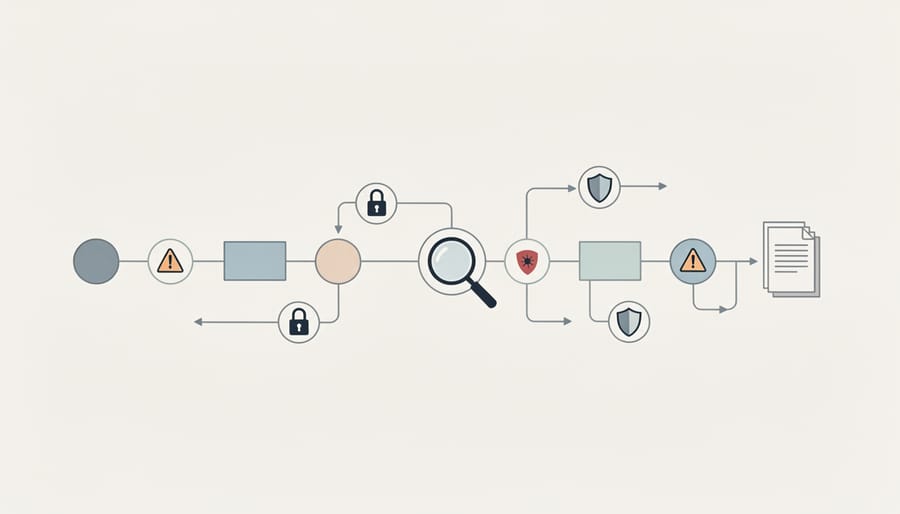
FASCSA fundamentally changed how federal agencies protect their technology supply chains by granting them three critical powers that didn’t exist before.
First, agencies now have the authority to identify and assess risks from specific vendors and technology components. Think of it like a security screening process at an airport, but for the companies and products the government wants to purchase. Agencies can investigate whether a vendor has concerning ties to foreign adversaries or whether their products might contain hidden vulnerabilities that could compromise sensitive systems.
Second, the law empowers agencies to exclude risky vendors from government contracts entirely. If an investigation reveals that a company’s products pose a national security threat, agencies can add them to an exclusion list. This prevents other government departments from accidentally purchasing compromised technology. For example, when concerns emerged about certain telecommunications equipment potentially enabling foreign surveillance, FASCSA gave agencies the legal backing to ban those products across all federal purchases.
Third, and perhaps most importantly, agencies gained the power to require ongoing security assessments throughout a contract’s lifetime. Rather than just vetting vendors at the initial purchase stage, agencies can continuously monitor for emerging threats. If a previously trusted vendor gets acquired by a company with problematic ownership, or if new security vulnerabilities are discovered in their products, agencies can take action mid-contract.
These powers create a dynamic defense system that adapts as threats evolve, particularly important for rapidly changing fields like artificial intelligence where new security concerns emerge regularly.
The Growing Intersection Between FASCSA and AI
Why AI Supply Chains Are More Complex Than Traditional Software
Think of a traditional software supply chain like building a house from a hardware store. You buy lumber, nails, and paint—each item has a clear manufacturer, and you can trace where everything came from. Now imagine an AI supply chain as more like baking a wedding cake using ingredients from a potluck dinner. Some guests brought pre-mixed batters, others contributed frosting made from unknown recipes, someone else provided decorations they found online, and you’re not entirely sure what’s in half of these dishes or where the original ingredients originated.
This complexity exists because AI systems don’t just rely on code you can audit line-by-line. Instead, they’re built from multiple interconnected layers that each introduce their own security considerations.
At the foundation, you have training data sources—the massive datasets used to teach AI models. This data might come from web scraping, public datasets, commercial providers, or crowdsourced collections. Unlike traditional software where you control your input, AI training data could contain millions of examples from countless unknown sources, making it nearly impossible to verify the provenance of every data point.
Next come pre-trained models, which are AI systems someone else already trained and packaged for reuse. Organizations frequently download these foundation models from repositories like Hugging Face or GitHub to save time and computing costs. However, you’re essentially trusting that the original creator used clean data, followed secure practices, and didn’t intentionally embed malicious behavior.
The frameworks and libraries layer includes tools like TensorFlow, PyTorch, and scikit-learn that provide the building blocks for AI development. While these are often open-source and widely trusted, they still represent third-party code that requires regular updates and security monitoring.
Computing infrastructure adds another dimension. Training large AI models often requires cloud services, specialized hardware like GPUs, or third-party computing platforms. Each connection point represents a potential security vulnerability.
Finally, third-party APIs allow AI systems to access external services for tasks like natural language processing or image recognition. Every API call sends data outside your control, creating additional exposure points that traditional software simply doesn’t have.

Real Risks in AI Supply Chains
AI supply chains present unique vulnerabilities that traditional security frameworks weren’t designed to address. Unlike conventional software, AI systems depend on massive datasets, pre-trained models, and specialized libraries—each representing a potential attack vector.
Consider poisoned training data, where attackers subtly corrupt datasets to manipulate model behavior. In 2021, researchers demonstrated how adding carefully crafted examples to a sentiment analysis training set could cause the model to misclassify specific phrases—potentially allowing malicious actors to bypass content filters or manipulate decision-making systems.
Backdoored models represent another serious threat. Pre-trained models from untrusted sources might contain hidden triggers that activate only under specific conditions. Imagine a facial recognition model that works perfectly during testing but fails to detect certain individuals in production—a nightmare scenario for security applications.
The dependency problem mirrors traditional software supply chains but with higher stakes. A compromised machine learning framework or a malicious package in repositories like PyPI could affect thousands of AI projects simultaneously. In 2022, security researchers discovered multiple malicious packages mimicking popular ML libraries, designed to steal credentials and exfiltrate training data.
These aren’t theoretical concerns. They’re happening now, making supply chain security essential for anyone building AI systems—especially for government applications where the consequences of compromise could be severe.
Understanding Model Provenance: Your AI’s Paper Trail
What Model Provenance Actually Tracks
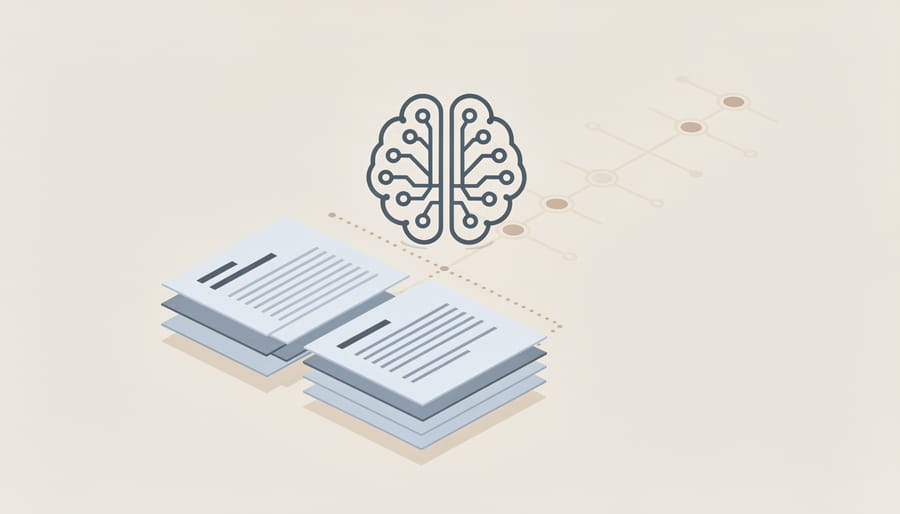
When federal agencies evaluate AI systems for potential security risks, they need a comprehensive paper trail that documents every element of a model’s journey from conception to deployment. Think of model provenance as a detailed family tree combined with a manufacturing record—it tells you where something came from and how it was made.
At its foundation, model provenance tracks training data origins. This means documenting which datasets were used to train the model, where those datasets came from, who created them, and whether they contain any proprietary or sensitive information. For example, if you’re using a language model trained on web-scraped content, provenance tracking would identify those specific sources and any potential licensing restrictions. This becomes particularly important when considering that training data could inadvertently include content from adversarial sources or contain hidden biases that affect model behavior.
The model architecture itself represents another critical tracking element. This includes documenting whether you’re using an established architecture like a transformer model, whether it came from an open-source repository, or if it was custom-built in-house. If your model is based on research from a specific institution or builds upon publicly available code, that lineage needs documentation. This matters because architecture choices can introduce specific vulnerabilities or dependencies on external maintenance.
Training process documentation captures the who, when, where, and how of model development. This includes recording which individuals or teams conducted the training, what computational infrastructure was used, which hyperparameters were selected, and how long the training took. Were the models trained on cloud infrastructure or on-premises hardware? What security controls were in place during training? These details help identify potential points where malicious actors could have influenced the model.
Fine-tuning history is equally important for models that undergo additional training after their initial development. Many organizations take pre-trained foundation models and customize them for specific tasks. Each fine-tuning step represents a potential modification point, so documenting who performed the fine-tuning, what data was used, and what changes were made helps maintain an unbroken chain of custody.
Finally, dependency chains capture all the software libraries, frameworks, and tools used throughout the model lifecycle. This extends beyond just the machine learning frameworks to include data processing libraries, evaluation tools, and deployment infrastructure components that could introduce security vulnerabilities into your AI supply chain.
The Model Provenance Problem in Practice
Imagine downloading a powerful AI model from a popular repository to speed up your government project. The model works brilliantly, but here’s the catch: can you actually trace where it came from? This seemingly simple question reveals a complex challenge facing AI practitioners today.
Consider the journey of a typical open-source model. A researcher at a university creates the initial version, someone else fine-tunes it on a different dataset, a third party optimizes it for production, and finally it lands on a model hub like Hugging Face or GitHub. At each step, the model changes, but documentation often doesn’t keep pace. When you download that final version, you might find a brief README file, but detailed information about training data sources, previous versions, or intermediate modifications often remains unclear or missing entirely.
Transfer learning compounds this problem. Let’s say you’re building a document classification system for a federal agency. You start with a pre-trained language model, add your own layers, and fine-tune it with agency data. Now you have a hybrid: part public model, part custom development. When asked about its provenance for compliance purposes, how do you document the full lineage? The original model’s training data likely included web-scraped content from unknown sources, potentially raising security concerns.
Model hubs present another practical challenge. While these platforms democratize AI access, they vary widely in their documentation standards. Some models include comprehensive cards detailing their origins, while others offer minimal information. Without consistent metadata standards, verifying that a model meets supply chain security requirements becomes detective work rather than a straightforward audit process.
How FASCSA Principles Apply to Your AI Projects
Questions You Should Be Asking About Your AI Supply Chain
Before you deploy your next AI model or integrate a new machine learning library, take a moment to ask yourself some critical questions. Think of this as your pre-flight checklist for AI supply chain security—simple questions that can help you avoid serious problems down the road.
Start with your training data. Where did it come from? Can you trace its origins? If you’re using a public dataset, do you know who compiled it and whether it’s been verified? Data poisoning is a real threat, and understanding your data’s provenance is your first line of defense. Ask yourself: Could malicious actors have tampered with this data before it reached me?
Next, examine your models. If you’re using pre-trained models, who created them? What organization or individual stands behind them? A model downloaded from an unknown source could contain hidden backdoors or be intentionally designed to fail under specific conditions. These AI vulnerabilities aren’t just theoretical—they’re documented security risks.
Look at your dependencies too. Modern AI projects often rely on dozens of open-source libraries. Can you list every dependency your project uses? Do you know if any come from countries or entities flagged by federal security guidelines? Have you checked if these libraries receive regular security updates?
Consider your deployment infrastructure. Where will your model run? If you’re using cloud services, are they FASCSA-compliant? What about the hardware—do you know where the chips in your servers were manufactured?
Finally, ask about documentation. Can you provide a complete bill of materials for your AI system? If an auditor or security team asked you to trace every component tomorrow, could you do it? Starting with clear answers to these questions puts you ahead of most teams and significantly closer to compliance.
When Model Provenance Becomes Critical
Model provenance becomes absolutely critical when your AI system moves beyond experimental sandboxes into real-world applications. Think of it like food safety labels—you might not check ingredients on a snack at a friend’s house, but you definitely want that information before serving meals at a restaurant.
In regulated industries like healthcare, finance, and government contracting, provenance isn’t optional—it’s mandatory. A hospital using an AI diagnostic tool needs to demonstrate exactly where that model came from, who trained it, and what data shaped its decisions. Federal contracts falling under FASCSA require this documentation trail as part of supply chain security compliance. Without clear provenance, you’re essentially asking auditors to trust a black box, which rarely ends well.
High-stakes applications demand similar rigor. Consider an AI system approving loans or screening job candidates. If that model makes biased decisions, you need to trace back through its lineage to identify where bias entered—was it the training data, the base model, or modifications made during fine-tuning? Without provenance records, this investigation becomes nearly impossible.
Customer-facing systems present another critical scenario. When your chatbot interacts with thousands of users daily, any security vulnerability or problematic behavior scales instantly. Knowing your model’s origins helps you respond quickly to discovered vulnerabilities, understand potential manipulation risks, and maintain customer trust.
Perhaps most importantly, scaling from prototype to production transforms provenance from nice-to-have into business-critical. That experimental model your team downloaded for testing? Once it’s processing real customer data or making automated decisions, you need complete documentation of its origins, modifications, and security posture.
Practical Steps to Secure Your AI Supply Chain
Vetting Your Data Sources
When building AI systems for federal contracts, knowing where your training data comes from isn’t just good practice—it’s becoming a compliance requirement. Just as FASCSA requires agencies to verify the origins of physical components in their supply chains, you need to trace your data back to its source.
Start by asking basic questions about each dataset: Who collected it? When was it gathered? What was the original purpose? For example, a facial recognition system trained on data scraped from social media without clear provenance raises immediate red flags. In 2019, researchers discovered that a popular image dataset contained photos pulled from surveillance cameras in multiple countries, creating both security and ethical concerns.
Data poisoning represents one of the most insidious risks in AI supply chains. This occurs when malicious actors deliberately introduce corrupted information into training datasets to manipulate model behavior. A real-world case involved attackers subtly altering street sign images in a public dataset, causing autonomous vehicle systems to misclassify stop signs. The changes were nearly invisible to human reviewers but proved highly effective at fooling AI models.
Watch for these warning signs: datasets with unclear licensing, missing documentation about collection methods, unusually cheap or free data from unknown providers, and datasets that can’t be independently verified. If a data source seems too good to be true—perhaps offering millions of labeled images for pennies—it probably warrants deeper investigation.
Document everything meticulously. Create a data provenance log that tracks each dataset’s origin, any preprocessing steps, and chain of custody. This documentation becomes your audit trail, proving due diligence if questions arise during contract reviews or security assessments.
Choosing and Documenting Pre-trained Models Safely
When selecting pre-trained models for government projects, think of it like choosing ingredients for a critical meal—you need to know exactly where they came from and what’s in them. This process becomes essential under FASCSA compliance.
Start by evaluating reputable model repositories. Hugging Face, TensorFlow Hub, and PyTorch Hub offer transparency features that help verify model origins. These platforms typically provide model cards—detailed documentation sheets that describe a model’s intended use, training data, limitations, and known biases. Before downloading any model, read its card thoroughly. Look for information about who created it, when it was last updated, and what datasets were used for training.
Verifying model integrity is your next safeguard. Most platforms provide checksums or hash values that you can compare against the downloaded file to ensure nothing was tampered with during transfer. Tools like Model Card Toolkit can help you generate standardized documentation, while DVC (Data Version Control) tracks model versions and their lineage throughout your project.
Maintain detailed records of every model you evaluate and implement. Create a simple spreadsheet documenting the model name, source platform, download date, hash value, intended use case, and any security considerations noted. This audit trail proves invaluable during compliance reviews and helps your team understand the supply chain of your AI components—exactly what FASCSA requires for traditional technology procurement.

Managing Dependencies and Frameworks
Managing dependencies in AI projects requires more vigilance than traditional software development because machine learning frameworks often pull in dozens of interconnected libraries. Think of it like building a house where you need to verify not just your primary materials, but every component down to the nails and screws—each one could potentially introduce vulnerabilities.
Start by creating a Software Bill of Materials (SBOM) for your project. This is essentially an ingredient list showing every piece of software your AI application uses. Tools like Syft or SPDX can automatically generate these inventories. For example, if you’re building a computer vision model using PyTorch, your SBOM would capture not just PyTorch itself, but also NumPy, Pillow, and all their underlying dependencies.
Once you have visibility into your dependencies, implement automated vulnerability scanning. GitHub’s Dependabot or Snyk can continuously monitor your project and alert you when known security issues emerge. Imagine you’re using an older version of TensorFlow—your scanner might flag CVE vulnerabilities that could allow attackers to manipulate model outputs through specially crafted inputs.
Make dependency updates a regular part of your workflow, but test thoroughly before deployment. A real-world scenario: updating a single data preprocessing library might unexpectedly change how your model handles edge cases, affecting prediction accuracy. Establish a staging environment where you can validate that security patches don’t break your model’s performance.
Following established security practices means treating dependency management as an ongoing process rather than a one-time checklist item.
Tools and Standards Emerging for AI Supply Chain Security
Model Cards and Documentation Standards
As organizations work to meet supply chain security requirements, a set of documentation practices has emerged to help track and verify AI components. Think of these as nutrition labels for AI systems—standardized information sheets that tell you exactly what’s inside and where it came from.
Model cards are one-page documents that describe how an AI model works, what it was trained to do, and its limitations. Created by researchers at Google, they answer questions like: What data was used for training? How accurate is the model? What biases might exist? For example, a facial recognition model card might note that it performs less accurately on certain demographic groups. This transparency helps procurement teams assess whether a model meets security standards and performs fairly.
Datasheets for datasets serve a similar purpose for training data. They document where data originated, how it was collected, who can use it, and what preprocessing occurred. If you’re using a language dataset, the datasheet tells you whether it contains personal information, what languages are represented, and potential privacy concerns.
These documentation practices align perfectly with emerging security standards by creating verifiable paper trails. When federal agencies need to demonstrate supply chain integrity, model cards and datasheets provide concrete evidence of component provenance. They transform abstract compliance requirements into practical checklists that developers can follow and auditors can verify, making supply chain security more manageable for everyone involved.
Tools You Can Start Using Today
Fortunately, you don’t need to wait for complex enterprise solutions to start securing your AI supply chain. Several practical tools are available right now, many of them free and open-source.
For dependency scanning, start with tools like OWASP Dependency-Check, which identifies known vulnerabilities in project dependencies. If you’re working with Python-based ML projects, Safety and pip-audit provide straightforward scanning of your requirements files. These tools integrate easily into your development workflow and can catch risky dependencies before they reach production.
Model verification requires specialized attention. The open-source tool ModelScan helps detect malicious code in serialized machine learning models, addressing the unique pickle file risks we discussed earlier. It’s particularly valuable when you’re importing pre-trained models from external sources.
For provenance tracking, Sigstore offers a free signing and verification service specifically designed for software artifacts. Think of it as a digital certificate of authenticity for your code and models. Similarly, in-toto provides a framework for securing the entire software supply chain by creating verifiable records of who did what and when.
Commercial platforms like Snyk and GitHub Advanced Security offer more comprehensive solutions with user-friendly interfaces, though they come with subscription costs. These platforms combine multiple security functions into single dashboards, making compliance tracking more manageable for teams working on government contracts.
Start small by implementing dependency scanning this week, then gradually expand your security toolkit as you become more comfortable with the processes.
Securing your AI supply chain isn’t just about checking boxes on a compliance form. It’s about building systems that people can trust, reducing risks that could derail your projects, and positioning yourself for a future where security standards will only become more important.
Think of it this way: every time you integrate a third-party AI model or use an open-source machine learning library, you’re making a promise to your users. You’re promising that the technology powering their experience is safe, reliable, and free from hidden vulnerabilities. FASCSA-inspired practices help you keep that promise, whether you’re working on government contracts or private sector applications.
The real-world benefits extend far beyond avoiding regulatory penalties. Organizations that implement strong supply chain security practices report fewer security incidents, faster incident response times, and greater confidence when adopting new AI technologies. They build reputations as trustworthy partners and attract better opportunities. For individual practitioners, these skills make you more valuable in an increasingly security-conscious marketplace.
Here’s the encouraging news: you don’t need to transform everything overnight. Start small. Document one critical AI component in your current project. Verify the source of your next model download. Add basic monitoring to detect unexpected behavior. Each step builds momentum and makes the next one easier.
The intersection of AI and supply chain security represents uncharted territory for many of us. But that’s exactly why now is the perfect time to engage with these practices. You’re not playing catch-up; you’re positioning yourself at the forefront of an evolving field. The practitioners who embrace these principles today will be the ones defining best practices tomorrow, ready for whatever new requirements emerge.