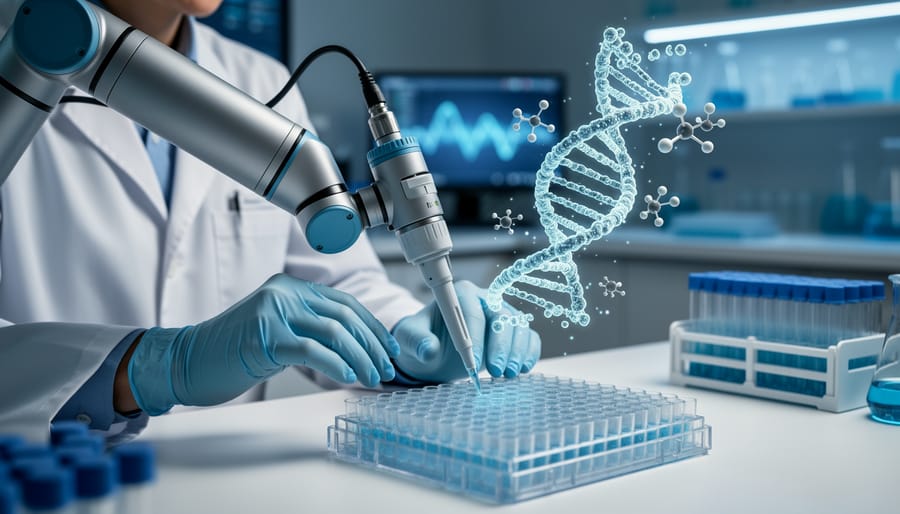
A drug that once took 15 years and $2.6 billion to develop can now reach patients in half that time, thanks to artificial intelligence transforming every stage of pharmaceutical research. From identifying promising molecular compounds to predicting which patients will respond best to treatment, AI systems are solving problems that have stumped scientists for decades.
Traditional drug development follows a punishing timeline: researchers screen thousands of compounds, most fail in clinical trials, and the few survivors face years of regulatory review. This process explains why prescription medications cost so much and why treatments for rare diseases often never materialize. The pharmaceutical industry has been desperate for a better approach.
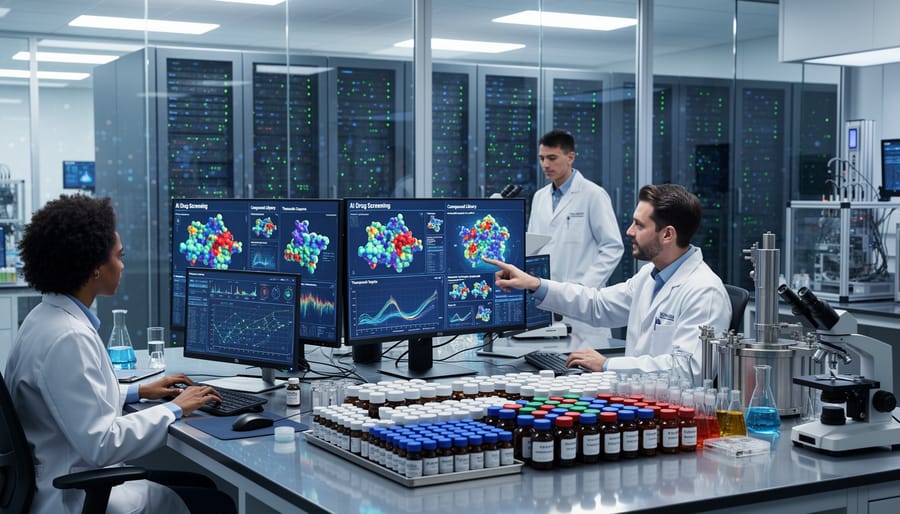
AI offers that solution by processing millions of data points that human researchers simply cannot handle. Machine learning algorithms can analyze genetic information, molecular structures, and clinical trial results simultaneously, identifying patterns invisible to conventional methods. These systems predict how different compounds will interact with disease targets, flag potential safety issues before expensive trials begin, and even identify existing drugs that could treat new conditions.
The technology behind AI revolutionizing healthcare isn’t just theoretical anymore. Several AI-discovered drugs have entered clinical trials, with some already showing promising results in treating conditions from cancer to infectious diseases. Companies using AI have cut their preclinical research time by 50-70%, potentially saving billions in development costs.
This article examines the specific ways AI is accelerating drug discovery, explores real success stories from pharmaceutical companies already seeing results, and evaluates what these changes mean for patients waiting for breakthrough treatments. The transformation happening in laboratories today will determine which diseases we can cure tomorrow.
The Traditional Drug Development Problem
Why Finding New Drugs Takes Forever
Developing a new drug is like searching for a needle in a haystack the size of a football field. Here’s why it typically takes 10-15 years and costs billions of dollars.
First, scientists must screen millions of chemical compounds to find promising candidates. Imagine testing every key in a city to find the one that opens a specific lock. Most compounds fail immediately because they don’t interact properly with the disease target.
The survivors then face rigorous laboratory testing to understand how they work at the molecular level. Next comes animal trials, where researchers study safety and effectiveness in living organisms. This stage alone can take several years.
If a drug passes these hurdles, it enters human clinical trials with three distinct phases. Phase 1 tests safety in small groups of healthy volunteers. Phase 2 examines effectiveness in hundreds of patients. Phase 3 involves thousands of participants to confirm benefits and monitor side effects. Only about 10% of drugs that enter human trials ever reach pharmacy shelves.
Each stage requires meticulous documentation, regulatory approval, and careful analysis. One unexpected problem at any point sends researchers back to the drawing board, adding years to the timeline.
The Staggering Failure Rate
Here’s a sobering reality: approximately 90% of drug candidates fail during clinical trials, even after showing promise in early research. To put this in perspective, imagine a pharmaceutical company spending 10-15 years developing a cancer treatment, investing hundreds of millions of dollars, only to discover in Phase 3 trials that the drug doesn’t work better than existing treatments or causes unexpected side effects.
Consider the real story of Alzheimer’s research. Between 2002 and 2012, 99.6% of Alzheimer’s drug trials failed. Companies invested billions pursuing treatments that looked promising in laboratory settings but couldn’t deliver results in actual patients. Each failure meant years of researcher dedication, patient hope, and financial resources essentially going down the drain.
The consequences extend beyond corporate balance sheets. Every failed drug represents delayed relief for patients waiting for better treatments. When a promising arthritis medication fails in year 12 of development, millions of people continue living with pain while researchers start over from scratch. This staggering failure rate isn’t due to lack of effort—it reflects how incredibly complex human biology is and how difficult it remains to predict which compounds will actually work safely in living people.
How AI is Transforming Drug Discovery
Finding the Right Target Faster
Traditional drug discovery required researchers to manually sift through thousands of potential molecular targets, a process that could take years of laboratory work. Today, AI algorithms transform this painstaking hunt into a rapid, data-driven process.
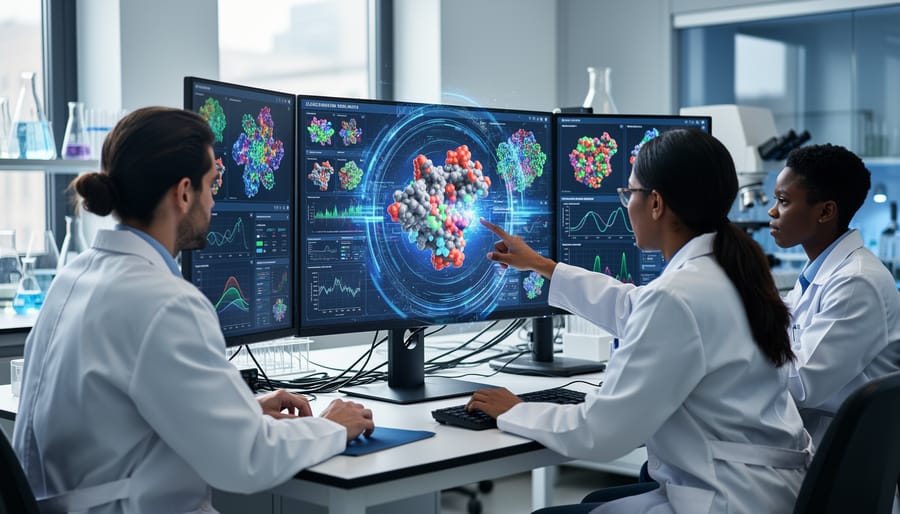
Machine learning systems now analyze massive datasets of genetic information, protein structures, and disease pathways to pinpoint the most promising drug targets. These algorithms can process millions of data points from genomic studies, identifying patterns that human researchers might miss. For example, BenevolentAI’s platform analyzed existing medical literature and discovered that baricitinib, an arthritis drug, could potentially treat COVID-19 by targeting specific inflammatory pathways. This insight emerged in just weeks, and the drug received emergency authorization after clinical validation.
Similarly, Recursion Pharmaceuticals uses AI to scan cellular images and genetic data, identifying disease mechanisms at unprecedented speed. Their system recently identified new targets for rare diseases that had stumped researchers for decades.
The impact is dramatic: what once took research teams 3-5 years now happens in mere weeks. AI doesn’t replace scientists but amplifies their capabilities, allowing them to focus on the most viable candidates from the start. This acceleration means patients gain access to potentially life-saving treatments much faster than ever before.
Designing Molecules That Actually Work
Traditional drug design once resembled finding a needle in a haystack—scientists would synthesize thousands of molecular variations, testing each one in the lab to see what worked. This painstaking process could take years and millions of dollars before discovering a single promising candidate.
AI has transformed this approach dramatically. Using machine learning frameworks, computers can now predict which molecular structures will likely bind to disease targets before scientists ever step into the lab. These algorithms analyze vast datasets of existing drugs, failed experiments, and biological interactions to identify patterns humans might miss.
Think of it like a molecular matchmaking service. The AI examines the 3D shape of a protein target—say, one involved in cancer—and generates molecules that fit perfectly into its binding sites, like a key designed for a specific lock. It considers factors like molecular stability, toxicity potential, and how the body will metabolize the compound.
Companies like Insilico Medicine used this approach to design a drug for idiopathic pulmonary fibrosis in just 18 months, compared to the typical 4-5 years. The AI generated 30,000 molecular designs, narrowed them to the most promising candidates, and predicted their effectiveness—all computationally. This reduces costly lab failures and accelerates the path from concept to clinical testing.
Repurposing Existing Drugs for New Uses
Finding new uses for existing drugs is like discovering your coffee maker can also make tea – the machine is already approved and sitting in your kitchen. This approach, called drug repurposing, has become one of AI’s most impactful contributions to medicine, especially when speed matters most.
Traditional drug development takes 10-15 years and costs billions of dollars. But when AI analyzes approved drugs, it can identify new therapeutic applications in months instead of years. The technology examines massive databases of molecular structures, disease mechanisms, and clinical trial data to spot unexpected connections between existing medications and different conditions.
The COVID-19 pandemic showcased this potential dramatically. AI systems rapidly screened thousands of approved drugs to find candidates that might combat the virus. Within weeks, AI identified promising options like baricitinib, an arthritis medication that became an authorized COVID-19 treatment. This process would have traditionally taken years of laboratory work.
Beyond pandemic response, AI has uncovered new uses for drugs treating everything from cancer to rare diseases. For example, researchers used AI to discover that a diabetes medication might help treat Alzheimer’s disease, opening entirely new treatment pathways. The beauty of repurposing is that these drugs already passed safety testing, allowing them to reach patients faster while significantly reducing development costs and risks.
AI’s Role in Clinical Trials
Finding the Right Patients Faster
Clinical trials traditionally face a daunting challenge: finding the right participants. Researchers might spend months or even years combing through patient databases, making phone calls, and hoping the right candidates will somehow discover their study. This bottleneck has delayed countless promising treatments from reaching patients who desperately need them.
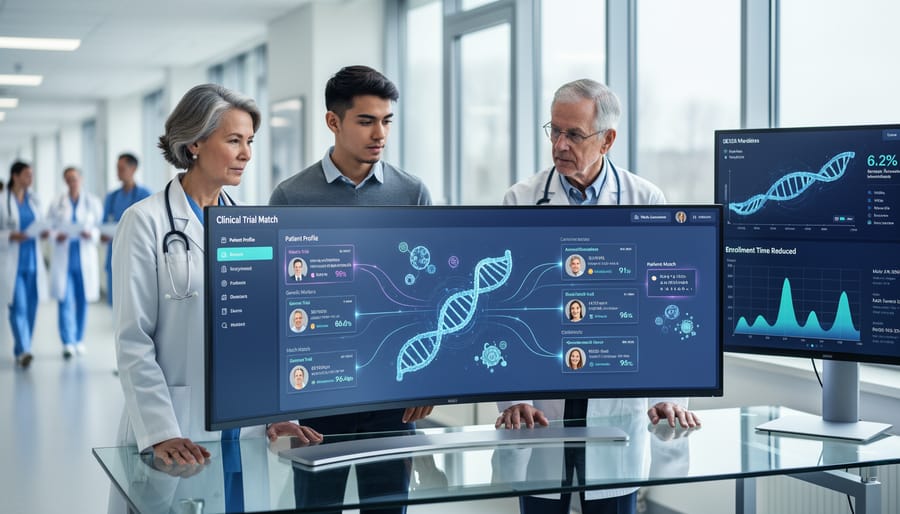
AI is transforming this process by acting as an incredibly smart matchmaker. Machine learning algorithms can scan through millions of electronic health records in minutes, identifying patients whose medical histories, genetic profiles, and current conditions align perfectly with trial requirements. For example, if a cancer trial needs patients with a specific genetic mutation who haven’t responded to traditional chemotherapy, AI can pinpoint these individuals across entire hospital networks almost instantly.
This technology goes beyond simple keyword searches. AI systems analyze complex patterns in patient data, considering factors like medication history, lab results, and even social determinants of health that might affect trial participation. Some platforms can predict which patients are most likely to complete a trial, reducing dropout rates that plague research studies.
The results speak for themselves: recruitment times have been cut from months to weeks at many research centers, and trials are enrolling more diverse patient populations who actually match the precise criteria needed for meaningful results.
Predicting Which Trials Will Succeed
Clinical trials fail at alarming rates, with nearly 90% never making it to approval. But what if we could predict which trials are headed for failure before investing years and millions of dollars? This is where machine learning steps in as a game-changer.
AI systems now analyze massive datasets from thousands of past clinical trials, identifying patterns that human researchers might miss. These algorithms examine factors like trial design, patient selection criteria, dosing schedules, and endpoint measurements to forecast success probability. For example, machine learning models can flag when a trial’s patient population is too broad or when biomarkers suggest the drug won’t work for certain genetic profiles.
One pharmaceutical company used these predictive models to reassess their pipeline and discovered three trials with less than 15% success probability. By terminating these early, they redirected resources to more promising candidates, saving an estimated $80 million and two years of development time.
The technology works by comparing new trial proposals against historical data, essentially asking: “Have trials with these characteristics succeeded before?” This pattern recognition helps researchers refine their approach before enrolling a single patient, making drug development faster, cheaper, and more likely to deliver treatments that actually work.
Monitoring Patient Safety in Real-Time
AI systems are revolutionizing how we track patient safety during clinical trials by catching warning signs that might slip past human observers. Traditional safety monitoring relies on periodic reviews of patient reports, which can mean dangerous side effects go unnoticed for weeks or even months. AI changes this equation completely.
Think of AI as a tireless sentinel watching over thousands of trial participants simultaneously. These systems analyze patient data streams in real-time, including lab results, vital signs, and reported symptoms. When something unusual appears, like an unexpected cluster of headaches among patients taking a new heart medication, the AI flags it immediately for human review.
One pharmaceutical company implemented an AI monitoring system that detected a rare liver enzyme elevation pattern in just three patients within 48 hours. Traditional monthly safety reviews would have taken weeks to identify this connection. This early detection prevented potential serious harm and saved months of trial delays.
Similar to AI healthcare diagnostics used in hospitals, these monitoring systems learn from vast databases of previous trials. They recognize subtle patterns like unusual symptom combinations or demographic-specific reactions that human reviewers might miss among mountains of data.
The result? Safer trials, faster responses to emerging issues, and ultimately better protection for the volunteers who make medical progress possible.
Real Success Stories You Should Know About
The First AI-Designed Drug in Human Trials
In February 2020, Exscientia made pharmaceutical history when DSP-1181, a drug designed by artificial intelligence, entered human clinical trials. This obsessive-compulsive disorder treatment took just 12 months from initial concept to clinical candidate—a process that traditionally requires 4-5 years.
The breakthrough wasn’t just about speed. DSP-1181 represented a fundamental shift in how we discover medicines. Instead of scientists manually testing thousands of compounds in laboratories, Exscientia’s AI system analyzed millions of molecular possibilities, predicting which designs would be most effective before any physical testing began.
Since then, other AI-designed drugs have followed this pioneering path. Insilico Medicine’s INS018_055, targeting idiopathic pulmonary fibrosis, entered trials in 2022 after just 18 months of development. Recursion Pharmaceuticals advanced multiple AI-discovered compounds into clinical studies for rare diseases.
What makes these milestones remarkable isn’t just the faster timelines. These AI systems identified drug candidates that human researchers might have overlooked, exploring chemical spaces too vast for traditional methods. The algorithms considered not just whether a molecule would work, but also predicted potential side effects, manufacturing challenges, and how the human body would process the drug.
These early successes validate a simple but powerful idea: machines can augment human creativity in drug design, potentially bringing life-saving treatments to patients years earlier than conventional approaches allow.
How AI Helped During the Pandemic
When COVID-19 emerged, the pharmaceutical world faced an unprecedented challenge: develop treatments and vaccines in months rather than the typical 10-15 years. AI became a critical ally in this race against time.
One standout example is how AI helped identify existing drugs that could fight the virus. Typically, screening thousands of compounds takes years of lab work. AI systems analyzed millions of molecular structures in mere days, identifying promising candidates like remdesivir for immediate clinical testing. BenevolentAI, a UK-based company, used machine learning to suggest baricitinib as a treatment option in just three days – a process that would normally take months.
For vaccine development, AI accelerated the crucial protein analysis phase. Researchers needed to understand the virus’s spike protein structure to create effective vaccines. Google’s AlphaFold AI predicted protein structures in hours instead of months, giving vaccine developers a critical head start. Moderna used AI to design their mRNA vaccine candidate in just two days after receiving the virus’s genetic sequence.
The results speak volumes: COVID-19 vaccines reached the public in under a year, compared to the previous record of four years for mumps. This breakthrough demonstrated that AI isn’t just a futuristic concept – it’s a practical tool that can genuinely save lives when time matters most.
The Challenges AI Still Faces
The Data Quality Problem
There’s a crucial principle in AI that researchers often summarize as “garbage in, garbage out.” When developing AI systems for drug discovery, the quality of training data directly determines how well these systems can predict outcomes, identify promising compounds, or spot potential side effects.
Think of it like teaching someone to identify different types of plants. If you only show them pictures of flowers in perfect lighting conditions, they’ll struggle to recognize those same plants in shade or during different seasons. The same applies to AI in pharmaceutical research.
The pharmaceutical industry faces several data quality challenges. Clinical trial data might be incomplete, with missing patient information or inconsistent reporting across different studies. Historical drug development records often exist in different formats, making it difficult to create unified datasets. Additionally, much of this data reflects populations that aren’t diverse enough, potentially creating bias in how AI systems predict drug responses across different ethnic groups, age ranges, or genetic backgrounds.
For example, if an AI system primarily trains on data from male participants, it might miss critical insights about how drugs affect women differently. This limitation doesn’t just affect AI accuracy; it can have real consequences for patient safety and drug effectiveness when these systems guide actual development decisions.
Regulatory Uncertainty
While AI is revolutionizing how we discover drugs, regulatory agencies like the FDA and EMA are still developing frameworks to evaluate these AI-designed treatments. Think of it this way: regulators have decades of experience assessing traditionally developed drugs, but AI introduces entirely new questions. How do you validate a drug candidate when the AI’s decision-making process isn’t fully transparent? What documentation is needed to prove an AI model’s reliability?
This creates real challenges for pharmaceutical companies. Without clear guidelines, they’re essentially navigating uncharted territory. Some companies have begun engaging with regulators early in development, sharing their AI methodologies and seeking preliminary feedback. However, the lack of standardized evaluation criteria means approval timelines remain unpredictable.
The European Union recently published draft guidelines for AI-assisted drug development, while the FDA has established a digital health center to address these issues. But comprehensive regulations are still evolving. For companies investing millions in AI-driven research, this uncertainty represents significant risk. The good news? Regulators recognize the potential and are actively working toward clarity, with several working groups dedicated to creating appropriate oversight frameworks that balance innovation with patient safety.
What This Means for Your Future Healthcare
The transformation happening in pharmaceutical labs today will directly impact your healthcare experience in the coming years. These AI medical breakthroughs aren’t just changing how scientists work—they’re reshaping what’s possible for patients like you.
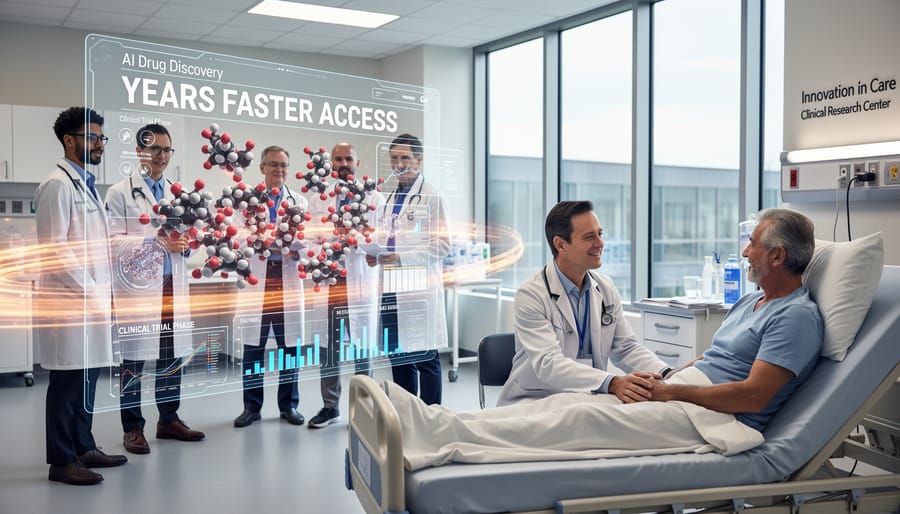
First, you’ll likely access new treatments years faster than before. Remember that traditional 10-15 year drug development timeline? AI is compressing this significantly. Drugs that might have reached you in 2035 could arrive by 2028 instead. For patients with aggressive diseases, this time difference can mean everything.
Your treatment will also become more personalized. AI systems analyze your genetic makeup, lifestyle factors, and medical history to predict which medications will work best for your unique biology. No more trial-and-error with multiple prescriptions—doctors will increasingly know upfront which drug offers you the highest chance of success with the fewest side effects.
Cost is another game-changer. When pharmaceutical companies spend less time and money developing drugs, those savings can translate to lower prices at the pharmacy counter. While the healthcare system is complex, AI’s efficiency improvements create pressure to reduce costs throughout the chain.
Perhaps most exciting is hope for rare disease patients. Previously, pharmaceutical companies couldn’t justify the expense of developing treatments for conditions affecting only thousands of people. AI dramatically reduces these development costs, making rare disease drugs economically viable. Conditions once considered too obscure for treatment research are now getting attention.
This isn’t science fiction set decades away—clinical trials using AI-discovered drugs are happening right now, with several expected to receive approval within the next few years.
The pharmaceutical landscape is undergoing a significant transformation, and artificial intelligence sits at the center of this change. Just as we’re seeing AI transforming industries from finance to agriculture, drug development is experiencing its own revolution—but it’s important to maintain realistic expectations about the timeline.
AI isn’t a magic wand that will instantly produce miracle cures. Instead, think of it as a powerful accelerator that makes existing processes faster, smarter, and more efficient. Where traditional drug discovery might take 10-15 years from laboratory to pharmacy, AI-assisted approaches are shaving years off this timeline and reducing costs by billions of dollars. This means treatments reaching patients sooner, but we’re still talking about years, not months.
The real victory lies in the compound effect. Every molecule identified faster, every clinical trial optimized, and every patient matched more precisely adds up to a healthcare system that works better for everyone. For the millions of patients waiting for treatments—whether for rare diseases, cancer, or chronic conditions—this acceleration represents genuine hope backed by tangible progress.
The transformation is already happening in laboratories worldwide. As AI tools become more sophisticated and datasets grow richer, we can expect this momentum to build. The future of medicine isn’t just about discovering new drugs; it’s about discovering them smarter, and that future is unfolding right now.