
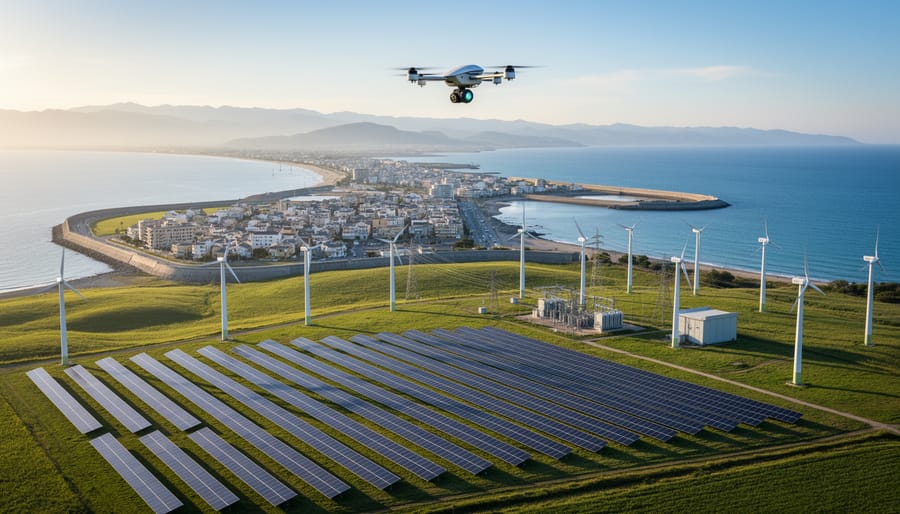
Our planet faces an unprecedented challenge: global temperatures are rising, extreme weather events are intensifying, and ecosystems are struggling to adapt. But here’s what many people misunderstand—fighting climate change isn’t just one strategy. It’s two fundamentally different approaches working in tandem.
Climate mitigation tackles the root cause by reducing greenhouse gas emissions and removing carbon from the atmosphere. Think solar panels replacing coal plants, electric vehicles replacing gas-guzzlers, and forests absorbing CO2. The goal? Slow down or stop climate change itself.
Climate adaptation, however, accepts that some change is already locked in. It focuses on protecting communities and ecosystems from impacts we can no longer prevent. This means building sea walls against rising oceans, developing drought-resistant crops, and designing cities to withstand extreme heat.
The distinction matters because we need both, and artificial intelligence is revolutionizing how we approach each one. Machine learning algorithms now optimize renewable energy grids with unprecedented precision, predict climate patterns months in advance, and identify the most effective adaptation strategies for specific regions.
Understanding this mitigation-adaptation framework transforms how we think about climate solutions. It’s not either-or—it’s a coordinated response where cutting emissions buys us time while adaptation strategies protect us from changes already underway. And AI technologies are emerging as the critical accelerator for both approaches, turning abstract climate goals into measurable, achievable actions.
The Two Paths: What Mitigation and Adaptation Actually Mean
Climate Mitigation: Stopping the Problem at Its Source
Climate mitigation tackles the root cause of global warming by reducing the greenhouse gases we pump into the atmosphere. Think of it as turning down the heat before your house gets uncomfortably warm, rather than installing fans after it’s already hot.
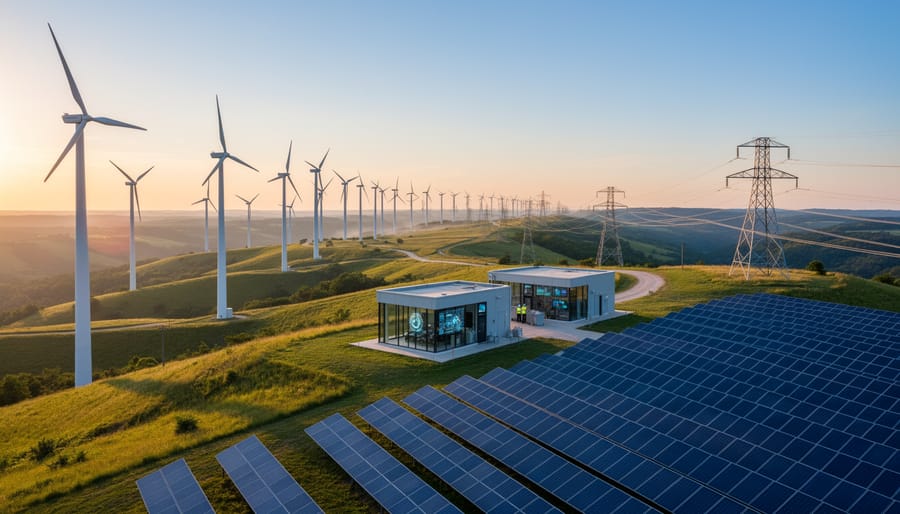
The primary goal is straightforward: prevent future temperature increases by cutting emissions at their source. This involves transitioning from fossil fuels to renewable energy sources like solar panels, wind turbines, and hydroelectric power. When you see a rooftop covered in solar panels or drive past a wind farm, you’re witnessing mitigation in action.
Other mitigation strategies include improving energy efficiency in buildings and transportation, protecting and expanding forests that naturally absorb carbon dioxide, and developing carbon capture technologies that pull greenhouse gases directly from the air or industrial exhaust streams. For example, some facilities now capture CO2 from power plants and store it underground permanently.
The beauty of mitigation is its preventive nature. Every ton of carbon dioxide we avoid releasing today means less warming tomorrow, reducing the need for costly adaptations down the road. However, because greenhouse gases already in the atmosphere will affect our climate for decades, mitigation alone isn’t enough, which is why adaptation strategies work hand-in-hand with these efforts.
Climate Adaptation: Living with the Changes Already Here
While mitigation focuses on preventing future climate change, adaptation means adjusting to the changes already happening around us. Think of it as climate-proofing our communities and systems for the realities we’re already facing.
Adaptation takes many practical forms in our daily lives. Coastal cities are building sea walls and flood barriers to protect against rising ocean levels. Farmers are switching to drought-resistant crop varieties that can survive with less water. Cities are establishing cooling centers where residents can escape dangerous heat waves. Infrastructure projects now account for increased rainfall intensity, with upgraded drainage systems preventing urban flooding.
Here’s the crucial part: even if we achieve perfect mitigation tomorrow and stop all greenhouse gas emissions, we’d still need adaptation. Why? Because the climate changes already set in motion will continue for decades due to the carbon dioxide already in our atmosphere. The heat waves, shifting rainfall patterns, and sea level rise we’re experiencing aren’t going away anytime soon.
This makes adaptation not just helpful, but essential for survival and prosperity. Communities that invest in both mitigation and adaptation strategies position themselves to weather current challenges while working toward a more stable climate future.
How AI Supercharges Climate Mitigation Efforts
Smart Energy Grids That Learn and Optimize
Imagine a power grid that thinks ahead. Modern smart energy systems use artificial intelligence to solve one of renewable energy’s biggest challenges: unpredictability. Solar panels don’t generate electricity at night, and wind turbines sit idle on calm days. AI bridges these gaps by learning patterns and making split-second decisions about energy distribution.
These intelligent grids analyze weather forecasts, historical consumption data, and real-time demand to predict exactly when and where electricity will be needed. When solar production peaks during midday, AI automatically routes excess power to battery storage or redirects it to areas with higher demand, preventing waste.
Google’s DeepMind demonstrated this capability by reducing energy use in its data centers by 40 percent through AI-powered cooling optimization. In Denmark, AI manages the country’s wind-heavy grid by forecasting wind patterns 36 hours ahead, allowing operators to balance supply with surgical precision.
National Grid in the UK employs machine learning to predict demand spikes during major events like football matches or popular TV finales, ensuring the system never gets caught off guard. The AI considers factors most humans would overlook, like cloud cover patterns affecting solar output or temperature fluctuations changing heating needs.
These systems don’t just react to problems; they prevent them. By continuously learning from millions of data points, AI spots inefficiencies invisible to human operators, turning our energy infrastructure into a self-improving network that gets smarter every day.

Carbon Capture Gets Smarter
Carbon capture technology has long promised to help reduce atmospheric CO2, but efficiency challenges have limited its effectiveness. Now, machine learning is transforming this mitigation strategy into a far more powerful tool.
AI algorithms analyze vast datasets to optimize every stage of the carbon capture process. These systems monitor temperature, pressure, and chemical reactions in real-time, automatically adjusting variables to maximize CO2 absorption while minimizing energy consumption. Some facilities using ML-optimized processes have reduced operational costs by up to 30% while capturing significantly more carbon.
Location matters tremendously for carbon capture projects, and this is where AI truly shines. Machine learning models process geological surveys, atmospheric data, and proximity to emission sources to identify ideal sites for direct air capture facilities. These algorithms consider factors humans might overlook, like local wind patterns, soil composition, and long-term storage potential in underground formations.
Perhaps most exciting is how decentralized AI networks enable global collaboration on carbon capture optimization. Research teams worldwide can share anonymized performance data, allowing AI systems to learn from thousands of installations simultaneously and identify best practices across different climates and conditions.
The result? Carbon capture facilities that learn and improve continuously, becoming more efficient at removing the greenhouse gases driving climate change. This represents a crucial advancement in our mitigation toolkit.
Transportation and Logistics Reimagined
Transportation accounts for roughly a quarter of global greenhouse gas emissions, making it a critical target for AI-powered climate solutions. The good news? Artificial intelligence is transforming how we move people and goods while dramatically cutting carbon footprints.
AI-powered route optimization serves as a prime example. Delivery companies like UPS use machine learning algorithms to analyze millions of possible routes, considering factors like traffic patterns, weather conditions, and delivery windows. These systems have helped reduce fuel consumption by millions of gallons annually. The AI doesn’t just find the shortest path—it identifies the most efficient one, accounting for real-time variables that human planners simply can’t process at scale.
Smart traffic management systems take this further by coordinating traffic lights across entire cities. In Los Angeles, an AI system reduced travel times by 12% and emissions by 10% by predicting congestion before it happens and adjusting signal timing accordingly.
Electric vehicle infrastructure also benefits from AI optimization. Smart charging networks use machine learning to determine when and where to charge vehicles based on grid capacity, renewable energy availability, and user needs. This prevents grid overload while maximizing the use of clean energy.
Supply chain optimization represents perhaps the biggest impact area. AI analyzes countless variables—from warehouse locations to shipping modes—to minimize transportation distances and consolidate shipments, cutting both costs and carbon emissions substantially.
Buildings That Think for Themselves
Imagine walking into an office building that automatically knows you’re too warm and adjusts the temperature before you even reach for the thermostat. This isn’t science fiction—it’s happening right now through AI-powered building management systems.
Buildings account for nearly 40% of global energy consumption, making them prime targets for climate mitigation. Smart building systems use machine learning algorithms to analyze patterns in occupancy, weather forecasts, and energy prices. The AI learns when people typically arrive, which rooms get used most, and even how long it takes to heat or cool different spaces.
Here’s how it works in practice: sensors throughout a building collect data on temperature, light levels, and occupancy. The AI processes this information in real-time, predicting needs and making micro-adjustments throughout the day. If a conference room stays empty all morning, the system reduces heating. When clouds roll in, automated blinds adjust and lighting compensates gradually.
The results are impressive. Companies using these systems report energy savings of 20-30% while employees report improved comfort. The technology pays for itself within a few years, making it both environmentally and economically smart. As these systems learn over time, they become even more efficient, continuously finding new ways to reduce waste without anyone noticing the difference.
AI’s Role in Climate Adaptation: Preparing for What’s Coming
Predicting Extreme Weather Before It Strikes
When Hurricane Ian approached Florida in 2022, AI-powered forecasting systems gave residents crucial extra hours to evacuate, potentially saving thousands of lives. This is the power of artificial intelligence in extreme weather prediction—transforming uncertain forecasts into precise, actionable warnings.
Traditional weather models struggle to predict rapidly intensifying storms or sudden flooding events. AI changes this by analyzing massive datasets from satellites, ocean buoys, and weather stations simultaneously. Google’s MetNet-3, for example, can predict precipitation up to 24 hours in advance with remarkable accuracy, focusing on specific neighborhoods rather than broad regions.
Machine learning algorithms have become particularly adept at identifying dangerous weather patterns before they fully develop. IBM’s Global High-Resolution Atmospheric Forecasting System processes atmospheric data 200 times faster than conventional models, giving emergency responders more time to prepare. During the 2023 Mediterranean floods, AI-enhanced early warning systems in Libya identified severe rainfall risks three days earlier than traditional methods, though infrastructure challenges still limited evacuation effectiveness.
The real-world impact extends beyond hurricanes. In Bangladesh, AI-powered flood prediction systems now provide up to five days of advance warning for vulnerable communities along river deltas. These systems analyze rainfall patterns, river levels, and historical flood data to predict inundation zones with 90 percent accuracy.
Perhaps most impressively, AI models are learning to predict tornado formation minutes before touchdowns occur, giving people precious time to seek shelter—a capability that would have seemed impossible just a decade ago.
Agriculture Adapts to New Climate Realities
Farmers worldwide face an unprecedented challenge: growing conditions that their grandparents wouldn’t recognize. Traditional planting calendars no longer match reality, and weather patterns have become unpredictable. This is where AI steps in as a crucial adaptation tool, helping agriculture adjust to our new climate reality.
Modern AI systems analyze decades of weather data, soil conditions, and crop performance to recommend which varieties will thrive in evolving local climates. For instance, a farmer in Kansas might receive AI-powered suggestions to shift from traditional corn varieties to drought-resistant alternatives that better match the region’s increasingly dry summers. These recommendations consider temperature shifts, rainfall patterns, and even pest migration trends.
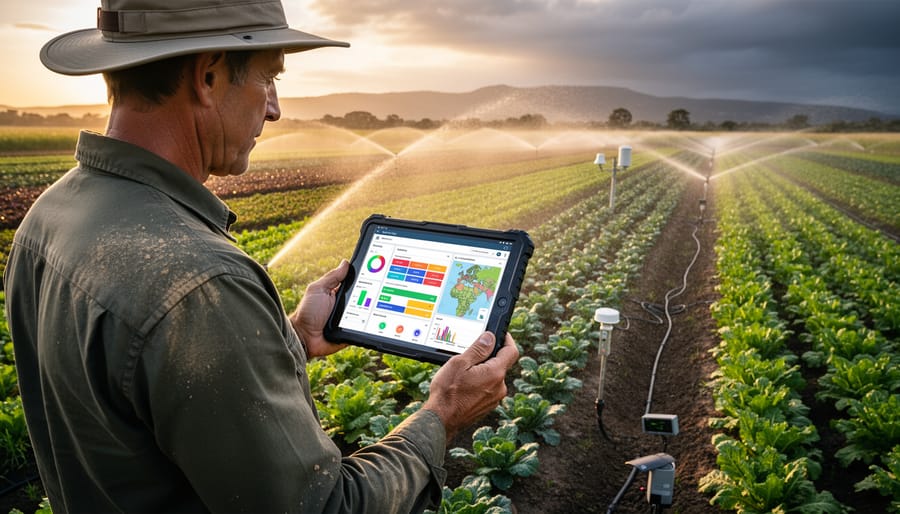
Irrigation optimization represents another game-changing application. AI-powered sensors monitor soil moisture levels in real-time, combining this data with weather forecasts to determine precisely when and how much to water. This approach conserves water while maintaining crop health, a critical balance as droughts become more frequent.
Pest prediction systems use machine learning to forecast outbreaks before they devastate crops. By analyzing temperature trends, humidity patterns, and historical pest behavior, these systems alert farmers to prepare defenses weeks in advance. In East Africa, for example, AI models successfully predict desert locust swarms, giving farmers crucial time to protect their fields.
Perhaps most impressively, AI platforms now provide personalized adaptation roadmaps, helping individual farmers navigate the long-term transition to climate-resilient agriculture through data-driven guidance tailored to their specific circumstances.
Protecting Infrastructure and Communities
When rising sea levels threaten coastal cities, how do we decide where to build protective barriers? This is where AI becomes an invaluable planning partner for adaptation efforts.
Machine learning models can predict sea-level rise with remarkable precision by analyzing decades of ocean temperature data, ice sheet measurements, and historical flooding patterns. These models don’t just forecast average increases—they identify specific neighborhoods and infrastructure most at risk. For example, AI systems have mapped Miami’s most vulnerable districts, helping city planners prioritize which areas need elevated roads or improved drainage systems first.
During active disasters, AI optimizes resource allocation in real-time. Computer vision algorithms analyze satellite imagery and social media posts to identify which communities need immediate assistance. One notable example is how AI helped coordinate emergency response during Hurricane Harvey by processing thousands of distress calls and directing rescue teams to the most critical locations first.
For long-term infrastructure planning, AI simulates thousands of scenarios to test different resilience strategies. Cities like Rotterdam use these simulations to design adaptive architecture—buildings that can withstand both current and future climate conditions. The AI considers multiple factors simultaneously: flood risk, population density, construction costs, and environmental impact.
Perhaps most practically, AI helps communities prepare before disasters strike. Predictive models analyze weather patterns to provide early warnings, giving residents crucial extra hours or days to evacuate. These systems learn from each event, becoming more accurate over time and ultimately saving lives through better preparation and response coordination.
Where Mitigation and Adaptation Meet: AI’s Dual Impact
Forest Management: Protecting Carbon Sinks and Communities
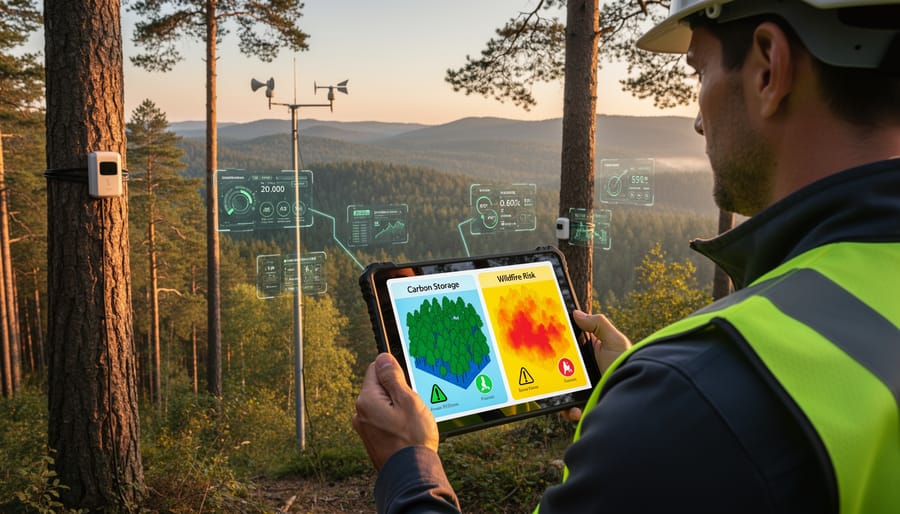
Forests represent one of nature’s most powerful carbon-capturing systems, absorbing roughly 2.6 billion tons of CO2 annually. AI is revolutionizing how we protect these vital ecosystems by tackling both sides of the climate equation simultaneously.
For mitigation, satellite-based AI systems analyze forest health and carbon sequestration rates across millions of acres. These platforms use computer vision to detect deforestation in real-time, sometimes within hours of illegal logging activity. By processing imagery from multiple sources, AI can estimate how much carbon different forest areas store and identify which regions offer the greatest potential for reforestation projects.
On the adaptation front, AI monitors wildfire risk by analyzing weather patterns, vegetation dryness, and historical fire data. Companies like Pano AI deploy camera networks that use machine learning to detect smoke plumes within minutes, often before traditional detection methods. This early warning system helps protect both forest carbon reserves and nearby communities.
The beauty of this dual approach is its efficiency. A single AI monitoring system can simultaneously track carbon storage levels while flagging emerging fire threats, creating a comprehensive forest protection strategy that addresses both preventing climate change and adapting to its immediate dangers.
Water Systems: Conservation and Crisis Management
Water scarcity affects over 2 billion people globally, and climate change is intensifying both droughts and floods. AI is tackling this crisis from both angles, helping us use less water while preparing for extreme events.
On the mitigation side, AI reduces water waste through intelligent monitoring. Smart irrigation systems analyze soil moisture, weather forecasts, and plant needs to deliver precise amounts of water exactly when needed. In California’s agriculture sector, these systems have cut water use by up to 30% while maintaining crop yields. AI orchestration systems coordinate sensors across entire water networks, detecting leaks that waste millions of gallons annually. Cities like Singapore use machine learning to predict pipe failures before they happen, preventing both waste and infrastructure damage.
For adaptation, AI helps communities prepare for water-related disasters. Predictive models analyze rainfall patterns, river levels, and historical data to forecast floods days in advance, giving residents time to evacuate. During droughts, AI optimizes water distribution across competing needs like drinking water, agriculture, and industry. In Cape Town, South Africa, machine learning helped the city avoid “Day Zero” by predicting reservoir levels and recommending conservation measures that prevented taps from running dry completely.
The Reality Check: Challenges AI Faces in Climate Action
While AI shows tremendous promise in addressing climate challenges, it’s crucial to acknowledge the elephant in the room: these technologies come with significant limitations and costs that could undermine their environmental benefits.
The most pressing concern is energy consumption. Training large AI models requires massive computational power, generating substantial carbon emissions. A single AI model can consume as much electricity as several homes use in a year. The irony isn’t lost on researchers—using energy-intensive technology to solve an energy and emissions problem creates a paradoxical situation. This is why advances in AI processing efficiency are becoming increasingly critical for sustainable climate applications.
Data dependency presents another major hurdle. AI systems are only as good as the data they’re trained on, and climate data often contains gaps, particularly from developing regions most vulnerable to climate impacts. Historical weather patterns may not accurately predict future conditions in our rapidly changing climate, potentially making AI predictions less reliable over time. Additionally, satellite imagery and sensor networks required for comprehensive monitoring remain expensive and inaccessible to many communities that need them most.
The digital divide creates troubling equity issues. While wealthy nations can deploy sophisticated AI climate solutions, developing countries often lack the infrastructure, technical expertise, and financial resources to benefit from these technologies. This risks widening the gap between those who can effectively respond to climate change and those left behind.
Perhaps the greatest danger is technological solutionism—the belief that AI alone can solve our climate crisis. This mindset can lead to delayed action on proven solutions like renewable energy deployment, conservation efforts, and policy changes. Technology cannot replace the fundamental behavioral and systemic changes needed to address climate change at its roots.
There’s also the challenge of implementation lag. Even when AI identifies optimal solutions, translating those insights into real-world action involves navigating complex political, economic, and social systems. A perfect algorithm means nothing if it sits unused in a research paper.
Understanding these limitations doesn’t mean abandoning AI for climate action. Rather, it means approaching these tools with clear eyes, realistic expectations, and commitment to addressing their shortcomings while maximizing their genuine potential for positive impact.
What This Means for You: Getting Involved
The intersection of AI and climate action offers exciting opportunities for anyone looking to make a real difference. Whether you’re a student, career-changer, or tech professional, there are multiple pathways to get involved.
For those considering a career shift, roles in climate tech are expanding rapidly. Machine learning engineers specializing in environmental applications are in high demand, as are data scientists who can work with climate datasets. Companies like Google’s Environmental Insights Explorer, Microsoft’s AI for Earth, and numerous climate tech startups are actively hiring. If you’re just starting out, focus on building skills in Python, understanding climate science basics, and exploring frameworks like TensorFlow or PyTorch.
Learning resources abound for the curious. Coursera offers courses on “AI for Climate Change,” while platforms like Kaggle host climate-related datasets perfect for hands-on practice. Organizations like Climate Change AI provide accessible research papers and host regular workshops connecting newcomers with experts.
You don’t need to be a professional to contribute. Citizen science projects like Zooniverse allow anyone to help label satellite imagery for environmental monitoring. Open-source initiatives such as OpenClimate and climate modeling projects on GitHub welcome contributors of all skill levels.
Stay informed by following key organizations driving this work: the Climate Change AI community, DeepMind’s sustainability research, and IBM’s Green Horizons project. Understanding adaptive AI governance becomes crucial as these technologies scale.
Even small actions matter. Advocate for AI-driven climate solutions in your workplace, share knowledge with your network, or simply stay informed about how these technologies evolve. The future of climate action will be shaped by those who understand both the problem and the tools available to address it.
The climate crisis demands both prevention and preparation—mitigation to reduce future harm and adaptation to manage present realities. These aren’t competing strategies but complementary approaches, like wearing sunscreen while also seeking shade. The good news? Artificial intelligence is revolutionizing both fronts simultaneously.
AI’s transformative potential lies in its ability to process vast datasets, identify patterns invisible to human analysis, and optimize complex systems in real-time. Whether it’s predicting renewable energy output for mitigation or forecasting drought patterns for adaptation, machine learning algorithms are becoming indispensable tools in our climate action toolkit. The technology excels at connecting dots across disciplines—linking weather patterns with crop yields, energy consumption with carbon emissions, or urban heat distribution with infrastructure planning.
As AI capabilities advance, we’re witnessing an evolution from simple predictive models to sophisticated systems that can recommend actionable interventions. Today’s algorithms don’t just tell us what might happen; they suggest what we should do about it. This shift from insight to action represents a pivotal moment in climate technology.
The path forward requires integrating AI tools across both mitigation and adaptation strategies, recognizing that effective climate action needs both approaches working in concert. For those entering this field, the opportunities are boundless—from developing new algorithms to applying existing technologies in novel ways.
The climate challenge is immense, but so is human ingenuity amplified by artificial intelligence. Stay informed, explore these technologies, and consider how your skills might contribute to building a more resilient, sustainable future. The solutions we need are emerging now, and they’ll be shaped by people who understand both the urgency of climate action and the possibilities of intelligent systems.