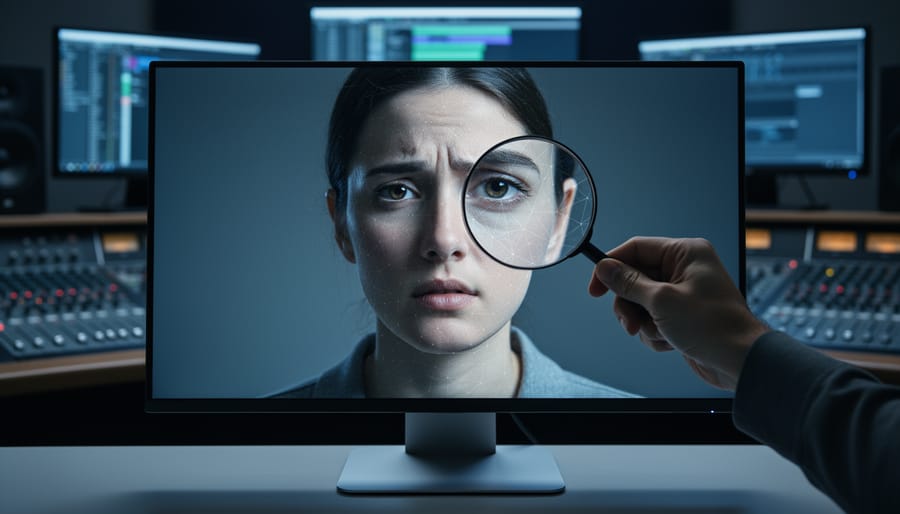
A child’s drawing uploaded online can now be replicated by AI systems and transformed into professional artwork within seconds. A corporate executive’s voice from a quarterly earnings call can be synthesized to create convincing fake audio instructions to transfer millions of dollars. These aren’t hypothetical scenarios—they’re happening right now, and the technology creating them improves daily.
AI watermarking emerged as a potential solution to this crisis of authenticity. The concept is straightforward: embed invisible markers into AI-generated content that identify its synthetic origins, much like currency has embedded security features to prevent counterfeiting. Major tech companies including Google, Meta, and OpenAI have announced watermarking initiatives, promising a future where you can instantly verify whether an image, video, or audio clip came from an AI system or a human creator.
But here’s the uncomfortable truth that the headlines often skip: AI watermarking isn’t the silver bullet many hoped it would be. While the technology works under controlled conditions, it crumbles when content gets compressed, edited, or intentionally attacked. A malicious actor can remove watermarks with surprising ease, and watermarking does nothing to address AI content generated by systems that don’t implement it in the first place.
This doesn’t mean AI watermarking is worthless. Understanding what it can and cannot do is essential for anyone navigating our increasingly synthetic media landscape. Whether you’re a content creator worried about attribution, a business leader concerned about brand impersonation, or simply someone trying to determine what’s real online, knowing the actual capabilities and fundamental limitations of AI watermarking will help you make better decisions about the content you encounter and create every day.
What AI Watermarking Actually Is (And What It Isn’t)
The Invisible Signature in Your AI Image
Think of the waterproof ink on a dollar bill. Under normal light, you see only the regular design, but shine a UV lamp and hidden security features suddenly appear. AI watermarks work similarly, embedding invisible patterns into images that remain hidden to the human eye but can be detected by specialized software.
When an AI system generates an image, it can subtly adjust pixel values in specific patterns throughout the picture. These tiny changes are imperceptible to us—we see a beautiful sunset or a portrait without noticing anything unusual. However, these modifications create a unique signature woven into the image’s digital fabric.
Here’s a practical example: imagine you’re looking at a photorealistic AI-generated image of a city skyline. The colors, shadows, and details all look perfect. Behind the scenes, the AI has modified specific pixels by minuscule amounts—perhaps changing a blue pixel from RGB value (100, 150, 200) to (101, 150, 201). Spread these microscopic tweaks across thousands of pixels in a carefully designed pattern, and you’ve created an invisible fingerprint.
The watermark remains embedded even if someone crops the image, applies filters, or compresses it for social media. Detection software can scan the image and recognize the pattern, confirming whether it was AI-generated and potentially identifying which system created it. This technology operates much like how noise-canceling headphones can identify and filter specific sound frequencies—the pattern exists in a layer most of us never perceive.

Why This Isn’t Like Traditional Watermarks
When you hear “watermark,” you might picture those semi-transparent logos stamped across stock photos to prevent theft. AI watermarks work completely differently and serve a different purpose altogether.
Traditional watermarks are visible (or sometimes invisible) markers added to protect copyright. They’re designed to be obvious deterrents that say “this content is owned by someone.” You can usually remove them with editing software, though doing so might be illegal.
AI watermarks for provenance, on the other hand, are invisible signals embedded deep within the content itself. Think of them like a digital fingerprint baked into every pixel of an image or woven into the pattern of text. They’re not meant to prevent you from using the content. Instead, they’re designed to tell you where that content came from: “This was created by AI” or “This came from a specific source.”
Here’s the key difference: traditional watermarks protect ownership, while AI watermarks provide transparency. One says “don’t steal this,” and the other says “here’s what you’re looking at.” This distinction matters because it shapes what we can realistically expect from this technology. AI watermarks won’t stop someone from creating a deepfake, but they might help you identify authentic content when it matters most.
How AI Content Provenance Tracking Works
Following the Digital Breadcrumbs
Let’s follow the journey of an AI-generated sunset image to understand how digital watermarking creates a breadcrumb trail. Imagine a graphic designer named Sarah uses an AI tool to create a stunning beach scene for a travel blog. The moment the image is generated, it receives an invisible watermark embedded directly into its pixels, like a secret signature woven into the fabric of the image itself.
But that’s just the first breadcrumb. The AI tool also attaches metadata to the file, recording crucial information: when it was created, which AI model generated it, and even specific parameters Sarah used in her prompt. Think of metadata as a digital birth certificate traveling with the image wherever it goes.
When Sarah uploads the image to Instagram, something interesting happens. While Instagram strips away some metadata to reduce file size, the watermark embedded in the pixels remains intact. If someone screenshots the image or downloads it to share elsewhere, that invisible marker persists through most transformations, compressions, and edits.
This creates what experts call a provenance chain, essentially a documented history of the image’s life. When fact-checkers or journalists encounter this sunset image months later in a misleading news article, they can use detection tools to scan for the watermark. These tools act like digital detectives, revealing that the image originated from an AI system rather than a camera at an actual beach.
However, the breadcrumb trail isn’t perfect. Heavy editing, certain filters, or deliberate removal attempts can corrupt or erase these markers. That’s why watermarking works best as part of a broader verification strategy, not as a standalone solution for combating misinformation.
Who’s Building These Systems (And Why You Should Care)
The push for AI watermarking isn’t coming from small startups in garages—it’s being driven by tech giants who recognize they have a responsibility problem on their hands.
Google DeepMind launched SynthID in 2023, embedding invisible watermarks directly into AI-generated images, audio, and text. Their system works across Google’s own products and is being shared with other companies through partnerships. Meanwhile, Meta released an open-source watermarking tool and committed to labeling AI content across Facebook and Instagram. Microsoft has integrated similar technology into its AI image generators and is working with the Content Authenticity Initiative, a coalition that includes Adobe, BBC, and Sony.
Why are these companies suddenly so invested? Three reasons. First, regulatory pressure is mounting—the European Union’s AI Act and similar legislation worldwide are pushing for transparency requirements. Second, these platforms are getting hammered by waves of AI-generated misinformation, and watermarking offers a potential defense they can point to. Third, and perhaps most cynically, being proactive on safety issues helps them shape regulations in their favor rather than having stricter rules imposed from outside.
For you as a user, this corporate involvement is a mixed bag. The good news is that watermarking will likely become standard across major platforms, making it easier to spot AI content when browsing social media or reading news. Similar to how privacy-preserving AI technologies are becoming mainstream, watermarking could become an expected feature rather than an exotic add-on. The downside? These same companies control the standards, and their business interests don’t always align with maximum transparency.
The Real-World Applications You’re Already Encountering

Social Media’s New Reality Check
Social media platforms are quietly rolling out one of the biggest infrastructure changes in years, and you might have already noticed subtle differences in your feed. Facebook and Instagram began labeling AI-generated images in May 2024, using invisible watermarks embedded by tools like DALL-E and Midjourney. When you scroll past an image now, you might see a small “AI Info” label in the corner—that’s watermark detection at work.
YouTube has taken a different approach by requiring creators to disclose AI-generated content, particularly for realistic-looking videos. The platform scans uploads for synthetic media markers, and starting in 2024, videos that trigger these detections without proper disclosure face removal or demonetization. This means your favorite creators are now adding labels like “Altered content” or “Synthetic media” to comply.
Twitter (X) implemented similar detection systems, though enforcement remains inconsistent. The platform displays warning labels on detected AI content, especially for images depicting public figures or newsworthy events.
What does this mean for your daily scrolling? You’ll increasingly see transparency labels on AI content, though not everything gets caught. Platforms prioritize flagging potentially misleading content—like fake news images or deepfakes of real people—over obvious creative works like AI-generated art. Think of it as a soft guardrail rather than a foolproof system.
The user experience remains relatively seamless. Most people won’t notice the behind-the-scenes scanning happening to billions of images daily. However, content creators face new responsibilities: properly labeling their AI-generated posts or risking reduced visibility and engagement as algorithms deprioritize unmarked synthetic content.
When Your Camera Becomes a Fact-Checker
Imagine if your smartphone could act as a built-in truth-teller, automatically proving that the photo you just snapped is real and unedited. That’s exactly what major camera manufacturers and tech companies are now building into their devices.
Companies like Sony, Canon, and Nikon have started embedding what’s called “hardware-level provenance” directly into professional cameras. Think of it as a digital birth certificate for every image. The moment you press the shutter button, the camera creates a cryptographic signature—a unique mathematical fingerprint that gets embedded in the photo file. This signature records essential details: when and where the photo was taken, which specific camera captured it, and crucially, whether anyone has modified it since.
The technology works through secure chips built into the camera hardware itself, similar to how your credit card chip protects your transactions. These chips are nearly impossible to hack or manipulate, making them far more trustworthy than software-based solutions that can be bypassed.
Smartphone makers are joining the movement too. Google’s latest Pixel phones include authenticity markers in their camera systems, while Adobe has partnered with multiple manufacturers to create the Content Credentials standard—essentially a nutrition label for digital media that travels with the image wherever it goes online.
The real-world benefit? When you see an image tagged with these credentials, you can verify its authenticity through special verification tools, giving you confidence that what you’re viewing hasn’t been manipulated by AI or traditional editing software.
Where AI Watermarking Falls Short
The Cat-and-Mouse Game Nobody’s Winning
Here’s the unfortunate truth: removing or tampering with AI watermarks is often surprisingly straightforward. Think of it like those “Do Not Remove” tags on mattresses—technically they’re there, but they’re not exactly Fort Knox.
The simplest method? Just crop, compress, or resize the image. Many watermarks, especially invisible ones embedded in pixel patterns, rely on the original file structure remaining intact. Change a few pixels here, apply a filter there, and the watermark degrades or disappears entirely. It’s similar to how photocopying a document repeatedly makes text fade—except with watermarks, sometimes just one edit is enough.
More sophisticated attackers can use what researchers call “adversarial techniques.” These are methods specifically designed to fool AI systems, much like how AI models under attack can be manipulated to make wrong predictions. Someone with basic programming knowledge can run scripts that systematically test which modifications break the watermark while keeping the image looking normal.
The cat-and-mouse dynamic works like this: watermarking companies create stronger protections, bad actors develop better removal tools, companies respond with even more robust watermarks, and the cycle continues. It’s an arms race where the attackers often have the advantage because they only need to find one weakness, while defenders must protect against every possible attack.
The reality is that any watermark strong enough to survive all tampering attempts would likely degrade the content quality so severely that nobody would want to use it.

The Screenshots and Screen Recordings Problem
Here’s the uncomfortable truth about AI watermarking: taking a screenshot defeats most systems instantly. When someone captures an image of watermarked content displayed on their screen, the watermark often disappears. Screen recordings of AI-generated videos present the same problem. The new file is technically a photograph of the original, containing none of the embedded metadata or invisible patterns that watermarking relies on.
This represents a fundamental challenge similar to other AI security vulnerabilities. Even the most sophisticated watermarking systems struggle against such basic workarounds. Anyone determined to spread misinformation can simply screenshot content before sharing it.
Some researchers are developing watermarks that survive screenshots by embedding patterns visible to detection algorithms even after reproduction. However, these systems face accuracy issues and can be fooled through compression, cropping, or applying filters. The reality is that watermarking works best when people choose not to circumvent it, making it more of a deterrent for casual misuse rather than a bulletproof solution against intentional bad actors.
Deepfake Detection: A Different Beast Entirely
What Detectors Look For That Humans Miss
While our eyes might scan an image and see nothing amiss, AI detection tools operate like forensic investigators, examining evidence invisible to casual observers. These detectors analyze dozens of microscopic clues that betray an image’s synthetic origins.
Consider lighting inconsistencies, one of the most telltale signs. In a genuine photograph, light behaves predictably—shadows fall in consistent directions, reflections appear in glossy surfaces like eyes or jewelry, and skin absorbs and reflects light naturally. AI-generated images often fumble these details. You might see a person with shadows falling to the left while their companion’s shadows point right, or eyes that lack the subtle reflections you’d expect from ambient light sources.
Detection algorithms also scrutinize what researchers call “frequency artifacts”—irregular patterns in how colors and textures transition. Real photographs contain natural noise and grain from camera sensors, while AI-generated images display mathematically perfect gradients that feel unnaturally smooth. Think of it like comparing hand-painted artwork to a digital gradient tool—both might look fine at first glance, but close inspection reveals different characteristics.
Then there’s the matter of biological impossibilities. Early deepfakes famously struggled with blinking, producing videos where subjects stared unblinkingly for uncomfortable stretches. Modern systems handle this better, but detectors now look for subtler cues: unnatural jaw movements during speech, teeth that blur together unnaturally, or hair that defies physics by maintaining impossible rigidity.
Detectors also examine metadata and compression patterns. Just as forensic analysts can identify a specific printer from nearly invisible tracking dots, AI tools can recognize the digital fingerprints left by different generation models. These statistical signatures exist in how the AI processes information, creating patterns that repeat across generated content like a manufacturer’s watermark woven into paper.
Why This Arms Race Never Ends
The battle between watermarking and evasion techniques mirrors a classic cybersecurity dynamic: defenders build stronger walls, attackers find new ways over them, and the cycle repeats. Each time researchers develop a more robust watermarking system, bad actors work to circumvent it through simple image editing, compression techniques, or AI models specifically trained to remove watermarks.
Think of it like antivirus software and computer viruses. As detection methods improve, malware creators adapt their code. Similarly, as watermarking becomes more sophisticated, so do the tools designed to defeat it. This creates an ongoing technology race where neither side can claim permanent victory.
The challenge intensifies as generative AI models become more accessible and powerful. Anyone can now create convincing manipulated AI content with minimal technical knowledge, while watermarking remains concentrated among major tech companies. This asymmetry means detection methods constantly play catch-up.
Moreover, watermarks must balance robustness with invisibility. Make them too strong, and they degrade content quality. Make them too subtle, and simple edits can eliminate them. This fundamental trade-off ensures that perfect, unbreakable watermarking remains elusive, keeping the arms race perpetually in motion.
What This Means for You Right Now
Simple Checks Anyone Can Do
You don’t need to be a tech expert to spot potential issues with AI-generated content. Here are practical steps anyone can take to verify what they’re seeing online.
Start by checking the source. Look for verification badges or watermark indicators from platforms like YouTube, Meta, or Adobe. Legitimate AI-generated content often includes disclosure statements in captions or descriptions. If something claims to show a celebrity or politician in an unusual situation, visit their official social media accounts or trusted news sources to confirm.
Next, examine the content itself for telltale signs. Watch for unnatural facial movements, especially around the eyes and mouth. Check if audio syncs properly with lip movements. Look at hands and fingers, which AI often struggles to render correctly. Notice backgrounds for distortions, warped objects, or inconsistent lighting that doesn’t match the scene.
Use reverse image search tools like Google Images or TinEye to trace where content originated. This can reveal if an image has been manipulated or taken out of context. Many platforms now offer built-in reporting tools specifically for suspected AI content.
Pay attention to metadata when possible. Some platforms display creation information that indicates AI involvement, similar to how photographers credit their equipment. While protecting AI systems requires technical solutions, spotting suspicious content relies on critical thinking.
When in doubt, approach sensational content with skepticism and wait for multiple credible sources to verify claims before sharing.

Free Tools Worth Bookmarking
Several free tools can help you verify the authenticity of images and videos you encounter online. Google’s About This Image feature lets you right-click any image in Chrome to see its history, related content, and metadata—useful for spotting manipulated or recycled photos. TinEye and Google Reverse Image Search work similarly, helping you trace where an image first appeared and whether it’s been altered.
For deepfake detection, Sensity AI offers a free Chrome extension that flags potentially manipulated faces in videos and images as you browse. The tool analyzes facial movements and inconsistencies that often betray synthetic media.
Microsoft’s Video Authenticator, while primarily designed for organizations, represents the growing accessibility of detection technology. Meanwhile, FotoForensics provides free analysis of image compression levels and error patterns that can reveal digital tampering.
Remember that these tools aren’t foolproof—they work best as part of your critical thinking toolkit rather than definitive truth-detectors. Cross-reference results from multiple tools, check the source’s credibility, and consider the context before drawing conclusions about whether content is authentic or manipulated.
AI watermarking represents an important step forward in our battle against misinformation and deepfakes, but it’s essential to understand its role realistically. Think of it as one tool in a much larger toolbox rather than a silver bullet solution. While watermarks can help verify the authenticity of AI-generated content, they work best when combined with other safeguards like improved platform policies, legal frameworks, and detection technologies.
The truth is, technology alone will never fully solve the challenge of digital misinformation. Even the most sophisticated watermarking systems have limitations, and determined bad actors will always look for workarounds. This reality doesn’t diminish watermarking’s value, but it does highlight something crucial: our own critical thinking skills remain our strongest defense.
This is where media literacy becomes vital. Learning to question what you see online, checking multiple sources, and understanding how AI-generated content works empowers you to navigate the digital landscape more confidently. Rather than relying solely on technological solutions to flag misinformation for us, we need to develop our own ability to spot red flags and verify information.
The digital world will continue evolving, bringing new challenges and solutions. The key to thriving in this environment isn’t just understanding individual technologies like AI watermarking, it’s cultivating adaptability and maintaining a healthy skepticism. Stay curious, keep learning about emerging technologies, and remember that being informed is your most powerful tool in the age of AI-generated content.