
Author: jean

Why Your Phone Can’t Handle That AI Model (Yet)

Why Your Phone Can’t Handle That AI Model (Yet)

Your phone can stream 4K video and run photorealistic games, yet struggles to generate a simple paragraph using AI. This isn’t a design flaw—it’s the reality of running large language models on consumer devices. The same ChatGPT that responds instantly through your browser would crawl to a halt if installed directly on your laptop, assuming it could even fit.
Device limitations for on-device LLMs stem from three fundamental constraints: memory capacity, processing power, and energy consumption. Modern AI models like GPT-4 require hundreds of gigabytes of RAM and specialized hardware that most personal devices simply don’t possess. When a model needs 175 billion parameters to function, and each…

Why Your AI Is Making Unfair Decisions (And How Fairness Data Fixes It)

Why Your AI Is Making Unfair Decisions (And How Fairness Data Fixes It)

In 2018, Amazon scrapped an AI recruiting tool that systematically downgraded resumes from women. The algorithm had learned bias from a decade of hiring data that predominantly featured male candidates. This failure wasn’t about bad code—it was about bad data and the absence of fairness considerations baked into the system from day one.
Fairness data refers to the information deliberately collected, curated, and analyzed to identify, measure, and mitigate bias in AI systems throughout their entire lifecycle. Unlike traditional training data, fairness data includes demographic attributes, protected characteristics, performance metrics across different groups, and contextual information about how …

Why Supply Chain and Logistics Aren’t the Same (And Why AI Needs to Know the Difference)

Why Supply Chain and Logistics Aren’t the Same (And Why AI Needs to Know the Difference)

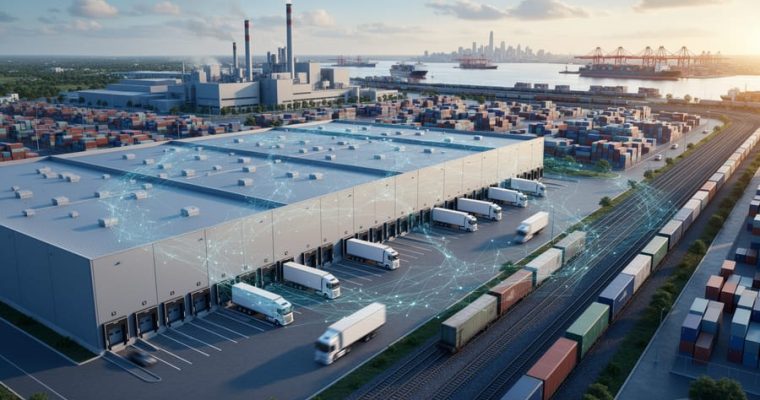
Supply chain and logistics aren’t the same thing, though many people use these terms interchangeably. Understanding the difference becomes crucial when you’re implementing AI solutions, as each domain requires distinct approaches and technologies.
Logistics is the tactical component that focuses on moving and storing goods efficiently. It handles transportation, warehousing, inventory management, and order fulfillment. Think of it as the execution layer—getting products from point A to point B at the right time and cost.
Supply chain is the strategic umbrella that encompasses logistics plus everything else: sourcing raw materials, manufacturing, demand forecasting, supplier relationships…

Your AI System Is One Breach Away From Disaster (Here’s How to Stop It)

Your AI System Is One Breach Away From Disaster (Here’s How to Stop It)

Treat AI deployment security as a multi-layered defense system, not an afterthought. Begin by implementing access controls at every stage of your machine learning pipeline, restricting who can modify training data, adjust model parameters, or access prediction outputs. A compromised dataset or model can cascade into widespread failures, from biased hiring algorithms to manipulated fraud detection systems.
Encrypt your data both in transit and at rest, using industry-standard protocols like TLS 1.3 for communication and AES-256 for storage. This protects sensitive training information and proprietary model architectures from interception. Deploy models within isolated containers or virtual environments…

AI in Education: What Schools Won’t Tell You About the Trade-Offs

AI in Education: What Schools Won’t Tell You About the Trade-Offs

Artificial intelligence is reshaping classrooms faster than most people realize. From elementary schools experimenting with adaptive learning software to universities deploying AI-powered grading systems, educational institutions worldwide are making billion-dollar bets on this technology. The global AI in education market reached $4 billion in 2022 and is projected to exceed $30 billion by 2032, signaling a transformation that will touch every student, teacher, and parent.
But this rapid adoption raises crucial questions. Will AI truly personalize learning for every child, or will it widen the digital divide? Can intelligent tutoring systems replace the irreplaceable human connection between teachers…

Why Today’s AI Doesn’t Need Quantum Computing (But Tomorrow’s Might)

Why Today’s AI Doesn’t Need Quantum Computing (But Tomorrow’s Might)

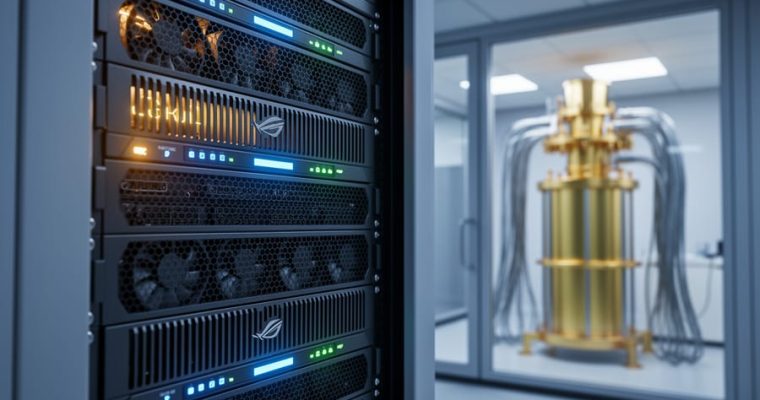
No, current AI systems like ChatGPT, Midjourney, and the machine learning models powering today’s technology do not use quantum computing. They run entirely on classical computers—the same type of hardware in your laptop or smartphone, just scaled up massively in data centers.
This misconception arises because both artificial intelligence and quantum computing dominate tech headlines, often mentioned in the same breath as revolutionary technologies. When people see news about quantum breakthroughs alongside AI achievements, it’s natural to assume they’re working together. They aren’t, at least not yet.
Understanding the distinction matters because it clarifies what’s happening now …

How AI Is Making Sustainable Farming Work Without Breaking the Bank

How AI Is Making Sustainable Farming Work Without Breaking the Bank

Picture a farm where crops thrive with minimal synthetic fertilizers, where natural pest control replaces chemical sprays, and where soil health improves year after year—all while maintaining profitable yields. This isn’t a romantic return to pre-industrial farming. It’s Low-Input Sustainable Agriculture (LISA), and artificial intelligence is transforming it from an idealistic concept into an economically viable reality for farmers worldwide.
LISA represents a fundamental shift in how we grow food. Instead of depending heavily on expensive chemical inputs, it works with natural ecosystems through practices like crop rotation, cover cropping, and integrated pest management. The challenge has …

Why Light-Based Connections Are Solving AI’s Biggest Bottleneck

Why Light-Based Connections Are Solving AI’s Biggest Bottleneck

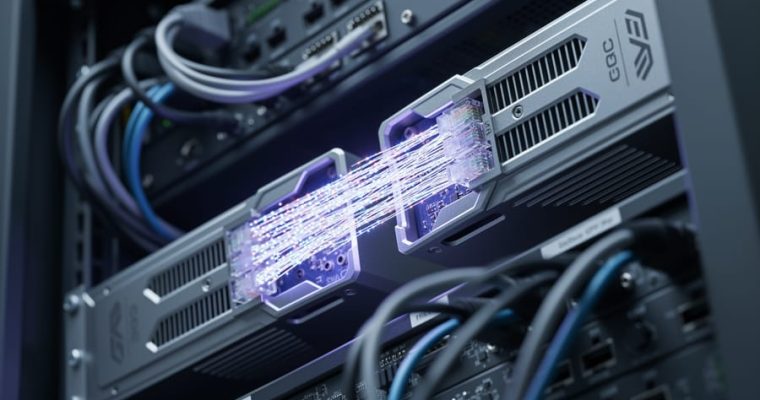
Artificial intelligence systems are hitting a wall, and it’s not about processing power. Modern AI chips can crunch numbers at breathtaking speeds, but they’re increasingly starved for data. The culprit? Traditional copper wiring connecting processors, memory, and accelerators simply cannot keep pace with the explosive computational demands of large language models, computer vision systems, and neural networks that power today’s AI breakthroughs.
Optical interconnects replace these copper bottlenecks with light-based data transmission, using photons instead of electrons to shuttle information between components. Think of it as upgrading from narrow country roads to fiber-optic highways for data…

Why Your AI Models Might Fail Government Security Standards

Why Your AI Models Might Fail Government Security Standards

The Chinese surveillance cameras monitoring your office building, the Russian-manufactured circuit boards in your data center servers, or the software libraries from unknown developers halfway across the world—any of these could be the weak link that compromises your entire AI system. In 2018, the U.S. government recognized this vulnerability and passed the Federal Acquisition Supply Chain Security Act (FASCSA), fundamentally changing how federal agencies and their contractors must think about technology procurement.
If you’re developing artificial intelligence systems for government clients, building machine learning models that will touch federal data, or simply curious about the intersection of…

How Privacy-Preserving Machine Learning Protects Your Data While Training Smarter AI

How Privacy-Preserving Machine Learning Protects Your Data While Training Smarter AI

Every time you share personal information with an AI application—whether it’s a health symptom checker, a financial advisor bot, or a smart home device—you’re making a calculated trade-off between convenience and privacy. The question isn’t whether your data will be processed, but whether it can be protected while machine learning models learn from it.
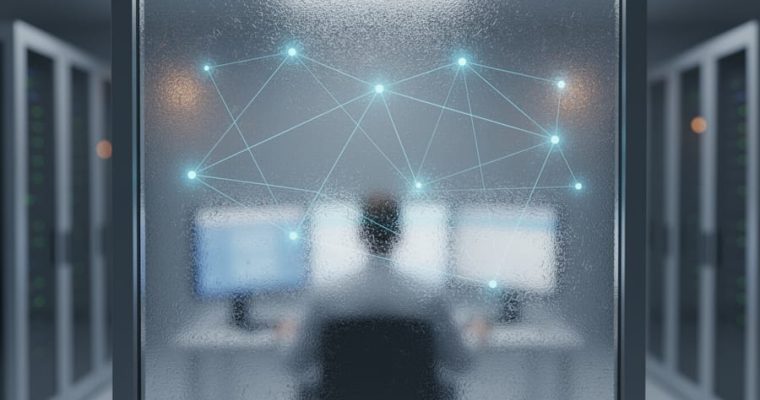
Privacy-preserving machine learning solves this dilemma by enabling AI systems to extract valuable insights from data without ever seeing the raw information itself. Think of it like a doctor diagnosing patients through a frosted glass window: they can identify patterns and make accurate assessments without viewing personal details directly. …