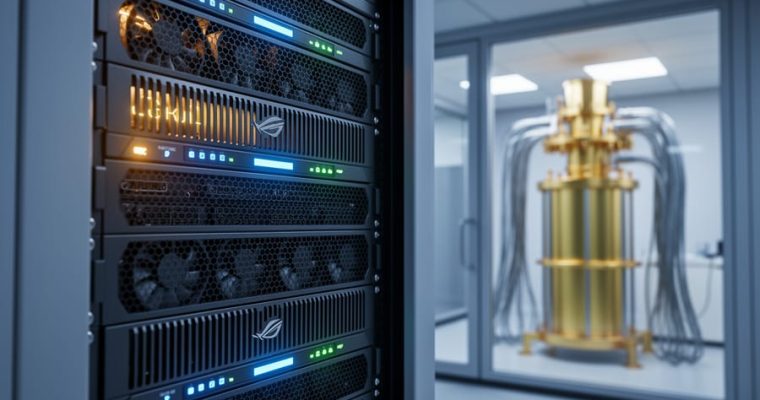

AI Future Enhancements

Explore emerging innovations and visionary AI frontiers set to transform technological landscapes.

Why AI Background Removal Makes Car Photos Sell Faster (And How It Works)

Why AI Background Removal Makes Car Photos Sell Faster (And How It Works)

Imagine listing a luxury vehicle online, only to have potential buyers scroll past because your photo shows a cluttered garage backdrop instead of the car’s sleek design. Professional automotive photographers and dealerships have long understood that clean, distraction-free images sell cars faster and at higher prices. Until recently, achieving that polished look meant hours of manual editing in complex software or expensive photoshoot locations.
Artificial intelligence has transformed this challenge into a one-click solution. AI-powered background removal analyzes car images, distinguishes the vehicle from its surroundings with pixel-perfect precision, and delivers professional results in …

AI Is Rewriting the Rules of Climate Action (Here’s What That Means)

AI Is Rewriting the Rules of Climate Action (Here’s What That Means)

Our planet faces an unprecedented challenge: global temperatures are rising, extreme weather events are intensifying, and ecosystems are struggling to adapt. But here’s what many people misunderstand—fighting climate change isn’t just one strategy. It’s two fundamentally different approaches working in tandem.
Climate mitigation tackles the root cause by reducing greenhouse gas emissions and removing carbon from the atmosphere. Think solar panels replacing coal plants, electric vehicles replacing gas-guzzlers, and forests absorbing CO2. The goal? Slow down or stop climate change itself.
Climate adaptation, however, accepts that some change is already locked in. It focuses on…

Can AI Actually Feel? The Truth About Machines and Emotional Intelligence

Can AI Actually Feel? The Truth About Machines and Emotional Intelligence

When your voice assistant detects frustration in your tone and responds with a gentler approach, or when a chatbot seems to understand you’re upset about a delayed package, you’re witnessing artificial emotional intelligence in action. But here’s the definitive answer: AI doesn’t truly possess emotional intelligence the way humans do. Instead, it mimics emotional understanding through pattern recognition, data analysis, and sophisticated algorithms that detect and respond to emotional cues.
Think of it this way. When you feel joy after receiving good news, you experience a genuine emotional state shaped by consciousness, personal history, and biochemical reactions. When AI …

Why Today’s AI Doesn’t Need Quantum Computing (But Tomorrow’s Might)

Why Today’s AI Doesn’t Need Quantum Computing (But Tomorrow’s Might)

No, current AI systems like ChatGPT, Midjourney, and the machine learning models powering today’s technology do not use quantum computing. They run entirely on classical computers—the same type of hardware in your laptop or smartphone, just scaled up massively in data centers.
This misconception arises because both artificial intelligence and quantum computing dominate tech headlines, often mentioned in the same breath as revolutionary technologies. When people see news about quantum breakthroughs alongside AI achievements, it’s natural to assume they’re working together. They aren’t, at least not yet.
Understanding the distinction matters because it clarifies what&#…

How AI is Transforming What You See in Augmented Reality

How AI is Transforming What You See in Augmented Reality

Point your smartphone at an empty corner of your room and watch a virtual lamp materialize, perfectly lit and scaled to your space. Swipe through restaurant reviews that float above storefronts as you walk past them. These aren’t science fiction scenarios—they’re everyday examples of augmented reality user interfaces transforming how we interact with digital information.
Augmented reality UI represents the next evolution in human-computer interaction, overlaying digital elements onto our physical world through devices like smartphones, tablets, and AR glasses. Unlike virtual reality, which creates entirely new environments, AR enhances what you already see by adding helpful layers of …

How ZIF AIOps Transforms Network Infrastructure Into a Self-Healing System

How ZIF AIOps Transforms Network Infrastructure Into a Self-Healing System

Network infrastructure is drowning in complexity. Every day, enterprises manage thousands of devices, millions of data packets, and countless potential points of failure. Traditional network management tools struggle to keep pace, forcing IT teams into a reactive cycle of troubleshooting and firefighting. Zero-touch, Intelligence-driven, and Fabric-based Artificial Intelligence for IT Operations—ZIF AIOps—represents a fundamental shift in how networks adapt, heal, and optimize themselves.
Picture a network that predicts problems before they occur, automatically reroutes traffic around congestion, and learns from every interaction to become smarter over time. ZIF AIOps makes this vision tangible by…

How Brain-Inspired Chips Are Revolutionizing Artificial Intelligence

How Brain-Inspired Chips Are Revolutionizing Artificial Intelligence

Your smartphone can run for days on a single charge, but your brain operates on roughly the same power as a 20-watt lightbulb while performing calculations that would bring supercomputers to their knees. This stark contrast has sparked a revolution in computer design called neuromorphic engineering, where scientists are reimagining how machines process information by mimicking the extraordinary efficiency of biological brains.
Traditional computers process data sequentially, shuttling information back and forth between separate memory and processing units. This architecture, unchanged for decades, creates bottlenecks that waste energy and limit speed. Neuromorphic chips break this mold entirely. They …

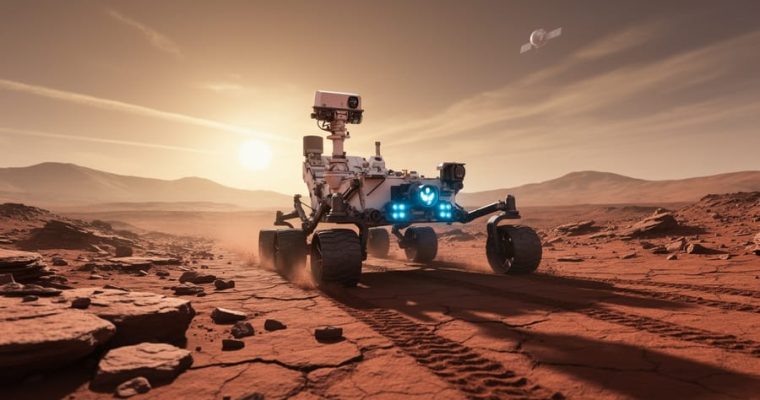
How AI is Actually Helping Us Reach Mars (And What Comes Next)

How AI is Actually Helping Us Reach Mars (And What Comes Next)

The vast darkness of space has always challenged human exploration—distances too great, environments too hostile, and data too complex for human minds alone to process. Enter artificial intelligence, the transformative force now reshaping how we navigate, analyze, and understand the cosmos. From autonomous rovers making split-second decisions on Martian terrain to algorithms detecting Earth-like planets in distant star systems, AI has evolved from a supporting tool to an indispensable partner in our quest beyond Earth.
AI-powered space missions are already delivering breakthroughs that seemed …

How AI is Already Reading Your Body Better Than Your Nutritionist

How AI is Already Reading Your Body Better Than Your Nutritionist

Imagine opening your phone to find a nutrition plan designed exclusively for your DNA, metabolism, and health goals—not a generic meal template copied from a magazine. **Artificial intelligence is transforming nutrition from one-size-fits-all diet charts into dynamic, personalized health ecosystems** that adapt to your body’s unique needs in real-time.
Traditional nutrition advice relies on broad population studies and standardized recommendations. A registered dietitian might suggest 2,000 calories daily for an average adult, but AI-powered systems analyze your genetic markers, gut microbiome composition, blood glucose responses, activity patterns, and even sleep quality to generate meal …

AI-Powered Space Missions Are Transforming How We Explore the Cosmos

AI-Powered Space Missions Are Transforming How We Explore the Cosmos

Artificial intelligence is revolutionizing space exploration, transforming how we explore the cosmos from automated spacecraft navigation to the analysis of vast astronomical datasets. As NASA, SpaceX, and other space agencies increasingly rely on AI systems to tackle the complexities of deep space missions, we’re witnessing a fundamental shift in our approach to understanding the universe. These intelligent systems are not just tools; they’re becoming essential partners in humanity’s greatest adventure, enabling discoveries that were once thought impossible.
AI’s role in space exploration spans from autonomous rover operations on Mars to processing millions of telescope images…