
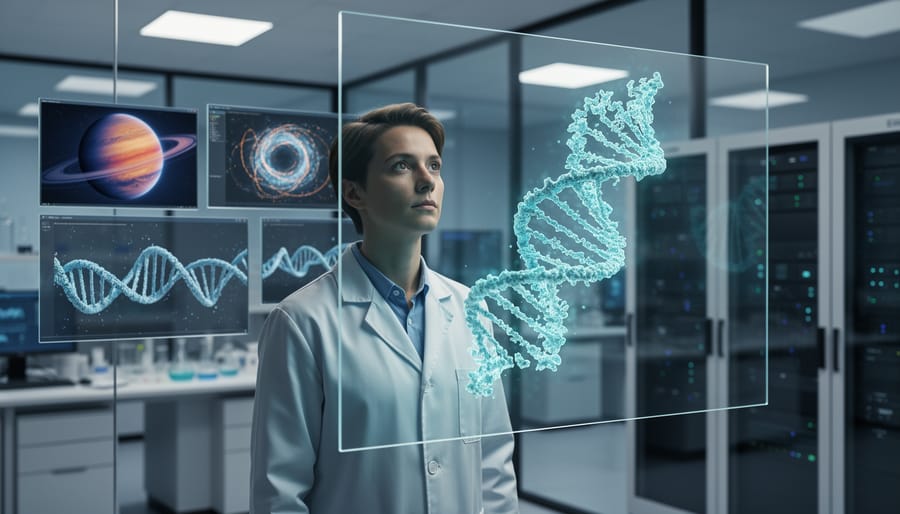
Artificial intelligence is fundamentally transforming how scientists make discoveries, turning months of laboratory work into hours of computational analysis and uncovering patterns invisible to human observation. In laboratories worldwide, AI algorithms now predict protein structures with near-perfect accuracy, identify promising drug candidates from millions of molecular combinations, and analyze telescope data to detect distant exoplanets that would otherwise remain hidden in cosmic noise.
The revolution extends across every scientific discipline. Climate researchers use machine learning models to process satellite imagery and predict environmental changes with unprecedented precision. Particle physicists at CERN deploy neural networks to sift through billions of collision events, identifying rare phenomena that advance our understanding of fundamental physics. Medical researchers combine AI with genomic data to personalize cancer treatments, matching patients with therapies based on their unique genetic profiles.
What makes AI particularly powerful in research is its ability to recognize complex relationships in massive datasets that exceed human cognitive capacity. A single experiment can generate terabytes of information, from brain scans revealing neural activity to gene sequencing data mapping biological pathways. AI systems excel at finding meaningful signals within this data deluge, accelerating the pace of scientific discovery while reducing research costs and time investments.
Yet this technological partnership between human creativity and machine intelligence comes with important considerations about transparency, reproducibility, and the evolving role of scientists themselves in an AI-augmented future.
The Scientific Method Gets an AI Upgrade
What AI Actually Does in a Research Lab
Think of AI as a highly efficient laboratory assistant that never sleeps and can spot patterns invisible to the human eye. In research labs worldwide, AI systems are tackling four fundamental tasks that accelerate discovery.
Pattern recognition is perhaps AI’s superstar ability. At the Francis Crick Institute in London, AI algorithms scan thousands of cellular images daily, identifying cancer cells with 95% accuracy—a task that would take human researchers weeks. The system learns what healthy versus diseased cells look like, then flags anomalies for scientists to investigate further.
Data processing is where AI truly shines at scale. CERN’s Large Hadron Collider generates 90 petabytes of data annually—equivalent to 90 million gigabytes. AI filters through this astronomical volume in real-time, identifying potentially significant particle collisions while discarding irrelevant information. Without AI, physicists would drown in data noise.
Simulation work has become remarkably sophisticated. At Stanford’s chemistry department, AI models predict how new drug molecules will interact with proteins in the human body. These simulations run in hours rather than months, eliminating thousands of unsuccessful candidates before any physical testing begins.
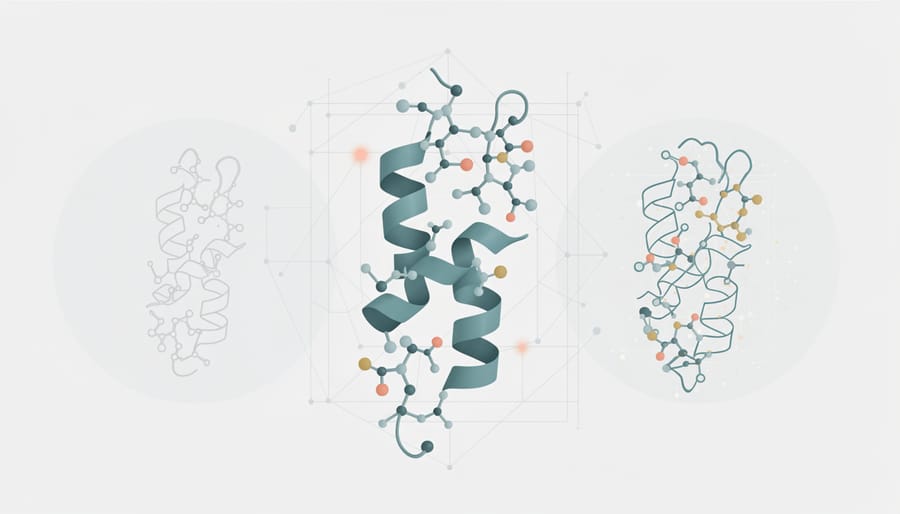
Prediction capabilities extend beyond simple forecasting. DeepMind’s AlphaFold predicted the 3D structure of nearly every known protein—200 million in total—solving a problem that stumped scientists for 50 years. This predictive power doesn’t replace human intuition but amplifies it, letting researchers focus on asking better questions rather than getting stuck in computational bottlenecks.
Where Human Scientists Still Lead
Despite AI’s impressive capabilities, human scientists remain irreplaceable in the research ecosystem. Think of AI as a powerful research assistant rather than a replacement—one that excels at pattern recognition and data processing but lacks the human spark of creativity.
Scientists are still the ones asking the fundamental questions that drive research forward. When a biologist wonders whether a specific protein structure might treat Alzheimer’s, or when a physicist questions existing theories about dark matter, those creative leaps come from human curiosity and intuition. AI can help explore these questions, but it can’t generate them independently.
Ethical oversight represents another crucial human responsibility. Research involving human subjects, genetic modification, or environmental impact requires moral judgment that AI simply cannot provide. Scientists must weigh societal implications, cultural contexts, and long-term consequences—decisions that demand human values and wisdom.
Perhaps most importantly, humans interpret what AI findings actually mean. When an algorithm identifies a correlation in climate data, scientists determine whether it represents a genuine causal relationship or merely a statistical coincidence. They connect discoveries to broader scientific understanding and translate technical findings into actionable knowledge.
This partnership model combines AI’s computational power with human creativity, ethics, and contextual understanding—creating something more powerful than either could achieve alone.
AI Breakthroughs Across Scientific Disciplines
Drug Discovery and Medical Research
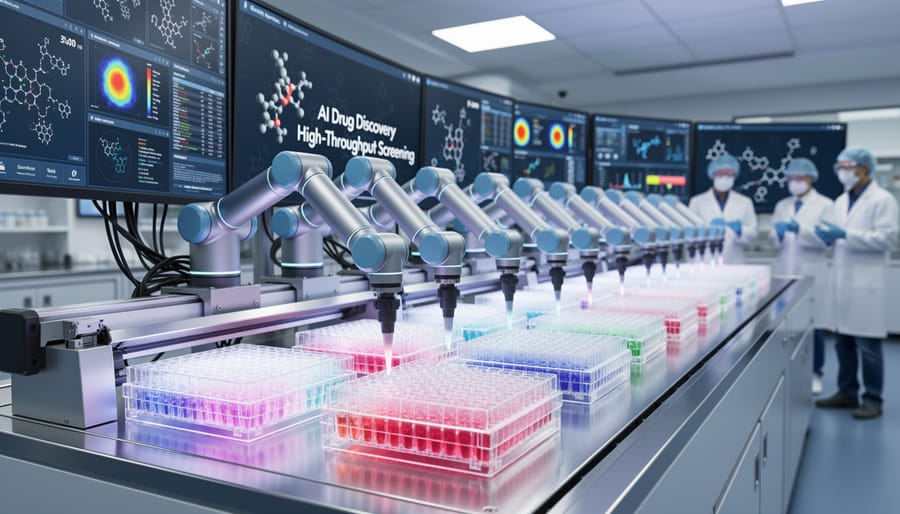
Perhaps nowhere has AI’s impact been more immediate and life-saving than in drug discovery and medical research. When COVID-19 emerged, researchers worldwide turned to AI to compress timelines that traditionally took years into mere months. Machine learning algorithms analyzed millions of molecular structures to identify promising vaccine candidates, predict how the virus would mutate, and even repurpose existing drugs for treatment.
The breakthrough that captured global attention came from DeepMind’s AlphaFold in 2020. This AI system solved a 50-year-old challenge in biology: predicting how proteins fold into complex 3D shapes. Understanding protein structures is crucial because these shapes determine how proteins function in our bodies and how drugs can interact with them. What once required years of painstaking laboratory work now takes minutes. AlphaFold has predicted structures for over 200 million proteins, freely sharing this database with researchers worldwide to accelerate discoveries in everything from cancer treatment to crop resilience.
AI in healthcare extends beyond lab discoveries into personalized medicine. Machine learning models now analyze individual patient data—genetics, lifestyle, medical history—to predict which treatments will work best for specific people. This targeted approach reduces the trial-and-error nature of prescribing medications and identifies disease risks earlier.
Companies like Insilico Medicine have used AI to design new drug molecules from scratch, progressing candidates to human trials in under 18 months compared to the traditional 4-5 years. These aren’t incremental improvements; they represent fundamental shifts in how we develop treatments and understand disease.
Chemistry and Materials Science
In chemistry labs worldwide, AI is transforming how scientists discover and design new materials. Instead of relying solely on trial-and-error experiments that can take months or years, researchers now use machine learning algorithms to predict how molecules will behave and interact before ever mixing them in a test tube.
One of AI’s most impressive capabilities is predicting molecular structures. By training on databases containing millions of known chemical compounds, AI models can suggest entirely new molecular configurations with specific desired properties. Think of it like having a incredibly knowledgeable assistant who can instantly recall every chemical structure ever documented and propose novel combinations you might never have considered.
This approach has revolutionized materials discovery. For example, AI has accelerated the search for better battery materials by screening thousands of potential compounds in days rather than decades. Researchers at MIT used machine learning to identify new electrolyte materials for lithium-ion batteries, dramatically speeding up a process that traditionally required extensive laboratory testing.
AI also optimizes chemical reactions by analyzing reaction conditions like temperature, pressure, and catalyst combinations. The system learns from past experiments to recommend the most efficient pathways, reducing waste and saving valuable research time. Pharmaceutical companies use this capability to streamline drug synthesis, while materials scientists apply it to develop everything from stronger polymers to more efficient solar panels.
Climate Science and Environmental Research
Climate change presents one of humanity’s most pressing challenges, and AI has become an indispensable ally in understanding and addressing it. AI-powered environmental research now helps scientists process massive datasets from satellites, weather stations, and ocean sensors far faster than traditional methods ever could.
In climate modeling, AI algorithms analyze decades of atmospheric data to predict temperature changes, rainfall patterns, and extreme weather events with increasing accuracy. These models help governments and communities prepare for floods, droughts, and hurricanes before they strike.
For biodiversity tracking, AI-powered camera traps automatically identify endangered species in remote forests, while machine learning algorithms monitor deforestation by analyzing satellite imagery. In the Amazon rainforest, AI systems now detect illegal logging activities in near real-time, alerting authorities to intervene quickly.
Ocean research has similarly benefited. AI monitors sea temperature fluctuations and tracks coral bleaching events across vast reef systems. Scientists use these insights to identify areas needing urgent conservation efforts.
One particularly impressive application involves analyzing audio recordings from rainforests and oceans. AI can identify individual animal species by their calls, helping researchers track population changes without physically disturbing ecosystems. This technology has already discovered declining populations that might otherwise have gone unnoticed until too late.

Astronomy and Physics
AI has become an invaluable partner for astronomers and physicists tackling some of the universe’s biggest mysteries. Machine learning algorithms now scan massive datasets from telescopes like Kepler and TESS, identifying exoplanets by detecting tiny dips in star brightness as planets pass in front of them. What once required months of manual analysis now happens in hours, with AI discovering thousands of potential worlds orbiting distant stars.
In gravitational wave detection, AI filters through noise in observatories like LIGO to identify the faint ripples in spacetime caused by colliding black holes or neutron stars. These signals are so subtle that traditional methods often miss them, but neural networks trained on simulated data catch patterns human researchers might overlook.
AI also processes images from radio telescopes, generating the first-ever photograph of a black hole by combining data from observatories worldwide. Similar techniques help cosmologists map dark matter distribution and analyze cosmic microwave background radiation. Just as AI accelerates breakthroughs in studying the brain, it transforms our understanding of the cosmos by handling astronomical data volumes no human team could process alone.
The Tools Researchers Actually Use
Machine Learning Frameworks for Science
Just as carpenters need the right tools to build a house, scientists need specialized software to build and deploy AI models. The good news? Several powerful frameworks make machine learning accessible, even if you’re not a computer science expert.
TensorFlow, developed by Google, stands as one of the most widely used frameworks in scientific research. Think of it as a comprehensive toolbox that handles everything from building simple models to deploying complex neural networks across multiple computers. Scientists use TensorFlow when they need to process massive datasets, like analyzing thousands of medical images or predicting weather patterns from satellite data.
PyTorch, created by Facebook’s AI Research lab, has become the framework of choice for many researchers because it works more intuitively. It’s particularly popular in academia, where scientists appreciate its flexibility for experimentation. If TensorFlow is like following a detailed blueprint, PyTorch lets you sketch and redesign as you go, making it ideal for cutting-edge research.
Beyond these giants, specialized tools cater specifically to scientific needs. Scikit-learn simplifies traditional machine learning tasks like classification and clustering, perfect for analyzing experimental data. DeepChem focuses exclusively on drug discovery and materials science, while packages like TensorFlow Quantum bridge AI with quantum computing research.
The beauty of these frameworks is that they handle the heavy mathematical lifting behind the scenes. Scientists can focus on their research questions rather than coding algorithms from scratch, democratizing AI access across all scientific disciplines.
AI-Powered Research Platforms
Modern AI-powered research platforms are transforming how scientists work, making sophisticated tools accessible to researchers regardless of their institution’s budget or location. These platforms democratize scientific discovery by offering cloud-based solutions that once required expensive on-site equipment and specialized expertise.
Cloud-based research platforms like Google’s DeepMind AlphaFold and IBM’s RXN for Chemistry allow scientists to access powerful AI models through simple web interfaces. Instead of spending months building computational models from scratch, researchers can now upload their data and receive insights within hours. For example, a graduate student studying protein structures can use AlphaFold to predict 3D protein configurations that would traditionally require costly laboratory experiments and years of analysis.
Automated lab systems represent another frontier, where AI coordinates robotic equipment to conduct experiments autonomously. Companies like Emerald Cloud Lab and Strateos operate remote laboratories where scientists design experiments online, and robots execute them with precision. This approach accelerates research timelines dramatically—what once took weeks of manual pipetting and sample preparation can now happen overnight.
Collaborative AI platforms like Benchling and SciNote integrate machine learning into everyday research workflows. These systems help teams organize experimental data, spot patterns across studies, and suggest new research directions based on existing findings. They serve as intelligent assistants that learn from each experiment, gradually becoming more helpful as they accumulate knowledge.
The real game-changer is accessibility. Researchers in smaller institutions or developing countries can now leverage the same AI capabilities as elite laboratories, leveling the playing field for scientific innovation.
When AI Gets It Wrong: Challenges and Limitations
The Black Box Problem
Imagine an AI system discovering a potential cure for a disease, but when scientists ask how it reached that conclusion, the system can’t explain its reasoning in human terms. This is the black box problem, one of the most pressing challenges in AI-powered research.
Many advanced AI models, particularly deep learning neural networks, operate through millions of interconnected calculations that even their creators struggle to interpret. The system might identify a promising drug compound by processing vast datasets, but it can’t tell researchers which specific molecular properties made it valuable or why certain patterns matter.
This creates a real dilemma for scientists. Traditional research relies on understanding the why behind discoveries, not just the what. When a researcher proposes a new theory, they must explain their reasoning, show their work, and help others replicate results. But AI often jumps straight to answers without providing a clear logical pathway.
In fields like medicine, this becomes especially critical. Doctors need to understand why an AI recommends a particular treatment before using it on patients. Regulatory agencies require transparent explanations before approving new therapies. Without interpretability, even accurate AI predictions face skepticism and resistance from the scientific community.
Researchers are actively developing solutions, including explainable AI techniques that help decode these black boxes, but balancing model accuracy with interpretability remains an ongoing challenge in scientific applications.
Data Quality and Bias
In scientific research, there’s a fundamental principle: garbage in, garbage out. When AI systems learn from flawed or biased data, they produce flawed results, no matter how sophisticated the algorithms.
Consider medical AI systems designed to detect skin cancer. Several studies revealed that these models performed poorly on darker skin tones because their training datasets consisted primarily of images from light-skinned patients. This isn’t just a technical glitch; it’s a serious health equity issue that could lead to delayed diagnoses and worse outcomes for underrepresented populations.
Environmental datasets present similar challenges. Climate models trained on historical data from limited geographic regions may miss crucial patterns in undersampled areas. For instance, AI systems predicting flood risks often perform poorly in developing nations where historical data collection has been sparse or inconsistent. This creates a dangerous cycle where the communities most vulnerable to climate change receive the least accurate predictions.
The problem extends beyond missing data. Sometimes datasets reflect historical biases. Medical studies have historically excluded women and minorities, meaning AI trained on this research inherits these blind spots. Even something as seemingly neutral as air quality monitoring can be biased when sensor placement favors wealthier neighborhoods.
Scientists are now implementing rigorous data audits, diversifying training datasets, and developing techniques to detect and correct bias. However, awareness remains the first step. Just as we must consider AI’s environmental costs, we must scrutinize the quality and representativeness of the data powering scientific AI systems.
What This Means for the Future of Science

Faster Discovery Cycles
Imagine condensing a decade of pharmaceutical research into mere months. That’s exactly what’s happening as AI transforms scientific discovery timelines. Traditional drug development, which typically takes 10-15 years from concept to market, is being radically compressed through machine learning algorithms that can screen millions of molecular combinations in days rather than years.
Consider the COVID-19 vaccine development as a prime example. While previous vaccines took years to develop, AI-powered platforms helped scientists analyze viral proteins, predict immune responses, and identify promising vaccine candidates in record time. The mRNA vaccines that emerged were developed and tested faster than any previous vaccine in history, partly thanks to AI assistance in understanding the virus’s structure and behavior.
This acceleration extends beyond medicine. In materials science, AI systems now predict properties of new compounds without lengthy laboratory testing. Climate researchers use AI to model environmental changes that would take supercomputers months to calculate, completing simulations in weeks instead.
The societal impact is profound. Faster discovery cycles mean quicker solutions to pressing challenges like disease outbreaks, environmental crises, and energy needs. When research timelines shrink from years to months, life-saving treatments reach patients sooner, and innovations addressing global problems arrive when they’re needed most, not years after the fact.
Opening Science to More People
AI is democratizing access to knowledge and research capabilities in remarkable ways. Traditional scientific methods often required expensive equipment, large teams, and specialized training that only well-funded institutions could afford. Now, AI tools are leveling the playing field.
Cloud-based AI platforms allow researchers in developing countries to analyze genetic sequences, climate data, or astronomical observations without investing in costly infrastructure. A small university in Kenya, for example, can use the same machine learning models for disease prediction as a lab at Harvard.
Citizen scientists are also joining the research community through AI-powered apps. Projects like Galaxy Zoo use AI to help volunteers classify celestial objects, contributing real scientific value. Similarly, smartphone apps equipped with AI can identify plant species, track wildlife, or monitor air quality, turning everyday people into data collectors.
For smaller labs with limited budgets, open-source AI tools provide access to advanced techniques like protein structure prediction or drug discovery simulations. These resources, once exclusive to pharmaceutical giants, now empower independent researchers worldwide. This shift means that groundbreaking discoveries can emerge from unexpected places, driven by passion and curiosity rather than just funding.
The partnership between human intelligence and artificial intelligence represents one of the most promising developments in modern science. Rather than replacing scientists, AI serves as a powerful amplifier of human creativity, intuition, and problem-solving abilities. Think of it as having a tireless research assistant that can process enormous datasets, spot hidden patterns, and generate hypotheses for human researchers to explore and validate.
As we’ve seen throughout this exploration, AI is already accelerating discoveries in drug development, climate modeling, astronomy, and countless other fields. Yet it’s the human scientists who design the experiments, interpret the results, and make the ethical decisions that shape how these discoveries benefit society. This collaborative model will only grow stronger as AI tools become more sophisticated and accessible.
For anyone interested in this rapidly evolving field, staying informed is essential. The landscape of AI capabilities changes monthly, with new breakthroughs and applications emerging regularly. Whether you’re a student considering a career in scientific research, a professional looking to incorporate AI into your work, or simply someone fascinated by technological progress, understanding these developments will help you navigate the future.
We encourage you to explore our website for more insights into how AI is transforming various industries and disciplines. The challenges facing humanity, from climate change to disease, are complex and urgent. While AI won’t solve these problems alone, it provides us with unprecedented tools to accelerate our search for solutions. Together, human ingenuity and artificial intelligence can illuminate paths forward that neither could discover independently.