
Recent Posts

AI Hot Topics That Will Transform Industries in 2024 (And Why You Should Care)

AI Hot Topics That Will Transform Industries in 2024 (And Why You Should Care)

Artificial intelligence stands at an inflection point in 2024, transforming from experimental technology into essential infrastructure that reshapes how we work, create, and solve problems. The conversation has shifted dramatically beyond “Will AI change our world?” to “How do we navigate the changes already underway?”
Generative AI tools now produce human-quality text, images, and code in seconds, making creative and analytical capabilities accessible to millions who previously lacked technical expertise. Meanwhile, AI agents are evolving from simple chatbots into autonomous systems that complete multi-step tasks, book appointments, and manage workflows with minimal human oversight.

Membership Inference Attacks: How Hackers Know If Your Data Trained Their AI

Membership Inference Attacks: How Hackers Know If Your Data Trained Their AI

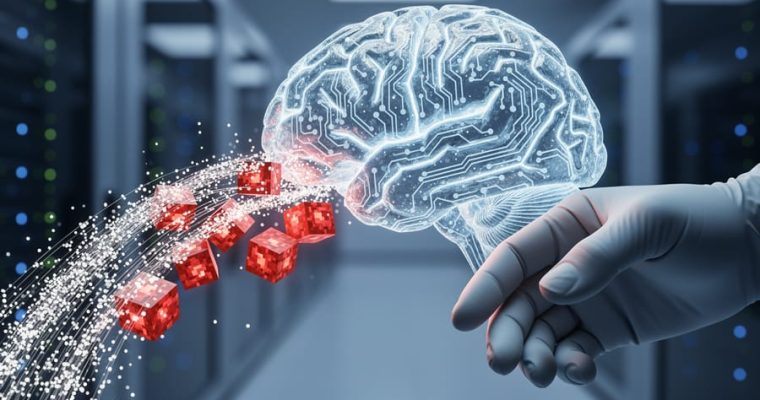
Imagine spending months training a machine learning model on sensitive patient data, only to have an attacker determine whether a specific individual’s records were used in your training dataset. This isn’t science fiction. It’s a membership inference attack, and it’s one of the most pressing privacy threats facing AI systems today.
Membership inference attacks exploit a fundamental vulnerability in how machine learning models learn. When a model trains on data, it inevitably memorizes some information about its training examples. Attackers leverage this behavior by querying your model and analyzing its responses to determine whether a specific data point was part of the training set. The …

AI Data Poisoning: The Silent Threat That Could Corrupt Your Machine Learning Models

AI Data Poisoning: The Silent Threat That Could Corrupt Your Machine Learning Models

Imagine training an AI model for months, investing thousands of dollars in computing power, only to discover that hidden within your training data are carefully planted digital landmines. These invisible threats, known as data poisoning attacks, can turn your trustworthy AI system into a manipulated tool that produces incorrect results, spreads misinformation, or creates dangerous security vulnerabilities. In 2023 alone, researchers documented hundreds of poisoned datasets circulating openly online, some downloaded thousands of times by unsuspecting developers.
Data poisoning occurs when attackers deliberately corrupt the training data that teaches AI models how to behave. Think of it like adding …

Why Your AI Model Fails Under Attack (And How to Build One That Doesn’t)

Why Your AI Model Fails Under Attack (And How to Build One That Doesn’t)

Test your model against intentionally manipulated inputs before deployment. Take a trained image classifier and add carefully calculated noise to test images—imperceptible changes that can cause a 90% accurate model to fail catastrophically. This reveals vulnerabilities that standard accuracy metrics miss entirely.
Implement gradient-based attack simulations during your evaluation phase. Generate adversarial examples using techniques like Fast Gradient Sign Method (FGSM), where slight pixel modifications fool models into misclassifying stop signs as speed limit signs. Understanding how attackers exploit your model’s decision boundaries is the first step toward building resilience.

How AI Catches Financial Fraudsters Before They Strike

How AI Catches Financial Fraudsters Before They Strike

Every time you check your bank balance, swipe your credit card, or apply for a loan, artificial intelligence is working behind the scenes to protect your money and make split-second decisions about your financial life. AI in finance refers to computer systems that can learn from patterns, make predictions, and automate decisions that traditionally required human expertise—all at speeds and scales impossible for people alone.
Think of AI as a tireless financial guardian that never sleeps. While you’re having breakfast, machine learning algorithms are scanning millions of transactions across the globe, identifying suspicious patterns that might indicate fraud. When you apply for a mortgage, AI …

Why Your AI Model Could Be a National Security Risk (And What the Government Is Doing About It)

Why Your AI Model Could Be a National Security Risk (And What the Government Is Doing About It)

Every artificial intelligence system you use today traveled through a complex global supply chain before reaching your device—and that journey creates security vulnerabilities that governments and enterprises can no longer ignore. The Federal Acquisition Supply Chain Security Act (FASCSA), enacted in 2018, gives federal agencies unprecedented authority to identify and exclude compromised technology products and services from government systems. While initially focused on hardware and telecommunications, this legislation now stands at the forefront of AI security as agencies grapple with how to safely procure machine learning models, training data, and AI development tools.
The stakes are remarkably …

When Machines Make Moral Choices: The Z Decision-Making Model’s Ethics Problem

When Machines Make Moral Choices: The Z Decision-Making Model’s Ethics Problem

Imagine a self-driving car approaching an unavoidable collision. Should it protect its passengers at all costs, or minimize total harm even if that means sacrificing those inside? This scenario isn’t science fiction—it’s the reality facing engineers and ethicists grappling with the Z Decision Making Model, a framework that attempts to codify how autonomous systems should make split-second choices with life-or-death consequences.
The Z Decision Making Model represents a structured approach to programming ethical reasoning into artificial intelligence. Unlike human intuition, which draws on emotions, cultural values, and years of moral development, autonomous systems require explicit rules and …

How AI Is Protecting Babies Before Birth by Detecting Maternal Immune Risks

How AI Is Protecting Babies Before Birth by Detecting Maternal Immune Risks

Every pregnancy triggers a delicate immune dance inside a mother’s body. When that immune system activates too strongly in response to infections, inflammation, or other triggers, it sets off a cascade called maternal immune activation (MIA). This biological response, while protecting the mother, can have unexpected consequences for the developing baby’s brain.
Recent research reveals that MIA during critical windows of pregnancy correlates with increased risks for neurodevelopmental conditions in children, including autism spectrum disorder and schizophrenia. The mechanism is straightforward: when a mother’s immune system releases inflammatory molecules called cytokines, these signals can cross…

The Academic Journal That’s Reshaping AI Research (And How to Use It)

The Academic Journal That’s Reshaping AI Research (And How to Use It)

Start by identifying the gap between tutorial-based learning and cutting-edge AI innovation. While online courses teach you established techniques, artificial intelligence research journals reveal what’s being discovered right now—the breakthroughs that will define tomorrow’s applications. These peer-reviewed publications contain the original ideas behind every AI tool you use, from ChatGPT’s language models to recommendation algorithms powering your favorite apps.
Access top-tier journals strategically rather than feeling overwhelmed. Focus on flagship publications like the Journal of Artificial Intelligence Research (JAIR), which offers open-access articles, or AI Magazine for more …

How AI is Transforming What You See in Augmented Reality

How AI is Transforming What You See in Augmented Reality

Point your smartphone at an empty corner of your room and watch a virtual lamp materialize, perfectly lit and scaled to your space. Swipe through restaurant reviews that float above storefronts as you walk past them. These aren’t science fiction scenarios—they’re everyday examples of augmented reality user interfaces transforming how we interact with digital information.
Augmented reality UI represents the next evolution in human-computer interaction, overlaying digital elements onto our physical world through devices like smartphones, tablets, and AR glasses. Unlike virtual reality, which creates entirely new environments, AR enhances what you already see by adding helpful layers of information…