

In the race against time to preserve Earth’s linguistic heritage, artificial intelligence is emerging as a powerful ally in language revitalization efforts. Every two weeks, another language falls silent forever, taking with it centuries of cultural knowledge, unique worldviews, and irreplaceable human experiences. Yet today’s AI-powered language preservation programs are revolutionizing how we document, teach, and revive endangered languages – from the Amazon rainforest to the Arctic Circle.
Modern machine learning algorithms now capture and analyze indigenous speech patterns with unprecedented accuracy, while natural language processing tools help create digital dictionaries and learning resources in mere months instead of decades. These technological breakthroughs are empowering communities to preserve their ancestral tongues for future generations through innovative applications like speech-to-text transcription, automated translation systems, and interactive language learning platforms.
As traditional knowledge keepers age and younger generations increasingly adopt dominant languages, these AI-assisted revitalization programs represent a critical bridge between past and future. They’re not just preserving words and grammar – they’re protecting entire ways of knowing and being in the world. By combining ancient wisdom with cutting-edge technology, we’re witnessing the dawn of a new era in language preservation, where endangered tongues aren’t just documented in archives but actively restored to daily use in their communities.
The stakes couldn’t be higher: each preserved language enriches humanity’s collective knowledge and cultural diversity. Through strategic deployment of AI tools alongside community-led initiatives, we now have unprecedented opportunities to reverse the tide of language loss and ensure these irreplaceable cultural treasures survive and thrive in the digital age.
How AI Is Transforming Language Preservation
Speech Recognition and Documentation
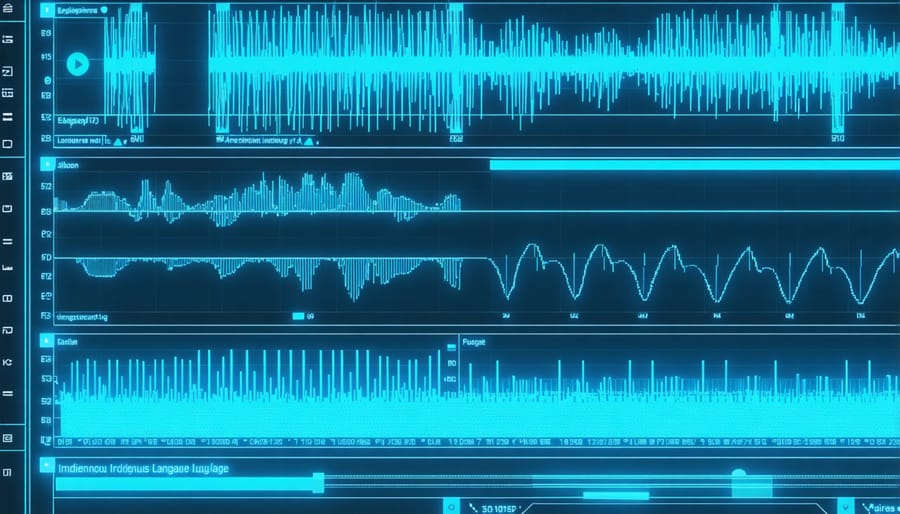
Modern speech recognition technology has become a powerful ally in language revitalization efforts, offering innovative ways to capture and preserve endangered languages. Advanced AI processing networks can now accurately transcribe spoken languages, even those with unique phonetic patterns and tonal variations that traditional systems struggled to recognize.
These AI-powered tools enable community elders and language keepers to record their native tongues with unprecedented precision. The technology automatically generates written transcriptions, creating valuable documentation that can be used for teaching materials, dictionaries, and cultural preservation. What’s particularly remarkable is how these systems can adapt to different dialects and speaking styles, making them especially useful for languages with regional variations.
The documentation process has become more efficient and accessible, allowing even remote communities to participate in language preservation efforts using just smartphones or basic recording devices. The AI systems can process hours of recorded speech, identifying patterns, common phrases, and grammatical structures that might otherwise take years to document manually.
Furthermore, these tools help create interactive learning resources by connecting audio recordings with their written forms, making it easier for new generations to learn their ancestral languages through authentic pronunciation examples and real-world usage contexts.
Natural Language Processing for Grammar Analysis
Natural Language Processing (NLP) has become a game-changer in understanding and documenting endangered languages. By analyzing grammar patterns and linguistic structures, AI systems can now identify and map out the complex rules that govern how a language works, even with limited source material.
Modern NLP algorithms excel at recognizing recurring patterns in speech and text, making them invaluable tools for linguists working on language preservation. These systems can process hours of recorded conversations or written texts to identify grammatical rules, sentence structures, and unique linguistic features that might take human researchers months or years to document manually.
For example, when working with indigenous languages, NLP tools can automatically detect verb conjugation patterns, noun classifications, and syntactic relationships. This technological assistance helps create comprehensive grammar guides more efficiently, ensuring that crucial language elements are preserved for future generations.
The technology also helps identify similarities between related languages, which can fill knowledge gaps when documenting endangered languages with limited surviving speakers. By comparing grammatical patterns across language families, AI can suggest potential rules or structures that might exist in the target language, providing valuable starting points for further research.
These AI-powered grammar analysis tools are particularly valuable when working with languages that have unique features not found in more widely spoken languages, helping preserve these distinctive linguistic characteristics for both academic study and practical revival efforts.
Real-World Success Stories
The Hawaiian Language Renaissance
The Hawaiian language revitalization movement has found a powerful ally in artificial intelligence, transforming how new generations connect with their ancestral tongue. Recent AI-powered initiatives have played a crucial role in making Hawaiian language learning more accessible and engaging than ever before.
Language learning apps like Duolingo have incorporated Hawaiian into their platforms, using AI algorithms to personalize learning paths and adapt to each student’s progress. These systems analyze learning patterns and provide targeted exercises, helping users master pronunciation and grammar through interactive lessons.
Natural Language Processing (NLP) tools have been instrumental in digitizing historical Hawaiian texts and creating comprehensive digital archives. These tools can now process and analyze traditional Hawaiian documents, making centuries of cultural knowledge accessible to language learners and researchers alike.
Speech recognition technology has been fine-tuned to recognize Hawaiian pronunciation patterns, helping learners perfect their accent and intonation. AI-powered pronunciation coaches provide instant feedback, allowing students to practice independently while maintaining authenticity in their speech.
Local tech startups have developed specialized chatbots that converse in Hawaiian, giving learners practical conversation experience. These AI companions use context-aware responses and cultural references, making the learning experience both authentic and culturally relevant.
The integration of AI has also supported teachers by automating assessment tasks and generating customized learning materials. This technology allows educators to focus more on direct interaction with students while ensuring consistent evaluation of language skills.
The success of these AI-powered initiatives is reflected in the growing number of Hawaiian speakers, particularly among younger generations. Recent statistics show a significant increase in Hawaiian language enrollment in schools where AI tools supplement traditional teaching methods.
Looking ahead, emerging AI technologies like augmented reality and advanced language models promise to create even more immersive and effective learning experiences, further supporting the Hawaiian language’s revival and ensuring its preservation for future generations.

Indigenous Australian Languages
Australia’s indigenous languages, representing one of the world’s oldest continuous cultures, are finding new life through innovative AI-powered preservation efforts. With over 250 Aboriginal languages historically documented and many now at risk of extinction, technology is playing a crucial role in their revival and documentation.
One groundbreaking initiative is the Living Archive project, which uses machine learning algorithms to process and analyze recordings of Aboriginal elders speaking their traditional languages. These AI systems can identify speech patterns, create digital transcriptions, and generate pronunciation guides, making it easier for younger generations to learn their ancestral languages.
The Dharug Language App, developed in collaboration with Aboriginal communities in New South Wales, demonstrates how AI can make language learning more accessible. The app uses speech recognition technology to help users perfect their pronunciation while learning vocabulary and cultural context. What makes this approach particularly effective is its integration of traditional storytelling methods with modern interactive learning techniques.
Machine learning models are also being employed to reconstruct partially lost languages by analyzing historical documents and identifying linguistic patterns. This technology can suggest likely word meanings and grammatical structures based on related languages that are better preserved, helping communities piece together their linguistic heritage.
The Partnership for Aboriginal Language Preservation (PALP) has pioneered the use of natural language processing to create digital dictionaries that evolve with community input. These adaptive resources capture not just words and phrases, but also the cultural context essential to truly understanding Aboriginal languages.
These technological innovations are always implemented with deep respect for Aboriginal cultural protocols and under the guidance of community elders. This collaborative approach ensures that AI serves as a tool for empowerment rather than appropriation, supporting Indigenous communities in their efforts to maintain their linguistic and cultural identity for future generations.
Building Digital Language Resources
Interactive Learning Platforms
Modern language revitalization efforts have been revolutionized by AI-powered learning platforms that make endangered language acquisition more accessible and engaging than ever before. These innovative tools combine machine learning algorithms with interactive features to create personalized learning experiences for users of all ages.
Apps like Duolingo have expanded their offerings to include endangered languages such as Hawaiian and Navajo, while specialized platforms like 7000 Languages focus exclusively on at-risk languages. These applications utilize adaptive learning technology to adjust lesson difficulty based on user performance and learning patterns.
What sets these platforms apart is their integration with collaborative AI platforms that enable native speakers and language learners to connect and practice together. Speech recognition technology helps users perfect their pronunciation, while natural language processing ensures accurate translation and grammar correction.
Many of these platforms incorporate gamification elements, such as achievement badges, progress tracking, and competitive leaderboards, to maintain user engagement. Virtual reality components are also being introduced, allowing learners to immerse themselves in simulated cultural contexts where they can practice their language skills in realistic scenarios.
The success of these digital tools lies in their ability to create sustainable learning communities. Users can participate in group activities, share resources, and support each other’s learning journeys. This combination of AI-driven instruction and community engagement has proven particularly effective in attracting younger generations to endangered language preservation efforts, ensuring these linguistic treasures continue to thrive in the digital age.
Digital Dictionaries and Translation Tools
Digital dictionaries and translation tools powered by artificial intelligence are revolutionizing language revitalization efforts worldwide. These modern solutions combine traditional lexicography with machine learning capabilities to create dynamic, evolving language resources that serve both learners and native speakers.
AI-enhanced dictionaries go beyond simple word translations by incorporating audio pronunciations, cultural context, and usage examples. They can capture nuanced meanings and dialectical variations that might otherwise be lost. For example, the First Voices app uses AI to help Indigenous communities in Canada document and preserve their languages, complete with proper pronunciation guides and contextual usage.
Machine learning algorithms are particularly effective at processing and analyzing large amounts of linguistic data, helping to identify patterns and relationships between related languages. This capability enables the creation of more accurate translation tools and helps reconstruct partially lost vocabulary by finding connections with sister languages.
These digital tools also feature interactive learning components, such as:
– Speech recognition for pronunciation practice
– Contextual learning exercises
– Real-time translation capabilities
– Community contribution features
Modern translation tools can now handle endangered languages with increasing accuracy, thanks to neural network training on limited datasets. The FirstWords project, for instance, successfully developed a translation system for several endangered Native American languages using as few as 5,000 sample phrases.
These digital resources are typically accessible through mobile apps and web platforms, making them available to community members regardless of location. This accessibility is crucial for diaspora communities wanting to maintain connections with their heritage language and for younger generations learning their ancestral tongue.
Challenges and Future Directions
Technical Challenges
Despite significant advances in AI technology, several technical challenges persist in language revitalization efforts. One major limitation is the difficulty in processing languages with limited digital resources. Many endangered languages lack substantial written records or digital corpora, making it challenging for AI systems to learn and analyze these languages effectively.
Speech recognition systems often struggle with tonal languages and unique phonetic features present in many indigenous languages. The variation in dialects, accents, and speaking styles within small language communities poses additional complications for AI models trained on standardized data sets.
Natural Language Processing (NLP) tools face hurdles when dealing with languages that have different grammatical structures from widely-spoken languages. Many endangered languages use complex morphological systems or word orders that current AI architectures aren’t optimized to handle. This becomes particularly evident in automated translation attempts between endangered languages and major world languages.
Data privacy and ownership present another significant challenge. Indigenous communities often have concerns about how their language data is collected, stored, and used. AI systems require substantial amounts of data to function effectively, but gathering this data while respecting cultural sensitivities and intellectual property rights remains complicated.
Technical infrastructure limitations in remote areas where many endangered languages are spoken can also impede the deployment of AI-powered language preservation tools. Limited internet connectivity and access to computing resources can make it difficult to implement sophisticated language technology solutions.

Promising Future Developments
The future of language revitalization looks increasingly promising as adaptive AI systems continue to evolve. Recent breakthroughs in natural language processing are enabling more sophisticated translation tools that can capture nuances, idioms, and cultural context with unprecedented accuracy. These developments are particularly exciting for communities working to preserve endangered languages.
One of the most promising trends is the integration of augmented reality (AR) and virtual reality (VR) technologies in language learning. These immersive environments allow learners to experience traditional storytelling, customs, and daily life scenarios in their ancestral languages, creating deeper emotional connections and more effective learning experiences.
Recent machine learning advances are also making it possible to reconstruct partially lost languages using historical records and linguistic patterns. This technology can help fill gaps in documentation and provide insights into language evolution, supporting more comprehensive preservation efforts.
Mobile applications are becoming increasingly sophisticated, incorporating speech recognition and real-time feedback systems that adapt to individual learning patterns. These personalized learning experiences are making language acquisition more accessible and engaging for younger generations, ensuring the continued transmission of endangered languages in our digital age.
Looking ahead, blockchain technology may play a crucial role in creating decentralized archives of language resources, ensuring that cultural heritage remains protected and accessible for future generations.
The convergence of artificial intelligence and language preservation efforts represents a pivotal moment in our quest to protect linguistic diversity. As we’ve explored throughout this article, AI technologies are proving to be powerful allies in documenting, analyzing, and revitalizing endangered languages. The impact is already visible in numerous success stories, from automated transcription systems that have preserved thousands of hours of indigenous speech to machine learning models that help create interactive language learning tools.
Looking ahead, the future of language preservation appears increasingly promising. Advanced natural language processing capabilities are becoming more sophisticated and accessible, enabling smaller communities to implement their own preservation initiatives. The democratization of AI tools means that even languages with few remaining speakers can benefit from modern preservation techniques.
However, it’s crucial to remember that AI is not a complete solution but rather a powerful tool in the broader context of language revitalization. The most successful programs combine technological innovation with community engagement, cultural sensitivity, and traditional teaching methods. The human element – the involvement of native speakers, community elders, and language activists – remains irreplaceable.
As AI technology continues to evolve, we can expect to see even more innovative applications in language preservation. From virtual reality immersion experiences to advanced speech synthesis systems that can help recreate extinct languages, the possibilities are expanding rapidly. The key to success lies in maintaining a balance between technological advancement and cultural authenticity, ensuring that AI serves as an enabler rather than a replacement for human connection in language preservation efforts.