
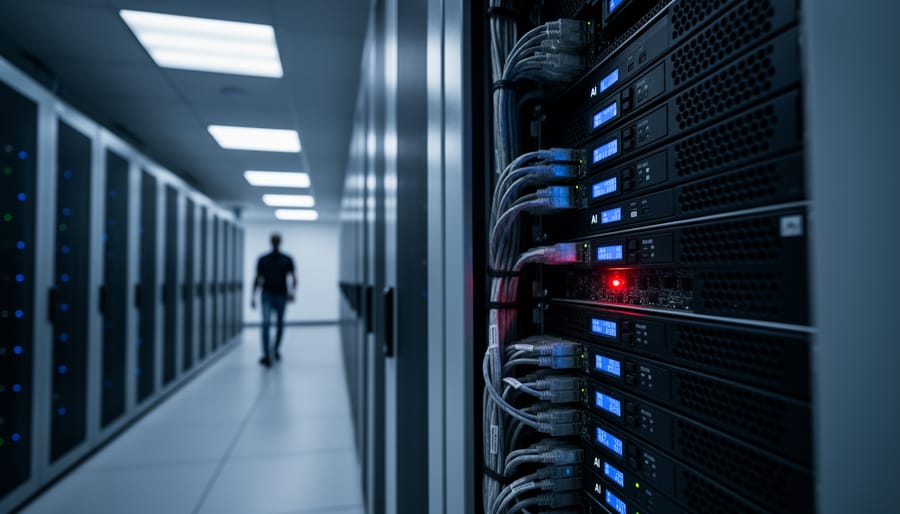
Deploy monitoring dashboards that track your AI model’s prediction accuracy, response times, and error rates in real-time. Start with basic metrics like prediction drift—when your model’s outputs begin deviating from expected patterns—which often signals that your training data no longer matches real-world conditions. Set automated alerts when accuracy drops below 85% or when inference latency exceeds your application’s requirements.
Implement data quality checks at every input point to catch corrupted or malformed data before it reaches your model. A single fraudulent image or text string can cascade into thousands of incorrect predictions, costing businesses an average of $15 million annually in model failures. Monitor for distribution shifts where incoming data statistically diverges from your training dataset, rendering even your best-performing models unreliable.
Track resource consumption patterns including GPU utilization, memory usage, and API call volumes to prevent cost overruns and service disruptions. Production AI models can unexpectedly consume 300% more compute resources when handling edge cases or adversarial inputs that weren’t anticipated during development.
AI monitoring extends far beyond traditional application performance monitoring because machine learning systems degrade silently. Unlike conventional software that breaks visibly with error messages, AI models continue generating predictions even as their accuracy deteriorates. A recommendation engine might slowly shift toward biased suggestions, a fraud detection system could miss emerging attack patterns, or a medical diagnosis tool might produce increasingly unreliable results—all while appearing to function normally. This invisible degradation makes continuous monitoring not just helpful but essential for any production AI system, whether you’re running a simple classification model or a complex multi-model pipeline serving millions of users daily.
Why AI Models Break in Ways Traditional Software Never Does
Traditional software breaks in predictable ways. When a bug exists in your code, it produces consistent errors that you can trace, fix, and prevent from happening again. AI models, however, operate in a fundamentally different way, and understanding why AI models break is essential for anyone working with machine learning systems.
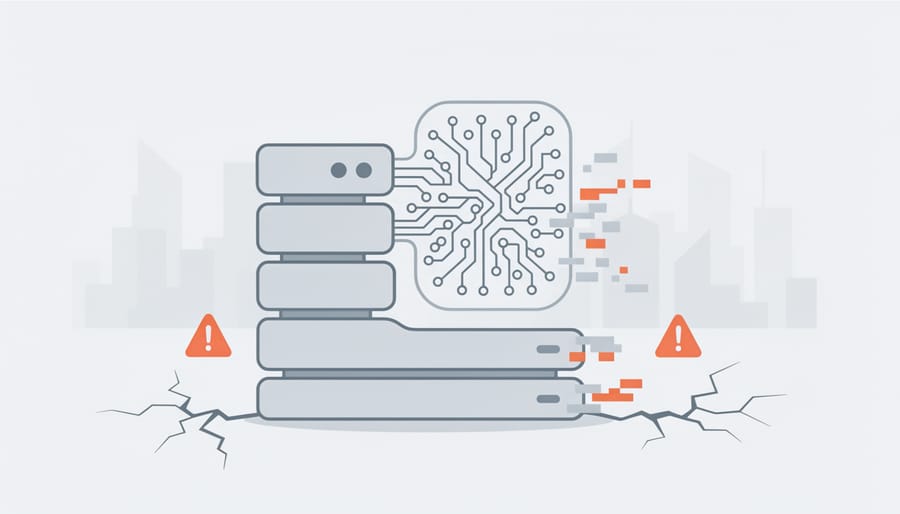
The most striking difference is that AI models can fail without a single line of code changing. Imagine spending months on AI model training, deploying a fraud detection system that works brilliantly, only to watch its accuracy plummet three months later, even though nothing in your codebase has changed. This phenomenon happens because AI models are learned systems, not programmed ones.
Data drift is one of the primary culprits. Your model learns patterns from historical data, but the real world keeps evolving. A fraud detection model trained on 2023 transaction patterns might struggle in 2024 because fraudsters constantly adapt their tactics. They’re essentially adversaries who learn from your defenses and find new ways around them. Your model hasn’t broken in a technical sense; the world it was designed to understand has simply moved on without it.
Concept drift takes this further. Sometimes the fundamental relationship between inputs and outputs changes. Consider a model predicting customer churn based on usage patterns. During an economic downturn, customers might cancel subscriptions for entirely different reasons than they did during prosperous times. The features remain the same, but what they mean has shifted.
Model decay happens gradually and silently. Unlike a server crash that triggers immediate alerts, a model’s performance might drop from 95 percent accuracy to 87 percent over six months. Without monitoring, you might not notice until the business impact becomes obvious, like increased fraud losses or customer complaints.
These challenges mean AI systems require continuous observation and evaluation. You’re not just watching for code failures; you’re monitoring whether your model still understands the world it’s trying to predict. This is why AI monitoring has become its own discipline, separate from traditional software monitoring practices.
What AI Model Monitoring Actually Means (In Plain English)
Think of AI monitoring like keeping tabs on a new employee at work. You wouldn’t just hire someone and assume they’ll perform perfectly forever, right? You’d check in regularly, see how they’re handling tasks, and notice if something seems off. That’s essentially what AI monitoring does for your machine learning models.
At its core, AI monitoring means tracking how your model behaves after you’ve deployed it into the real world. But here’s where it gets interesting: there’s actually a difference between monitoring and observability, and understanding this distinction matters.
Monitoring is like reading your car’s dashboard. It tells you your speed, fuel level, and engine temperature. You’re tracking specific metrics: accuracy rates, prediction latency, error counts. These numbers tell you what is happening right now.
Observability goes deeper. It’s like having a mechanic who can diagnose why your check engine light came on. When your model’s accuracy suddenly drops from 95% to 75%, observability helps you understand the reason behind that drop. Maybe your input data changed, or perhaps there’s a pattern your model wasn’t trained to handle. This is how observability catches failures before they become major problems.
So what exactly needs monitoring? Four key areas:
Inputs: The data feeding into your model. Is it similar to what the model was trained on? Are there unexpected values or missing fields?
Outputs: The predictions your model makes. Are they within expected ranges? Do they make logical sense?
Model performance: How accurate and reliable are the predictions over time? Is the model getting slower?
Infrastructure: The technical foundation running everything. Is your server handling the load? Are there memory issues?
Together, these four pillars give you a complete picture of your AI system’s health, helping you catch issues early and keep everything running smoothly.
The Critical Signals Your AI Model Is Sending You
Performance Metrics That Actually Matter
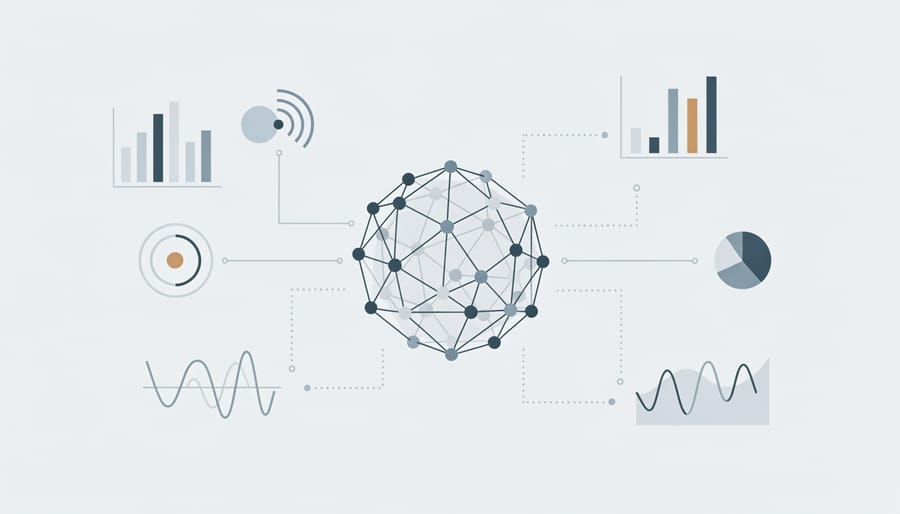
Not all performance metrics deserve equal attention. Think of monitoring your AI model like checking vital signs at a doctor’s visit—you need to measure what truly indicates health, not just collect numbers that look impressive.
For classification models (those that put things into categories like spam detection or image recognition), four metrics work together to tell the complete story. Accuracy shows the percentage of correct predictions overall, but it can be misleading when your data is imbalanced. Imagine a fraud detection system that encounters only one fraudulent transaction per thousand—a lazy model that labels everything as “not fraud” would still be 99.9% accurate while missing every actual case.
That’s where precision and recall become essential. Precision answers “When my model says something is positive, how often is it right?” while recall asks “Of all the actual positive cases, how many did my model catch?” The F1 score combines both into a single number, useful when you need to balance these competing priorities.
For regression models predicting continuous values (like house prices or temperature forecasts), you’ll focus on different metrics. Mean Absolute Error (MAE) and Root Mean Square Error (RMSE) measure how far off your predictions are from actual values—lower numbers mean better performance.
Recommendation systems need yet another approach, typically measuring ranking quality through metrics like precision at K (how many of the top K recommendations are relevant).
Regardless of model type, latency matters universally. A perfectly accurate model that takes thirty seconds to respond might be useless in real-time applications like autonomous vehicles or fraud detection systems.
Data Quality Red Flags
Your AI model might be performing flawlessly in testing, but what happens when real-world data starts behaving unexpectedly? Data quality issues represent one of the most common reasons models fail in production, yet they’re often overlooked until something breaks.
Think of it like this: imagine you’ve trained a weather prediction model using temperature data in Fahrenheit. Everything works perfectly until your data pipeline switches to Celsius without warning. Suddenly, your model interprets 20°C (a pleasant 68°F) as arctic conditions and starts predicting snowstorms in July. Without proper monitoring, this could go unnoticed for days or weeks.
Here are the critical data quality red flags to watch for:
Missing values can silently degrade your model’s accuracy. If your customer churn prediction model suddenly starts receiving records with missing account activity fields, it might default to incorrect assumptions about user engagement.
Outliers and anomalies need context-aware detection. A transaction amount of $50,000 might be normal for a B2B payment processor but completely suspicious for a coffee shop’s point-of-sale system.
Feature distribution shifts signal potential trouble. When your loan approval model trained on data where average incomes clustered around $60,000 suddenly sees applications averaging $120,000, predictions become unreliable.
Data schema violations are deployment killers. Adding new categories to existing fields, changing data types, or renaming columns can break your model instantly.
Modern data quality tools can automatically detect these issues before they impact your users, sending alerts when input data deviates from expected patterns.
When Your Model Starts Drifting
Even the best-performing AI model won’t stay accurate forever. Over time, models experience what we call “drift,” where their predictions gradually become less reliable. Think of it like a weather forecasting app that was trained on historical data but starts struggling when climate patterns shift.
There are two main types of drift to watch for. Data drift happens when the input data your model receives changes from what it saw during training. Imagine a fraud detection system trained on pre-pandemic shopping patterns suddenly encountering a massive surge in online transactions during lockdowns. The data looks fundamentally different, and the model struggles to adapt.
Concept drift is trickier because it involves changes in the underlying relationships between inputs and outputs. A recommendation engine for an e-commerce site might work perfectly until a viral social media trend completely reshapes what products people want. The inputs (user demographics, browsing history) stay similar, but their connection to purchasing decisions has shifted.
Real-world triggers for drift are everywhere. Seasonality affects retail predictions as shopping habits change with holidays. User behavior evolves as people adopt new technologies or platforms. External events like economic downturns, regulatory changes, or cultural shifts can dramatically alter the patterns your model relies on.
The scary part? Drift often happens gradually, making it easy to miss until your model’s performance has already deteriorated significantly. That’s exactly why continuous monitoring isn’t optional—it’s your early warning system for catching these changes before they impact your business or users.
Essential Tools That Keep Your AI Models Healthy
Open-Source Solutions for Getting Started
Getting started with AI monitoring doesn’t require a hefty budget or enterprise-level infrastructure. Several open-source tools offer powerful capabilities that make monitoring accessible to anyone building machine learning models.
Evidently AI stands out as an excellent starting point for those new to model monitoring. This Python library specializes in evaluating and tracking data quality, data drift, and model performance over time. Think of it as your model’s health checkup tool. It generates visual reports that make it easy to spot when your model’s predictions start drifting from expected behavior. Evidently works particularly well for batch monitoring scenarios where you’re analyzing data in scheduled intervals rather than real-time. Setup is straightforward—install it via pip, define your reference dataset, and generate reports with just a few lines of code. It’s ideal for teams running their first monitoring experiments or those with limited DevOps resources.
WhyLabs takes a different approach by focusing on data logging and observability. It calculates statistical profiles of your data without storing the actual data itself, which makes it privacy-friendly and lightweight. WhyLabs excels when you need continuous monitoring across multiple models or want to integrate monitoring into existing production pipelines. The platform offers both open-source components and managed services, giving you flexibility as your needs grow.
Great Expectations deserves mention for its strength in data validation and quality testing. While not exclusively an AI monitoring tool, it’s invaluable for ensuring the data feeding your models meets expected standards. Use it to define “expectations” about your data—like acceptable value ranges or required columns—and catch issues before they affect model performance. It integrates seamlessly with common data engineering workflows and provides detailed documentation that makes implementation manageable even for beginners.
Enterprise Platforms When You’re Ready to Scale
As your AI projects grow from experimental prototypes to production systems serving thousands of users, free tools often hit their limits. This is where enterprise monitoring platforms shine, offering robust features designed for teams managing multiple models at scale.
Arize AI specializes in catching the subtle issues that plague production models. Think of it as having a dedicated detective for your AI systems. When your customer recommendation engine suddenly starts performing poorly for users in a specific region, Arize’s root cause analysis automatically traces the problem back to a data drift in regional preferences, saving your team days of manual investigation.
Fiddler takes a different approach, focusing on explainability alongside monitoring. If a loan approval model begins rejecting qualified applicants, Fiddler doesn’t just alert you to the problem—it shows you which features are driving those decisions, making compliance and debugging significantly easier.
DataRobot offers an all-in-one platform that handles everything from model building to monitoring. For organizations standardizing their AI operations, this unified approach means less tool-switching and more consistent workflows across teams.
AWS SageMaker Model Monitor integrates seamlessly if you’re already in the Amazon ecosystem. It automatically compares your model’s current predictions against baseline performance, triggering alerts when deviations exceed your thresholds.
What justifies the investment? These platforms offer automated alerting that catches problems before customers notice them, sophisticated root cause analysis that pinpoints issues in minutes rather than days, and collaboration features that keep data scientists, engineers, and business stakeholders aligned. When downtime costs thousands per hour and model failures impact customer trust, these capabilities quickly pay for themselves.
Building Your Own Monitoring Dashboard
If you’re just getting started with AI monitoring or working with limited budgets, building a basic dashboard yourself can be surprisingly straightforward. Many developers already have the tools they need sitting in their tech stack.
Start with Python’s built-in logging module to capture essential metrics. You can log prediction inputs, outputs, confidence scores, and processing times with just a few lines of code. For example, after each model prediction, write a log entry containing the timestamp, prediction value, and any relevant metadata. This creates an audit trail you can analyze later.
Next, integrate Prometheus to collect and store these metrics over time. Prometheus excels at tracking numerical data like prediction latency, throughput, and error rates. You’ll add a lightweight exporter to your application that exposes metrics in a format Prometheus can scrape every few seconds.
Finally, connect Grafana to visualize everything. Grafana transforms raw data into interactive dashboards where you can spot trends at a glance. Create graphs showing prediction volume over time, charts tracking average confidence scores, and alerts that notify you when error rates spike above normal levels.
This DIY approach makes sense when you’re monitoring one or two models in development, have straightforward requirements, or need to prove value before investing in specialized tools. However, as you scale to production with multiple models, complex data drift detection needs, or compliance requirements, purpose-built AI monitoring platforms become worth the investment. They handle the heavy lifting of feature drift analysis, model versioning, and automated retraining triggers that would take months to build yourself.
Setting Up Your First AI Monitoring System (Without Overwhelming Yourself)
Starting your AI monitoring journey doesn’t require a massive infrastructure overhaul or expensive enterprise tools. The key is beginning with what matters most and gradually expanding your monitoring coverage as you learn what signals actually indicate problems.
Think of monitoring setup like building a home security system. You wouldn’t install cameras in every closet on day one. Instead, you’d start with the front door and most valuable rooms. The same principle applies to AI monitoring.
Begin with the Three Essential Metrics framework. For any AI model in production, start by tracking accuracy (is the model still making correct predictions?), latency (how fast does it respond?), and error rate (how often does it fail completely?). These three metrics catch roughly 80% of common model problems while requiring minimal setup effort.
Here’s a simple decision framework for prioritizing what to monitor first. Ask yourself two questions about each model: How critical is this model to business operations? What’s the potential impact if it fails? Plot your models on a simple grid with criticality on one axis and risk on the other. Models in the high-critical, high-risk quadrant get comprehensive monitoring immediately. Low-critical, low-risk models can start with basic health checks.
For your minimum viable monitoring setup, you’ll need just three components. First, implement logging to capture model predictions and inputs. Most programming languages have built-in logging libraries that work perfectly for this. Second, set up a simple dashboard using free tools like Grafana or even a Google Sheet that updates automatically. Third, create basic alerts that notify you when something crosses a threshold, like accuracy dropping below 85% or response time exceeding two seconds.
Let’s walk through a practical example. Imagine you’ve deployed a customer service chatbot using common model deployment practices. Your first monitoring step would be logging every conversation along with whether the bot successfully resolved the customer’s question. Next, create a simple daily report showing resolution rate and average response time. Finally, set an alert if resolution rate drops by 10% compared to the previous week.
Start small, monitor what matters, and expand as you understand your model’s behavior patterns. You’ll build a robust monitoring system without the initial overwhelm.

Real Stories: When Good Monitoring Saves the Day
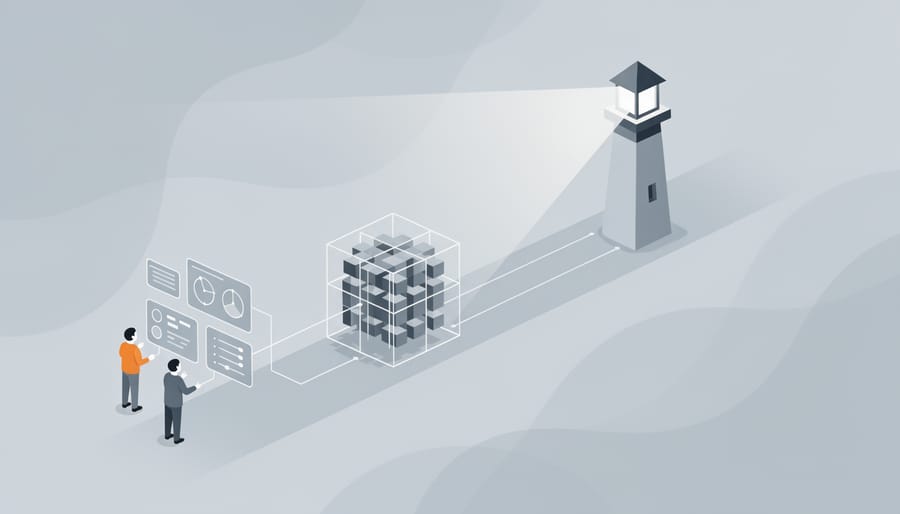
Sometimes the value of monitoring becomes crystal clear only when it prevents disaster. Here are three real situations where vigilant AI monitoring made all the difference.
During Black Friday 2022, a major online retailer noticed something odd in their dashboards. Their AI-powered recommendation engine, which typically drove 35% of sales, was showing a steep performance decline. Customers were seeing bizarre product combinations: winter coats suggested alongside swimming gear, baby products recommended to obvious single professionals. The monitoring system flagged a 40% drop in click-through rates within just two hours. The culprit? A recent catalog update had introduced inconsistent product categories that confused the model. Because their team caught this immediately through their monitoring alerts, they rolled back the changes and switched to a backup recommendation strategy. The incident lasted only 90 minutes instead of potentially ruining their biggest sales day. The lesson: peak traffic times are exactly when monitoring matters most.
A diabetes management application learned an even more critical lesson about model drift. Their AI system predicted insulin dosage recommendations based on patient data. Over six months, their monitoring system detected that predictions were becoming increasingly conservative, recommending lower doses than necessary. Investigation revealed the model had gradually shifted because the training data came primarily from younger patients, but their user base was aging. The drift was subtle, less than 5% monthly, but compounding. Patients weren’t in immediate danger, but they weren’t getting optimal care either. By catching this through systematic drift monitoring, the healthcare provider retrained their model with age-diverse data before any adverse outcomes occurred. Their takeaway: slow drift can be just as dangerous as sudden failure.
A credit card company’s fraud detection system tells perhaps the most dramatic story. Their monitoring showed a strange pattern: the model’s confidence scores were unusually high, yet actual fraud was slipping through. Attackers had discovered a new technique using legitimate-looking micro-transactions that the model hadn’t seen during training. Monitoring caught the discrepancy between the model’s confidence and real-world results within 48 hours, limiting losses to $200,000 instead of the estimated millions that would have accumulated over weeks. The experience taught them that monitoring must track real outcomes, not just model metrics.
Here’s the reality: AI monitoring has transformed from a nice-to-have into essential infrastructure. Just as you wouldn’t deploy a traditional application without logging and health checks, you shouldn’t release AI models into production without proper observability. The stakes are simply too high—models that silently degrade can erode user trust, compromise business decisions, and create costly downstream problems.
The good news? You don’t need to build a perfect monitoring system from day one. Waiting for the ideal setup means your models are running blind right now. Instead, embrace the power of starting small with immediate, practical steps.
Begin with this three-part approach: First, pick one critical model in your workflow—the one that directly impacts users or business outcomes. Second, choose one metric to track consistently, whether that’s prediction accuracy, response latency, or input data distribution. Third, set up one alert that notifies you when something goes wrong, even if it’s just a simple email notification when metrics drift beyond acceptable thresholds.
These modest first steps create a foundation you can build upon. As you gain confidence and understanding, you’ll naturally expand your monitoring coverage to additional models and metrics. You’ll discover which signals matter most for your specific use case and refine your alerting strategy to reduce noise while catching genuine issues.
The landscape of AI observability continues evolving rapidly, with new tools and methodologies emerging constantly. By establishing basic monitoring practices today, you’re positioning yourself to adapt and grow alongside these advancements. Don’t let perfection paralyze progress—start monitoring now, learn from what you observe, and iterate as you go.