
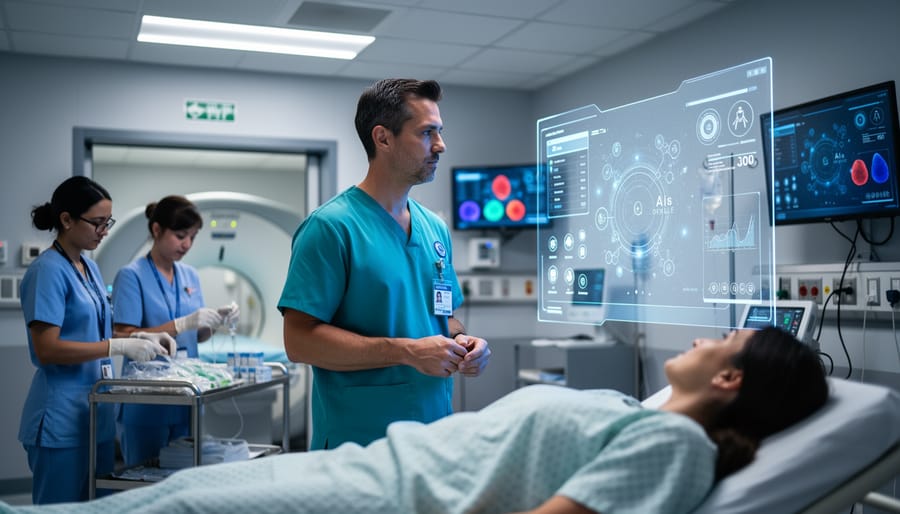
Every 10 seconds, someone walks through hospital emergency room doors facing a potential life-or-death situation. In that critical moment, physicians must rapidly assess symptoms, order the right tests, interpret results, and make treatment decisions that can mean the difference between life and death. Now, artificial intelligence is stepping into these high-pressure environments, not to replace doctors, but to enhance their ability to save lives.
AI emergency decision support systems are transforming how emergency departments operate by analyzing patient data in seconds, identifying patterns human eyes might miss, and flagging critical cases that need immediate attention. These intelligent systems can predict which chest pain patients are having heart attacks, detect strokes on brain scans faster than radiologists, and anticipate sepsis hours before visible symptoms appear.
The impact is already measurable. Hospitals using AI triage systems have reduced wait times by up to 30%, while AI-powered diagnostic tools have improved early detection rates for life-threatening conditions. For patients arriving disoriented or unable to communicate their symptoms clearly, AI analyzes vital signs, medical history, and test results to provide physicians with comprehensive insights within minutes.
This technology represents a fundamental shift in emergency medicine. Rather than relying solely on physician intuition and experience, emergency rooms now harness machine learning algorithms trained on millions of patient cases. The result is faster diagnoses, more accurate risk assessments, and ultimately, more lives saved. Understanding how AI emergency rooms work, what they can accomplish today, and where this technology is headed matters for anyone who might one day need emergency care.
What Makes an Emergency Room ‘AI-Enabled’?
The Three Pillars of AI Emergency Care
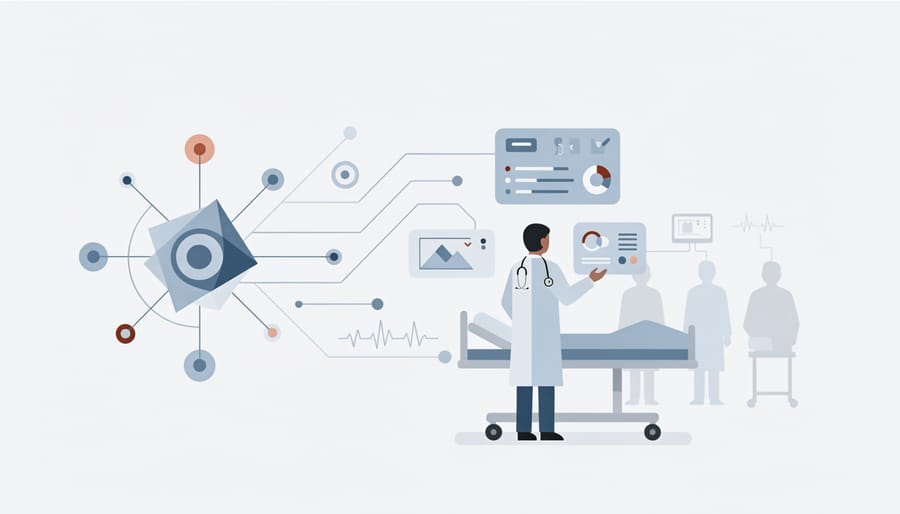
AI emergency rooms operate through three interconnected systems that work like a well-coordinated medical team, each handling crucial responsibilities while sharing information seamlessly.
Intelligent triage systems serve as the digital front door of emergency care. When a patient arrives, these AI-powered tools analyze vital signs, symptoms, and medical history in seconds. Think of it as having an experienced nurse who never gets tired and can process dozens of patients simultaneously. The system assigns priority levels based on severity, ensuring that someone experiencing a heart attack gets immediate attention while someone with a minor cut waits appropriately. These systems learn from millions of past cases, recognizing patterns that might escape even seasoned professionals during busy shifts.
Diagnostic assistance tools act as the physician’s second pair of eyes. They analyze medical imaging like X-rays and CT scans, flagging potential issues such as fractures, internal bleeding, or abnormal masses. Rather than replacing doctors, these tools highlight areas that need closer examination, similar to how spell-check underlines potential errors in your writing. They can cross-reference symptoms with vast medical databases, suggesting possible diagnoses that doctors might not immediately consider, especially for rare conditions.
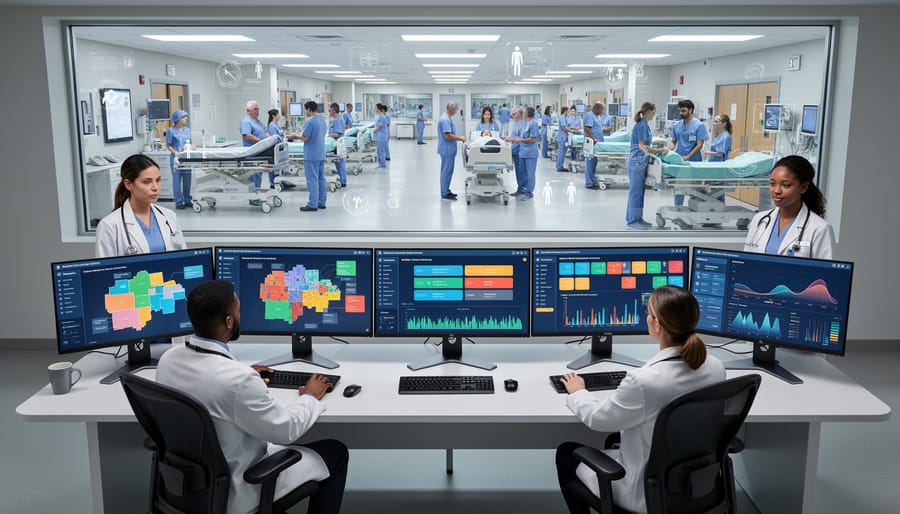
Resource optimization platforms function as the emergency room’s brain, managing everything behind the scenes. They predict patient flow based on time of day, weather patterns, and local events. This technology allocates staff efficiently, ensures equipment availability, and even coordinates with nearby hospitals for transfers when necessary. If three ambulances are incoming simultaneously, the system quickly determines which treatment rooms, specialists, and equipment should be prepared.
Together, these three pillars create a responsive ecosystem where information flows instantly, decisions happen faster, and resources stretch further, ultimately improving outcomes when every second counts.
How AI Triages Patients Faster Than Ever
Spotting the Invisible: Early Warning Systems
Imagine walking into an emergency room feeling unwell, but not critically ill. Behind the scenes, an AI system is already analyzing thousands of data points from your vital signs, flagging a pattern that suggests you might go into cardiac arrest in the next six hours. This isn’t science fiction—it’s happening right now in hospitals equipped with advanced predictive health monitoring systems.
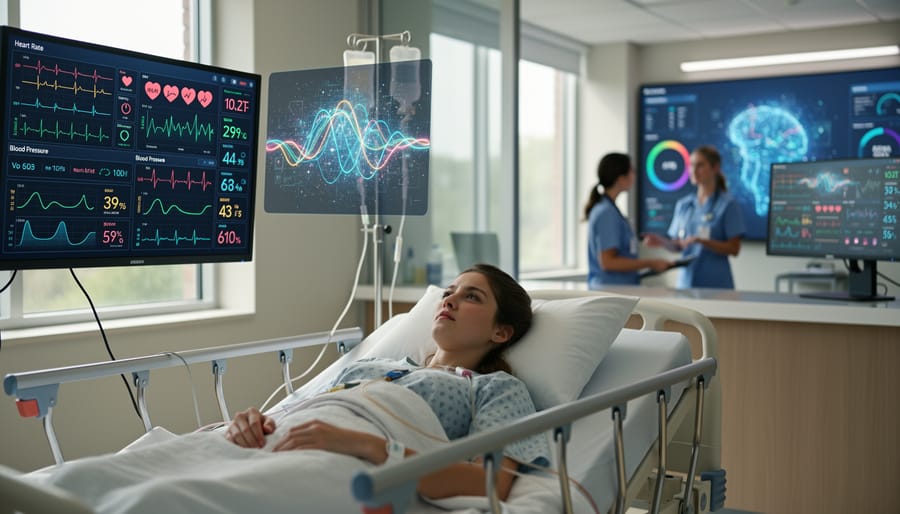
These AI-powered early warning systems work like digital sentinels, continuously scanning patient data for subtle patterns that human observers might miss. They process information from heart rate monitors, blood pressure readings, oxygen levels, and temperature sensors, while simultaneously analyzing recent lab results and medical history. The magic happens when the AI spots combinations of small changes that individually seem harmless but together signal impending danger.
Consider sepsis, a life-threatening condition where the body’s response to infection spirals out of control. Traditional detection often happens too late, when patients already show obvious symptoms like confusion or rapid breathing. AI systems can now predict cardiac arrests and sepsis hours before these symptoms appear, giving medical teams precious time to intervene.
The system learns from millions of patient cases, identifying patterns invisible to the human eye. A slight uptick in heart rate combined with a minor temperature change and specific lab values might mean nothing in isolation. But the AI recognizes this exact combination preceded septic shock in hundreds of previous cases.
This technology transforms emergency care from reactive to proactive. Instead of waiting for a patient to crash, doctors receive alerts when someone is just beginning to deteriorate. It’s like having a crystal ball that looks a few hours into the future, allowing medical teams to adjust treatments, administer medications, or move patients to intensive care before crisis strikes—potentially saving thousands of lives annually.
AI as the Doctor’s Second Brain
Medical Imaging Gets Superhuman Speed
When someone arrives at the emergency room with severe head pain or chest trauma, every second counts. Traditional medical imaging analysis requires radiologists to carefully examine scans—a process that, while thorough, can take precious minutes or even hours during busy periods. AI is transforming this timeline dramatically.
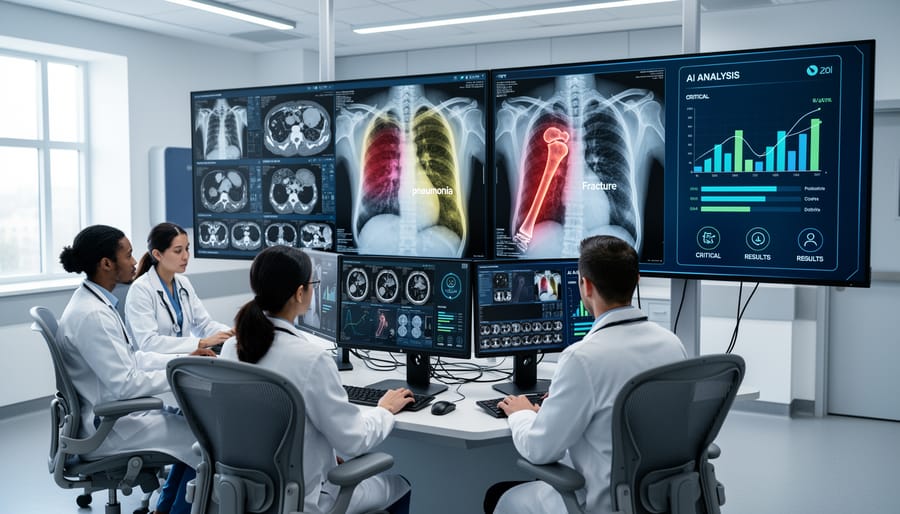
Modern AI systems can analyze medical imaging with speed and accuracy that wasn’t possible just a few years ago. These algorithms process X-rays, CT scans, and ultrasounds in mere seconds, flagging critical conditions that demand immediate attention.
Consider stroke detection. When a patient arrives with symptoms like sudden weakness or confusion, a CT scan can reveal whether they’re experiencing a blockage or bleeding in the brain. AI algorithms scan these images instantly, identifying signs of stroke and alerting the medical team within moments. This rapid analysis is crucial because stroke treatments have strict time windows—the faster doctors intervene, the better the patient’s chances of recovery.
Similarly, AI excels at spotting fractures that human eyes might miss, especially hairline breaks or complex injuries involving multiple bones. The technology highlights these areas on the scan, ensuring nothing goes unnoticed during the chaos of a busy emergency department.
Perhaps most critically, AI can detect internal bleeding from traumatic injuries. A patient involved in a car accident might appear stable on the outside while bleeding internally. AI systems quickly analyze abdominal scans, identifying fluid accumulation or organ damage that requires immediate surgical intervention.
This doesn’t replace human expertise—radiologists still review the findings and make final decisions. Instead, AI acts as an incredibly fast first-pass analyzer, ensuring critical cases receive immediate attention while helping medical professionals work more efficiently.
Managing Chaos: AI for Emergency Department Operations
Emergency departments operate in a state of controlled chaos, where patient arrivals are unpredictable and resources are perpetually stretched thin. AI is transforming this environment by bringing order to the disorder, using machine learning algorithms to anticipate needs before they become critical.
Imagine an ER on a typical Friday evening. Without AI, staff rely on gut feelings and past experience to prepare for patient surges. With AI, the story changes dramatically. Machine learning models analyze years of historical data—weather patterns, local events, flu season trends, even social media activity—to predict patient volume with remarkable accuracy. One hospital in Chicago implemented an AI forecasting system that predicts patient arrivals six hours in advance, allowing managers to adjust staffing levels proactively rather than scrambling when the waiting room fills up.
These predictive capabilities extend beyond simple headcounts. AI systems track bed availability across the entire hospital in real time, identifying bottlenecks before they occur. When the emergency department fills up, the AI can suggest which patients might be ready for discharge from other units, freeing up space for incoming emergencies. This dynamic bed management has helped some facilities reduce patient boarding times by up to 40 percent.
| Metric | Traditional ER Operations | AI-Enabled Operations |
|---|---|---|
| Average Wait Time | 2-4 hours | 1-2.5 hours |
| Bed Utilization Rate | 65-75% | 85-92% |
| Staff Allocation Efficiency | Reactive adjustments | Predictive scheduling with 6-hour advance notice |
Staff allocation represents another crucial area where AI makes a tangible difference. During surge events like mass casualties or disease outbreaks, AI systems can instantly analyze staff expertise, current workload, and patient acuity levels to recommend optimal team assignments. Think of it as having a tireless operations manager who processes thousands of variables simultaneously, ensuring the right healthcare provider reaches the right patient at the right moment. This intelligent orchestration means fewer burned-out staff members and better patient outcomes when every second counts.
Real Hospitals, Real Results
Across the globe, emergency departments are already experiencing the tangible benefits of AI implementation, with results that speak louder than theoretical promises.
At Johns Hopkins Hospital in Baltimore, an AI-powered sepsis prediction system has become a lifesaving cornerstone of their emergency department. The system analyzes patient vital signs, lab results, and medical history in real-time to identify sepsis risk hours before traditional methods would catch it. Since implementation in 2018, the hospital reported a 20% reduction in sepsis-related deaths and detected cases an average of four hours earlier than conventional screening. For patients like Sarah Martinez, a 54-year-old who arrived with flu-like symptoms, this meant receiving critical antibiotics within 45 minutes instead of the typical six-hour window—a difference that likely saved her life.
Mount Sinai Health System in New York deployed an AI triage assistant that evaluates incoming patients and predicts which ones will require immediate intervention. Over 18 months, the system reduced average wait times by 35 minutes and improved patient flow efficiency by 28%. The AI correctly identified 94% of high-risk patients who needed urgent care, ensuring critical cases received immediate attention while less severe cases were appropriately scheduled.
The Royal Bolton Hospital in the United Kingdom implemented an AI diagnostic tool to analyze chest X-rays in emergency situations. Radiologists who previously took 11 hours on average to review emergency scans now receive AI-assisted preliminary readings within seconds. The system flags potential pneumonia, fractures, and collapsed lungs with 92% accuracy, allowing doctors to begin treatment while awaiting final radiologist confirmation. Emergency physician Dr. James Chen notes that “the AI acts like having an extra set of expert eyes immediately available, especially during overnight shifts when radiologist coverage is thin.”
Similar to how AI in chronic care helps manage long-term conditions, emergency AI systems are proving their worth in acute settings. Stanford Health Care documented that their AI-powered stroke detection system reduced door-to-treatment time by 22 minutes—crucial when every minute without treatment means losing nearly two million brain cells.
These real-world implementations demonstrate that AI emergency systems aren’t futuristic concepts but present-day tools delivering measurable improvements in patient outcomes and operational efficiency.
The Challenges Nobody Talks About
While AI emergency rooms promise revolutionary improvements in healthcare, implementing this technology comes with significant hurdles that deserve honest examination.
- Dramatically reduces patient wait times through intelligent triage and resource allocation
- Improves diagnostic accuracy by analyzing vast amounts of medical data instantly
- Enables early detection of critical conditions that human observers might miss
- Reduces healthcare costs by optimizing staff deployment and preventing unnecessary tests
- Vulnerable to algorithm bias that can lead to unequal treatment across different patient demographics
- Raises serious data privacy concerns with sensitive medical information being processed by AI systems
- Requires expensive integration with outdated hospital infrastructure and legacy systems
- Demands continuous human oversight to catch errors and handle unexpected situations
Data privacy remains one of the most pressing concerns. Emergency rooms handle incredibly sensitive information, from medical histories to insurance details. When AI systems process this data, questions arise about who has access, how long information is stored, and whether these systems are truly secure from cyberattacks. A data breach in an AI emergency room could expose thousands of patient records simultaneously.
Algorithm bias presents another critical challenge. AI systems learn from historical data, which means they can inherit existing prejudices in healthcare. For example, if training data predominantly features one demographic group, the AI might perform poorly when diagnosing conditions in underrepresented populations. This could lead to delayed treatment or misdiagnosis for certain patient groups.
Integration with legacy systems is a practical nightmare many hospitals face. Most emergency rooms run on decades-old computer systems that were never designed to communicate with modern AI platforms. Upgrading this infrastructure requires significant investment, extensive staff training, and careful planning to avoid disruptions in patient care.
Perhaps most importantly, AI cannot replace human judgment entirely. Emergency medicine involves complex decision-making that considers not just symptoms, but also social factors, patient preferences, and ethical considerations. Human doctors must remain in the loop to validate AI recommendations, handle edge cases, and provide the compassionate care that algorithms simply cannot deliver.
What Patients Should Know
When you arrive at an AI-enabled emergency room, the experience may feel familiar with some high-tech additions working behind the scenes. Upon check-in, you’ll likely notice digital interfaces and streamlined processes, but human medical professionals remain at the center of your care. AI systems typically analyze your symptoms, vital signs, and medical history to help triage patients more efficiently, ensuring those with critical conditions receive immediate attention.
Your medical data plays a crucial role in these systems. Information like your heart rate, blood pressure, medical history, and current symptoms feeds into algorithms that assist doctors in making faster, more informed decisions. This data is protected under the same privacy laws (like HIPAA in the United States) that govern all medical records. The AI doesn’t replace your doctor’s judgment—it serves as an advanced decision-support tool, similar to how AI risk assessment tools help predict health risks.
When visiting an AI-enhanced ER, consider asking your healthcare provider these questions: How is AI being used in my diagnosis or treatment? Can you explain the AI’s recommendations? Who makes the final decisions about my care? Is my data being used to train AI systems, and can I opt out?
Remember, AI technology augments human expertise rather than replacing it. Your doctors and nurses remain your primary caregivers, using AI as a powerful assistant to deliver faster, more accurate emergency care when every second counts.
The transformation of emergency rooms through artificial intelligence represents one of healthcare’s most promising frontiers. We’ve explored how AI algorithms are already making real-time triage decisions, predicting patient deterioration before visible symptoms appear, and helping doctors interpret medical imaging with unprecedented speed and accuracy. These aren’t distant possibilities—they’re happening right now in hospitals across the globe, saving lives and improving outcomes for countless patients.
However, it’s important to remember that AI emergency rooms are still evolving. Current systems require ongoing refinement, and challenges around data privacy, algorithmic bias, and seamless integration with existing workflows remain works in progress. The technology isn’t meant to replace the human touch that’s essential to emergency medicine, but rather to amplify the capabilities of skilled medical professionals who make critical decisions under pressure.
Looking ahead to the next five years, expect to see AI emergency room technology become increasingly sophisticated and widespread. Predictive models will grow more accurate as they learn from larger, more diverse datasets. We’ll likely see AI systems that can simultaneously monitor dozens of patients, flagging subtle changes that might escape human attention during hectic shifts. Voice-activated AI assistants may handle documentation, freeing doctors to focus entirely on patient care. Most importantly, as these systems mature and prove their value, they’ll transition from experimental tools in select hospitals to standard equipment in emergency departments worldwide, fundamentally reshaping how we deliver urgent medical care.