

Imagine trying to follow a conversation in a crowded restaurant, struggling to hear your doctor’s instructions, or missing the punchline of a joke your grandchild just told. For over 466 million people worldwide living with hearing loss, these everyday moments represent daily challenges that technology is finally beginning to solve in revolutionary ways.
Hearing assistive technologies have evolved far beyond traditional hearing aids. Today’s solutions harness artificial intelligence to transform how people with hearing impairments experience sound, conversation, and connection. These smart systems don’t just amplify volume—they analyze acoustic environments in real-time, distinguish speech from background noise, and adapt instantly to changing conditions. The same machine learning principles driving the AI healthcare revolution are now embedded in devices small enough to fit inside your ear canal.
The transformation is remarkable. Modern hearing assistive technologies use neural networks trained on millions of sound samples to recognize patterns humans struggle to detect. They can identify whether you’re in a quiet library or busy street corner, automatically adjusting sound processing accordingly. Some devices translate speech into text in real-time, while others use directional microphones guided by AI algorithms to focus precisely on the person speaking directly to you.
This article explores how artificial intelligence is reshaping hearing assistance, from the algorithms that power smart hearing aids to emerging innovations like cochlear implants with built-in machine learning. Whether you’re considering these technologies for yourself, a loved one, or simply want to understand how AI solves real-world accessibility challenges, you’ll discover how these tools work, what makes them effective, and where this technology is headed next.
What Are Hearing Assistive Technologies?

Beyond Traditional Hearing Aids
For decades, hearing aids followed a relatively straightforward path. The earliest devices were simple analog amplifiers—essentially microphones connected to speakers that made everything louder. If you’ve ever turned up the volume on a radio in a noisy room, you understand the limitation: yes, sounds get louder, but so does all the background noise.
The digital revolution of the 1990s marked the first major leap forward. Digital hearing aids could process sound selectively, filtering out some unwanted noise and adjusting frequencies based on the wearer’s specific hearing loss pattern. This was transformative, but these devices still operated on pre-programmed rules. They couldn’t adapt to new situations or learn from the wearer’s preferences.
Enter artificial intelligence, and we’re witnessing something fundamentally different. Today’s AI-powered hearing solutions don’t just amplify or filter—they understand context. Imagine a device that recognizes you’re in a restaurant and automatically prioritizes the voice of the person sitting across from you while dampening the clatter of dishes. Or one that learns you prefer certain adjustments when you’re in your office versus when you’re outdoors.
This isn’t incremental improvement; it’s a paradigm shift. AI brings hearing assistance into the realm of truly intelligent technology that adapts, learns, and personalizes in real-time. For the 466 million people worldwide with hearing loss, this represents not just better sound quality, but a genuine restoration of natural hearing experiences that seemed impossible just years ago.
How AI is Transforming Hearing Assistive Technologies
Smart Sound Processing and Noise Reduction
Imagine trying to follow a conversation at a bustling coffee shop, with espresso machines hissing, music playing overhead, and multiple conversations happening around you. For people with hearing loss, this scenario becomes nearly impossible without advanced technology. This is where AI-powered smart sound processing changes the game.
Modern hearing assistive devices use sophisticated machine learning algorithms that can distinguish between the sounds you want to hear and the noise you don’t. These algorithms analyze incoming audio in real-time, identifying patterns that indicate human speech versus background interference. Think of it as having an intelligent filter that knows the difference between your friend’s voice and the clatter of dishes at a restaurant.
The technology works by breaking down sound into different frequency bands and analyzing each one separately. The AI has been trained on thousands of hours of audio recordings featuring various environments, from quiet libraries to crowded subway stations. This training allows it to recognize speech patterns even when they’re mixed with competing sounds.
What makes this particularly impressive is the automatic adaptation feature. When you move from a quiet office to a noisy street, the device doesn’t need manual adjustment. The AI continuously monitors your acoustic environment and adjusts its processing strategy within milliseconds. In a restaurant, it might suppress the clinking of silverware while amplifying the voice of the person across from you. At a family gathering with multiple speakers, it can help isolate individual voices based on their direction and proximity.
Some advanced systems even learn your preferences over time, understanding which sounds matter most to you in different settings. This personalized approach means the technology becomes more effective the longer you use it, creating a truly adaptive listening experience.
Personalized Hearing Profiles
Imagine a hearing aid that understands your unique hearing needs as well as you do. That’s exactly what personalized hearing profiles achieve through machine learning technology. Unlike traditional hearing aids that apply one-size-fits-all amplification, AI-powered devices create a custom sound blueprint tailored specifically to your hearing patterns.
Here’s how it works: When you first use a modern hearing assistive device, it begins by conducting baseline assessments of your hearing capabilities across different frequencies. But the real magic happens over time. These devices continuously collect data about how you interact with sound in various environments—whether you’re in a crowded restaurant, watching television at home, or having a conversation outdoors.
Machine learning algorithms analyze this behavioral data to understand your preferences. For instance, if you consistently adjust volume settings during phone calls or increase clarity in certain frequency ranges during music playback, the device learns and automatically applies these preferences in similar situations. It’s like having a personal audio engineer who remembers exactly how you like your sound delivered.
The learning process is ongoing and adaptive. As your hearing needs change or you encounter new listening environments, the system updates its understanding. Some advanced devices even track which sounds you pay attention to versus background noise you ignore, using this information to enhance relevant audio while suppressing distractions.
This personalization extends beyond volume control. Machine learning models can adjust speech clarity, reduce feedback, balance environmental sounds, and even predict challenging listening situations before you encounter them. The result is a hearing experience that feels natural and effortless, continuously improving as the technology learns more about your individual hearing signature and daily listening habits.
Real-Time Language Translation and Transcription
Modern hearing assistive technologies have evolved far beyond simple sound amplification, now incorporating sophisticated AI features that break down communication barriers in remarkable ways. One of the most transformative capabilities is real-time language translation and transcription, which turns hearing devices into powerful communication tools.
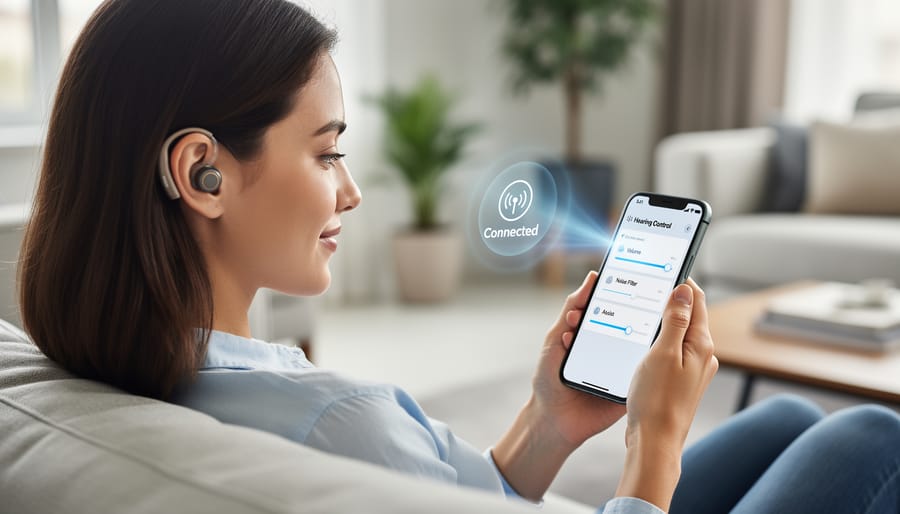
Live captioning has become a game-changer for people in everyday conversations. Imagine sitting in a busy coffee shop where background noise makes it difficult to follow what your friend is saying. AI-powered hearing aids can now display real-time captions of the conversation directly on your smartphone or a connected display, ensuring you don’t miss a single word. This same technology proves invaluable during business meetings, lectures, or phone calls, where accuracy matters most.
Speech-to-text capabilities go even further by creating written records of conversations. For instance, a professional attending a conference can review transcripts later, catching details they might have missed in the moment. These systems use machine learning algorithms that continuously improve their accuracy by learning speech patterns, accents, and contextual meanings.
Perhaps most impressive is real-time language translation. Picture traveling abroad and conversing with someone who speaks a different language. Advanced hearing devices can now translate spoken words almost instantly, displaying the translation as text or even converting it to audio in your preferred language. This technology combines speech recognition, natural language processing, and translation algorithms working seamlessly together.
These features represent how artificial intelligence transforms hearing assistance from a medical necessity into an empowering communication platform that connects people across linguistic and auditory barriers.
Predictive Health Monitoring
Modern hearing aids are becoming intelligent health companions through predictive health monitoring capabilities. AI algorithms continuously analyze patterns in your hearing data, tracking subtle changes that might signal emerging problems before they become noticeable. These systems monitor metrics like how often you adjust volume settings, which frequencies you struggle with most, and environmental listening challenges you encounter daily.
When the AI detects concerning trends, such as progressive difficulty hearing certain sound ranges or increased listening effort in specific situations, it can alert both you and your audiologist. This early warning system enables timely interventions, whether that means adjusting device settings, scheduling a check-up, or modifying treatment plans. Think of it as having a health tracker for your ears, transforming reactive hearing care into proactive prevention and helping maintain optimal hearing health over time.
Real-World Applications Changing Lives Today
AI-Powered Hearing Aids on the Market
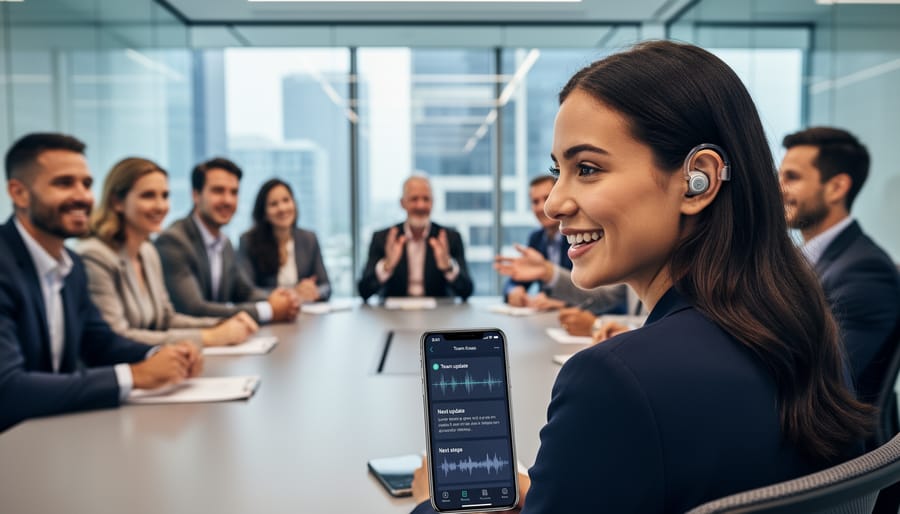
The hearing aid market has transformed dramatically with AI integration, and several manufacturers now offer sophisticated products that showcase this technology’s potential. Leading companies like Phonak, Starkey, and Signia have developed devices that go far beyond simple sound amplification.
Starkey’s Livio AI hearing aids represent a significant leap forward, featuring integrated sensors that track physical activity and cognitive health alongside their primary hearing function. These devices use machine learning to adapt to different sound environments automatically, learning from user preferences over time. What makes them particularly innovative is their fall detection capability and connection to smartphone apps that provide real-time translation services.
Phonak’s Audéo Paradise series employs AI-driven sound processing that can distinguish between speech and background noise across various environments, from quiet homes to bustling restaurants. The technology creates personalized hearing experiences by analyzing millions of sound scenarios in real-time, adjusting settings faster than traditional methods.
Perhaps most revolutionary are self-fitting hearing aids like those from Eargo and Lexie Hearing. These over-the-counter devices use AI-powered algorithms to guide users through customization without requiring professional audiologist visits. Users complete hearing assessments through smartphone apps, and the AI generates personalized sound profiles automatically.
Cloud connectivity has also emerged as a game-changing feature. Devices from manufacturers like Widex connect to cloud-based AI systems that continuously improve their algorithms based on aggregated user data, meaning your hearing aids literally become smarter over time through software updates that enhance performance and introduce new features.
Smartphone Apps and Accessibility Features
Modern smartphones have become powerful hearing assistive devices, thanks to AI-powered apps and built-in accessibility features that transform how people interact with sound.
Popular apps like Sound Amplifier for Android and Live Listen for iPhone use artificial intelligence to enhance specific frequencies and filter out background noise during conversations. These tools work by analyzing incoming audio in real-time, identifying speech patterns, and boosting clarity while reducing environmental interference. Imagine sitting in a bustling café—these apps can help you focus on your companion’s voice while minimizing the clatter of dishes and surrounding chatter.
Beyond conversation enhancement, apps like Aware and Sound Alert use machine learning to identify environmental sounds. They can detect doorbells, smoke alarms, crying babies, or approaching vehicles, sending visual or vibration alerts to users. This environmental awareness technology creates a safer, more connected experience for people with hearing difficulties.
Both iOS and Android now include robust native accessibility features. Apple’s Live Captions automatically transcribes phone calls and FaceTime conversations in real-time, while Android’s Sound Notifications recognizes important household sounds. These operating system-level features require no additional downloads and continuously improve through AI updates.
The beauty of these smartphone solutions lies in their accessibility—most are free or low-cost, turning devices people already own into sophisticated hearing assistive tools.
Teleaudiology and Remote Care
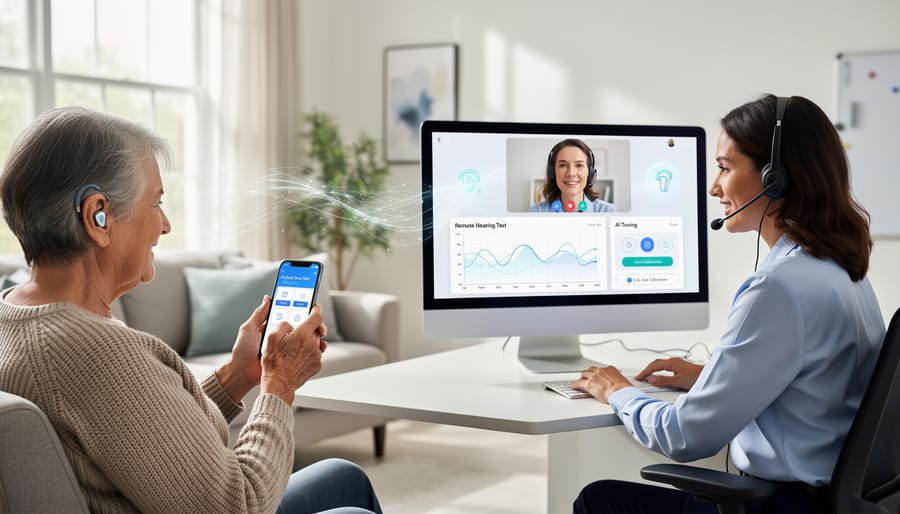
AI is revolutionizing access to hearing care through teleaudiology platforms that eliminate the need for frequent clinic visits. Today’s smart hearing aids connect to mobile apps that allow audiologists to remotely assess hearing performance, analyze real-world usage data, and fine-tune settings based on how patients actually experience sound in their daily environments. This means if you’re struggling to hear conversations in restaurants or experiencing feedback issues, your audiologist can adjust your device settings remotely within minutes rather than waiting weeks for an appointment.
These remote care solutions are particularly valuable for people in rural areas, elderly individuals with mobility challenges, or anyone with busy schedules. AI-powered self-assessment tools can even conduct preliminary hearing tests through smartphone apps, flagging potential issues and recommending when professional consultation is necessary. This approach reduces costs while maintaining quality care, making hearing healthcare more accessible to millions who previously faced geographic or financial barriers.
The Technology Behind the Magic
Neural Networks and Sound Recognition
Think of teaching a child to recognize different animals. You show them pictures of cats, dogs, and birds repeatedly until they learn to tell them apart. Neural networks learn to identify sounds in remarkably similar ways, though at a much faster pace.
At their core, neural networks are computer systems modeled after the human brain, consisting of interconnected layers that process information. When training these networks for sound recognition in hearing assistive technologies, developers feed them thousands of audio samples—everything from doorbells ringing to sirens wailing to babies crying. Each sound comes with a label, like a teacher marking a flashcard.
During training, the network analyzes patterns in these sounds: frequency, pitch, duration, and unique acoustic signatures. Initially, it makes mistakes, perhaps confusing a smoke alarm with a phone ringtone. But here’s where the magic happens: the system adjusts its internal connections based on these errors, gradually improving its accuracy through a process called backpropagation.
Imagine adjusting recipe ingredients until you perfect a dish. The neural network does something similar, tweaking millions of tiny parameters until it can reliably distinguish a knock on the door from thunder outside. This training can take hours or days, processing vast sound libraries to build robust recognition capabilities.
The result is a sophisticated system that can identify dozens of environmental sounds in real-time, alerting hearing aid users to important auditory cues they might otherwise miss. Modern hearing assistive devices leverage these trained networks to provide contextual awareness, transforming how people with hearing challenges interact with their surroundings.
Edge Computing in Hearing Devices
When you’re having a conversation, every millisecond counts. This is where edge computing makes a crucial difference in modern hearing devices. Instead of sending audio data to distant cloud servers for processing, edge computing performs AI analysis directly on the device itself, right there in your ear.
Think of it like this: cloud-based processing is like mailing a letter across the country and waiting for a response, while edge computing is like having an expert standing right beside you. When your hearing aid uses edge computing, it can identify that a car horn is approaching, separate your friend’s voice from background noise, and adjust volume levels in real-time—all within milliseconds.
This instant response is essential for natural hearing. A delay of even half a second would make conversations feel disconnected and awkward, similar to a poorly synced video call. Edge computing also provides privacy benefits since your conversations stay on your device rather than being transmitted elsewhere.
However, edge computing requires powerful yet tiny processors that fit inside small hearing devices while managing battery life efficiently. That’s why many modern hearing aids use a hybrid approach, handling critical real-time tasks on-device while occasionally connecting to cloud services for software updates or advanced personalization features that don’t require immediate responses.
What This Means for the Future of Hearing Health
Early Detection and Prevention
Imagine if your smartphone could warn you about hearing loss before you even notice it. That’s the promise of AI-powered monitoring systems that can detect subtle changes in your hearing over time. Unlike traditional hearing tests that happen once every few years at a clinic, these intelligent systems can track your hearing health continuously through everyday interactions.
AI algorithms analyze patterns in how you adjust volume levels on devices, how often you ask people to repeat themselves during phone calls, or even changes in your voice recognition accuracy. By establishing a baseline of your normal hearing patterns, these systems can flag early warning signs of deterioration that might otherwise go unnoticed for months or years.
This proactive approach is part of a broader trend in early detection technologies that catch health issues before they become serious problems. When hearing loss is identified early, interventions like lifestyle adjustments, protective measures in noisy environments, or timely medical treatment can slow or even prevent further damage.
Some smartphone apps already use AI to periodically check your hearing through simple listening exercises, creating a personal hearing profile that updates automatically. This transforms hearing health from reactive treatment to preventive care, giving you the power to protect one of your most valuable senses.
Integration with Other Health Technologies
Modern hearing assistive technologies don’t exist in isolation—they’re becoming integral parts of comprehensive health ecosystems. By connecting hearing health data with other wellness metrics, these AI-powered devices create a more complete picture of your overall well-being.
Consider how your hearing aid might detect unusual patterns in your daily activity levels. If you’re moving less or speaking to people less frequently, this could signal social isolation or depression—conditions often linked to untreated hearing loss. When integrated with fitness trackers or smartphone health apps, your hearing device can share these insights with your healthcare team, prompting early interventions.
Some systems now combine hearing data with cardiovascular monitoring. Research shows connections between hearing health and heart conditions, so tracking both simultaneously helps identify potential risks earlier. Similarly, fall detection features in modern hearing aids can sync with emergency response systems, providing crucial safety monitoring for older adults.
The power of personalized AI solutions shines when multiple data streams converge. Your hearing device might notice you’re struggling in noisy environments at certain times, while your smartwatch shows elevated stress levels during those same periods. Together, these insights enable more targeted support and lifestyle adjustments that improve both hearing and overall health outcomes.
Getting Started with AI-Enabled Hearing Solutions
Questions to Ask Your Audiologist
When meeting with your audiologist about AI-powered hearing devices, come prepared with these essential questions to make the most of your consultation:
What AI features are available in the hearing aids you recommend? Ask specifically about noise reduction algorithms, speech enhancement capabilities, and automatic environment detection. Understanding these features helps you match technology to your daily needs.
How does the device learn and adapt to my preferences? Some hearing aids use machine learning to remember your volume and setting adjustments across different locations, creating a personalized listening experience over time.
Can I control AI features through a smartphone app? Modern hearing assistive technologies often include companion apps that let you fine-tune settings, track listening environments, and even monitor your hearing health data.
What happens to my data when AI processes sound? It’s important to understand privacy protocols, whether processing happens on-device or in the cloud, and how your information is protected.
Will the AI features improve over time with software updates? Ask about the manufacturer’s commitment to ongoing improvements and whether your device can receive new capabilities after purchase.
How much do AI-enhanced features add to the overall cost? Understanding the price difference between basic and AI-powered options helps you make an informed investment in your hearing health.
What to Consider Before Investing
Before diving into hearing assistive technologies, take time to evaluate your specific needs and circumstances. Start by considering device compatibility with your existing technology ecosystem. Will the hearing aid sync with your smartphone? Does it work across different operating systems? These practical questions matter for daily use.
Privacy deserves careful attention since AI-powered devices often process audio data. Review what information gets collected, where it’s stored, and whether you can control data sharing. Reputable manufacturers should clearly explain their privacy practices.
Ease of use varies significantly between products. Some devices require minimal setup and adjust automatically, while others need frequent manual tweaking. If you’re not comfortable with technology, prioritize solutions with intuitive interfaces and strong customer support.
Cost considerations extend beyond the initial purchase price. Factor in potential maintenance fees, software updates, battery replacements, and whether your insurance covers any expenses. Remember that the most expensive option isn’t always the best fit for your situation. Test products when possible and read real-world user reviews to understand how these technologies perform in everyday scenarios.
We’re witnessing a remarkable transformation in hearing healthcare, one that promises to reach millions who previously faced barriers to quality hearing solutions. AI-enabled hearing technologies represent far more than incremental improvements—they mark a fundamental democratization of advanced auditory care. What was once available only through expensive clinical visits and premium devices is now increasingly accessible through smartphone apps, affordable consumer devices, and intelligent hearing aids that adapt to your life in real-time.
The impact extends beyond convenience. For the estimated 1.5 billion people worldwide living with hearing challenges, these AI-powered solutions offer something profound: the ability to fully participate in conversations, enjoy entertainment, and navigate their environments with confidence. Machine learning algorithms that personalize sound profiles, smart noise cancellation that isolates voices in crowded spaces, and real-time transcription features are restoring connections that hearing loss threatens to sever.
Perhaps most exciting is that we’re still in the early chapters of this story. As AI technology continues to evolve, we can expect even more sophisticated solutions—from improved speech recognition in challenging acoustic environments to seamless integration with our daily digital ecosystems. The algorithms will become smarter, the devices more intuitive, and the barriers to access lower.
If you or someone you know faces hearing challenges, now is an excellent time to explore what these technologies can offer. The future of hearing health isn’t just arriving—it’s already here, learning and improving with each passing day.