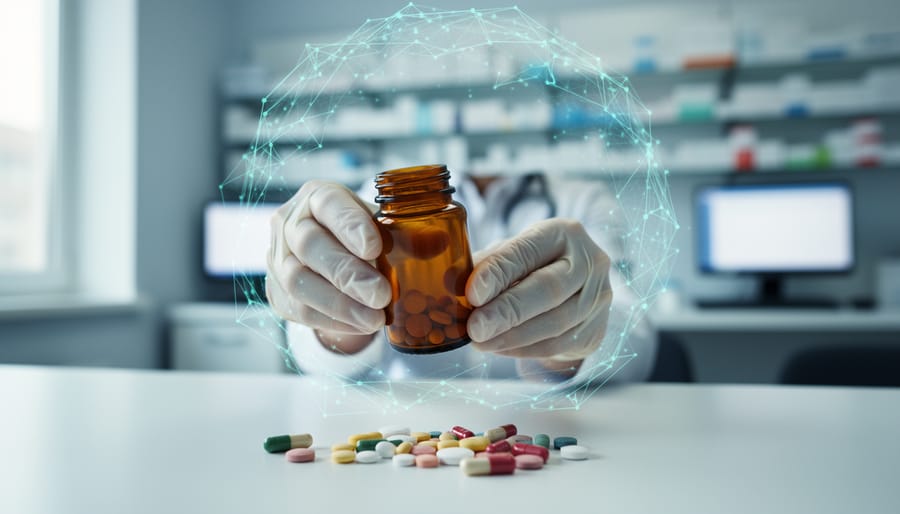
Every year, pharmaceutical companies receive millions of reports about potential drug side effects, creating an overwhelming challenge for human analysts who must identify genuine safety signals hidden within this massive data ocean. A single missed warning sign could mean the difference between catching a dangerous drug interaction early and a preventable patient tragedy unfolding across hospitals worldwide.
Pharmacovigilance, the science of monitoring drug safety after medications reach the market, stands at a critical crossroads. Traditional methods struggle to keep pace with the explosion of health data flowing from electronic medical records, social media posts, clinical databases, and patient forums. While regulatory agencies require thorough analysis of every adverse event report, the sheer volume has outstripped human capacity to process information quickly enough to protect public health effectively.
Artificial intelligence offers a transformative solution to this growing crisis. Machine learning algorithms can analyze millions of patient records in hours rather than months, detecting subtle patterns that human reviewers might miss. Natural language processing systems extract critical safety information from unstructured doctor’s notes and patient testimonials automatically. Predictive models flag potential drug interactions before they become widespread problems, shifting pharmacovigilance from reactive damage control to proactive prevention.
The implications extend far beyond efficiency gains. AI-powered systems are already identifying rare adverse events that traditional surveillance methods overlooked for years, expediting recalls of dangerous medications, and enabling faster approval of beneficial drugs by streamlining safety assessments. For patients, this technological revolution means better protection from medication risks and quicker access to life-saving treatments. Yet implementing these powerful tools raises important questions about data privacy, algorithmic transparency, and the irreplaceable role of human medical expertise in final safety decisions.
What Is Pharmacovigilance and Why Should You Care?
The Human Cost of Medication Errors
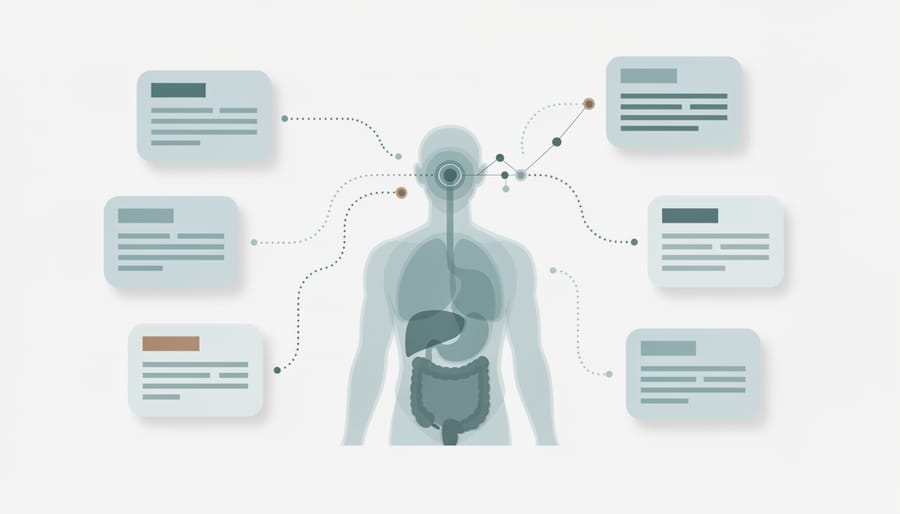
Every year, adverse drug reactions (ADRs) send approximately 1.3 million people to emergency rooms in the United States alone. Even more sobering, medication errors contribute to over 100,000 deaths annually worldwide. Behind these numbers are real people like Sarah, a 42-year-old teacher who developed severe liver damage from a drug interaction her doctors didn’t catch in time, or Michael, whose rare allergic reaction to a common antibiotic went unrecognized until it became life-threatening.
The challenge isn’t just the sheer volume of medications on the market, with over 20,000 prescription drugs approved in the U.S. It’s that traditional pharmacovigilance methods simply can’t keep up. Healthcare professionals rely heavily on voluntary reporting systems, which capture only an estimated 1-10% of actual adverse events. By the time patterns emerge through conventional analysis, thousands of patients may have already been affected.
Clinical trials, while rigorous, test drugs on limited populations under controlled conditions. Once medications reach the real world where patients take multiple prescriptions, have diverse genetic backgrounds, and live with various health conditions, unexpected reactions emerge. Traditional monitoring struggles to connect these dots quickly enough. When safety signals hide within millions of patient records, electronic health systems, and social media reports, human analysts face an impossible task of timely detection and analysis.
How Traditional Pharmacovigilance Works (And Where It Falls Short)
For decades, pharmaceutical companies and regulatory agencies have relied on a system that sounds straightforward but is surprisingly fragile: waiting for doctors, patients, and pharmacists to voluntarily report adverse drug reactions. This spontaneous reporting system forms the backbone of traditional pharmacovigilance, where healthcare professionals fill out forms detailing side effects they observe in their patients.
Once these reports arrive at regulatory agencies like the FDA or EMA, safety experts manually review each case, looking for patterns that might signal a serious problem. Think of it as searching for needles in a haystack, except the haystack keeps growing and the needles might take months or years to become visible.
The limitations of this approach are significant. First, there’s the underreporting problem. Studies suggest that only 1-10% of adverse drug reactions actually get reported. Busy physicians may forget to file reports, patients might not connect their symptoms to a medication, or minor reactions simply go undocumented.
Second, the process is painfully slow. By the time enough reports accumulate for safety officers to spot a trend, thousands of patients may have already experienced the same harmful effect. Manual review of case reports means that rare but serious side effects can hide in the data for years before detection.
Finally, human capacity creates a bottleneck. With millions of people taking thousands of different medications, often in combination, the volume of data far exceeds what safety teams can thoroughly analyze. Important signals can get lost in the noise, and overworked analysts may miss connections between seemingly unrelated reports. This is precisely where artificial intelligence enters the picture, offering capabilities that transcend traditional human limitations.
How AI Is Revolutionizing Drug Safety Monitoring
Natural Language Processing: Reading Millions of Medical Records
Imagine trying to read through millions of patient records, doctor’s notes, online health forums, and medical journals to spot potential problems with medications. For humans, this task would be impossible. But for Natural Language Processing algorithms—a type of AI that understands human language—it’s exactly what they’re designed to do.
NLP algorithms work like highly sophisticated reading assistants. They scan unstructured text from electronic health records, social media posts, scientific publications, and patient discussion forums, looking for mentions of drugs alongside descriptions of symptoms or health problems. These AI monitoring systems can understand context, recognize medical terminology, and even interpret informal language like “my stomach has been killing me since I started that new med.”
Here’s a concrete example: In 2019, researchers used NLP to analyze social media posts from patients taking a popular diabetes medication. The algorithm identified an unusual pattern—multiple users describing severe joint pain that wasn’t listed as a known side effect. By processing thousands of posts and extracting relevant information about timing, severity, and co-occurring symptoms, the NLP system flagged this as a potential safety signal that warranted further investigation.
The technology works by first breaking down text into smaller components, identifying medical terms and drug names, then analyzing the relationships between these elements. If someone writes “felt dizzy after taking medication X,” the algorithm recognizes the temporal relationship (after) connecting the drug to the symptom.
What makes NLP particularly valuable is its ability to process information in real-time and at massive scale. While traditional pharmacovigilance relies heavily on voluntary reporting by healthcare professionals, NLP can detect safety signals from sources that might otherwise go unnoticed—like patient forums where people discuss their experiences candidly. This broader surveillance network means potential problems can be identified earlier, ultimately protecting more patients from harmful side effects.
Machine Learning Models That Predict Drug Interactions
Machine learning models are transforming how we identify dangerous drug combinations before they reach patients. These algorithms work by analyzing millions of patient records, clinical trial data, and scientific publications to spot patterns that human researchers might miss. Think of it as having a detective that never sleeps, constantly connecting dots across countless cases to flag potential problems.
The process begins with training the model on historical data about known drug interactions. The algorithm learns to recognize warning signs, like how certain medications affect the same biological pathways or share similar chemical structures. Once trained, it can predict whether two or more drugs might cause harmful effects when taken together, even if that specific combination has never been tested in clinical trials.
A compelling real-world example involves the interaction between warfarin, a common blood thinner, and various antibiotics. Researchers at Stanford University developed a machine learning model that analyzed electronic health records from over 400,000 patients. The system successfully predicted that certain antibiotic combinations with warfarin significantly increased bleeding risk, a dangerous interaction that wasn’t well documented at the time. This early warning allowed doctors to adjust dosages or choose alternative medications, potentially saving lives.
What makes these models particularly powerful is their ability to process diverse data sources simultaneously. They consider factors like patient age, genetic variations, dosage amounts, and even the timing of when medications are taken. This comprehensive analysis provides more nuanced predictions than traditional methods, which often rely on limited clinical trial data or isolated case reports. As these systems continue learning from new data, their predictions become increasingly accurate and valuable for protecting patient safety.
Signal Detection: Finding the Needle in the Data Haystack
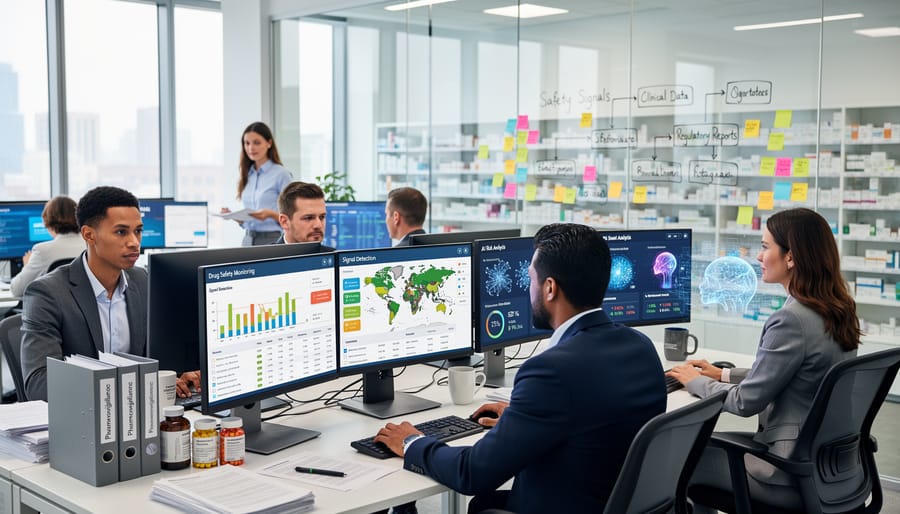
Imagine trying to spot a dangerous pattern among millions of medication reports—a task that would take human analysts weeks or months. This is where artificial intelligence becomes a game-changer in drug safety monitoring.
Traditional pharmacovigilance relies on healthcare professionals manually reviewing adverse event reports, a process that can delay the detection of serious drug problems by months or even years. AI healthcare systems transform this landscape by continuously analyzing vast amounts of data from multiple sources: electronic health records, social media posts, clinical trial databases, and spontaneous reporting systems.
Here’s a concrete example: In 2019, researchers demonstrated that AI algorithms could identify a rare cardiovascular side effect linked to a diabetes medication approximately six months earlier than traditional methods. The AI system analyzed patterns across 10 million patient records, detecting subtle correlations between the drug and unusual heart rhythm changes that human reviewers had missed due to the sheer volume of data.
The speed difference is striking. While manual review of 1,000 adverse event reports might take a team of specialists several days, AI systems can process the same volume in minutes while maintaining accuracy rates above 90 percent. More importantly, these systems excel at finding unexpected connections—such as when a medication prescribed for one condition causes rare side effects in patients with a specific genetic marker.
AI accomplishes this through pattern recognition algorithms that learn what “normal” looks like across thousands of variables, then flag anomalies that deserve human investigation. Think of it as having a tireless assistant who never gets fatigued, can read millions of pages per day, and remembers every detail it has ever processed.
However, AI doesn’t replace human expertise—it amplifies it. The technology identifies potential signals, which pharmacovigilance experts then validate, investigate, and act upon, combining machine efficiency with human medical judgment.
Real-World Applications Already Saving Lives
FDA and Regulatory Agency Adoption
Regulatory agencies worldwide are moving beyond skepticism to actively embrace AI in their drug safety operations. The U.S. Food and Drug Administration (FDA) launched its Sentinel Initiative in 2008, which has evolved into one of the most comprehensive AI-powered surveillance systems monitoring over 800 million patient records. This system can automatically detect potential safety signals within days rather than months, analyzing patterns across diverse patient populations that would be impossible for human reviewers to spot.
The European Medicines Agency (EMA) has similarly integrated machine learning tools through its EudraVigilance system, processing millions of adverse event reports annually. In 2022, the agency reported that AI-assisted screening reduced the time to identify serious safety signals by approximately 40 percent. Perhaps most impressively, these tools helped identify rare cardiac complications in a widely-used medication that traditional methods had missed for nearly two years.
The UK’s Medicines and Healthcare products Regulatory Agency (MHRA) introduced its Yellow Card AI program, which uses natural language processing to extract insights from patient-reported side effects. This system proved particularly valuable during COVID-19 vaccine monitoring, processing unprecedented volumes of reports while maintaining accuracy.
These regulatory adoptions represent a significant shift. Rather than replacing human expertise, these agencies use AI as a sophisticated early warning system, allowing safety reviewers to focus their expertise on investigating flagged signals and making critical decisions about public health interventions.
Pharmaceutical Companies Using AI for Post-Market Surveillance
Major pharmaceutical companies are turning AI into their safety watchdog after medications hit the market. Unlike the AI drug development phase, post-market surveillance focuses on tracking side effects in real-world patients taking the medication.
Here’s how it works in practice: One large pharmaceutical manufacturer deployed machine learning to analyze millions of patient reports from social media, electronic health records, and regulatory databases. Their AI system identified a previously undetected interaction between their diabetes medication and a common heart drug within three months—something that would have taken traditional methods over a year to discover. This early detection allowed them to update prescribing guidelines quickly, preventing potential adverse events.
Another company uses natural language processing to scan doctors’ notes and patient forums for unusual symptom patterns. In one case, their system flagged an unexpected cluster of sleep disturbances among patients taking a new allergy medication. The AI connected seemingly unrelated reports across different countries, revealing a side effect that occurred in only 0.3% of patients but was serious enough to warrant a label update.
These AI systems work alongside the drug discovery process teams, creating a continuous safety loop. They process data 24/7, automatically prioritizing cases that need human review. The result? Faster identification of safety signals, more comprehensive monitoring, and ultimately, safer medications for patients worldwide.
The Technology Behind the Safety Net
The Data Sources AI Monitors 24/7
AI pharmacovigilance systems function like tireless sentinels, constantly scanning multiple information streams to catch potential drug safety issues before they escalate. Understanding where this data comes from helps illustrate just how comprehensive modern drug monitoring has become.
Electronic Health Records (EHRs) represent a goldmine of real-world evidence. These digital patient files contain detailed medication histories, lab results, and clinical notes. When AI analyzes millions of EHRs, it can detect patterns like a specific diabetes medication correlating with unexpected kidney function changes across diverse patient populations—insights that might take years to emerge through traditional reporting.
Social media platforms have become an unexpected but valuable data source. Patients frequently share medication experiences on Twitter, Reddit, and health forums, often mentioning side effects they never reported to their doctors. AI tools scan these conversations, identifying trends like users discussing sleep disturbances after starting a new antidepressant, providing early warning signals worth investigating.
Clinical trial databases offer structured, detailed information about drug performance under controlled conditions. AI systems compare trial outcomes with real-world data, helping identify whether adverse events occurring during studies continue appearing after market approval.
Spontaneous reporting systems—where healthcare providers and patients voluntarily submit adverse event reports to regulatory agencies—remain foundational to pharmacovigilance. AI enhances these traditional databases by automatically categorizing reports, flagging duplicate entries, and prioritizing serious events requiring immediate attention.
Together, these diverse sources create a comprehensive surveillance network, enabling AI to connect dots across datasets that would overwhelm human analysts, ultimately keeping patients safer.
How the Algorithms Actually Work (Simplified)
Think of AI in pharmacovigilance as a highly trained detective sifting through millions of clues to spot patterns that human eyes might miss. Instead of magnifying glasses and fingerprints, these algorithms use mathematical patterns and statistical probabilities to identify potential drug safety issues.
The process starts with data mining, which is essentially like panning for gold in a river of information. AI systems scan through vast databases containing patient reports, medical records, social media posts, and scientific literature. They’re looking for signals, unusual patterns that might indicate an adverse drug reaction.
One common approach is supervised learning, where algorithms learn from examples. Imagine teaching a child to recognize different animals by showing them labeled pictures. Similarly, researchers feed AI systems thousands of previously identified adverse events, each tagged with information about the drug involved and the reaction type. The algorithm learns to recognize these patterns and can then identify similar cases in new, unlabeled data.
Natural language processing plays a crucial role here. Since many adverse event reports come in as free text, like doctor’s notes or patient complaints, the AI needs to understand human language. It’s like having a translator who can read a paragraph saying “patient experienced severe headaches after starting medication X” and automatically extract the key information: drug name, symptom, and severity.
Once trained, these algorithms continuously monitor incoming data streams, flagging potential safety signals in real-time. They assign probability scores to each finding, helping human experts prioritize which cases need immediate investigation. The AI doesn’t replace pharmacovigilance professionals but acts as their tireless assistant, processing information at speeds and scales impossible for humans alone.
The Challenges AI Still Faces in Medication Safety
Data Quality and Privacy Concerns
Despite AI’s promising potential in pharmacovigilance, several data-related hurdles stand in the way of seamless implementation. Understanding these challenges helps explain why AI isn’t simply a plug-and-play solution for drug safety monitoring.
The first major obstacle is incomplete data. Imagine trying to complete a jigsaw puzzle with missing pieces—that’s what AI systems face when working with adverse event reports. Patients might forget to mention relevant medications, healthcare providers may document cases inconsistently, and many side effects go unreported altogether. This incompleteness can cause AI algorithms to miss critical safety signals or draw incorrect conclusions.
Data standardization presents another significant challenge. Different hospitals, countries, and reporting systems use varying formats, terminologies, and coding systems to describe the same adverse events. One facility might record a reaction as “severe headache” while another uses “grade 3 cephalalgia.” Without standardized data, AI models struggle to recognize patterns across different sources, limiting their effectiveness in detecting widespread safety issues.
Perhaps most critically, patient privacy protections add complexity to AI implementation. Medical data is highly sensitive, and regulations like HIPAA in the United States and GDPR in Europe impose strict requirements on how patient information can be collected, stored, and analyzed. While these protections are essential, they create technical and legal barriers when training AI systems that need access to large datasets. Organizations must carefully balance the benefits of AI-powered drug safety monitoring with their obligation to protect patient confidentiality, often requiring sophisticated anonymization techniques and secure computing environments.
The Need for Human Expertise
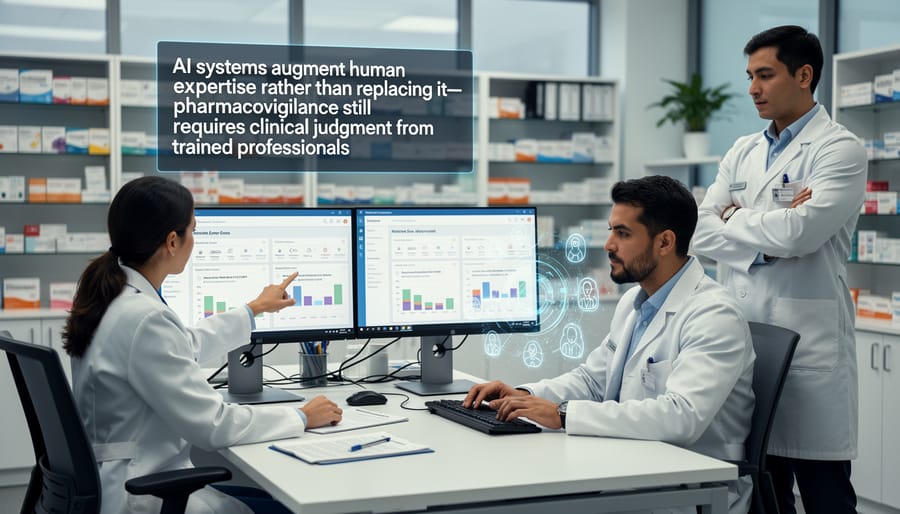
Despite the impressive capabilities of AI systems in pharmacovigilance, they function best as powerful assistants rather than standalone decision-makers. Think of AI as a highly skilled research assistant who can quickly review thousands of reports and flag potential concerns, but still needs an experienced supervisor to make the final call.
The reason is simple: drug safety involves nuances that extend beyond pattern recognition. Consider a case where AI flags a potential drug-heart problem connection based on multiple adverse event reports. A human expert needs to evaluate whether these reports genuinely suggest causation or merely correlation. Perhaps the patients taking this medication already had underlying heart conditions, or maybe they were also taking other medications that contributed to the issue.
Clinical judgment remains irreplaceable in several key areas. Pharmacovigilance professionals bring contextual understanding of patient populations, knowledge of medical history and comorbidities, and awareness of confounding factors that AI might miss. They can recognize when statistical associations don’t make biological sense or when seemingly minor details actually signal serious safety concerns.
Furthermore, regulatory decisions about drug safety carry enormous consequences. Withdrawing a medication from the market or adding new warnings affects millions of patients. These high-stakes decisions require human accountability, ethical reasoning, and the ability to weigh complex trade-offs between benefits and risks. AI provides the evidence; humans provide the wisdom to interpret it responsibly and make decisions that prioritize patient welfare above all else.
Regulatory Hurdles and Validation Requirements
Before AI systems can monitor drug safety at scale, they must pass through a gauntlet of regulatory scrutiny. Think of it like getting a pilot’s license—extensive training and testing are required before you can fly passengers.
Regulatory bodies like the FDA and EMA require comprehensive validation to ensure AI tools produce accurate, reproducible results. This means AI systems must be tested against thousands of known cases to prove they can correctly identify adverse drug reactions without missing critical safety signals or generating false alarms that waste investigator time.
The validation process examines several key areas. First, transparency: regulators need to understand how the AI reaches its conclusions, which can be challenging with complex machine learning models often described as “black boxes.” Second, data quality: the AI must demonstrate it can handle real-world messy data, including incomplete reports and varied reporting formats across different countries.
Perhaps most importantly, these systems must prove they enhance rather than replace human expertise. Current regulations typically position AI as a support tool, with trained pharmacovigilance professionals making final safety decisions. This human-in-the-loop approach ensures accountability while the technology matures and regulators develop more comprehensive frameworks for AI oversight in healthcare settings.
What This Means for Patients and Healthcare
Faster Detection Means Earlier Warnings
Speed isn’t just a convenience in drug safety monitoring—it can save lives. Traditional pharmacovigilance systems typically take weeks or even months to identify emerging safety signals from adverse event reports. By the time human reviewers manually process thousands of reports, compile data, and recognize patterns, patients may have already experienced preventable harm.
AI systems dramatically compress this timeline. What once took 30 to 90 days can now happen in near real-time, with algorithms flagging potential safety concerns within hours or days of data submission. For example, an AI system monitoring social media, electronic health records, and adverse event databases simultaneously can detect an unusual cluster of liver problems associated with a specific medication within 48 hours—compared to the traditional six-week window.
This acceleration means regulatory agencies and pharmaceutical companies can issue safety alerts faster, update prescribing guidelines promptly, and even recall dangerous products before widespread harm occurs. In practical terms, this speed advantage could mean the difference between a handful of affected patients and thousands experiencing serious complications from a previously undetected drug interaction or side effect.
More Personalized Medication Safety
The future of drug safety monitoring is becoming remarkably personal. Imagine a system that doesn’t just flag general medication risks, but evaluates how a specific drug might affect you based on your unique genetic makeup, medical history, and lifestyle factors.
AI is paving the way for this reality through personalized risk assessments. Rather than relying solely on population-wide statistics, advanced machine learning algorithms can analyze individual patient characteristics to predict who might be most vulnerable to specific side effects. For instance, certain genetic variations make some people metabolize medications differently, turning a standard dose into either an ineffective treatment or a dangerous overdose.
These AI systems could integrate data from genetic tests, electronic health records, wearable devices, and lifestyle information to create individualized safety profiles. A patient with specific liver enzymes might receive an automatic alert about a drug interaction that wouldn’t affect most people. Someone with a particular gene variant could be steered toward safer alternatives before ever experiencing an adverse reaction.
This shift from one-size-fits-all warnings to truly personalized medication guidance represents the next frontier in keeping patients safe while ensuring they receive the most effective treatments for their unique biology.
The integration of artificial intelligence into pharmacovigilance represents a significant leap forward in how we protect patients from medication-related harm. Throughout this exploration, we’ve seen how AI transforms the traditionally labor-intensive process of monitoring drug safety into something faster, more comprehensive, and increasingly proactive. From scanning millions of social media posts to identifying subtle patterns in adverse event reports that human analysts might miss, AI tools are already making meaningful contributions to medication safety worldwide.
However, it’s important to maintain realistic expectations. Current AI systems still face challenges with data quality, regulatory acceptance, and the need for human oversight. These technologies work best as powerful assistants rather than replacements for experienced pharmacovigilance professionals. The algorithms excel at processing vast amounts of information quickly, but they still require human judgment to interpret context, understand nuances, and make critical safety decisions.
Looking ahead, the future of pharmacovigilance lies not in choosing between human expertise and artificial intelligence, but in combining their complementary strengths. As AI technologies continue to mature and regulatory frameworks evolve to accommodate these innovations, we can anticipate even more sophisticated safety monitoring systems. This partnership between dedicated healthcare professionals and increasingly capable AI tools promises to create a future where medication risks are identified earlier, understood more deeply, and managed more effectively—ultimately ensuring safer medication use for patients everywhere.