
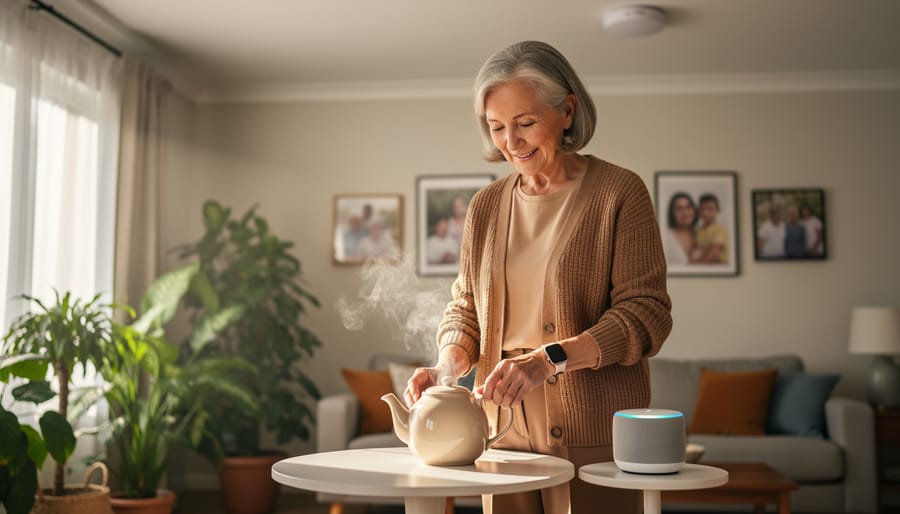
Imagine your mother living independently in her own home at 85, while an invisible network of artificial intelligence monitors her daily patterns, detects when she’s fallen, reminds her about medications, and alerts you to subtle changes in her routine that might indicate declining health. This isn’t science fiction. This is Aging 2.0, a revolutionary convergence of artificial intelligence, smart home technology, and healthcare innovation that’s transforming how millions of seniors maintain independence while staying safe.
The numbers tell a compelling story. By 2030, one in five Americans will be over 65, yet 90% of seniors want to age in their own homes rather than move to assisted living facilities. Traditional caregiving can’t scale to meet this demand. Family caregivers are stretched thin, professional in-home care costs average $54,000 annually, and nursing homes feel like giving up independence entirely. Meanwhile, the loneliness epidemic among isolated seniors contributes to cognitive decline and shortened lifespans.
Aging 2.0 represents the second generation of aging solutions, powered by machine learning algorithms that actually understand context. Unlike the first wave of basic medical alert buttons and pill dispensers, today’s AI-enabled systems learn your parent’s unique patterns. They distinguish between normal activity variations and genuine concerns. A smart floor sensor doesn’t just detect falls; it recognizes gait changes that predict falls weeks in advance. Voice assistants don’t just answer questions; they detect vocal biomarkers indicating depression or early dementia.
For adult children navigating care decisions, these technologies offer something precious: peace of mind without sacrificing your parent’s dignity. For seniors themselves, it’s the difference between reluctantly accepting help and confidently maintaining autonomy. The technology fades into the background, supporting rather than supervising, preserving the home environment while adding an intelligent safety net.
Understanding which technologies actually deliver on these promises, how they integrate into daily life, and what they realistically cost requires cutting through marketing hype to examine real-world applications and outcomes.
What Exactly Is Aging 2.0?
From Nursing Homes to Smart Homes
The traditional model of aging often meant a one-way ticket to a nursing home, where institutional routines replaced personal independence. Today, technology is rewriting this narrative entirely. Smart homes equipped with AI-powered systems are enabling millions of seniors to remain in familiar surroundings while receiving sophisticated care and monitoring.
Consider Margaret, a 78-year-old widow who faced the difficult decision many families know too well: move to an assisted living facility or risk living alone. Instead, her daughter installed smart sensors throughout her home that monitor daily patterns without cameras, respecting privacy while ensuring safety. Motion sensors track movement between rooms, smart pill dispensers send reminders and alerts, and voice-activated assistants help her control lights, thermostats, and communicate with family.
The benefits extend beyond emotional comfort. Financially, aging in place typically costs 50-75% less than nursing home care, which averages over $100,000 annually in the United States. Health outcomes improve too, as studies show seniors in familiar environments experience less depression, maintain cognitive function longer, and recover from illness more quickly than those in institutional settings.
Smart home technology bridges the gap between complete independence and institutional care. Fall detection systems automatically alert emergency contacts, while AI-powered video doorbells identify visitors and delivery personnel. Sleep monitors track rest quality, and smart refrigerators can even notify family members about eating patterns, creating an invisible safety net that preserves dignity while providing peace of mind for everyone involved.
The Role of AI and Machine Learning
Traditional technology follows rigid rules—press a button, get a specific response. Artificial Intelligence works differently. It learns from experience, recognizes patterns, and adapts its behavior over time, much like how we learn from daily life.
Think of AI as a thoughtful companion that pays attention. Instead of simply reminding someone to take medication at 3 PM every day, AI-powered systems learn that Mrs. Johnson usually takes her medicine after her afternoon tea. If she hasn’t moved toward the kitchen by 3:30 PM, the system can send a gentle reminder.
Machine learning algorithms analyze data from sensors, wearables, and smart home devices to understand what’s normal for each individual. Does your father typically visit the bathroom twice nightly? Does your mother usually open the refrigerator by 8 AM? The system learns these patterns.
The real power emerges in anomaly detection. If someone who normally wakes at 7 AM shows no movement by 10 AM, or if nighttime bathroom visits suddenly triple, AI can alert family members or caregivers before small concerns become emergencies.
This predictive capability transforms senior care from reactive to proactive. Rather than responding after falls or health crises occur, AI anticipates potential problems by spotting subtle changes in behavior, sleep patterns, or activity levels that humans might miss.
AI Technologies Making Aging-in-Place Possible
Smart Fall Detection That Actually Works
For years, fall detection devices frustrated both seniors and their families with constant false alarms. Traditional systems couldn’t tell the difference between someone actually falling and everyday activities like sitting down quickly or bending to tie shoes. The result? Devices that cried wolf so often they ended up in drawers, unused.
Modern AI-powered fall detection has changed this dramatically. Today’s smart sensors and wearables use machine learning to understand movement patterns with remarkable accuracy, typically achieving 95% or higher detection rates while drastically reducing false positives.
Here’s how it works: These devices collect data from accelerometers and gyroscopes, measuring movement in three dimensions. But the real breakthrough comes from the AI’s training. Engineers feed thousands of examples of actual falls and normal daily activities into machine learning algorithms. Over time, the system learns to recognize the unique signature of a fall, which typically includes a rapid downward acceleration followed by a sudden impact and lack of movement.
Consider the Apple Watch Series 4 and newer models. Its fall detection algorithm analyzes wrist trajectory and impact acceleration. When it detects a hard fall, it taps the wearer and sounds an alarm. If there’s no response within 60 seconds, it automatically contacts emergency services and sends location information to emergency contacts. Similar technology appears in standalone devices like Philips Lifeline AutoAlert and specialized systems from companies like Vayyar, which use radar sensors that work even when nothing is worn.
What makes these systems particularly impressive is their continuous learning capability. Some devices update their algorithms based on aggregated user data, becoming smarter over time. They adapt to individual movement patterns, distinguishing between one person’s normal gait and a concerning stumble. This personalization means fewer false alarms and faster genuine emergency response when it truly matters.
Voice Assistants Designed for Seniors
Voice assistants have evolved far beyond simple smart speakers, with specialized systems now designed specifically for older adults facing hearing challenges or changes in speech patterns. These AI-powered companions understand the unique needs of seniors, adapting to softer voices, slower speech, or difficulty articulating certain words.
Modern voice assistants for seniors employ advanced natural language processing that recognizes conversational patterns typical of older adults. Unlike standard devices that might struggle with age-related speech variations, these systems learn individual speech patterns over time. When Margaret, 78, asks her assistant about “that heart pill,” the AI understands she means her prescribed medication and provides the correct reminder without requiring precise pharmaceutical names.
The real value emerges in daily health management. These assistants proactively remind seniors about medications at scheduled times, using natural conversation rather than robotic alerts. “Good morning, Sarah. Time for your blood pressure medication with breakfast” feels more like a caring companion than a sterile alarm. The system can confirm when medication is taken and alert family members if doses are missed.
Appointment scheduling becomes simpler through voice interaction, eliminating the frustration of small smartphone screens or complex calendar apps. Seniors can simply say, “I have a doctor’s appointment next Tuesday at 2pm,” and the assistant handles the rest.
Perhaps most critically, emergency calling functionality provides peace of mind for both seniors and their families. A simple phrase like “I need help” or “I’ve fallen” triggers immediate calls to designated contacts or emergency services, potentially saving lives when every second counts.
Predictive Health Monitoring
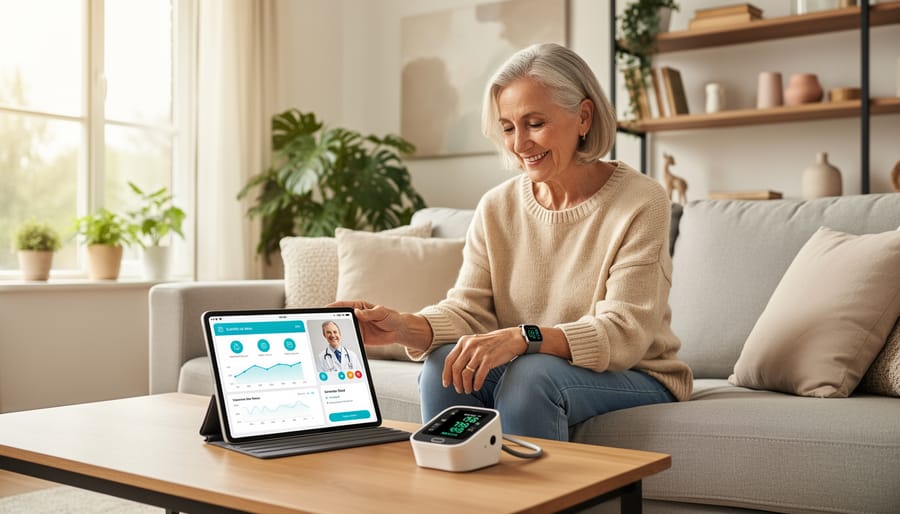
Imagine a system that knows your loved one is getting sick before they do. That’s the promise of predictive health monitoring, one of the most transformative applications of AI in aging care.
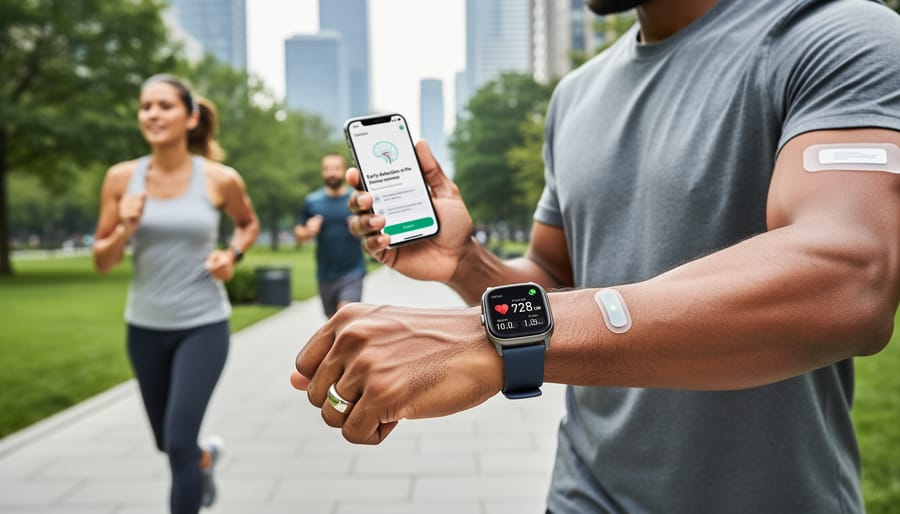
These intelligent systems work by continuously collecting data from various sources: wearable devices tracking heart rate and sleep patterns, motion sensors detecting activity levels, and even smart home devices monitoring daily routines. Machine learning algorithms analyze this information to establish what’s normal for each individual person, creating a personalized health baseline.
Here’s where it gets powerful: the AI doesn’t just record data, it learns to recognize warning signs. For example, if your father typically walks to the kitchen five times each morning but suddenly reduces this to twice, the system flags this behavioral change. Combined with slightly elevated resting heart rate and disrupted sleep patterns, the AI might detect early signs of a urinary tract infection, which often causes confusion and falls in older adults if left untreated.
Similarly, these systems excel at spotting cognitive decline indicators. Subtle changes like forgetting to take medications at regular times, increased nighttime wandering, or altered speech patterns during video calls can signal early dementia stages when intervention is most effective.
The technology also supports chronic disease management by alerting caregivers when vital signs drift outside safe ranges. A diabetic senior’s glucose patterns, a heart patient’s irregular rhythms, or respiratory changes in someone with COPD can all trigger timely notifications.
The result? Fewer emergency room visits, earlier interventions, and most importantly, seniors maintaining independence longer while families gain peace of mind knowing someone’s always watching over their loved ones.
Computer Vision for Safety and Independence
Modern computer vision systems are transforming home safety for older adults, offering watchful protection without the discomfort of being constantly monitored by another person. These AI-powered camera systems work quietly in the background, analyzing visual information to detect potentially dangerous situations while respecting privacy in ways traditional surveillance never could.
Think of these systems as intelligent guardians that understand context. They can recognize when someone has fallen and hasn’t gotten up, when the stove has been left on for an unsafe amount of time, or when wandering behavior suggests confusion or distress. Unlike motion sensors that simply detect movement, computer vision analyzes what’s actually happening in a scene. The system might notice that someone has been sitting unusually still for hours or that the front door opened at 3 AM—situations that warrant gentle alerts to caregivers.
Privacy concerns are addressed through sophisticated anonymization techniques. Many systems use edge computing, processing video data directly on the device rather than sending footage to the cloud. Some convert visual information into skeletal outlines or heat signatures, detecting falls and unusual activity without capturing identifiable images. Others blur faces and bodies while still tracking movement patterns and detecting concerning events.
For families worried about intrusion, these systems often include customizable privacy zones and scheduled monitoring periods. You might activate full monitoring only during high-risk times, like overnight hours, while maintaining minimal detection during the day. The technology provides peace of mind without turning homes into fishbowls, striking a careful balance between safety and dignity.
Real-World Success Stories
Margaret’s story illustrates how transformative these technologies can be. At 78, the retired librarian from Portland wanted to stay in her beloved home after her husband passed away, but her daughter Sarah worried constantly. Living three hours away, Sarah couldn’t easily check if her mom had taken her blood pressure medication or whether she’d fallen during her nightly trips to the bathroom.
After implementing a suite of AI-enabled aging-in-place solutions, everything changed. Smart sensors throughout the house monitor Margaret’s daily patterns without cameras, respecting her privacy while providing peace of mind. When Margaret didn’t get out of bed at her usual time one morning, the system alerted Sarah, who discovered her mother had a minor flu. What could have become a serious situation was addressed quickly.
“I never feel watched or invaded,” Margaret explains. “But I know if something goes wrong, help is on the way. I take my medications on time because my smart dispenser reminds me, and Sarah can see I’m doing well without hovering over me.”
For Sarah, the emotional relief has been profound. “I can focus on being her daughter again, not her worried caretaker. When I visit, we have quality time instead of me frantically checking pill bottles and looking for hazards.”
Then there’s Robert, an 82-year-old Vietnam veteran in Arizona managing diabetes and early-stage cognitive decline. His son James installed an AI voice assistant specifically designed for seniors, along with smart lighting that automatically brightens when Robert moves around at night. The voice assistant reminds Robert about meals, helps him connect with his grandchildren through simple voice commands, and even plays his favorite Johnny Cash songs.
The system learned Robert’s patterns within weeks. When he started asking the same questions repeatedly in the afternoon, a sign his medication timing needed adjustment, the AI flagged this pattern for his doctor. This kind of subtle monitoring caught an issue before it became critical.
“Dad’s more engaged and confident,” James reports. “He tells the assistant jokes and asks it about the weather. It’s given him a companion that never gets impatient, and it’s given me data that helps his healthcare team provide better care.”
The Geriatric Wellness Revolution
Personalized Exercise and Mobility Programs
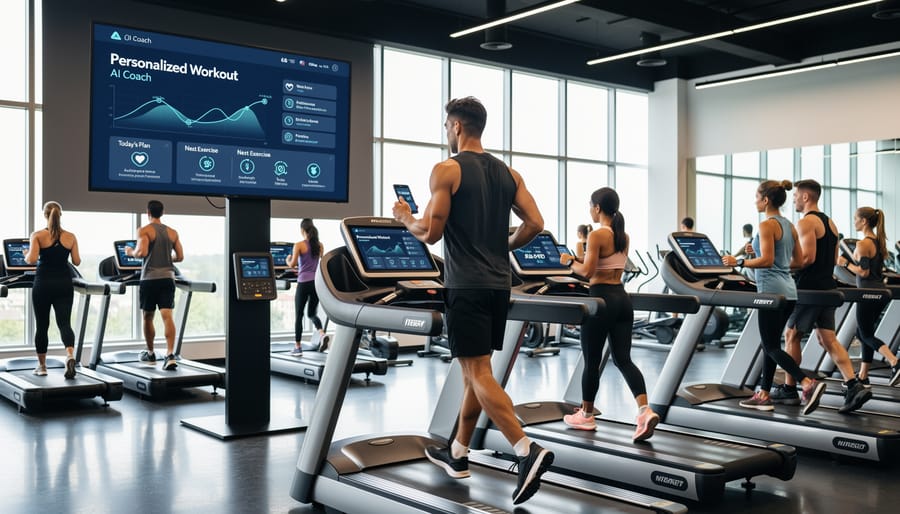
Staying active becomes increasingly vital as we age, but traditional one-size-fits-all exercise programs often miss the mark for older adults with varying abilities and health considerations. AI-powered fitness programs are changing this landscape by creating truly personalized mobility routines.
These intelligent systems begin by assessing an individual’s current capabilities, existing health conditions like arthritis or balance issues, and personal goals. Using this information, the AI designs safe, appropriate exercises that match where someone is today, not where they used to be or where others their age might be.
The real magic happens over time. Machine learning algorithms continuously analyze performance data, tracking progress through sensors or simple input from users. If someone struggles with a particular movement, the system automatically adjusts difficulty downward. When they’re ready for more challenge, it gradually increases intensity.
Many systems also provide real-time encouragement and form correction through voice guidance or visual feedback. This combination of personalization, safety monitoring, and adaptive difficulty helps older adults maintain independence through consistent, appropriate exercise tailored specifically to their evolving needs.
Cognitive Health and Brain Training
Maintaining mental sharpness becomes increasingly important as we age, and AI-powered tools are revolutionizing how seniors keep their minds active. These intelligent applications go far beyond traditional crossword puzzles, offering personalized brain training experiences that adapt to each user’s cognitive abilities and progress.
Modern brain training apps use machine learning algorithms to assess cognitive performance across memory, attention, problem-solving, and processing speed. As users engage with games and exercises, the AI adjusts difficulty levels in real-time, ensuring optimal challenge without frustration. For example, apps like Lumosity and Peak create customized workout plans that evolve based on individual performance patterns.
Perhaps more importantly, these platforms now incorporate cognitive health monitoring capabilities that can detect subtle changes in performance over time. By analyzing response patterns, accuracy trends, and completion times, AI systems can identify potential early warning signs of cognitive decline, prompting users to consult healthcare providers for further evaluation.
These tools also combat social isolation through multiplayer challenges and community features, adding an engaging social dimension to mental fitness. The combination of personalization, progress tracking, and early detection makes AI-powered brain training an essential component of aging-in-place technology, helping seniors maintain independence while staying mentally sharp.
Combating Social Isolation
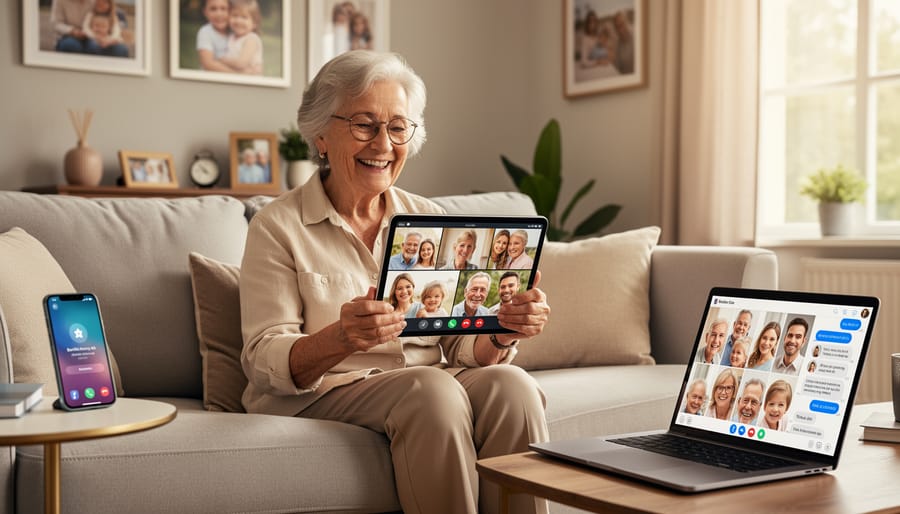
Loneliness affects millions of seniors, but AI-powered solutions are creating meaningful connections in surprising ways. Modern communication tools now use artificial intelligence to simplify video calling, automatically adjusting audio and video settings so conversations with grandchildren happen at the touch of a button rather than through complicated tech setups.
AI companions represent perhaps the most intriguing development. These conversational systems learn individual preferences over time, remembering that Margaret loves discussing gardening or that Robert enjoys talking about his naval service days. Companies like ElliQ have created devices specifically designed for older adults, initiating conversations, suggesting activities, and providing genuine interaction when human company isn’t available.
Picture this: an AI assistant that reminds your father about his grandson’s soccer game and helps him video call at just the right time, or one that notices your mother hasn’t left home in days and gently suggests a walk while sharing the weather forecast. These aren’t cold, robotic interactions. The technology adapts to speech patterns, remembers past conversations, and even develops what feels like personality.
For family members living far away, these tools provide peace of mind. They supplement human connection rather than replace it, ensuring seniors have someone to talk with between visits while maintaining their independence and dignity.
What Families Need to Know Before Getting Started
Cost Considerations and Insurance Coverage
Understanding the financial side of AI-enabled aging technologies helps you make informed decisions for yourself or your loved ones. The good news is that these solutions often cost less than you might expect.
Smart home devices typically range from $50 to $500 per device, with basic monitoring systems starting around $30 monthly for subscription services. A comprehensive AI-powered home setup might cost $2,000 to $5,000 initially, plus $50 to $200 monthly for monitoring services. Compare this to assisted living facilities, which average $4,500 monthly, or in-home caregivers at $25 to $30 hourly.
Medicare currently doesn’t cover most smart home technologies directly, though some Medicare Advantage plans are beginning to include telehealth devices and remote monitoring equipment. Veterans may qualify for VA benefits covering certain assistive technologies. Long-term care insurance policies increasingly recognize technology-based solutions, potentially reimbursing monitoring systems that reduce care costs.
Some practical strategies to manage expenses include starting small with one or two priority devices, checking if your state offers Medicaid waiver programs covering assistive technology, and exploring manufacturer payment plans. Many companies offer free trials, allowing you to test effectiveness before committing financially. The investment often pays for itself by delaying or reducing traditional care needs.
Privacy and Data Security Concerns
As exciting as these technologies are, it’s essential to understand what happens to the sensitive health data they collect. When cameras monitor movement patterns, sensors track bathroom visits, and AI analyzes daily routines, that information needs robust protection.
Start by asking potential vendors specific questions: Where is data stored—on local devices or cloud servers? Who can access the information beyond family caregivers? Is the data encrypted both during transmission and storage? How long is information retained, and can you request deletion? Companies with strong privacy practices will answer these questions transparently and provide clear documentation.
Look for systems certified under recognized healthcare privacy standards. In the United States, HIPAA compliance is the gold standard for medical data protection. However, many aging-in-place technologies fall into regulatory gray areas, so don’t assume all providers follow these rules.
Consider starting with devices that process data locally rather than sending everything to the cloud. For example, some fall detection systems analyze movement on the device itself, only sending alerts when necessary rather than continuously streaming video footage.
Read privacy policies carefully before purchasing. Red flags include vague language about “sharing with partners,” automatic consent to data collection for product improvement, or policies that can change without notice. Remember, you’re not just protecting privacy today—you’re establishing trust for ongoing care relationships.
Getting Seniors On Board
Introducing new technology to older adults requires patience and the right approach. Many seniors resist not because they can’t learn, but because they fear loss of privacy or feel overwhelmed by complexity.
Start with one simple device that addresses an immediate need. Instead of installing an entire smart home system overnight, begin with a single fall detection sensor or medication reminder. Let them experience success before adding more tools.
Frame technology as an independence enabler, not a monitoring system. Rather than saying “we’ll be able to check on you,” emphasize “this helps you stay in your own home longer.” The difference in messaging matters tremendously.
Most importantly, involve seniors in every decision. Take them to demonstrations, let them try devices, and genuinely listen to their concerns. When my neighbor’s daughter installed cameras throughout her father’s house without asking, he unplugged them all. When they redesigned the approach together, selecting voice-activated lights and a simple alert pendant he could control, he became an enthusiastic user.
Remember that today’s seniors often learned new technologies throughout their careers. They’re capable learners who deserve respect and agency in decisions affecting their daily lives.
The Challenges AI Still Needs to Solve
While AI-powered aging-in-place solutions show tremendous promise, it’s important to understand the hurdles that still need clearing before these technologies can truly serve everyone who needs them.
The digital divide remains one of the most significant barriers. Not all seniors have reliable internet access or smartphones, particularly in rural areas or lower-income communities. A sophisticated fall detection system doesn’t help much if someone can’t afford the device or the monthly connectivity fees. This creates an unfortunate situation where those who might benefit most from these technologies often have the least access to them.
Technology literacy presents another real challenge. Even well-designed AI systems can feel overwhelming to someone who didn’t grow up with smartphones and voice assistants. Imagine your grandmother trying to troubleshoot why her medication reminder app stopped working, or why Alexa suddenly doesn’t understand her requests. While companies are improving user interfaces for seniors, there’s still a learning curve that can discourage adoption.
Accuracy issues also persist, particularly for diverse populations. AI systems trained primarily on certain demographic groups may not work as well for others. Voice recognition might struggle with accents or speech patterns affected by certain health conditions. Health monitoring algorithms developed using data from one population may miss important signals in another. Developers are working to address these biases, but progress takes time.
Perhaps most critically, AI cannot replace human connection. A chatbot companion might provide some entertainment, but it can’t offer genuine empathy or the warmth of a grandchild’s hug. Sensors can detect a fall, but they can’t notice the subtle signs of depression that a regular visitor might catch. These technologies work best as supplements to human care, not substitutes.
The good news? Awareness of these challenges is driving innovation. Companies are developing more affordable solutions, creating simpler interfaces, and collecting more diverse data to improve accuracy for everyone.
At its core, Aging 2.0 isn’t really about the technology at all—it’s about people. Behind every smart sensor, predictive algorithm, and AI-powered assistant is a fundamental human desire: to maintain dignity, preserve independence, and continue living meaningful lives in familiar surroundings. These technologies exist to serve that deeply personal goal.
Consider Maria, who can now stay in the home where she raised her children because fall detection sensors provide peace of mind to her family. Or James, whose cognitive decline is managed more effectively through AI systems that notice subtle changes his weekly visitors might miss. These aren’t science fiction scenarios—they’re happening today, quietly transforming how families approach the challenges of aging.
The real promise of AI-enabled aging-in-place lies in its ability to support without diminishing. Unlike institutional care settings that often require seniors to adapt to rigid schedules and unfamiliar environments, these technologies adapt to individual needs and preferences. They enhance rather than replace human connection, freeing family caregivers from constant worry while allowing them to focus on quality time together.
For families exploring these options, the key is starting early and staying informed. Technology evolves rapidly—what seems cutting-edge today may be standard tomorrow. Begin conversations now, even if implementation feels distant. Research available solutions, consult with healthcare providers familiar with these tools, and most importantly, involve your aging loved ones in the decision-making process.
The future of aging isn’t about replacing human care with machines. It’s about creating a supportive ecosystem where technology handles monitoring and routine tasks while people provide companionship, emotional support, and meaningful connection. That’s a future worth building toward—one where growing older doesn’t mean giving up independence or leaving behind the places and rhythms that make life feel like home.