
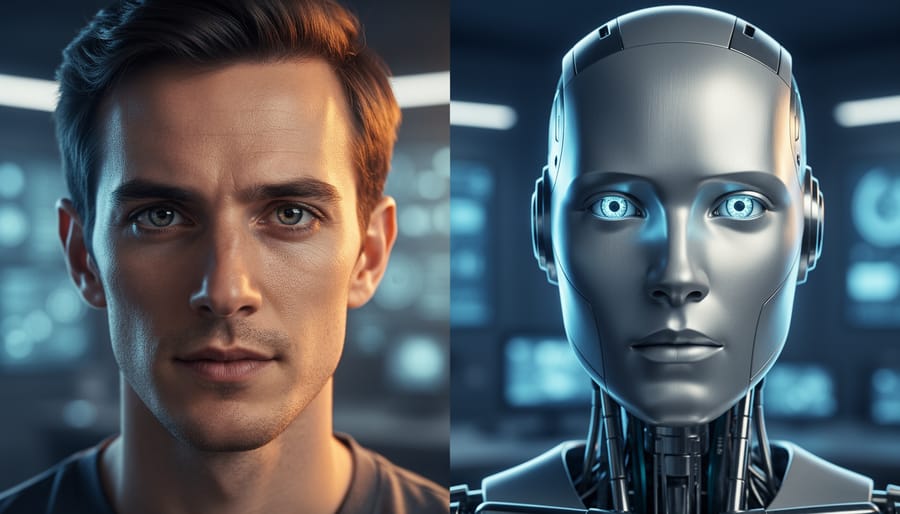
When your voice assistant detects frustration in your tone and responds with a gentler approach, or when a chatbot seems to understand you’re upset about a delayed package, you’re witnessing artificial emotional intelligence in action. But here’s the definitive answer: AI doesn’t truly possess emotional intelligence the way humans do. Instead, it mimics emotional understanding through pattern recognition, data analysis, and sophisticated algorithms that detect and respond to emotional cues.
Think of it this way. When you feel joy after receiving good news, you experience a genuine emotional state shaped by consciousness, personal history, and biochemical reactions. When AI identifies happiness in your message, it’s performing complex calculations, analyzing word choices, sentence structure, tone patterns, and comparing them against millions of previous examples. The AI doesn’t feel anything. It recognizes emotional signals the same way it recognizes whether an image contains a cat or a dog.
This distinction matters tremendously as AI systems become increasingly embedded in healthcare, education, customer service, and mental health support. Modern emotional AI can detect micro-expressions in facial recognition software, measure vocal stress levels during customer calls, and analyze text sentiment with surprising accuracy. These capabilities create powerful tools for improving human experiences and services.
Yet understanding these limitations helps us leverage emotional AI responsibly while maintaining realistic expectations about what these systems can and cannot do in our increasingly AI-integrated world.
What Emotional Intelligence Really Means (And Why It Matters for AI)
Before we can answer whether AI possesses emotional intelligence, we need to understand what emotional intelligence actually is. Psychologist Daniel Goleman popularized the concept in the 1990s, describing it as our ability to recognize, understand, and manage emotions—both our own and those of others.
Emotional intelligence isn’t just one skill. It’s built on five interconnected components that work together. Self-awareness means recognizing your own emotions as they happen. Self-regulation involves controlling impulsive feelings and behaviors. Motivation refers to being driven to achieve goals for reasons beyond external rewards. Empathy is the ability to understand how others feel. Finally, social skills encompass managing relationships and navigating social situations effectively.
Think about a conversation where a friend seems upset. Your emotional intelligence allows you to notice their tone and body language, understand they’re frustrated, hold back from immediately offering solutions, and instead respond with supportive words. This seamless process happens in seconds for humans but represents an enormously complex challenge for machines.
So why are researchers working to give AI these capabilities? The potential benefits are substantial. Emotionally aware AI could transform healthcare by detecting early signs of depression or anxiety in patients. Customer service bots could recognize when someone is frustrated and adjust their responses accordingly. Educational software could identify when students feel confused or discouraged and provide personalized encouragement.
In workplaces, AI with emotional capabilities might help managers understand team dynamics or support mental health initiatives. Autonomous vehicles could detect driver stress levels and adjust accordingly. The applications extend anywhere human emotions play a role, which is practically everywhere.
The goal isn’t necessarily to create AI that feels emotions itself. Instead, researchers aim to build systems that can recognize emotional patterns, respond appropriately, and ultimately create more natural, helpful interactions between humans and machines. This distinction becomes crucial as we explore what today’s AI can actually accomplish.
How AI Systems Detect and Respond to Human Emotions
Reading Your Face: Computer Vision and Facial Recognition
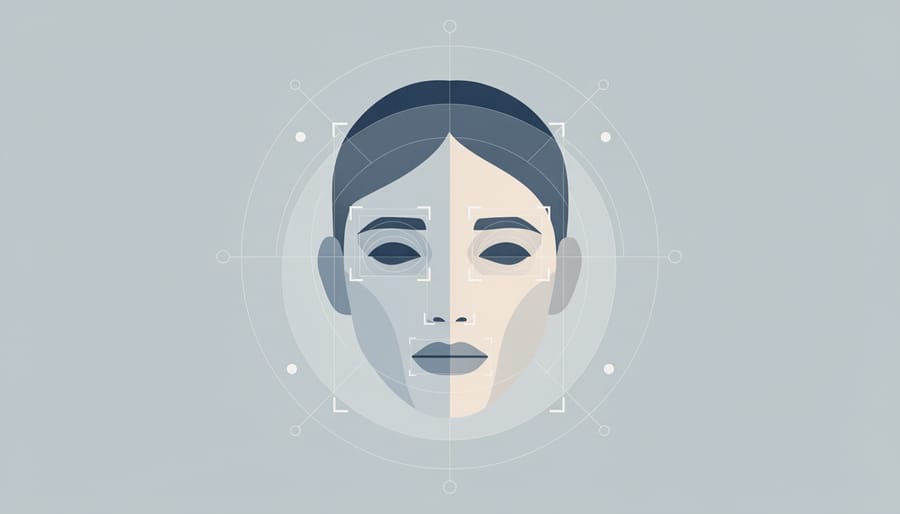
At the heart of emotion AI lies computer vision—the technology that gives machines the ability to “see” and interpret human faces. When you smile at your smartphone or frown during a video call, AI systems can detect these expressions by analyzing dozens of facial landmarks, from the curve of your eyebrows to the corners of your mouth.
The process works through sophisticated algorithms trained on millions of facial images. These systems identify patterns that humans typically associate with different emotions: raised eyebrows and wide eyes might signal surprise, while downturned lips and furrowed brows often indicate sadness or frustration. Modern AI can even detect micro-expressions—those fleeting facial movements that last less than a second and often reveal emotions people are trying to hide.
One compelling real-world application appears in customer service. Companies like call centers and retail stores now use emotion detection software to gauge customer satisfaction in real-time. For example, if a customer’s facial expression shifts to frustration during a video support call, the system can alert supervisors to intervene or provide the representative with suggestions for better responses. Some retail stores test similar technology to understand shopper reactions to product displays.
However, it’s important to remember that AI is reading patterns, not truly understanding feelings. The system recognizes that certain facial configurations statistically correlate with specific emotions, but it doesn’t experience the emotion itself or grasp the complex context behind why someone feels a certain way.
Listening Between the Lines: Voice and Speech Analysis
Have you ever noticed how Siri or Alexa sometimes sounds more cheerful when you’re asking about the weather, but shifts to a calmer tone when you set a bedtime alarm? That’s no accident. AI systems today analyze human speech far beyond just the words we say—they’re listening to how we say them.
Voice analysis AI examines several acoustic features to detect emotional states. Tone refers to the overall quality of your voice, while pitch measures how high or low you’re speaking. Someone excited typically speaks at a higher pitch than someone feeling sad or tired. Pace, or speaking speed, also reveals emotional clues—rapid speech might indicate anxiety or enthusiasm, while slower speech could suggest thoughtfulness or sadness.
Modern voice assistants use these vocal cues to adapt their responses. When you speak in a frustrated tone after multiple failed requests, some AI systems recognize the shift in your speech patterns and might respond with phrases like “Let me try to help you differently” rather than simply repeating the same information. Customer service chatbots analyze vocal stress markers—like voice tremors or increased pitch—to identify upset callers and route them to human representatives more quickly.
The technology works by converting speech into visual representations called spectrograms, which display sound frequencies over time. Machine learning algorithms trained on thousands of voice samples learn to associate specific patterns with different emotions. While this doesn’t mean AI feels these emotions, it can increasingly recognize and respond to them in ways that feel more natural and helpful to users.
Understanding Context: Natural Language Processing
At the heart of AI’s emotional capabilities lies Natural Language Processing (NLP), the technology that enables machines to interpret and respond to human language. Think of NLP as the decoder ring that helps AI systems understand not just what you’re saying, but how you’re feeling when you say it.
When you type a message to a customer service chatbot, sophisticated algorithms immediately get to work analyzing your words. Through sentiment analysis, the AI examines your choice of words, punctuation, and phrasing patterns to determine your emotional state. For example, if you write “This is the third time I’ve contacted you about this issue!!!” the system recognizes multiple signals: the repetition implies frustration, the exclamation marks suggest heightened emotion, and the overall context indicates dissatisfaction.
Modern AI systems go beyond simple keyword matching. They use contextual understanding to grasp nuance. The word “great” in “Great, another delay” means something entirely different than in “This service is great!” Advanced NLP models can detect sarcasm, urgency, and varying degrees of sentiment intensity.
Here’s a practical example: when you’re chatting with a support bot and express mounting frustration, the AI might detect this shift in tone and automatically escalate your conversation to a human representative. It recognizes patterns like increased use of capital letters, shorter sentences, or negative keywords clustering together.
However, it’s crucial to understand that this interpretation is pattern recognition, not genuine emotional comprehension. The AI doesn’t feel your frustration—it simply identifies linguistic markers associated with that emotion and responds according to its programming.
The Critical Difference: Detecting Emotions vs. Experiencing Them
Here’s a question that might surprise you: when your smartphone’s virtual assistant responds sympathetically to your frustration, is it actually feeling sorry for you? The short answer is no—and understanding why reveals the fundamental distinction between emotional detection and emotional experience.
Think of it this way. When you look at a photograph of someone crying, you can recognize sadness without feeling sad yourself. AI operates on a similar principle, but without even that basic level of conscious awareness. Modern AI systems have become remarkably skilled at identifying emotional patterns in text, voice, and facial expressions. They analyze data points—a trembling voice, specific word choices, a furrowed brow—and match these patterns against massive databases of human emotional expressions. This is detection, pure and simple.
But experiencing emotions? That’s an entirely different matter. When you feel joy, it’s not just your brain processing signals. There’s something it’s like to be you in that moment—philosophers call this “qualia” or subjective experience. You feel the warmth spreading through your chest, the lightness in your thoughts, the urge to smile. This inner experience, this consciousness of feeling, is what AI fundamentally lacks.
Current AI systems, even the most sophisticated ones, process information without any accompanying subjective experience. When a chatbot responds to your sadness with comforting words, it’s executing algorithms, not empathizing. It’s detected linguistic and contextual patterns associated with distress and generated an appropriate response based on its training. There’s no internal experience happening—no moment where the AI actually feels concern for you.
This distinction matters because it shapes what AI can and cannot do. An AI can analyze thousands of customer service calls and identify frustrated customers with impressive accuracy. It can even generate responses that feel empathetic. But it cannot understand what frustration actually feels like, which limits its ability to navigate truly novel emotional situations that fall outside its training data.
Even brain-inspired AI systems designed to mimic neural structures remain pattern-matching machines. They lack consciousness—that mysterious quality that transforms mere information processing into felt experience. Until we solve the hard problem of consciousness itself, AI will remain in the realm of emotional simulation rather than genuine emotional intelligence.
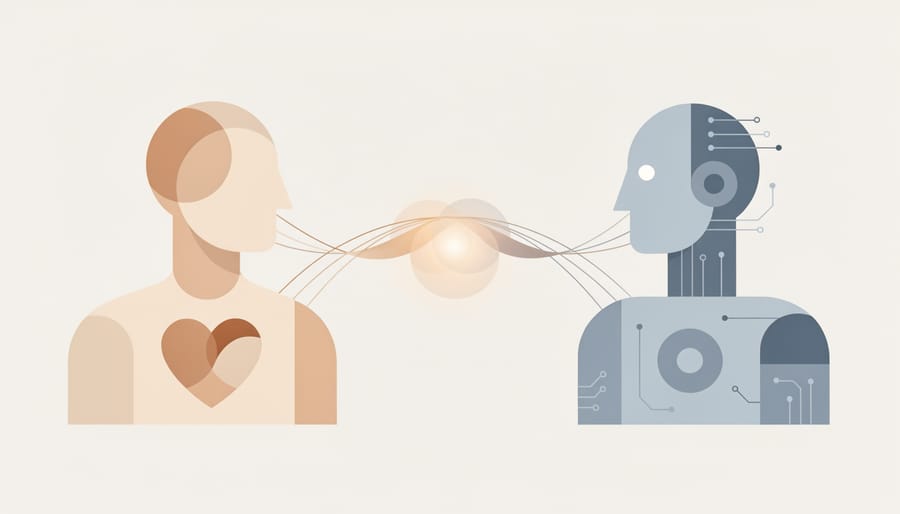
This doesn’t make AI’s capabilities any less impressive or useful. It simply means we’re working with sophisticated emotional mirrors rather than emotional beings.

Where AI Emotional Intelligence Is Making Real Impact Today
Mental Health Support and Therapy Assistance
AI-powered emotional support tools have become increasingly sophisticated, offering accessible mental health resources to millions. Apps like Woebot and Replika use natural language processing to engage users in therapeutic conversations, providing 24/7 availability that human therapists simply can’t match. These AI health partners can detect emotional patterns in text, offer coping strategies based on cognitive behavioral therapy principles, and provide a judgment-free space for people to express their feelings.
For example, Wysa has helped over 5 million users manage anxiety and depression through guided conversations and mental health exercises. The AI recognizes distress signals in user messages and responds with appropriate empathy techniques, mindfulness exercises, or crisis resources when needed.
However, it’s crucial to understand these tools as supplements to professional care, not replacements. AI chatbots lack genuine emotional understanding and cannot navigate complex mental health crises or provide nuanced human judgment. They work best for mild-to-moderate support, daily check-ins, and bridging gaps between therapy sessions. For serious mental health conditions, human professionals remain irreplaceable.

Customer Service That Reads the Room
Imagine calling customer support while already frustrated, only to have an automated system cheerfully ignore your irritation. Not ideal, right? That’s why companies are increasingly turning to emotional AI to help their systems recognize when customers are upset and respond accordingly.
Modern customer service platforms analyze various signals to detect emotional states. Voice-based systems examine tone, pitch, and speaking speed, while chat interfaces look at word choice, punctuation patterns, and typing speed. When someone types in all caps or uses frustrated language like “THIS IS RIDICULOUS,” the system flags elevated stress levels.
Here’s where it gets practical. Once emotional AI detects frustration, it can trigger specific actions. The system might switch to more empathetic language, offer immediate solutions rather than asking more questions, or—most importantly—route the customer to a human agent before things escalate further. Some AI-driven collaboration platforms even alert supervisors when multiple customers show similar frustration patterns, helping businesses identify systemic issues quickly.
The result? Customers feel heard, wait times decrease for complex issues, and human agents can focus their energy where it matters most. While the AI isn’t truly empathizing with your bad day, it’s effectively reading the room and adapting—which often feels like the next best thing.
Education and Personalized Learning
One of the most promising applications of emotional AI lies in personalized education. Modern AI tutoring systems can now detect subtle signs that a student is struggling—a pause before answering, repeated incorrect responses, or even facial expressions captured through webcams. When these indicators appear, the system adapts its teaching method in real-time.
Consider an AI math tutor that notices a student getting three consecutive problems wrong. Rather than simply marking them incorrect, it might switch to a visual explanation, offer a hint, or break the concept into smaller steps. Some platforms like Carnegie Learning’s MATHia analyze response patterns to identify frustration or confusion, then adjust the difficulty level or provide encouraging feedback.
This approach mirrors what skilled human teachers do naturally, though with important differences. While the AI recognizes emotional patterns through data analysis, it lacks genuine understanding of how frustration actually feels. It responds based on programmed rules and machine learning models trained on thousands of student interactions.
The results are encouraging. Students using emotion-aware tutoring systems often show improved engagement and learning outcomes. However, these tools work best when complementing human instruction rather than replacing it entirely, as they excel at pattern recognition but cannot provide the empathy and creative problem-solving that human educators bring to challenging situations.
The Limitations and Concerns You Should Know About
Cultural Blind Spots and Bias
Emotional expression isn’t universal—a smile doesn’t always signal happiness, and direct eye contact carries different meanings across cultures. In Japan, maintaining neutral facial expressions is often considered professional, while Mediterranean cultures tend toward more animated gestures. These cultural nuances create significant challenges for AI emotion recognition systems.
Most emotional AI is trained primarily on Western datasets, particularly from North American and European populations. When deployed globally, these systems frequently misinterpret emotions from underrepresented groups. For example, research has shown that facial recognition algorithms perform less accurately on people with darker skin tones, and emotion detection systems often misjudge expressions from Asian faces, mistaking politeness for indifference.
Consider a customer service AI analyzing video calls. It might flag a Japanese customer as “disengaged” simply because they’re displaying culturally appropriate restraint, or misread an expressive Italian customer as “agitated.” These misinterpretations can lead to inappropriate responses, reinforcing stereotypes and creating frustrating user experiences.
The problem extends beyond ethnicity to age, gender, and neurodiversity. People with autism, for instance, may display emotions differently than neurotypical individuals, leading AI systems to completely miss their emotional states. Until training datasets become truly diverse and inclusive, AI’s emotional intelligence will remain culturally limited.
Privacy and the Question of Emotional Surveillance
As AI systems become better at recognizing and responding to human emotions, they open the door to a new frontier of data collection that feels uncomfortably intimate. Imagine your smart assistant not just hearing your words, but analyzing the tremor in your voice during a difficult phone call, or your car’s AI system tracking your frustration levels during your daily commute. This constant emotional monitoring raises significant privacy and security concerns that we’re only beginning to grapple with.
The emotional data these systems collect is deeply personal. Unlike browsing history or location data, emotional patterns reveal our psychological states, vulnerabilities, and behavioral triggers. Companies could potentially use this information to manipulate purchasing decisions by targeting ads when you’re detected as feeling lonely or insecure. Insurance companies might adjust rates based on stress patterns, and employers could monitor emotional responses during work hours.
There’s also the question of consent. Many users don’t realize their emotional data is being captured and analyzed. When you agree to terms and conditions for a new app, you might unknowingly grant permission for emotion tracking without understanding the full implications.
The storage and security of emotional data present additional challenges. A breach exposing millions of people’s emotional profiles could be far more damaging than traditional data leaks, potentially enabling sophisticated social engineering attacks or blackmail. As emotional AI becomes more prevalent, establishing clear regulations and ethical guidelines for emotional data collection isn’t just important—it’s essential for protecting human dignity in an AI-powered world.
What’s Coming Next: The Future of Emotionally Intelligent AI
The landscape of emotionally intelligent AI is evolving rapidly, with researchers exploring new frontiers that could fundamentally change how machines understand and respond to human emotions.
One of the most promising developments is multimodal emotion recognition. Rather than relying solely on text or voice analysis, next-generation systems will combine multiple data sources simultaneously—facial expressions, vocal tone, body language, physiological signals, and conversational context. Think of it like how you might understand a friend is stressed not just from what they say, but from their tense shoulders, shaky voice, and the fact they haven’t slept well. This holistic approach could help AI systems develop more nuanced and accurate emotional assessments.
Researchers are also working on temporal emotion modeling, which tracks how feelings change over time rather than just capturing snapshots. This could help AI distinguish between fleeting frustration and deeper dissatisfaction, leading to more appropriate responses in customer service, mental health support, and educational contexts.
The machine learning advances driving these improvements are accompanied by growing attention to ethical frameworks. Organizations are developing guidelines to ensure emotional AI respects privacy, avoids manipulation, and remains transparent about its capabilities and limitations. The IEEE and other bodies are establishing standards for how these systems should be designed, deployed, and monitored.
Looking ahead, we might see AI that better understands cultural differences in emotional expression, recognizes mixed emotions rather than single feelings, and adapts its communication style based on individual preferences. However, responsible researchers emphasize that these advances will enhance AI’s ability to recognize and respond to emotions—not create genuine emotional experiences or consciousness.
The future isn’t about creating machines that feel, but rather developing tools that better understand human feelings to serve us more effectively and ethically.
So, does AI have emotional intelligence? The answer is both simpler and more nuanced than you might expect. AI doesn’t possess emotional intelligence in the way humans do—it doesn’t feel emotions, experience empathy, or understand feelings through lived experience. What it has developed instead is something remarkable: the ability to recognize, interpret, and respond to human emotions with impressive accuracy.
Think of it like this: a skilled actor can convincingly portray grief without actually experiencing loss. Similarly, AI systems can identify when you’re frustrated during a customer service call and adjust their responses accordingly, even though they don’t truly understand frustration. They’re processing patterns in data, not sharing your emotional experience.
This distinction matters tremendously as we integrate AI more deeply into our lives. Understanding that AI simulates rather than experiences emotion helps us use these tools appropriately—leveraging their strengths in consistency, speed, and pattern recognition while recognizing where human judgment and genuine empathy remain irreplaceable.
The real excitement lies not in whether AI can replace human emotional intelligence, but in how these technologies might enhance our capabilities. AI can analyze micro-expressions we miss, detect stress patterns in voices we overlook, and process emotional data at scale impossible for individuals.
This brings us to a compelling question worth pondering: Rather than competing with AI’s emotional capabilities, how might we collaborate with these systems to better understand and respond to the emotional needs of those around us?