

Imagine applying for car insurance and receiving approval in 60 seconds instead of 60 minutes. Automated insurance underwriting uses artificial intelligence to evaluate risk, determine coverage eligibility, and set premiums without human intervention. The technology analyzes thousands of data points from your driving record, credit history, property details, and lifestyle factors faster than any underwriter could manually review them.
Traditional underwriting required agents to spend hours reviewing applications, consulting actuarial tables, and making judgment calls. Today’s AI systems process the same information in milliseconds, delivering instant quotes while you’re still on the website. This shift represents one of the most significant examples of AI transforming industries where speed and accuracy directly impact millions of consumers daily.
The algorithms behind automated underwriting combine machine learning models trained on decades of insurance claims data with real-time information from external databases. These systems identify patterns human underwriters might miss, detecting fraud indicators while simultaneously finding opportunities to offer better rates to low-risk applicants.
For consumers, this means faster decisions and more competitive pricing. For insurance companies, automation reduces operational costs by 40-70% while improving consistency in risk assessment. Yet the technology raises important questions about transparency, bias, and whether machines should make decisions that significantly affect people’s financial lives.
Understanding how automated underwriting works helps you navigate insurance applications more effectively and reveals broader implications about AI’s growing role in financial services.
What Is Automated Insurance Underwriting?
The Traditional Way vs. The AI Way
Let’s imagine two people applying for the same life insurance policy, but five years apart.
In 2018, Sarah submitted her application and then waited. A human underwriter named Mike received her paperwork along with dozens of others that week. He spent his morning reviewing Sarah’s medical history, calling her doctor’s office for clarification on a previous prescription, cross-referencing actuarial tables, and checking her driving record. After lunch, he moved on to the next application. Sarah received her approval letter two weeks later.
Fast forward to 2023. James applies for a similar policy through the same company, now using an AI-powered system. Within seconds of submitting his application, the system pulls data from hundreds of sources: medical databases, prescription records, motor vehicle departments, credit bureaus, and lifestyle indicators from wearable devices he voluntarily shared. The AI analyzes over 10,000 data points, identifies patterns, calculates risk scores, and cross-references similar applicants from millions of past cases. James receives his decision in under two minutes.
The difference isn’t just speed. While Mike could review perhaps 8-10 applications thoroughly per day, the AI system processes thousands simultaneously with consistent criteria. Mike’s decisions, despite his expertise, could vary slightly based on fatigue or the order he reviewed applications. The AI applies identical standards every time, though it relies entirely on the quality of its training data and programming.
This transformation represents one of the most dramatic shifts in how insurance companies evaluate risk and make decisions about coverage.

How AI Underwriting Actually Works Behind the Scenes
Data Collection and Integration
Modern AI-powered insurance underwriting systems cast a much wider net when gathering information about applicants compared to traditional methods. While conventional underwriters might review a handful of documents manually, AI systems can simultaneously pull data from dozens of sources in seconds.
Think of it like the difference between reading a few book reviews versus having an AI analyze thousands of reader opinions, author interviews, and sales data all at once. The breadth is staggering.
These systems typically collect information from financial institutions to assess credit scores and banking history, providing insights into an applicant’s financial responsibility. They access medical records and prescription databases to evaluate health risks for life and health insurance policies. For auto insurance, they pull driving records, accident reports, and even telematics data from smartphone apps that track driving behavior in real-time.
What’s particularly striking is the inclusion of alternative data sources that traditional underwriters rarely considered. Some systems analyze social media activity, property records, and even weather patterns in an applicant’s location. For example, if you live in an area prone to flooding, the AI might factor in recent climate data and your home’s elevation.
This comprehensive approach allows insurers to build a 360-degree profile of each applicant. A study by McKinsey found that insurers using advanced data integration could assess risk with up to 30% greater accuracy than traditional methods. However, this data-hungry approach also raises important questions about privacy and fairness that we’ll explore later.
Machine Learning Risk Models
At the heart of automated insurance underwriting, machine learning algorithms work like pattern-recognition detectives, analyzing thousands of data points to predict risk levels. Machine learning, or ML, refers to computer systems that learn from data without being explicitly programmed for every scenario. Instead of rigid rules, these systems identify patterns humans might miss.
Here’s how it works in practice: imagine the system analyzing a car insurance application. It might notice that drivers who bundle renters insurance tend to file fewer claims. Or it could identify that someone with regular vehicle maintenance records presents lower risk than someone without such documentation. The algorithm learns these correlations by studying millions of past applications and their outcomes.
These models can flag high-risk behaviors too. For instance, multiple speeding tickets within a short timeframe might trigger a higher premium, while completing a defensive driving course could reduce rates. In health insurance, the system might reward applicants who participate in wellness programs or maintain consistent preventive care visits.
The key advantage? Consistency and speed. A traditional underwriter might take days reviewing applications subjectively, but ML models evaluate them in seconds using objective criteria. The algorithm assigns a risk score, essentially a numerical prediction of how likely someone is to file a claim, based on their unique combination of factors. This score then determines pricing and coverage options, making the entire process faster and more transparent for applicants.

The Instant Decision Engine
After gathering and analyzing all your information, the AI system reaches its moment of truth: making a decision. Think of this as the brain’s final verdict after processing thousands of data points in milliseconds.
The system assigns each application a confidence score, typically ranging from 0 to 100. Applications scoring above 85 might receive instant approval—the AI is highly confident these applicants meet all criteria. Those below 40 often face automatic denial due to clear risk factors. But here’s where it gets interesting: applications falling in the middle zone trigger a different response.
This middle ground represents the system’s humility. When confidence scores hover between 40 and 85, the AI essentially raises its hand and says, “I need backup.” These flagged applications get routed to human underwriters who can consider nuances the algorithm might miss—like a recent career change that temporarily affected income or unusual property features requiring expert judgment.
Insurance companies continuously adjust these thresholds based on performance data. If too many approved policies result in claims, they might raise the auto-approval threshold to 90. This balance ensures speed without sacrificing accuracy, combining machine efficiency with human expertise where it matters most.
Real-World Benefits You’ll Actually Notice
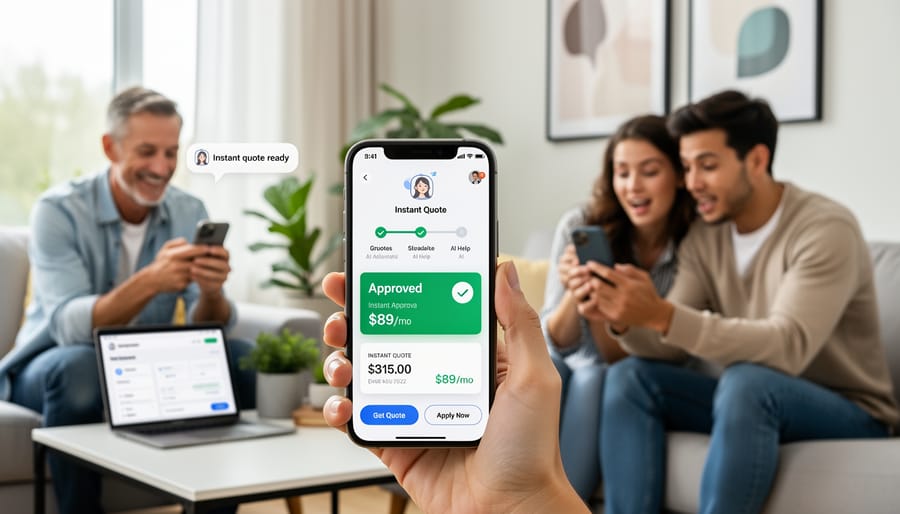
From Weeks to Minutes
Remember when getting life insurance meant weeks of paperwork, medical exams, and anxious waiting? That’s rapidly becoming ancient history. Thanks to automated systems making AI insurance decisions, you can now get approved for a policy during your lunch break.
Lemonade, a digital insurance company, set an industry record by processing a claim in just three seconds. Meanwhile, Haven Life offers instant life insurance approvals for qualified applicants in under 20 minutes, with no medical exam required. The system analyzes your application, cross-references public records, reviews your medical history, and renders a decision before you’ve finished your coffee.
John Hancock took this even further by integrating fitness tracker data into their underwriting process. Active customers who meet health goals receive better rates, with the AI continuously updating risk assessments based on real-time health metrics. What once required scheduling appointments with agents, waiting for lab results, and enduring a month-long approval process now happens almost instantly, transforming insurance from a dreaded chore into a quick digital transaction.
More Accurate Pricing for Your Specific Situation
Traditional insurance pricing often lumps people into broad categories based on age, zip code, or occupation. If you’re a safe driver in your 30s, you might pay similar rates to someone with multiple speeding tickets simply because you share the same demographic profile.
AI-powered underwriting changes this by analyzing hundreds of data points to calculate your unique risk profile. Instead of relying solely on whether you’re 25 or 45 years old, the system examines your actual behavior patterns, driving history, lifestyle choices, and dozens of other relevant factors. Think of it like getting a custom-tailored suit instead of buying off the rack.
This personalized approach creates winners and losers. If you’re genuinely low-risk—perhaps you drive carefully, maintain your home well, or live a healthy lifestyle—you’ll likely see lower premiums than you would under traditional systems. The AI recognizes and rewards your responsible behavior rather than averaging your rate with higher-risk individuals in your demographic group.
However, this precision cuts both ways. Those with riskier profiles may face higher premiums as the system identifies patterns that traditional underwriting might have missed.
Reduced Human Bias
One of the most promising aspects of automated insurance underwriting is its potential to reduce human bias in decision-making. Traditional underwriting can sometimes be influenced by unconscious prejudices or inconsistent judgments between different human underwriters. An automated system, by contrast, evaluates every application using the same criteria and methodology, ensuring consistency across thousands of decisions.
For example, two applicants with identical risk profiles will receive the same assessment, regardless of when they apply or which underwriter reviews their case. This standardization helps create a more equitable process where decisions are based purely on relevant data points rather than subjective impressions.
However, it’s important to understand that automation doesn’t automatically guarantee fairness. The algorithms powering these systems learn from historical data, which may contain embedded biases from past human decisions. If training data reflects discriminatory patterns, the AI system could inadvertently perpetuate them.
This is why leading insurance companies actively monitor their automated systems for algorithmic fairness. They regularly audit outcomes across different demographic groups, test for unintended disparities, and adjust their models accordingly. Think of it as ongoing quality control to ensure the technology serves everyone fairly. The goal isn’t to eliminate human oversight entirely, but rather to combine machine consistency with human accountability.
The Challenges AI Underwriting Still Faces
When the Algorithm Gets It Wrong
No algorithm is perfect, and automated insurance underwriting systems sometimes stumble over unusual situations. Consider someone who worked overseas for years, has no local credit history, or recently changed careers into a higher-paying field. These edge cases can trigger incorrect risk assessments because they fall outside the patterns the AI learned from training data.
This is why human oversight remains essential. Most insurance companies employ underwriters who review flagged applications, particularly those involving high coverage amounts or unusual circumstances. Think of it as having a safety net beneath the automated system.
If you believe the algorithm made an error in your case, you have options. Most insurers offer formal appeals processes where you can submit additional documentation or explanations. For example, a low credit score due to medical bankruptcy might be reconsidered with proper context. Companies typically maintain quality assurance teams that audit algorithmic decisions, tracking error rates and refining their models accordingly.
The best insurance providers are transparent about their appeals process and maintain accessible customer service channels. They understand that while automation brings efficiency, human judgment remains irreplaceable for handling life’s complexities that don’t fit neatly into data points.
Privacy and Data Security Concerns
When insurance companies use automated systems to evaluate your application, they’re gathering and analyzing substantial amounts of your personal information. This includes medical records, financial history, driving records, credit scores, and sometimes even social media activity. While this data helps AI systems make faster decisions, it naturally raises important questions: Who has access to this information? How long is it stored? And what protections are in place?
Insurance companies operating in many regions must comply with strict data protection regulations. In Europe, the General Data Protection Regulation (GDPR) gives consumers significant control over their personal information, including the right to know what data is collected and request its deletion. In the United States, various state and federal laws govern insurance data practices, though regulations vary by jurisdiction.
Modern insurers typically employ multiple security measures to protect your information. These include data encryption, secure storage systems, and regular security audits. Many companies also implement data minimization principles, collecting only what’s necessary for underwriting decisions.
As a consumer, you have rights. You can typically request to see what data an insurer has collected about you and ask how automated systems used it in decision-making. If you’re concerned about data privacy, don’t hesitate to ask your insurance provider about their specific security practices and compliance measures before sharing sensitive information.
The Transparency Problem
One of the most pressing concerns with AI-driven insurance underwriting is the transparency problem. Many modern algorithms operate as “black boxes,” meaning even the insurance companies using them can’t always explain exactly why the system denied coverage to one person but approved another. The AI processes millions of data points through complex neural networks, making decisions that may be mathematically sound but humanly incomprehensible.
This creates serious issues. Imagine being denied insurance and receiving no clear explanation beyond “the algorithm decided.” For consumers, it feels unfair. For regulators, it raises red flags about discrimination and accountability.
That’s why there’s a growing push for explainable AI in the insurance industry. Regulators in Europe and the United States are increasingly demanding that companies demonstrate how their AI systems reach conclusions. Insurance providers must now balance the power of sophisticated algorithms with the ability to provide clear, understandable explanations for their decisions—ensuring that automation doesn’t come at the cost of fairness and transparency.
What This Means for Your Next Insurance Application
How to Prepare Your Information
Before applying for insurance, gathering your information strategically can smooth the automated underwriting process and potentially improve your rates. Think of AI systems as thorough digital detectives—they need complete, accurate data to assess your application fairly.
Start by collecting essential documents like government-issued ID, medical records if applying for life or health insurance, driving history for auto coverage, and property details for homeowners policies. AI systems typically analyze dozens of data points simultaneously, including your credit score, claims history, occupation, and lifestyle factors. Unlike human underwriters who might request missing information later, automated systems make faster decisions based on what you provide upfront.
Accuracy is crucial. Even small inconsistencies—like misspelling your address or entering an incorrect birth date—can trigger red flags or delays in the system. Double-check all entries before submitting, as AI algorithms cross-reference your information against multiple databases instantly.
Pro tip: Have recent statements ready showing your current coverage, if applicable. This helps the system understand your insurance history and may unlock loyalty discounts. Many platforms also allow you to save progress, so you don’t need everything immediately. However, completing your application in one sitting with all documents handy typically yields the quickest results, sometimes within minutes.
What to Do If You’re Denied
Receiving a denial from an automated insurance system can feel frustrating, especially when there’s no human to explain why. However, you have several options to explore.
First, request a detailed explanation. Insurance companies must provide specific reasons for denials, not just a generic “risk assessment” response. Look for factors like credit score, driving history, or medical conditions that triggered the decision. Understanding these specifics helps you identify what needs improvement.
Next, ask for human review. Many insurers allow you to appeal automated decisions and have a real underwriter examine your application. This person can consider context that algorithms might miss, such as recent life changes or unique circumstances that don’t fit standard patterns.
Consider shopping around. Different insurers use different algorithms and weigh factors differently. What one system flags as high-risk, another might view as acceptable. Getting quotes from multiple providers increases your chances of approval.
Finally, work on improving your profile. If credit score was an issue, focus on building better credit. For health insurance, consider wellness programs that demonstrate healthy habits. For auto insurance, taking defensive driving courses can help offset previous violations.
Remember, automated systems aren’t infallible. A denial today doesn’t mean permanent rejection everywhere.
The Future: Where Automated Underwriting Is Heading
The insurance industry is entering an era where automated underwriting extends far beyond basic risk assessment. The same AI technologies reshaping various sectors are now connecting insurance decisions to real-time data from our daily lives.
Think about your smartwatch tracking your morning run or your home security system detecting a water leak. These Internet of Things (IoT) devices are becoming valuable partners in insurance underwriting. Progressive and other insurers already use telematics devices that monitor driving habits, offering personalized premiums based on actual behavior rather than statistical averages. This trend is expanding rapidly into health insurance through wearables and home insurance via smart sensors that detect smoke, moisture, or break-ins.
Predictive analytics represents another significant leap forward. Instead of simply analyzing your application, future systems will forecast how your risk profile might evolve. Machine learning models can identify patterns suggesting whether a homeowner will likely file claims based on maintenance behaviors or whether a driver’s risk increases during specific seasons or times of day.
Perhaps most exciting is the movement toward end-to-end automation. We’re seeing early versions of systems that not only approve policies but also process claims automatically. When your smart home sensor detects pipe damage, future systems could verify the claim, assess damage through uploaded photos analyzed by computer vision, and initiate payment within hours rather than weeks.
However, this future isn’t decades away. It’s unfolding now in pilot programs and early adopters. The key difference from today’s automated underwriting is the shift from reactive assessment to proactive partnership. Instead of computers simply deciding if you qualify for coverage, they’re becoming tools that help you reduce risk through real-time feedback and personalized recommendations, creating a fundamentally different relationship between insurers and customers built on continuous data exchange rather than annual applications.
The insurance industry has undergone a remarkable transformation. What once took underwriters weeks of manual document review, phone calls, and careful deliberation now happens in mere seconds. Automated insurance underwriting systems powered by AI can analyze your application, cross-reference dozens of data sources, and deliver a decision before you’ve finished your coffee.
This shift represents more than just improved speed. AI-driven systems bring consistency to decisions, reduce human bias, and make insurance accessible to more people by lowering operational costs. They can identify patterns across millions of policies that no human could spot, leading to fairer pricing and better risk assessment.
However, it’s important to remember that automation isn’t about replacing human judgment entirely. The most effective insurance companies use AI as a powerful tool that handles routine cases while flagging complex situations for human review. Experienced underwriters still provide the nuanced decision-making needed for unusual circumstances, ensuring that the system serves people fairly.
Understanding how these automated systems work empowers you as a consumer. When you know what data insurers analyze and how algorithms weight different factors, you can make more informed decisions about your coverage. You’ll know which factors you can control, how to present your application effectively, and when to question a decision that seems off.
The future of insurance is here, and being an informed participant in this AI-driven landscape puts you in the driver’s seat.