

Artificial intelligence has transformed from a futuristic concept into a practical tool that’s reshaping how businesses connect with customers. Marketing teams of all sizes now leverage AI to automate repetitive tasks, personalize customer experiences at scale, and make data-driven decisions that once required entire analytics departments. The technology analyzes millions of data points in seconds, predicts customer behavior with remarkable accuracy, and creates content that resonates with specific audience segments.
The shift is happening faster than many realize. AI-powered chatbots handle customer inquiries 24/7, predictive analytics identify which leads are most likely to convert, and machine learning algorithms optimize ad spending in real-time to maximize return on investment. Content creation tools generate email subject lines, social media posts, and even full articles, while recommendation engines personalize product suggestions for each individual visitor. These aren’t experimental features limited to tech giants anymore. Small businesses and solo marketers access sophisticated AI capabilities through affordable, user-friendly platforms.
Understanding how to harness these tools effectively separates thriving marketing strategies from those that get left behind. The challenge isn’t whether to adopt AI in your marketing efforts, but rather which applications will deliver the most value for your specific goals and audience. Some marketers focus on automating customer service, others prioritize content optimization, and many combine multiple AI applications to create comprehensive strategies.
This guide breaks down the essential AI marketing tools and techniques into practical, actionable steps. You’ll discover how to implement AI without requiring a technical background, which tools solve specific marketing challenges, and how to measure the impact of your AI-powered campaigns. Whether you’re just beginning to explore AI possibilities or looking to expand your current capabilities, these insights provide a clear roadmap for integrating artificial intelligence into your marketing workflow.
What AI-Driven Marketing Actually Means (Beyond the Buzzwords)
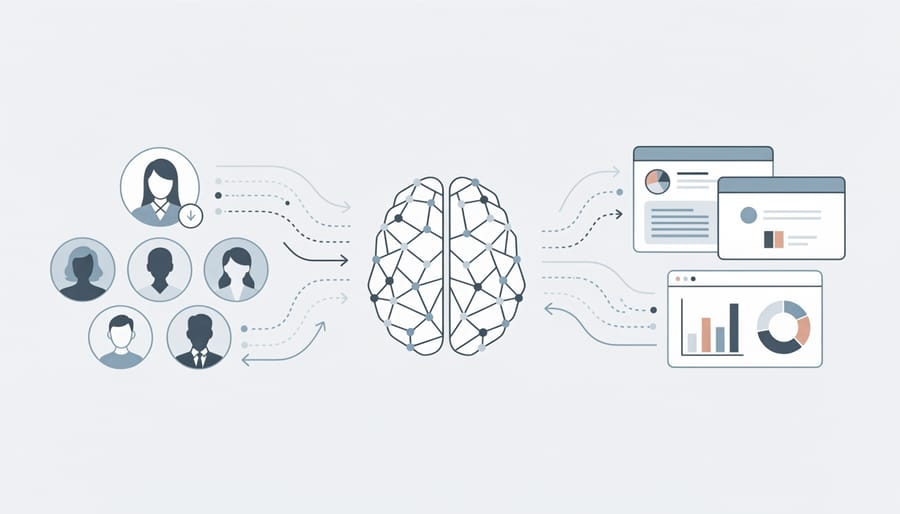
The Three Pillars of AI Marketing Technology
Think of AI marketing technology as resting on three essential pillars that work together to transform how businesses connect with customers.
Machine learning is the foundation that allows computers to learn from patterns without being explicitly programmed. In marketing, this means your email platform can automatically determine the best time to send messages to each subscriber based on their past opening behavior. For example, if Sarah typically opens emails during her lunch break while Tom prefers evening reading, machine learning ensures each receives their message at the optimal moment. The system gets smarter with every campaign, continuously improving your results.
Natural language processing enables computers to understand and generate human language. This technology powers chatbots that can have genuine conversations with website visitors, answering questions and guiding purchases 24/7. It also analyzes customer reviews across platforms, identifying whether feedback is positive or negative and extracting common themes. A restaurant chain might discover that customers consistently praise their appetizers but complain about wait times, providing clear direction for improvement.
Predictive analytics uses historical data to forecast future outcomes. Instead of guessing which customers might leave, predictive models analyze behavior patterns to identify at-risk accounts before they churn. An online retailer might predict that customers who haven’t purchased in 60 days and stopped opening emails have an 80% likelihood of never returning, triggering targeted win-back campaigns.
Together, these three pillars create marketing technology that thinks, understands, and anticipates, turning data into actionable insights that drive real business growth.
Traditional Marketing vs. AI-Powered Marketing: A Side-by-Side Reality Check
Let’s look at how marketing has evolved by comparing two real scenarios.
Imagine you’re launching a new fitness app. The traditional approach meant creating broad email campaigns sent to your entire subscriber list at 9 AM every Monday, hoping someone would bite. You’d wait weeks to gather enough data about open rates and clicks, then manually sort through spreadsheets to identify patterns. If you wanted to test different subject lines, you’d split your list in half and compare results after the campaign ended.
Now picture the AI-powered version. Your marketing system analyzes when each individual subscriber typically checks their email, sending messages at their optimal time. Instead of one generic message, AI generates personalized content based on each person’s fitness goals, past interactions, and browsing behavior. If someone looked at yoga content but didn’t purchase, they receive yoga-focused recommendations. If another person opened three emails about running, they get running-related offers.
The differences extend beyond email. Traditional social media meant scheduling posts manually and guessing which content might resonate. AI tools now predict which posts will perform best, suggest optimal posting times, and even generate multiple content variations for different audience segments.
Perhaps most striking is the speed advantage. What once took a marketing team days or weeks to analyze now happens in real-time, allowing you to adjust campaigns on the fly rather than waiting until the next quarter to implement changes.
How AI Uncovers Consumer Insights You’d Never Find Manually
Pattern Recognition: Spotting Trends Before They Go Mainstream
Imagine Netflix knowing you’d love a quirky Korean drama before you even realize it yourself. That’s pattern recognition in action. AI-powered analytics scan millions of data points across social media conversations, search queries, and purchasing behaviors to detect subtle shifts in consumer preferences.
Consider how Spotify identified the rising popularity of lo-fi hip-hop years before it became mainstream. Their algorithms noticed growing late-night listening patterns among students and young professionals, prompting them to create dedicated playlists that now have millions of followers.
For marketers, this means getting ahead of the curve. AI tools can flag emerging hashtags gaining traction, identify micro-influencers before they explode, or spot product features that competitors haven’t addressed yet. A beauty brand might discover through sentiment analysis that consumers are suddenly discussing “skin cycling” routines, allowing them to adjust their content strategy weeks before competitors catch on.
The key advantage is speed. While traditional market research takes months, AI processes real-time data continuously, alerting you to opportunities while they’re still fresh. This transforms reactive marketing into proactive strategy.

Sentiment Analysis: Understanding What Customers Really Feel
Every day, customers share their honest opinions across social media, review sites, and feedback forms. But when you’re dealing with thousands of comments, how do you truly understand what people feel about your brand? This is where sentiment analysis steps in as your AI-powered emotion detector.
Think of sentiment analysis as a sophisticated reading assistant that processes customer feedback at scale. Instead of manually reading through countless reviews, AI algorithms analyze text to determine whether the sentiment is positive, negative, or neutral. But here’s where it gets interesting: modern sentiment analysis goes beyond simple good-or-bad classifications.
For example, if a customer writes “The product works great, but shipping took forever,” AI can identify mixed emotions—satisfaction with the product but frustration with delivery. This nuanced understanding helps you pinpoint exactly what needs improvement.
Major brands use sentiment analysis to monitor social media mentions in real-time, catching potential PR issues before they escalate. A restaurant chain might discover that while customers love their new menu, they’re consistently unhappy about wait times. This actionable insight allows for immediate operational adjustments.
The technology works by examining word patterns, context, and even emojis to gauge emotional tone. As these systems learn from more data, they become increasingly accurate at understanding sarcasm, cultural nuances, and industry-specific language—giving you genuine insights into customer feelings.
Customer Segmentation That Goes Beyond Demographics
Traditional demographic segmentation—sorting customers by age, location, or income—only scratches the surface of understanding your audience. AI takes customer segmentation to an entirely new level by analyzing behavioral patterns, purchase histories, browsing habits, and engagement metrics to create dynamic customer profiles.
Instead of broad categories like “millennials in urban areas,” AI identifies micro-segments such as “frequent weekend browsers who abandon carts but respond to email reminders” or “seasonal buyers influenced by social proof.” These behavioral insights reveal not just who your customers are, but how they think and what motivates their decisions.
Machine learning algorithms continuously refine these segments as new data flows in, adapting to changing customer preferences in real-time. For example, Netflix doesn’t just categorize viewers by age—it creates thousands of taste clusters based on viewing patterns, rating behaviors, and even the time of day people watch certain content.
This sophisticated approach to AI revolutionizing customer experience enables marketers to deliver precisely targeted messages that resonate with specific behavioral groups. The result? Higher conversion rates, improved customer satisfaction, and marketing campaigns that feel personally crafted rather than mass-produced.
Practical AI Marketing Strategies That Work Right Now
Personalization at Scale: Making Every Customer Feel Like Your Only Customer
Imagine walking into your favorite coffee shop where the barista remembers your name, your usual order, and even asks about your recent vacation. That warm, personalized experience is exactly what AI now makes possible in digital marketing, except at a scale that would be impossible for humans alone.
AI-powered personalization engines analyze countless data points about each customer—browsing behavior, purchase history, email interactions, and preferences—to create uniquely tailored experiences. When you see product recommendations on Amazon that seem eerily perfect, or receive an email from Netflix suggesting shows based on your viewing habits, that’s AI working behind the scenes.
The beauty of AI personalization lies in its ability to segment audiences into micro-groups or even treat each customer individually. Instead of sending the same promotional email to 10,000 subscribers, AI can generate 10,000 variations—each with different product suggestions, subject lines, and content based on individual preferences and behaviors.
E-commerce platforms use AI to dynamically adjust website content, showing winter coats to customers in cold climates while displaying swimwear to those in warmer regions. Spotify’s Discover Weekly playlist exemplifies this perfectly—creating a unique musical experience for each of its millions of users every single week, without any manual curation required.
Predictive Analytics: Knowing What Customers Want Before They Do
Imagine knowing your customers are thinking about purchasing before they’ve even added items to their cart. That’s the power of predictive analytics in AI-driven marketing. By analyzing historical data, browsing patterns, and behavioral signals, AI algorithms can forecast what customers will likely want, when they’ll want it, and whether they’re at risk of leaving for a competitor.
For example, streaming services like Netflix use predictive models to anticipate which shows you’ll binge next, sending perfectly timed recommendations. E-commerce platforms predict when you’ll run out of household essentials and nudge you with reminders just before you need to reorder. This is how machine learning transforms interactions from reactive to proactive.
Churn prediction is particularly valuable. AI identifies warning signs—like decreased engagement or abandoned carts—allowing marketers to intervene with personalized offers or support before losing the customer. Rather than waiting for problems to surface, predictive analytics empowers businesses to act strategically, improving retention rates and maximizing customer lifetime value. The result? Marketing that feels less like guesswork and more like genuine mind-reading.
Content Creation and Optimization: Your AI Marketing Assistant
Creating compelling marketing content at scale becomes manageable with AI-powered tools that serve as your 24/7 creative assistant. These systems analyze millions of high-performing examples to generate email subject lines, social media posts, and ad copy that resonate with your audience.
For instance, AI platforms like Jasper and Copy.ai can produce dozens of headline variations in seconds, each optimized for different platforms and audience segments. Rather than spending hours crafting the perfect Instagram caption, marketers input key details about their product or campaign, and AI generates multiple options tailored to their brand voice.
The real power emerges in optimization. AI doesn’t just create content—it continuously tests and refines it. Through A/B testing automation, these tools determine which subject lines achieve higher open rates or which ad variations drive more conversions. One e-commerce brand increased their email open rates by 23% simply by letting AI test and optimize subject line formulas based on customer behavior patterns.
This technology handles the repetitive creative work, freeing marketers to focus on strategy and meaningful customer connections.
Chatbots and Conversational Marketing: 24/7 Customer Engagement
AI-powered chatbots have transformed customer engagement by providing instant, personalized responses around the clock. Unlike traditional automated systems, modern chatbots leverage generative AI for conversations that feel natural and helpful.
For lead generation, chatbots can qualify prospects by asking targeted questions, collecting contact information, and routing high-value leads to sales teams immediately. A real estate company might use a chatbot to gather buyer preferences, budget ranges, and timelines before scheduling viewings with agents.
In customer service, chatbots handle routine inquiries like order tracking, FAQs, and appointment scheduling, freeing human agents for complex issues. When a chatbot encounters questions beyond its capability, it seamlessly transfers to a person, ensuring customers always get the help they need.
For relationship building, chatbots can send personalized product recommendations based on browsing history, follow up after purchases, and even remember previous conversations to create continuity. This consistent engagement keeps your brand top-of-mind while building trust through reliable, immediate support that respects your customers’ time.
Getting Started: Your First Steps Into AI Marketing
AI Marketing Tools You Can Start Using Today
Ready to dive into AI marketing? Here are beginner-friendly tools you can start exploring today:
ChatGPT is perfect for generating content ideas, writing social media posts, and drafting email campaigns. Think of it as your creative brainstorming partner that’s available 24/7. Many marketers use it to overcome writer’s block or create multiple variations of ad copy in minutes.
Canva’s AI-powered design features make creating professional graphics surprisingly simple. Its Magic Design tool generates complete layouts from your content, while Background Remover and Magic Eraser help polish images without needing design expertise.
HubSpot’s Marketing Hub includes AI tools for email subject line optimization and content strategy recommendations. It’s particularly useful if you’re managing multiple marketing channels and need intelligent insights about what’s working.
Jasper specializes in marketing copy, helping you craft everything from blog posts to product descriptions. It’s trained specifically on marketing frameworks, so it understands persuasive writing techniques.
Grammarly goes beyond spell-checking by using AI to improve tone, clarity, and engagement in your writing. It’s invaluable for ensuring your marketing messages resonate with your audience.
Most of these platforms offer free trials or basic plans, letting you experiment without major financial commitment. Start with one tool, master its capabilities, then gradually expand your AI marketing toolkit.

Common Pitfalls and How to Avoid Them
Even with powerful AI tools at your disposal, certain missteps can derail your marketing efforts before they gain momentum. One of the most common pitfalls is poor data quality. AI systems are only as good as the information they process—feeding them outdated, incomplete, or inaccurate customer data produces unreliable insights and ineffective campaigns. Before implementing AI, audit your data sources and establish regular cleaning protocols.
Another frequent mistake is over-automation without human oversight. While AI excels at handling repetitive tasks, completely removing the human element can lead to tone-deaf messaging or missed opportunities for genuine connection. For instance, an automated chatbot might mishandle a sensitive customer complaint that requires empathy and nuanced understanding.
Many beginners also fall into the trap of implementing AI without clear objectives. Adopting technology simply because it’s trendy wastes resources and creates confusion. Define specific goals first—whether improving email open rates or personalizing product recommendations—then select AI tools that address those needs.
Finally, neglecting team training undermines AI initiatives. Successfully leading AI transformation requires your marketing team to understand both the capabilities and limitations of these tools. Invest time in education and encourage experimentation in low-risk environments before rolling out AI-driven campaigns at scale.
Measuring Success: What Actually Matters
Success isn’t just about implementing AI—it’s about measuring what truly moves the needle. Focus on engagement metrics like click-through rates and time spent on personalized content, which show if your AI recommendations resonate. Track conversion lift by comparing AI-driven campaigns against traditional approaches. Monitor cost per acquisition to ensure efficiency gains. Beyond numbers, measure customer satisfaction through feedback and retention rates. For example, if your AI chatbot handles 70% of queries but satisfaction drops, that’s a red flag. The sweet spot is balancing automation efficiency with genuine customer value. Remember, AI is a tool to enhance human connection, not replace it—so track both the data and the relationships you’re building.
The Future Is Already Here: Emerging AI Marketing Trends

Voice Search and Visual Recognition: The Next Frontier
The way we search is evolving rapidly. Instead of typing queries, consumers now ask Alexa about product recommendations or snap photos to find similar items online. This shift is transforming how brands need to think about visibility.
Voice search optimization requires a completely different approach than traditional SEO. When someone types “running shoes,” they might search for “best running shoes reviews.” But voice queries sound more conversational: “Hey Google, what are the best running shoes for beginners?” Smart marketers are now optimizing content for these natural language patterns, focusing on question-based keywords and local search terms.
Visual recognition technology is equally game-changing. Pinterest Lens and Google Lens allow users to photograph products and instantly find where to buy them. Fashion retailers like ASOS use this technology to help customers find clothes by uploading photos, while home decor brands enable customers to identify furniture pieces from inspiration images.
For businesses, this means ensuring your product images are high-quality and properly tagged, your content answers conversational questions, and your local listings are optimized for “near me” searches that voice assistants frequently deliver.
Ethical AI Marketing: Privacy, Transparency, and Trust
As AI becomes more sophisticated in marketing, ethical considerations have moved to the forefront. Consumers are increasingly aware of how their data is collected and used, making transparency non-negotiable for brands.
The foundation of ethical AI marketing rests on three pillars: respecting privacy, maintaining transparency, and building trust. This means clearly communicating when AI is being used to interact with customers, whether through chatbots, personalized recommendations, or targeted advertising. For example, when a customer receives product suggestions, letting them know these are AI-generated based on their browsing history creates transparency.
Privacy concerns require marketers to be selective about data collection, gathering only what’s necessary and storing it securely. Implementing opt-in consent mechanisms and providing easy opt-out options demonstrates respect for customer autonomy.
Building trust also involves addressing AI bias. Marketing algorithms can inadvertently perpetuate stereotypes if trained on biased data. Regular audits of AI systems help ensure fair treatment across different demographic groups.
Companies that prioritize ethical AI practices not only comply with regulations like GDPR but also differentiate themselves in a crowded marketplace. Today’s consumers reward transparency with loyalty, making ethical AI marketing both a moral imperative and a smart business strategy.
The future of marketing isn’t about choosing between human intuition and artificial intelligence—it’s about combining both to create something more powerful than either could achieve alone. Throughout this guide, we’ve explored how AI is transforming everything from customer segmentation to content creation, from predictive analytics to personalized experiences. The technology that once seemed reserved for tech giants is now accessible to businesses of all sizes, ready to amplify your marketing efforts in ways that were impossible just a few years ago.
Think of AI as your marketing co-pilot rather than your replacement. While algorithms can process data at lightning speed and identify patterns invisible to the human eye, they still need your creativity, empathy, and strategic thinking to truly connect with audiences. The most successful marketers of tomorrow will be those who embrace AI as a tool to handle repetitive tasks and data-heavy analysis, freeing themselves to focus on what humans do best: building relationships, crafting compelling stories, and making nuanced decisions that reflect brand values.
The opportunity is here, and waiting will only put you further behind. Start small—experiment with one AI tool that addresses your most pressing challenge, whether that’s email personalization, chatbot implementation, or predictive analytics. Learn from the results, adjust your approach, and gradually expand your AI toolkit as you grow more comfortable. The transformation won’t happen overnight, but every step forward puts you closer to marketing that’s smarter, faster, and more effective. Your journey into AI-powered marketing begins with a single decision: to take action today.