
Ethics and Societal Impact

Explore the ethical considerations and societal implications of AI and ML technologies, including privacy, bias, and regulatory challenges.

Your AI Search Costs More Than You Think: The Environmental Toll of Machine Learning

Your AI Search Costs More Than You Think: The Environmental Toll of Machine Learning

Every time you ask ChatGPT a question, data centers somewhere consume enough electricity to power your home for hours. The AI revolution transforming our world carries a hidden environmental cost that few understand: training a single large language model can emit as much carbon as five cars produce over their entire lifetimes. Water usage at AI facilities has spiked dramatically, with some data centers consuming millions of gallons daily just for cooling. Electronic waste from outdated AI hardware piles up in landfills, leaching toxic materials into soil and groundwater.
This environmental burden raises urgent ethical questions. Who bears responsibility when AI systems designed to solve problems …

When AI Makes Choices That Matter: A Framework for Ethical Decision-Making

When AI Makes Choices That Matter: A Framework for Ethical Decision-Making

Picture this: A self-driving car encounters an unavoidable accident scenario where it must choose between two harmful outcomes. A healthcare AI must decide which patients receive priority treatment when resources are scarce. A content moderation algorithm determines what millions of people can and cannot say online. These aren’t hypothetical scenarios from science fiction—they’re real challenges happening right now as artificial intelligence systems make increasingly consequential decisions.
The stakes have never been higher. As AI systems evolve from simple recommendation engines to complex …

When AI Makes Choices That Matter: The Ethics of Autonomous Decision-Making

When AI Makes Choices That Matter: The Ethics of Autonomous Decision-Making

Every time you unlock your smartphone with facial recognition, accept a personalized loan offer calculated by an algorithm, or drive a car that automatically brakes to prevent collision, you’re experiencing decision-making autonomy in action. This autonomy—the ability of machines to make choices without human intervention—has evolved from science fiction premise to everyday reality in less than a decade.
Decision-making autonomy represents a fundamental shift in how choices get made in our society. Rather than humans programming every possible scenario, we now create systems that learn, adapt, and decide independently based on data patterns and programmed objectives. An autonomous vehicle …

When Machines Make Moral Choices: How the 7-Step Model Keeps AI Ethical

When Machines Make Moral Choices: How the 7-Step Model Keeps AI Ethical

Every week, headlines announce another AI controversy: facial recognition systems showing bias, autonomous vehicles facing split-second life-or-death decisions, or algorithms determining who receives loans, jobs, or medical care. These aren’t hypothetical scenarios from science fiction. They’re happening right now, and the stakes couldn’t be higher.
The challenge isn’t just technical. When an AI system makes a decision that affects human lives, who bears responsibility? How do we ensure machines align with human values when those values themselves vary across cultures and contexts? Traditional ethical frameworks weren’t designed for systems that learn, adapt, and make …

When Machines Make Life-or-Death Decisions: What Could Go Wrong?

When Machines Make Life-or-Death Decisions: What Could Go Wrong?

In 2018, a self-driving Uber vehicle struck and killed a pedestrian in Arizona, forcing society to confront an unsettling question: who bears responsibility when machines make fatal decisions? This wasn’t a hypothetical trolley problem debated in philosophy classrooms—it was a real tragedy that exposed the vast ethical territory we’re entering as artificial intelligence systems gain the power to act without human oversight.
Autonomous decision-making refers to AI systems that analyze information, evaluate options, and execute actions independently, often faster and more consistently than humans ever could. These systems now approve loans, diagnose diseases, recommend criminal sentences, …

When Machines Make Moral Choices: How AI Should Decide What’s Right

When Machines Make Moral Choices: How AI Should Decide What’s Right

**Recognize that every AI system makes decisions that affect real people.** When a self-driving car encounters an unavoidable accident, when a healthcare algorithm recommends treatment, or when a hiring system screens job candidates, ethical frameworks become the invisible guardrails preventing harm. Yet most AI developers lack a systematic approach to embedding ethics into their code.
**Apply a structured decision-making framework before deploying any AI system.** The six-step ethical decision-making model transforms abstract moral principles into concrete actions: identifying the ethical issue, gathering relevant information, evaluating alternative approaches, making a decision, implementing …

When Machines Make Life-or-Death Decisions: What Could Go Wrong?

When Machines Make Life-or-Death Decisions: What Could Go Wrong?

Every day, algorithms decide whether you qualify for a loan, which job applications reach human recruiters, and even how long a defendant spends in prison. These aren’t science fiction scenarios—they’re happening right now, as autonomous systems make consequential decisions that once required human judgment, empathy, and ethical reasoning.
Autonomous decision-making occurs when AI systems analyze data, evaluate options, and take action without human intervention at each step. A self-driving car choosing to brake suddenly, a medical AI recommending treatment plans, or a hiring algorithm filtering candidates—these systems operate with increasing independence, speed, and complexity. While…

AI Healthcare Decisions: Where Patient Autonomy Meets Legal Reality

AI Healthcare Decisions: Where Patient Autonomy Meets Legal Reality

The intersection of artificial intelligence and healthcare autonomy stands at a critical legal crossroads in 2024. As AI-driven medical decisions become increasingly prevalent, healthcare providers face unprecedented challenges in balancing patient self-determination with automated clinical protocols. Recent landmark cases, including the 2023 Mayo Clinic AI liability ruling, have highlighted the complex interplay between traditional informed consent doctrines and emerging autonomous healthcare systems.
The legal framework governing medical autonomy must now address three key dimensions: algorithmic transparency in clinical decision-making, liability distribution among healthcare providers and AI …

Self-Driving Cars Face Life-or-Death Decisions: Who Should They Protect?

Self-Driving Cars Face Life-or-Death Decisions: Who Should They Protect?

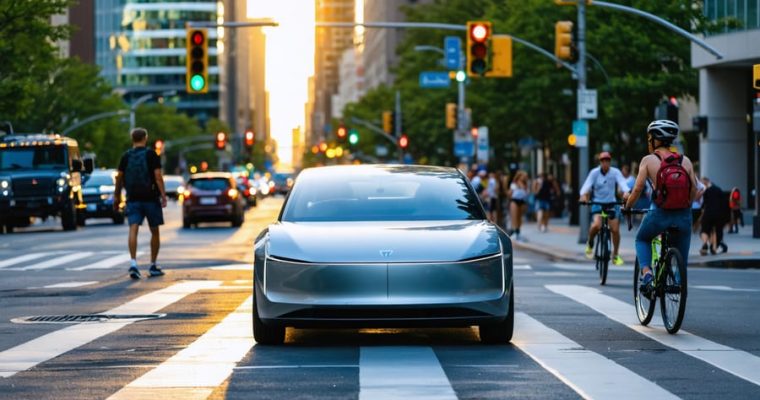
Picture a self-driving car approaching an unavoidable collision. In a split second, it must decide: swerve to protect its passenger but endanger pedestrians, or prioritize saving the most lives at the expense of its occupant. This scenario, once confined to philosophy classrooms, now represents a real-world challenge as autonomous vehicles reshape our roads and force us to codify human ethics into algorithms.
The ethical programming of self-driving cars stands at the intersection of technology, morality, and public safety. Engineers and ethicists grapple with questions that have no clear answers: Should vehicles be programmed to always minimize casualties, even if it means sacrificing their passengers…

How AI Makes Ethical Decisions: A Framework for Autonomous Systems

How AI Makes Ethical Decisions: A Framework for Autonomous Systems

In today’s AI-driven world, ethical decision-making has become more critical than ever, particularly as AI’s moral decision-making capabilities continue to evolve and impact our daily lives. The seven steps of ethical decision-making provide a robust framework for navigating complex moral challenges in both personal and professional contexts.
Picture yourself facing a crucial ethical dilemma at work – perhaps a conflict between data privacy and system efficiency, or choosing between immediate profit and long-term sustainability. Without a structured approach, these decisions can feel …