Recent Posts

How Industry 4.0 Adoption Can Fast-Track Your Career Across Multiple Industries

How Industry 4.0 Adoption Can Fast-Track Your Career Across Multiple Industries

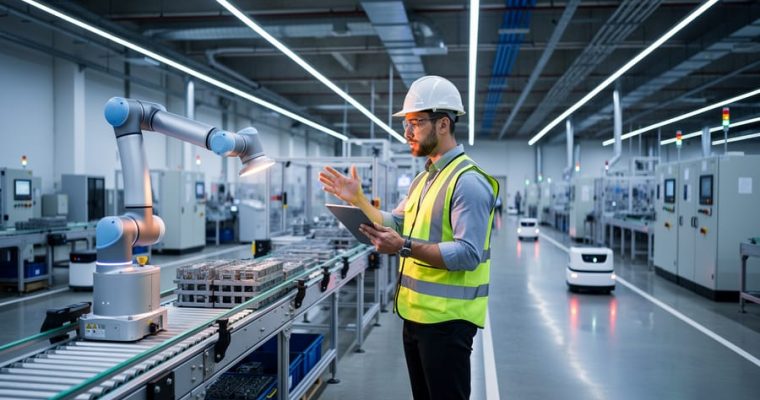
The factory floor of 2025 looks nothing like the assembly lines your parents knew. Smart sensors communicate with AI systems, robots collaborate with human workers, and entire production chains optimize themselves in real-time. This is Industry 4.0, and it’s reshaping every career path in manufacturing, logistics, healthcare, and beyond.
Industry 4.0 refers to the fourth industrial revolution, where digital technologies like artificial intelligence, Internet of Things, cloud computing, and automation converge to create intelligent, interconnected systems. Unlike previous industrial shifts that primarily affected factory workers, this transformation touches every role from entry-level technicians…

How AI Generative Models Actually Create Something From Nothing

How AI Generative Models Actually Create Something From Nothing

Picture a world where machines don’t just follow instructions—they create. AI generative models represent one of the most transformative breakthroughs in artificial intelligence, enabling computers to generate entirely new content, from photorealistic images and human-like text to original music and code. Unlike traditional AI systems that classify, predict, or analyze existing data, generative models learn the underlying patterns of their training data to produce novel outputs that never existed before.
At their core, these models work by understanding probability distributions. Think of them as digital artists who study millions of examples to grasp what makes a photograph look realistic or …

When AI Becomes Your Doctor: The Ethics We Can’t Ignore

When AI Becomes Your Doctor: The Ethics We Can’t Ignore

A 34-year-old woman walks into a hospital emergency room with chest pain. Within seconds, an AI system analyzes her symptoms, medical history, and vital signs to recommend treatment. The algorithm works flawlessly, but there’s a problem nobody sees: it was trained primarily on data from male patients, making it less accurate for women. This scenario isn’t hypothetical. It’s happening right now in healthcare facilities worldwide, revealing a troubling reality about artificial intelligence in medicine.
AI promises to revolutionize healthcare by diagnosing diseases faster, personalizing treatments, and reducing medical errors. Hospitals deploy machine learning algorithms to predict …

How AI in Electronic Health Records is Catching Diseases Your Doctor Might Miss

How AI in Electronic Health Records is Catching Diseases Your Doctor Might Miss

Imagine a doctor reviewing thousands of patient records in seconds, spotting patterns invisible to the human eye, and predicting health crises before symptoms even appear. This isn’t science fiction—it’s artificial intelligence transforming electronic health records (EHRs) into powerful diagnostic tools that are reshaping how healthcare professionals identify and treat diseases.
Electronic health records have long been the digital backbone of modern healthcare, storing everything from lab results to medication histories. But traditional EHR systems functioned primarily as sophisticated filing cabinets, requiring doctors to manually sift through mountains of data to piece together …

How Q-Learning Neural Networks Actually Learn to Win (Without Being Told How)

How Q-Learning Neural Networks Actually Learn to Win (Without Being Told How)

Imagine teaching a robot to navigate a maze without giving it a map. Instead of programming every possible turn, you let it explore, rewarding successful moves and penalizing dead ends. Within minutes, the robot learns the optimal path through pure trial and error. This is the power of Q-learning neural networks, a breakthrough fusion of two transformative technologies that’s reshaping how machines learn to make decisions.
Q-learning neural networks combine deep learning’s pattern recognition capabilities with reinforcement learning’s decision-making framework. Traditional Q-learning uses tables to store every possible state-action combination, which becomes impossible when dealing …

How Generative AI is Rewriting Every Customer Conversation Your Business Has

How Generative AI is Rewriting Every Customer Conversation Your Business Has

Generative AI is fundamentally transforming how businesses interact with customers, moving beyond simple chatbots to create personalized, human-like experiences at scale. This technology now writes product descriptions that match individual preferences, generates instant responses to complex customer inquiries, and creates tailored marketing content that resonates with specific audience segments.
The impact is measurable: companies implementing generative AI for customer experience report 30-50% reductions in response times and significant improvements in customer satisfaction scores. Rather than replacing human agents, these systems handle routine inquiries while escalating nuanced situations to …

Journey Maps vs User Flows: Which AI Tool Actually Maps Your Users Better?

Journey Maps vs User Flows: Which AI Tool Actually Maps Your Users Better?

You’re staring at two UX design terms that sound similar but serve completely different purposes in your product development workflow. Journey maps visualize the entire emotional experience a customer has with your brand across multiple touchpoints—from first discovering your product to becoming a loyal advocate. User flows, by contrast, diagram the specific steps and decision points users take to complete a single task within your interface, like signing up for an account or completing a checkout.
The confusion stems from their overlapping goal of understanding users, but their applications diverge significantly. Journey maps answer “how does our customer feel throughout their …

AI is Rewriting Biology Faster Than You Think

AI is Rewriting Biology Faster Than You Think

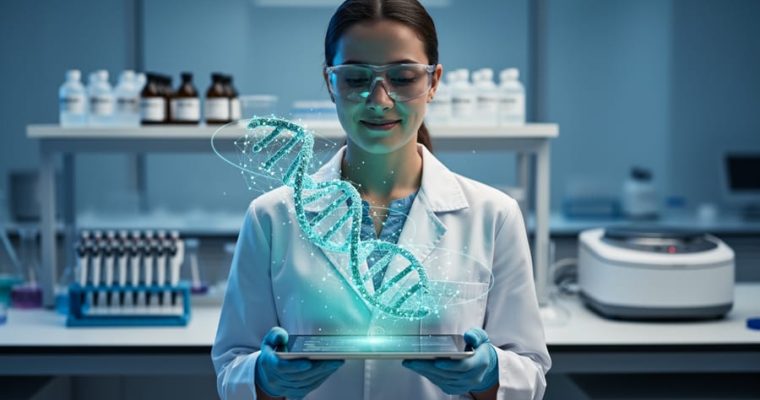
Imagine a world where scientists design life-saving drugs in hours instead of years, where personalized cancer treatments are crafted specifically for your DNA, and where we can predict and prevent diseases before symptoms even appear. This isn’t science fiction. The AI and biology convergence is making these breakthroughs reality right now, transforming how we understand life itself and develop solutions to humanity’s most pressing health challenges.
Artificial intelligence and biotechnology represent two of the most transformative forces of our time. Separately, each field has revolutionized …

Visual AI Tools That Actually Make Feature Selection Effortless

Visual AI Tools That Actually Make Feature Selection Effortless

Visualize your datasets through interactive dashboards that highlight which features matter most—tools like SHAP force plots and LIME explanations transform abstract correlation matrices into color-coded importance rankings you can understand at a glance. Machine learning practitioners waste hours manually comparing feature subsets, but visual interfaces in platforms like Orange Data Mining, RapidMiner, and Yellowbrick let you drag, drop, and instantly see how removing or adding variables impacts model performance through real-time accuracy graphs.
Start with automated feature selection tools that generate …

Your AI Nutritionist Knows What Your Body Needs Before You Do

Your AI Nutritionist Knows What Your Body Needs Before You Do

Imagine having a nutrition expert available 24/7, one that remembers every meal you’ve eaten, tracks your health goals with precision, and adjusts your dietary recommendations in real-time based on how your body responds. That’s exactly what AI nutritionists are delivering right now, transforming smartphones into powerful wellness coaches that create personalized wellness plans tailored to your unique biology, lifestyle, and preferences.
The technology works by analyzing multiple data points simultaneously. Your food photos get scanned through computer vision algorithms that identify …