
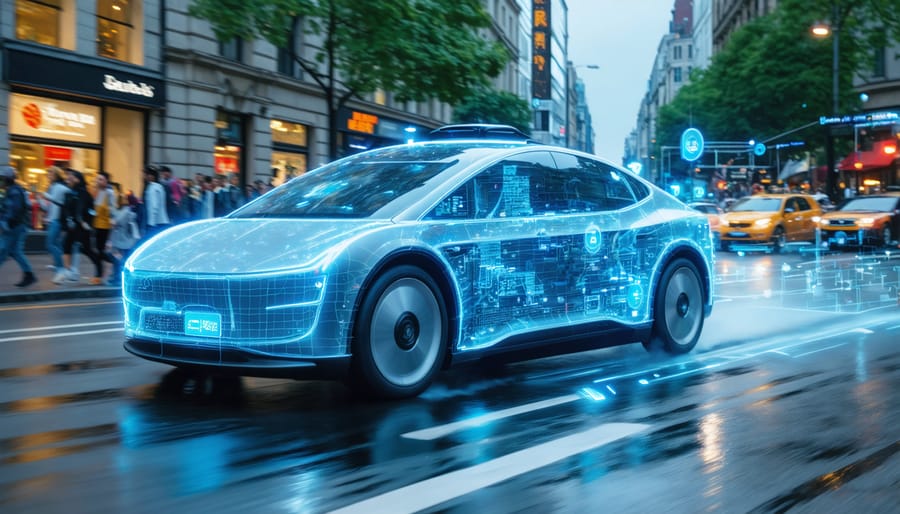
Every second, machine learning algorithms are making split-second decisions that impact our lives – from preventing vehicle collisions to executing million-dollar financial trades. The fusion of real-time data processing and sophisticated ML models has revolutionized how we approach instant decision-making across industries. In autonomous vehicles, these systems process thousands of sensor inputs within milliseconds, transforming raw data into life-saving maneuvers. What once required human deliberation can now be executed with unprecedented speed and accuracy, thanks to advances in deep learning and edge computing.
The stakes couldn’t be higher: in critical applications like emergency response systems and industrial automation, the difference between success and failure often comes down to microseconds. Modern ML architectures have evolved to meet these demanding requirements, delivering not just speed but also reliability and adaptability in dynamic environments. As we stand at the intersection of big data and artificial intelligence, real-time ML systems are becoming the backbone of our increasingly automated world, promising safer roads, more efficient operations, and smarter cities.
This convergence of speed, intelligence, and automation represents one of the most significant technological achievements of our time – where machines don’t just analyze but act, transforming data into decisions faster than human thought.
Real-Time Decision Making: The Brain of Self-Driving Cars
From Sensor Data to Action
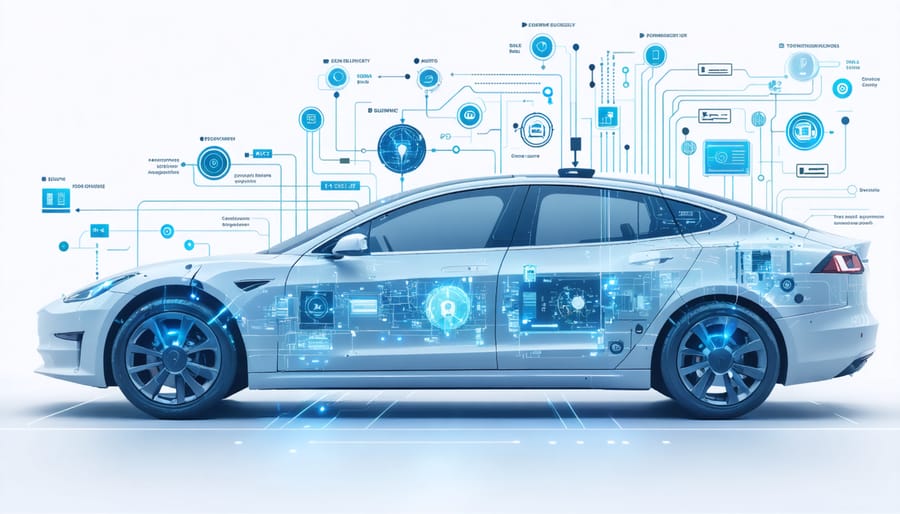
The journey from raw sensor data to actionable decisions involves multiple sophisticated processing layers within machine learning frameworks. Initially, sensors collect various data types – from camera imagery and lidar scans to radar signals and GPS coordinates. This data stream undergoes real-time preprocessing, where noise is filtered out and relevant features are extracted.
The cleaned data then feeds into neural networks that have been trained to recognize patterns and objects. These networks simultaneously process multiple data streams, creating a comprehensive understanding of the vehicle’s environment. For example, while one neural network identifies pedestrians and vehicles, another calculates their trajectories and predicted movements.
The system then combines these insights with predefined rules and learned behaviors to make split-second decisions. If a pedestrian steps onto the road, the system rapidly evaluates multiple factors: the pedestrian’s movement, vehicle speed, road conditions, and available escape routes. Within milliseconds, it determines the safest action – whether to brake, swerve, or maintain course – and sends commands to the vehicle’s control systems.
This entire process happens continuously, with the system making hundreds of decisions per second to ensure safe operation.
Split-Second Intelligence
In real-time decision-making systems, every millisecond counts. Modern machine learning algorithms need to process and analyze data at incredible speeds – often in less than a second – to make meaningful decisions. For example, a self-driving car must detect obstacles, predict their movements, and adjust its course in about 20-30 milliseconds to ensure passenger safety.
These split-second decisions rely on optimized algorithms and powerful hardware acceleration. Graphics Processing Units (GPUs) and specialized AI chips process multiple data streams simultaneously, while edge computing brings processing closer to the data source, reducing latency. A typical autonomous vehicle processes up to 1.1 terabytes of sensor data per hour, making rapid computations essential.
The challenge lies in balancing speed with accuracy. While some applications can tolerate slight delays, others – like emergency response systems or financial trading algorithms – require near-instantaneous processing. Advanced techniques like model compression and parallel processing help achieve this balance, enabling systems to make smart decisions in microseconds while maintaining reliability. The latest developments in quantum computing promise to push these boundaries even further, potentially reducing processing times to unprecedented levels.
Core ML Applications in Autonomous Driving
Object Detection and Classification
Object detection and classification form the backbone of real-time decision-making in autonomous systems. These ML systems act like vigilant eyes on the road, continuously scanning the environment to identify and categorize various objects – from pedestrians and cyclists to traffic signs and other vehicles.
The process begins with image capture through cameras and sensors, which feed data into sophisticated neural networks. These networks break down each frame into smaller segments, analyzing patterns, shapes, and features to distinguish different objects. For instance, when a pedestrian crosses the road, the system must identify them within milliseconds, understand their movement pattern, and predict their trajectory.
Modern ML algorithms use techniques like convolutional neural networks (CNNs) to achieve remarkable accuracy in object detection. These systems can differentiate between similar objects, such as distinguishing a motorcycle from a bicycle, even in challenging conditions like rain or low light. The classification happens in real-time, typically processing 30-60 frames per second.
The system assigns confidence scores to its detections, helping prioritize responses. A detected child running toward the street might receive a higher priority than a stationary trash can. This hierarchical classification enables quick, intelligent decision-making that closely mirrors human perception.
Recent advances have improved these systems’ ability to handle edge cases, like partially obscured objects or unusual scenarios, making them increasingly reliable for real-world applications.

Path Planning and Navigation
Path planning and navigation represent crucial components of autonomous systems where machine learning excels in making split-second routing decisions. Modern ML algorithms process vast amounts of real-time data from sensors, GPS, and traffic information to determine the safest and most efficient routes. This capability has become particularly important in reinforcement learning in autonomous vehicles, where AI must constantly adapt to changing road conditions and unexpected obstacles.
The system works by combining multiple data streams: real-time traffic patterns, weather conditions, road quality, and historical travel data. Machine learning models analyze these inputs to predict potential challenges and adjust routes accordingly. For example, if sensors detect heavy traffic ahead, the system can quickly calculate alternative paths while considering factors like fuel efficiency and arrival time.
What makes this technology particularly impressive is its ability to learn from experience. Each navigation decision contributes to a growing knowledge base, helping the system make increasingly sophisticated choices over time. The algorithms can identify patterns in traffic flow, anticipate congestion before it occurs, and even learn from the behavior of other vehicles on the road.
This advanced path planning doesn’t just make transportation more efficient – it’s fundamental to safety. By processing information faster than any human could, ML-powered navigation systems can react to hazards instantly, choosing the safest route while maintaining optimal performance.
Predictive Behavior Analysis
One of the most remarkable capabilities of machine learning in autonomous vehicles is its ability to predict the behavior of other road users. By analyzing vast amounts of real-time data from sensors, cameras, and historical patterns, ML algorithms create sophisticated models that anticipate how pedestrians, cyclists, and other vehicles might act in the next few seconds.
These predictive systems work by identifying subtle cues in movement patterns. For instance, when a pedestrian slightly turns their head before crossing the street, or when a car’s wheel angle suggests an upcoming lane change, the ML model recognizes these indicators and calculates the probability of various outcomes. This happens in milliseconds, giving the autonomous vehicle time to prepare appropriate responses.
The system continuously learns from new scenarios, improving its accuracy over time. It considers multiple factors simultaneously, such as weather conditions, time of day, road type, and local traffic patterns. For example, the algorithm might predict that a school bus stopping ahead will likely mean children crossing the street, or that a delivery truck in a residential area might make frequent stops.
What makes this technology particularly effective is its ability to adapt to different cultural contexts and regional driving behaviors. The same system can adjust its predictions based on whether it’s operating in a busy urban center or a quiet suburban street, ensuring safer and more natural interactions with human road users.
Safety Enhancement Through ML
Accident Prevention Systems
Machine learning has revolutionized accident prevention by enabling systems to make split-second decisions that can mean the difference between safety and disaster. Modern autonomous vehicle systems utilize sophisticated ML algorithms to process data from multiple sensors, including cameras, LiDAR, and radar, to detect potential collision risks in real-time.
These systems work by continuously analyzing the surrounding environment, identifying objects, predicting their movements, and calculating risk levels. For example, when a pedestrian suddenly steps onto the road, the ML model processes their position, speed, and direction within milliseconds, while simultaneously considering the vehicle’s current speed, road conditions, and available escape routes.
The prevention system then makes instantaneous decisions about the best course of action, whether that’s gradual braking, emergency stopping, or evasive maneuvering. What makes these systems particularly effective is their ability to learn from vast databases of accident scenarios, improving their response accuracy over time.
Recent advancements have introduced predictive capabilities that can anticipate dangerous situations before they fully develop. For instance, the system might detect a child playing near the street and automatically reduce speed, even before any immediate danger is present. Some advanced systems can also communicate with other vehicles and infrastructure, creating a network of shared safety information that enhances collision prevention capabilities.
These ML-powered safety features have shown remarkable success, with studies indicating a significant reduction in accident rates for vehicles equipped with such technology. As these systems continue to evolve, they’re becoming increasingly sophisticated at handling complex traffic scenarios while maintaining passenger safety.
Emergency Response Capabilities
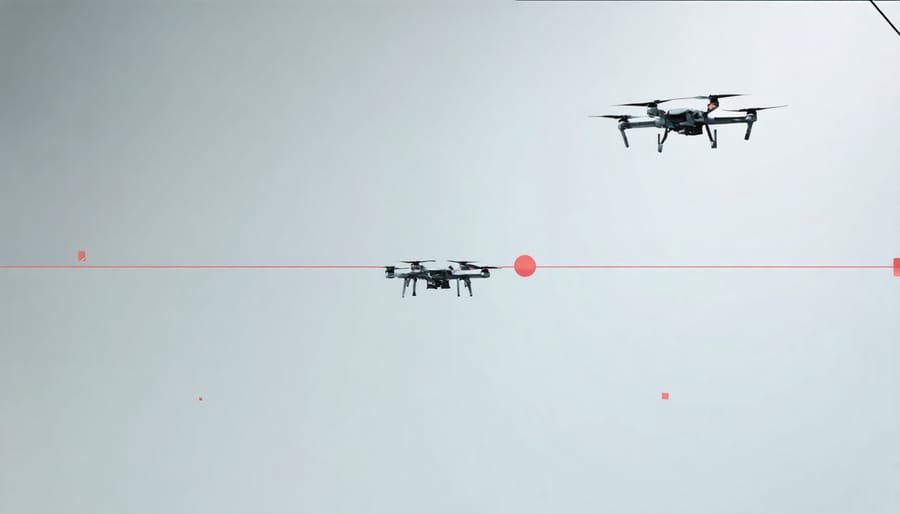
Machine learning systems excel at handling unexpected situations and emergencies through their ability to process vast amounts of data and make split-second decisions. When faced with emergency scenarios, ML algorithms can analyze multiple data streams simultaneously, identifying patterns and potential risks faster than human operators.
In healthcare settings, ML-powered systems monitor patient vital signs and can detect subtle changes that might indicate an impending crisis. These systems can alert medical staff before traditional monitoring methods would recognize the problem, potentially saving crucial minutes in emergency response times.
During natural disasters, ML applications help emergency response teams by processing satellite imagery, social media feeds, and sensor data to assess damage, predict the path of storms or fires, and optimize evacuation routes in real-time. For example, during wildfires, ML algorithms can analyze wind patterns, temperature data, and terrain information to predict fire spread and recommend the most effective deployment of firefighting resources.
In industrial settings, ML systems monitor equipment performance and can initiate emergency shutdowns when they detect dangerous anomalies. These systems learn from historical incident data to recognize warning signs of potential failures, allowing for preventive action before a situation becomes critical.
The key strength of ML in emergency response lies in its ability to maintain consistent performance under pressure. Unlike humans, ML systems don’t suffer from stress or fatigue, ensuring reliable decision-making even in high-pressure situations. However, these systems are designed to work alongside human experts, providing data-driven insights to support, rather than replace, human judgment in critical situations.
As ML technology continues to evolve, emergency response capabilities are becoming more sophisticated, incorporating advanced features like real-time language translation for international crisis coordination and predictive modeling for disaster preparedness.
Future Developments and Challenges
The future of machine learning in autonomous vehicles stands at an exciting crossroads, with both promising developments and significant challenges ahead. As safety regulations for self-driving cars continue to evolve, manufacturers and developers are pushing the boundaries of what’s possible with real-time decision-making systems.
One of the most anticipated developments is the integration of advanced sensor fusion technologies, which will enable vehicles to process multiple data streams simultaneously with unprecedented accuracy. This improvement will allow autonomous vehicles to make split-second decisions with greater confidence, particularly in challenging weather conditions or complex urban environments.
Edge computing is another game-changing innovation on the horizon. By processing data closer to its source, vehicles will be able to make decisions faster while reducing their dependence on cloud connectivity. This advancement is crucial for operating in areas with limited network coverage or during connectivity outages.
However, significant challenges remain. The ethical implications of algorithmic decision-making in life-or-death situations continue to spark debate among developers and policymakers. How should a vehicle prioritize different lives in unavoidable accident scenarios? These questions require careful consideration and social consensus.
Technical challenges also persist, particularly in handling edge cases – unusual situations that occur rarely but could be catastrophic if mishandled. Machine learning models must become more robust in recognizing and responding to these scenarios while maintaining consistent performance across diverse environments and conditions.
Data privacy and cybersecurity present ongoing concerns as vehicles become more connected and dependent on real-time data processing. Protecting sensitive information while ensuring rapid decision-making capabilities remains a critical balance to strike.
Despite these challenges, the trajectory of autonomous vehicle development remains positive. With continued advances in computing power, sensor technology, and machine learning algorithms, we’re moving closer to a future where autonomous vehicles can make safer and more reliable decisions than human drivers.
Machine learning has revolutionized autonomous driving by enabling vehicles to make split-second decisions with remarkable accuracy. As we’ve explored, these systems process vast amounts of sensor data to navigate complex traffic scenarios, avoid obstacles, and ensure passenger safety. The technology continues to evolve rapidly, with improvements in neural networks and decision-making algorithms pushing the boundaries of what’s possible. Looking ahead, we can expect even more sophisticated ML models that better handle edge cases, adverse weather conditions, and complex urban environments. The integration of 5G networks and advanced cloud computing will further enhance real-time processing capabilities, making autonomous vehicles increasingly reliable and accessible. While challenges remain, particularly in areas of regulatory compliance and public trust, the foundation has been laid for a future where ML-powered autonomous vehicles become an integral part of our transportation ecosystem.