

Imagine waking up to find that a video of your country’s leader declaring war has gone viral—except it never happened. The video was a deepfake, created by AI in minutes, spreading faster than fact-checkers could respond. This isn’t a distant dystopian scenario. It’s happening now, and it’s reshaping how we participate in democracy.
Artificial intelligence is transforming the very foundations of democratic society, from how we access information to how governments make decisions about our lives. While AI promises to enhance civic engagement through better data analysis and more responsive public services, it simultaneously threatens the integrity of elections, amplifies disinformation, and concentrates power in the hands of those who control the algorithms. Understanding AI’s impact on voting and democratic participation has become essential for every citizen.
The stakes couldn’t be higher. Algorithmic bias in criminal justice systems affects who gets bail and who doesn’t. Social media algorithms determine which political messages reach millions and which disappear into obscurity. Surveillance technologies powered by facial recognition track protesters and dissidents. These aren’t abstract ethical debates—they’re daily realities shaping the balance between security and freedom, efficiency and fairness.
This article explores both sides of AI’s democratic equation: the genuine risks we face and the practical solutions emerging to protect our rights as citizens in an increasingly automated world.
How AI Actually Shows Up in Modern Elections

Campaign Targeting and Micro-Messaging
Modern political campaigns have transformed into data-driven operations where AI analyzes millions of voter profiles to craft messages that resonate with individual concerns. These systems process information from social media activity, browsing history, consumer purchases, and public records to build detailed psychological profiles of voters.
In the 2016 U.S. presidential election, Cambridge Analytica used AI to analyze data from 87 million Facebook users, creating personalized political advertisements based on psychological traits. Voters concerned about immigration received different messaging than those focused on economic issues, even when supporting the same candidate. This micro-targeting approach has become standard practice across democratic nations.
During the 2020 elections, campaigns used AI chatbots to send text messages addressing specific voter concerns. A small business owner might receive messages about tax policy, while a parent received content about education funding. The UK’s Brexit campaign similarly deployed AI-powered tools to identify undecided voters and deliver targeted content through social media platforms.
While personalization can make political information more relevant, it raises significant concerns about voter data protection and manipulation. When different groups receive contradictory messages from the same candidate, it becomes difficult for citizens to understand actual policy positions. These AI systems can also reinforce existing biases and create filter bubbles where voters only encounter information confirming their views, potentially undermining informed democratic participation.
Content Moderation and Information Control
Every time you scroll through your social media feed, AI algorithms are making split-second decisions about what political content appears on your screen and what remains hidden. These content moderation systems work behind the scenes, determining which posts about elections, protests, or policy debates reach millions of people and which get filtered out or deprioritized.
Consider this real-world scenario: During a recent election, two users in the same city posted nearly identical messages about voting rights. One post went viral, reaching hundreds of thousands of people, while the other barely registered 50 views. The difference? The AI algorithm flagged certain keywords in one post as potentially problematic, drastically limiting its distribution.
These algorithms use machine learning to identify and manage content at scale, scanning for misinformation, hate speech, and policy violations. However, this creates a paradox for democracy. While content moderation helps prevent harmful disinformation from spreading, it also gives platforms enormous power over political discourse. Who decides what constitutes misinformation? How do we balance removing genuinely false content while protecting legitimate political debate?
The challenge intensifies because these systems aren’t perfect. They sometimes remove authentic news stories, silence marginalized voices discussing social issues, or fail to catch coordinated disinformation campaigns. Studies have shown that automated moderation can disproportionately affect certain political perspectives or demographic groups, raising concerns about fairness and bias.
For citizens, this means the political information shaping your understanding of democratic issues has already passed through an algorithmic gatekeeper, influencing not just what you see, but ultimately how you think about crucial civic matters.
The Deepfake Problem Nobody Saw Coming
Real Cases That Should Worry Us
The threat isn’t hypothetical anymore. In 2024, a deepfake audio clip mimicking President Biden’s voice circulated in New Hampshire, telling voters to skip the primary election. Though caught quickly, it demonstrated how easily AI could suppress voter turnout.
During Gabon’s 2023 political crisis, a poorly-executed deepfake video of President Ali Bongo sparked genuine confusion about his health and fitness to govern, contributing to political instability. Whether the video was authentic became a national security question.
More subtle manipulation occurs constantly. Researchers documented how AI-generated fake accounts flooded social media during Brazil’s 2022 elections, spreading misinformation at superhuman speeds. These weren’t obvious bots—they had profile pictures, post histories, and conversational abilities that fooled many users.
In India’s 2024 elections, politicians themselves used AI to create speeches in regional languages they don’t actually speak, raising questions about authenticity in campaigning. While not inherently malicious, this normalized synthetic media in political discourse.
Perhaps most concerning: we only catch the unsuccessful attempts. Security experts warn that sophisticated deepfakes designed by skilled operators likely circulate undetected, quietly shaping public opinion without leaving fingerprints.
Why Our Brains Fall for Synthetic Media
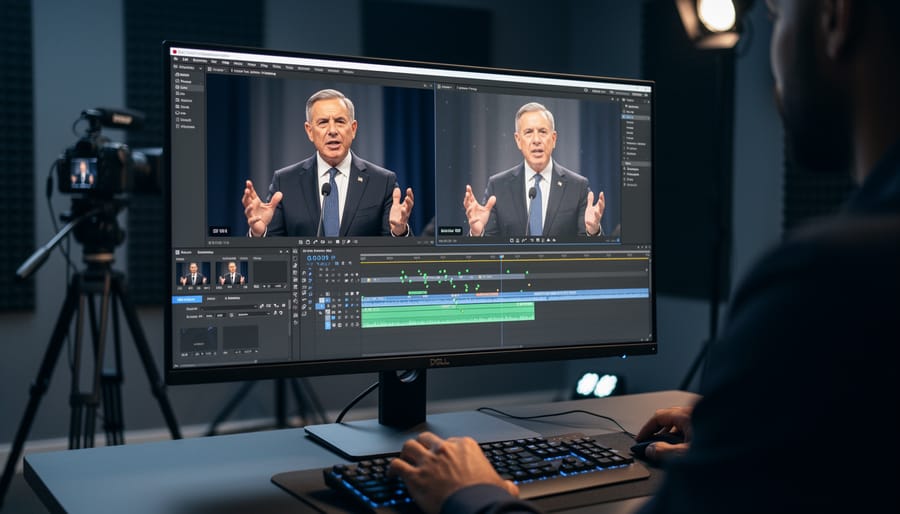
Our brains are wired with cognitive shortcuts that help us make quick decisions, but these same mental mechanisms make us vulnerable to synthetic media. When we see a video of a familiar face or hear a recognizable voice, our brains automatically assume authenticity. This is called the “seeing is believing” bias, a deeply ingrained instinct that served us well for thousands of years but now works against us in the digital age.
The reality is that humans are surprisingly poor lie detectors, even in face-to-face interactions. Research shows we’re correct only about 54% of the time when judging if someone is lying, barely better than a coin flip. Deepfakes exploit this weakness by presenting fabricated content through our most trusted sense: vision.
Another psychological vulnerability is confirmation bias, our tendency to believe information that aligns with our existing views. If a deepfake video shows a politician we already distrust saying something outrageous, we’re more likely to accept it as real without questioning its authenticity. This is particularly dangerous during election seasons when emotions run high and partisan divisions deepen.
Additionally, the emotional impact of video content bypasses our logical thinking. A shocking deepfake triggers immediate emotional responses in our amygdala before our prefrontal cortex, responsible for critical thinking, can properly evaluate what we’re seeing. By the time we engage our analytical brain, the emotional damage is done, and the false narrative has already taken root in our memory.
When Algorithms Decide What Democracy Looks Like
The Filter Bubble Effect on Voter Behavior
Imagine scrolling through your social media feed and noticing that every political post seems to align perfectly with your existing beliefs. That’s not coincidence—it’s AI at work. Social media platforms use sophisticated algorithms that analyze your clicks, likes, and viewing time to predict what content will keep you engaged. While this might seem like helpful personalization, it creates what experts call filter bubbles: digital environments where you’re primarily exposed to information that confirms what you already think.
Here’s how it works in practice. When you interact with content supporting a particular political candidate, the AI learns this preference and shows you more similar content while filtering out opposing viewpoints. Over time, you see less diversity in perspectives, making it harder to understand why others might disagree with you. A 2020 study found that social media users encountered 35% fewer cross-cutting political opinions compared to traditional media consumers.
This impacts democracy in tangible ways. Democratic deliberation depends on citizens encountering different viewpoints, weighing evidence, and making informed decisions. But when algorithms trap us in echo chambers, we lose this crucial exchange of ideas. Elections become more polarized, compromise seems impossible, and we struggle to find common ground with fellow citizens.
The challenge isn’t just what we see—it’s what we don’t see. These invisible editorial decisions by AI systems shape our understanding of political reality without us realizing it, fundamentally changing how democracy functions in the digital age.
Who Decides What the Algorithm Decides?
When you use social media, search engines, or streaming platforms, complex algorithms decide what you see, when you see it, and sometimes even what you can say. But here’s the unsettling question: who exactly programmed these decision-making systems, and what values did they embed into the code?
The reality is that a small group of engineers and executives at major tech companies make choices that affect billions of users, yet most of these decisions happen behind closed doors. Unlike elected officials who must answer to voters, tech companies aren’t required to explain how their algorithms work or why they make certain recommendations. This creates a significant accountability gap in our democratic systems.
Consider content moderation as an example. When an algorithm removes your post or suspends your account, you often receive little explanation beyond a generic message about “community guidelines.” The actual decision-making process—whether it was purely algorithmic or involved human reviewers, what specific factors triggered the action, and how you might appeal effectively—remains frustratingly opaque.
This lack of transparency in AI systems becomes even more concerning during elections. Algorithms that determine which political content gets amplified or suppressed effectively influence public discourse without democratic oversight. Who ensures these systems treat all candidates fairly? Who verifies they aren’t inadvertently silencing marginalized voices?
The problem extends beyond individual companies. Even when governments try to regulate these systems, they face a knowledge barrier. Tech companies claim their algorithms are proprietary trade secrets, making independent audits nearly impossible. This leaves citizens in the dark about systems that increasingly shape their access to information, their economic opportunities, and their civic participation—all fundamental aspects of democracy.
The Fairness Problem in AI-Powered Voting Systems
Voter Verification and False Positives
AI-powered voter verification systems promise efficiency and security, but they come with serious risks. When AI systems incorrectly flagged legitimate voters, the consequences fall disproportionately on already marginalized communities.
Consider what happened in several U.S. states where facial recognition technology was used to verify voter identities. These systems showed error rates up to 35% higher for Black and Asian faces compared to white faces. Imagine being turned away from your polling place because an algorithm couldn’t properly match your photo to its database, even though you’re a registered voter with valid identification.
Similar problems emerge with signature matching algorithms. In one Georgia county, the AI system rejected mail-in ballots at rates three times higher in predominantly Black neighborhoods than in white ones. These voters then faced the burden of “curing” their ballots through additional paperwork and time-consuming processes that many couldn’t complete before deadlines.
The root cause? Algorithmic bias stemming from training data that underrepresents certain demographic groups. When AI learns primarily from one population’s data, it performs poorly on others. For democracy, this creates a digital poll tax where technological barriers prevent eligible citizens from exercising their fundamental right to vote.
These aren’t just technical glitches. They’re systemic failures that threaten to amplify historical patterns of voter suppression through seemingly neutral technology.
The Redistricting Debate
Every ten years, electoral districts get redrawn based on new census data—a process that should reflect population changes fairly. However, gerrymandering has long allowed political parties to manipulate district boundaries for electoral advantage, creating oddly-shaped districts that dilute opposing voters’ influence. Now, AI has entered this controversial arena, and it’s reshaping the debate in surprising ways.
Traditional gerrymandering required manual mapmaking and political intuition. Modern AI algorithms can analyze millions of potential district configurations in seconds, optimizing for specific political outcomes with unprecedented precision. These systems process voter registration data, demographic information, and past voting patterns to create maps that maximize partisan advantage. This computational power makes gerrymandering more efficient—and harder to detect.
But there’s a flip side. The same AI technology is being weaponized against gerrymandering itself. Reform advocates now use machine learning to analyze district maps for statistical anomalies that suggest manipulation. These algorithms can generate thousands of alternative maps demonstrating what fair districting might look like, providing powerful evidence in court challenges. In several states, AI-generated comparison maps have successfully exposed partisan gerrymandering.
This creates a technological arms race with profound ethical implications. Should we trust algorithms to draw democratic boundaries? Who controls the data and assumptions these systems use? When both sides deploy AI, does it level the playing field or simply escalate the problem? These questions highlight how AI doesn’t just affect democracy—it forces us to reconsider fundamental questions about fairness, representation, and how we translate votes into political power.
What Good AI in Democracy Could Look Like
Fact-Checking at Scale
In the battle against misinformation, AI has become both the problem and the solution. While deepfakes and AI-generated content can spread false information rapidly, sophisticated fact-checking tools are now helping journalists and platforms verify claims at unprecedented speeds.
Organizations like Full Fact and ClaimBuster use machine learning to scan thousands of statements from politicians and news sources, flagging potential misinformation for human reviewers. These systems analyze patterns in language, cross-reference claims against verified databases, and even detect manipulated images or videos. For instance, during elections, these tools can process live debate transcripts in real-time, identifying checkable claims within seconds.
Social media platforms have integrated similar technology, though with mixed results. The challenge lies in balancing accuracy with speed while avoiding censorship concerns. The most effective approaches combine AI’s processing power with human judgment, ensuring context and nuance aren’t lost in automated decisions.
The key difference between helpful fact-checking and overreach is transparency. When platforms clearly label disputed content and explain their reasoning, users can make informed decisions rather than simply accepting algorithmic verdicts. This collaborative approach between AI systems and human oversight represents democracy’s best defense against the information chaos that threatens public discourse.
Increasing Voter Access and Participation
While concerns about AI’s impact on democracy are valid, the technology also offers powerful tools to strengthen democratic participation and make voting more accessible to everyone.
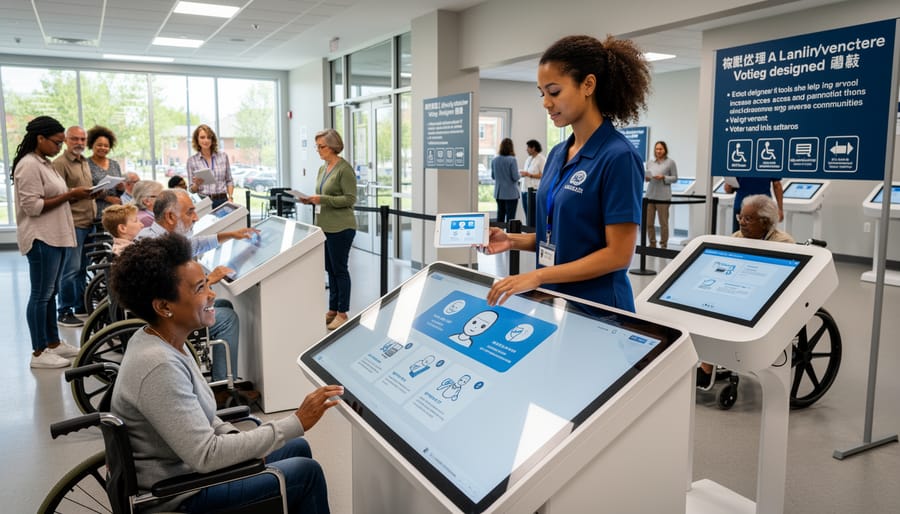
One of the most promising applications is multilingual voter information systems. AI-powered translation tools can instantly convert ballot measures, candidate statements, and voting instructions into dozens of languages. For example, some U.S. counties now use AI translation to provide real-time voter assistance in communities where English isn’t the primary language, ensuring that language barriers don’t prevent citizens from understanding what they’re voting on.
Accessibility represents another breakthrough area. AI-driven screen readers and voice interfaces help visually impaired voters navigate digital ballot systems independently. Speech-to-text applications assist people with mobility challenges, while AI chatbots answer voter questions 24/7 in simple, understandable language. These tools transform voting from an obstacle course into an inclusive experience.
Civic engagement platforms powered by AI are also changing how citizens interact with democracy beyond election day. These systems can match constituents with relevant town hall meetings, summarize lengthy policy documents into digestible formats, and even help citizens craft personalized messages to their representatives. By reducing the time and effort required to stay informed, AI makes democratic participation more practical for busy working families.
The key difference between these applications and the problematic uses of AI lies in their design intent: they’re built to empower citizens rather than manipulate them, expanding democratic access rather than restricting it.
Your Role in Holding AI Accountable
As citizens in an AI-influenced democracy, you have more power than you might realize to shape how these technologies impact our political systems. Here’s how you can stay informed and hold AI accountable.
Start by developing your AI literacy. When you encounter political content online, ask yourself: Could this be AI-generated? Deepfake videos often have subtle tells like unnatural blinking patterns, mismatched lip movements, or odd facial expressions during transitions. Audio deepfakes might contain strange breathing patterns or robotic cadences. If something seems too inflammatory or perfectly crafted to trigger strong emotions, pause before sharing. Verify information through multiple trusted sources before accepting it as truth.
Demand transparency from the platforms and services you use. When you see political ads on social media, look for disclosure labels explaining why you’re being targeted. Many platforms now allow you to view your advertising profile—check it regularly to understand what assumptions algorithms are making about your political leanings. If a platform won’t explain how its recommendation algorithm works, consider whether you want to rely on it for news and information.
Support politicians and policies that prioritize ethical AI development. Look for candidates who advocate for AI transparency requirements, algorithmic auditing, and regulations that prevent discriminatory outcomes. When legislation about AI comes up for discussion in your community, participate in public comment periods. Your local representatives need to hear from constituents who understand these issues.
Practice good digital hygiene. Diversify your news sources to avoid algorithmic echo chambers. Actively seek perspectives that challenge your views. Use browser extensions that identify bot accounts or flag potentially manipulated media. Consider attending town halls or community forums where you can engage with real people rather than algorithmic representations of public opinion.
Remember, democracy has always required active, informed participation. The AI age simply means we need new skills to fulfill that same civic responsibility.
The future of AI and democracy isn’t predetermined. These technologies are tools, and like any tool, their impact depends entirely on the choices we make today about regulation, transparency, and accountability. We’ve seen how AI can both strengthen democratic participation through better civic engagement platforms and threaten it through surveillance systems and disinformation campaigns. The technology itself is neutral—it’s our collective decisions about deployment and oversight that will shape whether AI becomes a force for democratic empowerment or erosion.
This isn’t a challenge we can afford to ignore. As citizens in democratic societies, staying informed about these developments isn’t optional—it’s essential. Follow trusted sources on AI policy developments, ask questions about how AI systems affect your community, and participate in public discussions about technology governance. Support organizations advocating for responsible AI practices and hold elected officials accountable for their technology policies.
The conversation about AI and democracy is happening right now, with or without your voice. Make sure you’re part of it. Your engagement today will help determine whether these powerful technologies serve democratic values or undermine them. The choice, ultimately, is ours to make together.