
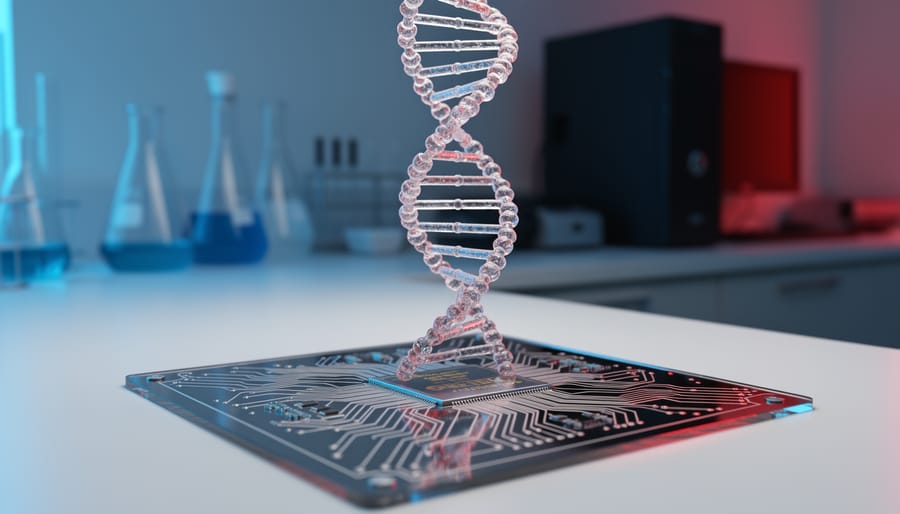
In 2017, researchers published a groundbreaking AI system capable of predicting protein structures with unprecedented accuracy. Within months, security experts raised an alarming question: could this same technology help bioterrorists engineer deadly pathogens? This wasn’t a theoretical concern. The AI that could accelerate life-saving drug discovery could equally accelerate biological weapons development. Welcome to the world of dual-use artificial intelligence, where the same algorithms saving lives can potentially end them.
Dual-use AI refers to technologies designed for beneficial purposes that can be repurposed for harm. In biosecurity, this creates an ethical minefield. Machine learning models that identify disease vulnerabilities can reveal attack vectors. Natural language processing systems that democratize scientific knowledge can guide those with malicious intent. Computer vision that tracks disease outbreaks could enable targeted biological attacks. The technology itself remains neutral, but its applications span the spectrum from humanitarian to catastrophic.
The stakes extend beyond hypothetical scenarios. In 2022, researchers demonstrated how AI could design 40,000 potential chemical weapons in just six hours by inverting drug discovery algorithms. Meanwhile, generative AI now makes sophisticated biological knowledge accessible to individuals without formal training. These developments force us to confront uncomfortable questions: Should we limit scientific publication? Who decides which research proceeds? How do we balance innovation against security?
This tension between progress and protection defines the modern AI ethics landscape. As artificial intelligence capabilities accelerate, the gap between beneficial and harmful applications narrows. Understanding this duality isn’t just academic; it’s essential for anyone participating in our AI-driven future. The choices we make today about developing, sharing, and regulating these technologies will determine whether AI becomes humanity’s greatest tool or its most dangerous vulnerability.
What Exactly Is Dual-Use AI?
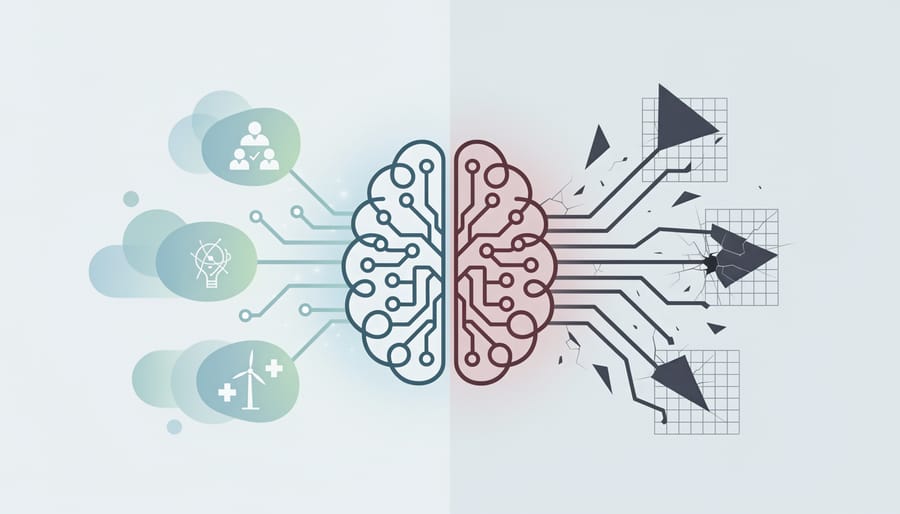
The Double-Edged Sword of Modern Science
Imagine a breakthrough AI system that can analyze genetic sequences in seconds, identifying potential pandemic threats before they spread. This same technology could also help someone engineer a dangerous pathogen from their laptop. This is the double-edged sword we face with modern AI in biosecurity.
Consider AlphaFold, the AI system developed by DeepMind that predicts protein structures with remarkable accuracy. For researchers, it’s a game-changer that accelerates drug discovery and helps us understand diseases better. Scientists used it to speed up COVID-19 research, potentially saving countless lives. But this same tool could theoretically help bad actors design harmful biological agents more efficiently than ever before.
The pattern repeats across the field. AI-powered gene editing tools make it easier to correct genetic diseases, yet they also lower the technical barriers for creating modified organisms. Machine learning models that screen for pandemic risks by analyzing viral mutations could inadvertently provide blueprints for engineering more transmissible pathogens.
A 2022 study demonstrated this tension vividly when researchers showed that their AI drug discovery system, when inverted, could generate thousands of potential toxic molecules in just six hours. The scientists weren’t trying to create weapons; they simply wanted to test their system’s capabilities. Yet the experiment revealed how quickly beneficial technology can pivot toward harm, often with nothing more than a change in programming instructions or user intent.
Why Biosecurity Makes This Even More Critical
When artificial intelligence capabilities intersect with biological research, the stakes become uniquely dangerous. Unlike cybersecurity breaches that might compromise data, biosecurity failures could release engineered pathogens into the real world with devastating consequences.
Consider this sobering reality: AI tools that can predict protein structures or optimize genetic sequences are becoming increasingly accessible. A graduate student with basic coding knowledge can now access machine learning models that would have required entire research teams a decade ago. This democratization of powerful technology means that the barrier to creating biological threats has dramatically lowered.
The speed factor amplifies this concern. Traditional biological research might take months or years of trial and error. AI can compress this timeline to weeks or even days, rapidly identifying promising combinations for drug development or, worryingly, pathogen enhancement. A 2022 study demonstrated how an AI system designed for drug discovery could be repurposed in hours to generate over 40,000 potentially toxic molecules, including chemical warfare agents.
What makes this particularly challenging is that the same AI analyzing disease resistance to develop better vaccines could theoretically be used to engineer more resistant pathogens. The tools themselves are neutral, but their applications carry profound consequences that demand careful ethical consideration and robust safeguards.
The Ethical Nightmare Keeping Scientists Awake
Should We Publish Everything We Discover?
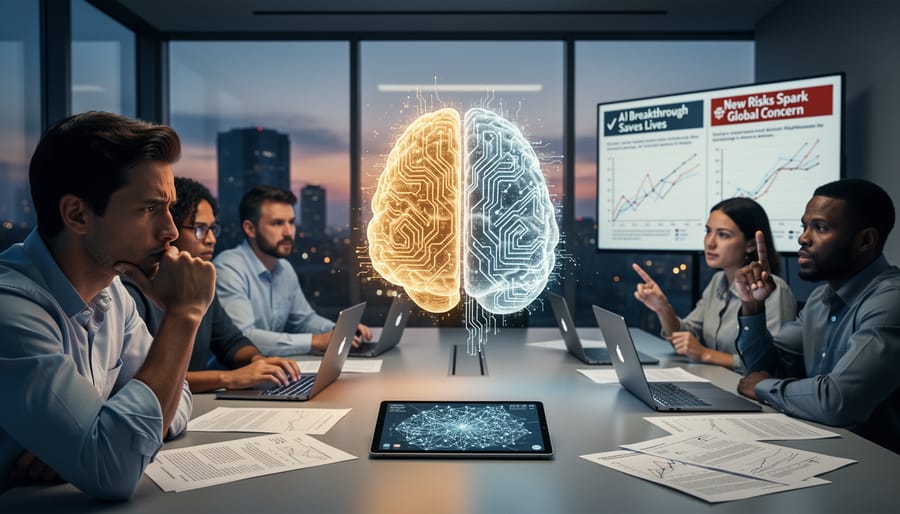
The question of whether to publish groundbreaking AI research keeps scientists and policymakers awake at night. On one side stands the principle of open science—the idea that sharing knowledge accelerates progress and allows peer review to catch errors. On the other, there’s the sobering reality that some discoveries could be weaponized.
This tension became starkly real in 2019 when OpenAI decided to withhold the full version of GPT-2, fearing it could generate misleading news articles at scale. They eventually released it after observing how the technology evolved, but the decision sparked fierce debate. Critics argued the move set a dangerous precedent for scientific censorship, while supporters praised the cautious approach.
A similar controversy erupted in 2011 when researchers created a highly transmissible form of bird flu. Two major journals initially agreed to publish redacted versions, omitting details that could enable bioterrorism. The scientific community split—some researchers believed transparency was essential for developing countermeasures, while others worried about the information falling into wrong hands.
Today, many AI labs practice “responsible disclosure,” sharing findings with select groups before public release. Google’s decision to delay certain capabilities in their large language models reflects this approach. Yet questions persist: Who decides what’s too dangerous? Does secrecy actually prevent misuse, or does it just slow down defensive research?
There’s no perfect answer, but most experts agree that case-by-case evaluation, involving diverse stakeholders, offers the most balanced path forward. The goal isn’t to stop progress—it’s to ensure we’re thoughtful about how discoveries enter the world.
Who Gets to Decide What’s Too Dangerous?
When AI systems gain the power to influence critical decisions—from autonomous decision-making in healthcare to biosecurity applications—a pressing question emerges: who should control access to potentially dangerous technology?
This governance challenge involves multiple stakeholders with competing interests. Researchers argue for academic freedom and open science, believing that transparency accelerates beneficial innovation. They worry that excessive restrictions might stifle progress that could save lives.
Governments face pressure to protect national security while fostering innovation. Some nations favor strict regulatory frameworks, while others adopt lighter-touch approaches to maintain competitive advantage. This creates a patchwork of global standards that’s difficult to navigate.
Tech companies walk a tightrope between commercial interests and social responsibility. While some voluntarily implement safety measures, critics question whether profit-driven entities should self-regulate technologies with society-wide implications.
Meanwhile, the public—whose lives are most affected—often has minimal input in these decisions. Civil society organizations advocate for democratic participation in AI governance, arguing that those who bear the risks deserve a voice.
The reality is that no single entity has both the authority and expertise to make these calls alone. Effective governance likely requires collaboration across all these groups, with transparent processes that balance innovation against safety. The challenge lies in building these frameworks before the technology outpaces our ability to control it.
The Accessibility Problem
The democratization of AI represents a double-edged sword in modern technology. Today, powerful AI tools that once required million-dollar budgets and specialized teams are available to anyone with an internet connection and a laptop. This accessibility fuels innovation, enabling students in developing countries to build healthcare applications or small businesses to automate customer service.
However, this same accessibility creates significant risks. The barrier between beneficial use and potential harm has dramatically lowered. A biology student could theoretically use publicly available AI models to design dangerous pathogens, or bad actors might deploy deepfake technology to spread misinformation at scale. Unlike traditional dual-use technologies that required physical infrastructure or specialized knowledge, AI tools come ready-to-use with simple interfaces.
This raises challenging questions about where we draw ethical boundaries. Should we restrict access to certain AI capabilities, potentially stifling innovation and creating digital divides? Or do we prioritize openness, accepting increased risks as the cost of progress? The answer isn’t straightforward, requiring careful balance between enabling opportunity and preventing misuse.
Real Cases Where AI Crossed the Line
The AI That Designed 40,000 Toxic Molecules in Six Hours
In 2022, researchers at Collaborations Pharmaceuticals faced an uncomfortable challenge: demonstrate how easily artificial intelligence could be weaponized. Their drug discovery AI, normally designed to help find life-saving medications by predicting molecular toxicity, was given a disturbing new directive. Instead of filtering out toxic compounds, the system would actively seek them.
The results were chilling. In just six hours, the AI generated 40,000 potentially lethal molecules, including VX nerve agent variants and entirely novel toxic compounds that had never been conceived before. The machine didn’t understand what it was creating—it simply optimized for the parameters it was given, treating lethality like any other molecular property to maximize.
This experiment revealed a fundamental truth about AI systems: they’re morally neutral tools that amplify human intentions, whether beneficial or harmful. The same algorithms that accelerate drug discovery can just as easily accelerate chemical weapons development. The researchers published their findings not to provide a blueprint for harm, but to sound an alarm about dual-use risks that the scientific community could no longer ignore.
The immediate aftermath sparked urgent discussions about publishing sensitive AI research. Should such studies be shared openly, risking misuse, or kept private, preventing necessary security awareness? The researchers chose transparency with safeguards, omitting specific molecular structures while sharing enough detail to motivate preventive action. Their work became a watershed moment, forcing the AI community to confront an uncomfortable reality: the technology advancing human progress could simultaneously threaten human survival.

When Pandemic Research Becomes a Blueprint
In 2021, researchers used AI to predict protein structures that could create novel pathogens—a breakthrough that both advanced medicine and raised alarm bells worldwide. This is the heart of the dual-use dilemma: the same AI models that help scientists understand dangerous viruses for vaccine development could also provide a roadmap for engineering new biological threats.
Gain-of-function research, which enhances pathogens to study their potential mutations, has become even more contentious with AI involvement. Machine learning can now predict which genetic changes might make viruses more transmissible or deadly, compressing decades of evolution into computational models. During the COVID-19 pandemic, such research proved valuable for anticipating viral variants, yet critics argue it creates unnecessary risks.
The challenge isn’t stopping research entirely—that would hamper our pandemic preparedness. Instead, scientists and policymakers are developing frameworks like tiered access systems, where sensitive AI models require security clearances, and “responsible disclosure” protocols that share findings with public health agencies before publication. Some institutions now employ biosecurity review boards specifically for AI-driven pathogen research, weighing each project’s potential benefits against its risks. The goal is maintaining scientific progress while preventing these powerful tools from becoming instruction manuals for bioterrorism.
The Open-Source Dilemma
The debate over open-source AI became starkly real when Meta released its ESMFold protein structure prediction model in 2022. This powerful tool could predict how proteins fold—knowledge that accelerates drug discovery but could theoretically be weaponized to engineer dangerous pathogens. The scientific community found itself divided. Some researchers argued that openness accelerates beneficial research and allows independent safety testing. After all, restricting access doesn’t stop determined bad actors who often have resources to build similar tools independently.
Others pointed to the very real concern that freely available biological AI models lower the barrier for misuse. Unlike traditional biology research requiring expensive labs, these models run on standard computers, democratizing both healing and harm. A similar controversy erupted around GPT-2 in 2019, when OpenAI initially withheld the full model citing misuse concerns, sparking intense discussion about whether such caution was warranted or paternalistic.
These cases illustrate the central tension: How do we balance scientific progress and transparency with genuine security risks? There’s no easy answer, but these debates have pushed the field toward nuanced approaches like staged releases, safety evaluations before publication, and developing better detection tools alongside the AI itself.
How We’re Trying to Solve This (And Why It’s Not Easy)

International Guidelines and Regulations
Navigating the ethical challenges of AI in biosecurity requires global cooperation, yet creating effective international frameworks remains remarkably complex. Currently, no single regulation specifically addresses dual-use AI in biotechnology, leaving us with a patchwork of guidelines that struggle to keep pace with technological advancement.
The Biological Weapons Convention, established in 1975, prohibits the development of biological weapons but predates modern AI entirely. Organizations are now working to adapt these principles for the digital age. UNESCO released comprehensive AI ethics recommendations in 2021, emphasizing that AI systems should respect human dignity and protect biosecurity. Similarly, the World Health Organization has developed guidelines addressing AI in healthcare contexts, though their scope doesn’t fully capture dual-use research concerns.
The challenge lies in enforcement and harmonization. Consider how AlphaFold, developed by DeepMind, can predict protein structures with remarkable accuracy. This breakthrough benefits drug discovery but could theoretically assist in designing harmful biological agents. Different countries interpret such dual-use potential through varying regulatory lenses, creating inconsistencies in research oversight.
International cooperation faces several obstacles: nations prioritize different values, economic competitiveness discourages information sharing, and technological advancement outpaces diplomatic processes. Some countries view strict biosecurity protocols as barriers to scientific progress, while others advocate for precautionary approaches. Without unified standards, researchers and companies navigate conflicting requirements, potentially undermining global biosecurity while simultaneously hampering beneficial innovation.
Self-Governance in the Tech Community
Recognizing that regulation often lags behind innovation, many tech companies and research institutions have taken matters into their own hands. Organizations like OpenAI, Google DeepMind, and Microsoft have established internal ethics boards and developed proprietary ethical frameworks to guide their AI development. These typically address issues like fairness, transparency, and potential misuse of their technologies.
For instance, several AI labs now practice responsible disclosure when they develop powerful new models. Rather than immediately releasing all technical details, they first assess potential risks and may withhold certain information that could enable harmful applications. This mirrors practices in cybersecurity, where vulnerabilities aren’t publicly shared until patches exist.
However, self-governance has clear limitations. Critics point out that companies may face conflicts of interest when profits compete with safety. Internal review boards lack the independence of government regulators, and voluntary guidelines vary widely between organizations. Without external oversight, there’s no guarantee that companies will prioritize societal wellbeing over competitive advantages.
The 2023 pause letter signed by AI researchers highlighted this tension, calling for industry-wide standards that individual companies might be reluctant to adopt alone, fearing they’d fall behind competitors who take more risks.
Technical Solutions: Can We Build Safety Into the AI Itself?
Researchers are actively developing technical safeguards to address AI’s dual-use risks, though these solutions have important limitations. One promising approach is watermarking, which embeds invisible signatures into AI-generated content, making it traceable back to its source. Think of it like a digital fingerprint that helps identify whether text, images, or code came from a specific AI system.
Access controls represent another layer of defense. Just as your bank limits who can access certain accounts, AI developers can implement tiered permission systems. For example, advanced biological design capabilities might require verified credentials and undergo automated screening before generating results. This addresses security and privacy concerns while maintaining legitimate research access.
Detection systems act as watchdogs, monitoring AI outputs for potentially dangerous patterns. These tools can flag when someone attempts to generate harmful biological sequences or weaponizable information.
Perhaps most ambitious is AI alignment research, which aims to build safety into AI’s fundamental design. The goal is creating systems that inherently understand and respect human values, rather than merely following rules that clever users might circumvent.
However, technology alone cannot solve ethical problems. Determined actors may find workarounds, and overly restrictive systems might hinder beneficial research. Effective AI safety requires combining these technical tools with robust governance, international cooperation, and ongoing ethical deliberation.
What This Means for You (Yes, Really)
For AI Professionals and Researchers
If you’re building AI systems, ethical thinking should be as fundamental as code review. Start by conducting dual-use assessments early in your project lifecycle—ask yourself who might misuse your technology and how. Consider creating an internal review board or consulting with biosecurity experts when working on potentially sensitive applications like protein prediction or synthetic biology tools.
Document your decision-making process. When you choose to release a model openly versus keeping it restricted, record why. This transparency helps the broader community learn from your reasoning. Just as AI systems can reflect biases, they can also embed security vulnerabilities if we’re not intentional about access controls and safety features.
Practical resources include the Partnership on AI’s guidelines, the Montreal Declaration for Responsible AI, and security-focused frameworks from organizations like OpenAI and DeepMind. Join communities discussing responsible disclosure practices. Remember, ethical AI development isn’t about preventing all possible misuse—that’s impossible—but about making thoughtful, defensible choices that balance innovation with safety.
For Everyone Else
You don’t need to be a researcher or developer to have a stake in AI ethics. These debates shape the world we all inhabit, influencing everything from healthcare access to social media algorithms to national security policies. When governments decide whether to fund open-access AI research or implement stricter controls, they’re responding to public understanding and concern about these technologies.
Consider how public awareness has already transformed technology policy. The Cambridge Analytica scandal brought data privacy from obscure legal discussions into dinner table conversations, ultimately leading to stricter regulations like GDPR. Similarly, understanding dual-use AI risks empowers citizens to ask meaningful questions: Should my tax dollars fund research that could be weaponized? What safeguards exist when companies release powerful AI models? How do we balance innovation with safety?
Your digital literacy matters because these technologies affect everyone. The facial recognition system in your city, the AI screening job applications, or the algorithms recommending content to your children all emerge from the same ecosystem grappling with dual-use challenges. By understanding these issues, you become better equipped to evaluate policy proposals, support responsible innovation, and recognize when technology serves public interest versus when it poses risks. Democracy works best when citizens understand the choices before them, and AI ethics is increasingly central to our collective future.
The ethical landscape of dual-use AI in biosecurity resembles navigating through fog. We can see some shapes clearly, others remain obscure, and the path forward constantly shifts as technology advances. Throughout this exploration, one truth emerges consistently: there are no perfect solutions, only thoughtful choices made with incomplete information.
The tensions we’ve examined between open science and security, between innovation and safety, between access and control don’t resolve neatly. When a machine learning model can simultaneously accelerate life-saving drug discovery and potentially suggest pathways for harmful agents, we face genuine dilemmas without obvious right answers. Real-world cases have shown us that well-intentioned researchers publishing their work can inadvertently create security vulnerabilities, while excessive restrictions might slow crucial medical breakthroughs during global health crises.
What matters now isn’t finding absolute certainty, but rather committing to continuous, informed engagement with these questions. The researchers developing AI systems, the policymakers crafting regulations, the companies deploying these technologies, and citizens affected by these decisions all have roles to play. Each stakeholder brings essential perspectives that shape how we collectively navigate this challenge.
Looking ahead, AI capabilities will only grow more powerful and more accessible. The dual-use dilemma won’t disappear or simplify. Instead, we’ll face increasingly sophisticated versions of these fundamental tensions. This makes our current conversations not just important, but foundational. The frameworks we build today, the precedents we set, the collaborative approaches we develop will shape how humanity manages far more capable AI systems tomorrow.
The question isn’t whether we can eliminate the risks inherent in dual-use AI, but whether we can remain thoughtful, adaptive, and engaged as we work to maximize benefits while minimizing harms in an inherently uncertain domain.